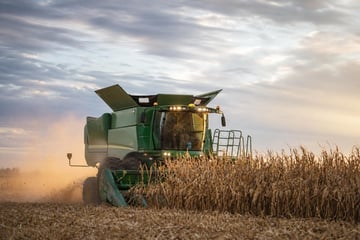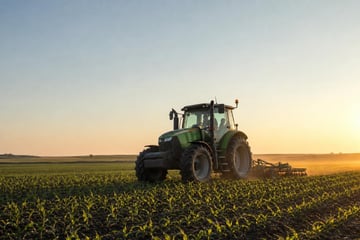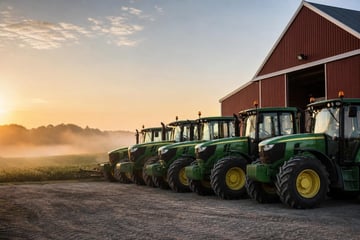
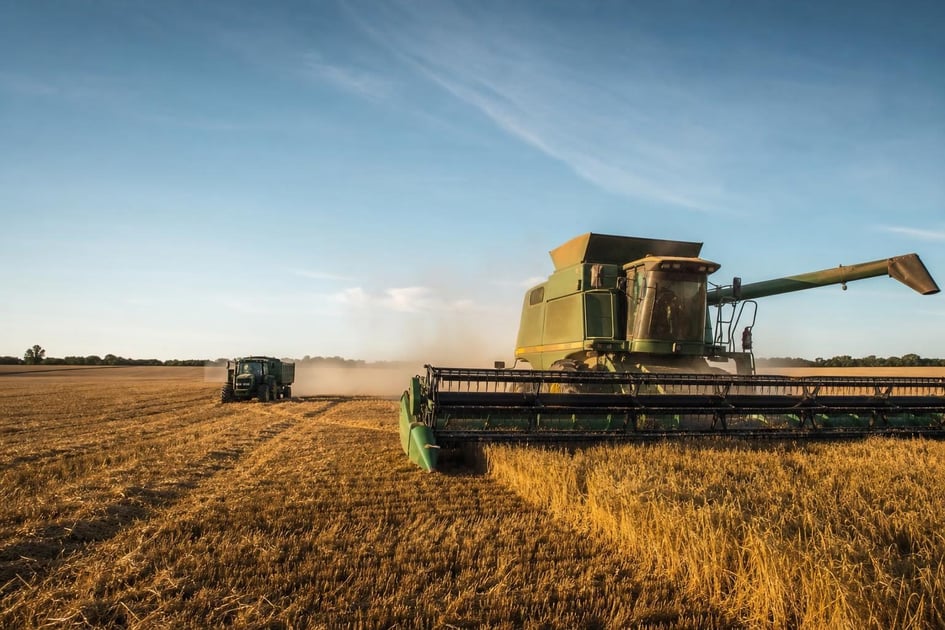
Agriculture equipment financing cost depends on your credit profile, the age and type of the machine, the length of the term, and how much you put down. Rates vary by credit profile, equipment age and term. Most farm equipment loans run from $5,000 up to $5 million, with the equipment itself serving as collateral. That collateral structure is what keeps financing accessible even when a farm has uneven seasonal cash flow. Same-day approvals are possible once you submit a complete application, but they are not guaranteed.
What Drives Your Agriculture Equipment Financing Cost
Several factors work together to set the monthly payment on a tractor, combine, planter, or irrigation system. Understanding them upfront lets you budget accurately and avoid surprises at closing.
The U.S. Census Bureau classifies the vast majority of U.S. farms as small businesses, which means they face the same capital constraints as any owner-operator trying to preserve liquidity for operations and growth.
Credit Profile and Business History
Lenders look at both your personal and business credit. A longer track record in farming—typically two or more years—strengthens your file because it shows you can manage cyclical revenue. If your credit has dents from a rough season or a delayed insurance settlement, you can still qualify, though the structure may require a larger down payment or a shorter term. Rates vary by credit profile, equipment age and term, so a borrower with strong credit financing a newer tractor over 36 months will see a different cost structure than one financing older equipment over 60 months.
Equipment Age and Condition
New equipment commands better financing terms because it holds residual value and comes with manufacturer warranties. Used equipment—anything from a three-year-old combine to a twenty-year-old baler—can still be financed, but the lender factors in maintenance risk and resale value. A general rule is that equipment under 10 years old is easier to place, while older assets may need a larger down payment or a cosigner. The make and model matter too; a John Deere or Case IH tractor with strong auction values will finance more cleanly than a discontinued brand with thin resale data.
Term Length and Down Payment
Most agriculture equipment loans range from 24 to 84 months. A longer term drops the monthly payment but increases total cost. A shorter term saves money overall but requires higher monthly cash flow, which can be tight in winter or pre-harvest months. Down payments typically start at zero for well-qualified buyers but often land in the 10% to 20% range for used equipment or challenged credit. The equipment itself is the collateral, which keeps rates competitive compared with unsecured borrowing.
Key Insight: Many lenders apply seasonal payment structures to agriculture loans, allowing lower payments in off-months and larger ones after harvest. If your cash flow is concentrated in Q3 and Q4, ask whether a seasonal schedule is available before you sign. A standard equal-payment plan can strain a farm’s liquidity in February when input costs are due and no crop revenue has arrived.
Get a fast decision on your equipment
Applying takes just a few minutes, and decisions can come as soon as the same day.
Start Your ApplicationNew vs. Used Farm Equipment Financing
The decision between new and used equipment is often driven by sticker price, but financing cost should be part of the same calculation.
New equipment usually qualifies for the lowest rates and longest terms. Manufacturers sometimes subsidize financing on new models, and lenders like the predictable warranty coverage. For a $400,000 combine, a 60-month term with a standard structure might keep the monthly payment manageable while preserving operating capital for seed and chemicals.
Used equipment reduces the amount financed and therefore the total interest paid, even if the rate is slightly higher. A $120,000 tractor that is five years old may carry a rate adjustment of a few points compared with new, but the smaller principal means the farm pays less over the life of the loan. The break-even point usually comes down to expected annual hours of use and repair reserves. If you plan to run a machine 800 hours per year, new may be worth the premium. If it is a backup planter for 200 acres, used often makes more sense.
Warranty coverage is the hidden financing factor. New equipment rarely needs major repairs in the first three years, so your cash flow forecast is more predictable. Used equipment should have a maintenance reserve built in, because a $15,000 transmission repair in year two effectively raises your total cost of ownership. Some lenders allow you to finance warranties or service contracts alongside the machine, folding that protection into the monthly payment.
Equipment Financing vs. Leasing for Farmers
Farmers often lease equipment they plan to trade every few years, while they finance equipment they intend to keep for its full useful life. The choice affects monthly cost, tax treatment, and what happens at the end of the term.
| Factor | Equipment Loan | Equipment Lease |
|---|---|---|
| Ownership | You own the asset once paid off | Lessor owns the asset; you may have a purchase option |
| Collateral | The equipment secures the loan | The equipment secures the lease |
| Down payment | Often 0% to 20% | Usually one or two payments upfront |
| Term | 24 to 84 months | 12 to 60 months |
| Monthly cost | Higher than lease in early years | Lower monthly outlay |
| End of term | You hold clear title | Return, renew, or buy at fair market value |
| Best for | Long-term keepers: tractors, combines, irrigation | Rapid turnover: technology upgrades, seasonal attachments |
Leasing works well when you need to preserve capital for land rent or input costs and you plan to upgrade equipment frequently. Financing works better when you want to build equity in a core fleet and avoid mileage or hour restrictions. Rates vary by credit profile, equipment age and term in both structures, so the exact monthly difference depends on your specific file.
Pro Tip: If you lease a combine with a purchase option, negotiate the residual value at the start, not the end. Lenders calculate lease payments based on that residual, and a higher residual lowers your monthly cost. However, if you plan to buy it out, make sure the residual is realistic compared with auction data for that model year. An inflated residual helps cash flow now but hurts you later if you exercise the purchase option.
2026 Tax Treatment and Section 179
The tax code offers farmers significant incentives to invest in equipment, but the details change with inflation adjustments and legislative updates. For tax year 2026, Section 179 allows businesses to expense qualifying equipment purchases up to an inflation-adjusted dollar limit. The exact 2026 limit is set by IRS guidance, so you should confirm the current ceiling with your CPA before making purchase timing decisions.
Bonus depreciation may also apply to new and used equipment placed in service during 2026, though the percentage has been stepping down in recent years. The interaction between Section 179 and bonus depreciation is complex: you generally decide which to apply first, and state tax treatment may differ from federal. A tractor that qualifies for both could see a substantial first-year write-off, but only your accountant can model the outcome against your specific tax bracket and farm structure.
Because farm income fluctuates with commodity prices and weather, timing matters. If 2026 is a high-income year, accelerating deductions through equipment purchase may reduce your tax bill. If you are carrying losses forward, the deduction may be less valuable now than in a future profitable year. Talk to a CPA who understands farm tax before you sign, because the financing structure itself—loan versus lease—can also affect whether you qualify for certain deductions.
By the Numbers: A Midwest row-crop operation financing a $350,000 combine over 60 months with a standard structure might see a monthly payment in the mid-to-upper thousands, depending on credit and term specifics. Over five years, the total outlay includes principal, interest, and any origination fees. Compare that with a 36-month term: the monthly payment rises significantly, but the total interest paid drops by a meaningful margin. Running both scenarios with your lender and your CPA ensures the structure matches your cash flow and tax strategy.
See what you qualify for
The equipment itself secures the financing, which keeps rates competitive. Checking your options takes minutes.
Check Your OptionsHow to Qualify for Agriculture Equipment Financing
Qualification is straightforward for established operations, but newer farms and those recovering from a difficult season should know what lenders review.
The U.S. Small Business Administration emphasizes that equipment financing is one of the most common funding mechanisms for agricultural businesses looking to expand without diluting ownership or taking on unsecured debt.
Time in Business and Revenue
Most agriculture equipment lenders prefer at least two years of operating history. That gives them two full tax returns to verify average revenue and expense patterns. If you are newer, you may still qualify with a strong personal credit score, a detailed business plan, or a cosigner with farm experience. Revenue requirements vary by deal size: a $25,000 utility tractor needs far less documentation than a $1.2 million fleet refinance.
Credit Thresholds
There is no universal minimum credit score for farm equipment financing. A score in the mid-600s or higher opens the most competitive structures, while scores below that may require additional collateral, a larger down payment, or a shorter term. Rates vary by credit profile, equipment age and term, so improving your credit by even 30 points before applying can shift you into a better pricing tier. Pay down revolving balances and resolve any outstanding tax liens before submitting an application.
Documentation You Will Need
Lenders typically request the following:
- Last two years of business tax returns
- Personal tax returns for all owners with 20% or more equity
- Current balance sheet and profit-and-loss statement
- Equipment quote or invoice from the dealer or private seller
- Proof of insurance naming the lender as loss payee
- Bank statements for the last three to six months
Having these ready before you apply can move the decision from days to hours. Same-day approvals are possible when the file is complete and the equipment is straightforward, but missing documents delay the process.
Key Insight: Private-party equipment purchases require extra diligence. The lender will verify that the seller has clear title, that the serial number matches the documentation, and that there are no existing liens. This adds 24 to 72 hours compared with a dealer sale. If you are buying at auction, get a preliminary approval letter before bidding so you know your maximum bid and the lender can move quickly once you win.
Common Mistakes When Financing Farm Equipment
Even experienced operators make errors that raise their cost or slow funding. Avoiding these keeps your financing efficient.
Underfinancing soft costs. Buyers often ask for exactly the purchase price of the machine and forget freight, setup, attachments, and first-year maintenance. If you finance only the base tractor and then pay cash for a $12,000 loader and $3,000 delivery, you drain working capital that could have been preserved. Most lenders allow you to roll eligible soft costs into the loan up to a percentage of the equipment value.
Choosing the wrong term. Stretching a $50,000 baler over 84 months gives you a low payment, but you may still be making payments after the machine’s productive life has ended. Conversely, a 24-month term on a $600,000 combine creates a cash flow crunch in a bad yield year. Match the term to the equipment’s expected useful life and your revenue cycle.
Ignoring hour meters and maintenance records. Used equipment financing depends heavily on condition. A combine with 2,500 separator hours and a clean maintenance log is a safer collateral bet than one with 1,000 hours and no records. Lenders may require an inspection on older assets, and discovering deferred maintenance during underwriting can reduce the approved amount or increase the required down payment.
Not comparing total cost. A low monthly payment is easy to focus on, but total cost of financing includes origination fees, documentation fees, prepayment penalties, and required insurance. Ask for the total dollar outlay over the full term before you commit. If you plan to sell or trade the equipment early, a loan with no prepayment penalty can save thousands compared with one that locks you in.
What Happens After You Apply
Once you submit a complete application and equipment details, the lender reviews credit, verifies collateral value, and issues a decision. For straightforward deals on standard equipment, this can happen the same day. More complex files—large fleet deals, private-party sales, or challenged credit—may take two to five business days.
After approval, you receive a term sheet outlining the structure, payment amount, and any conditions. Read it carefully to confirm the term length matches your request and that there are no unexpected fees. If everything looks correct, you sign and return the documents. The lender then pays the dealer or seller directly, or places a lien on the equipment if you have already purchased it. You begin payments according to the schedule, usually within 30 to 45 days of funding.
Throughout the term, keep the equipment insured and maintained. Defaulting on insurance or allowing the asset to deteriorate can trigger a technical default even if you are current on payments. If you hit a rough season and need a temporary modification, contact the lender before you miss a payment. Most agriculture lenders understand cyclical cash flow and will work with you on a deferral or restructuring if you communicate early.
See what you qualify for before you visit the dealer, so you can negotiate from a position of certainty.
Ready to move forward?
More than 10,000 businesses have financed equipment with Provide Capital. See what you qualify for today.
Get StartedFrequently Asked Questions
What is the minimum and maximum amount I can finance?
Provide Capital finances agriculture equipment from $5,000 to $5 million. That range covers everything from a compact utility tractor to a full fleet of combines, planters, and sprayers.
Can I finance used equipment, or only new?
Both new and used equipment are eligible. Used equipment may require a larger down payment or a shorter term depending on age and condition, but financing is widely available for quality pre-owned machines.
How long are typical agriculture equipment loan terms?
Terms generally range from 24 to 84 months. The right term depends on the equipment’s useful life, your cash flow cycle, and how quickly you want to build equity.
Is the equipment itself the collateral?
Yes. The equipment secures the financing, which is why rates are typically more competitive than unsecured loans. You do not usually need to pledge real estate or other assets.
Can I finance attachments and implements along with the main machine?
In most cases, yes. Lenders often allow you to bundle eligible attachments, warranties, and freight into the same financing package, up to a limit based on the primary equipment value.
What if my credit is not perfect?
You can still qualify. Credit is one of several factors. A larger down payment, shorter term, or cosigner can offset a lower score. Rates vary by credit profile, equipment age and term, so every application is evaluated individually.
How fast can I get a decision?
Same-day approvals are possible with a complete application, but they are not guaranteed. Complex deals or incomplete files take longer. Submitting all requested documentation upfront is the best way to speed the process.
Can I pay off the loan early?
Many agriculture equipment loans allow early payoff, but some carry prepayment penalties or minimum interest charges. Review the term sheet carefully and ask your lender to confirm the policy before you sign.
Get Started on Your Next Equipment Purchase
As Reuters market coverage has noted, commodity price cycles heavily influence when farmers make major equipment investments. Financing farm equipment is a tool for preserving working capital, managing taxes, and keeping your operation competitive. Whether you are adding a tractor for row-crop work, upgrading to a larger combine, or financing a skid steer for barn maintenance, the right structure keeps your payments aligned with your revenue cycle.
Start by gathering your financial documents and equipment quote. Then get a same-day decision on your equipment so you know your budget before you negotiate. For operations looking to expand, Agriculture equipment financing offers a path to growth without tying up the cash you need for seed, chemicals, and labor.
If you are also considering equipment for construction or transport on the farm, look into Skid Steers financing and Dump Trucks financing for versatile machines that move material year-round. The right financing partner understands that farming is seasonal, capital-intensive, and unpredictable—and structures deals accordingly.
Disclaimer: The information provided in this article is for general educational purposes only and is not financial, legal, or tax advice. Funding terms, qualifications, and product availability may vary and are subject to change without notice. Provide Capital does not guarantee approval, rates, or specific outcomes. For personalized information about your business funding options, contact our team directly.