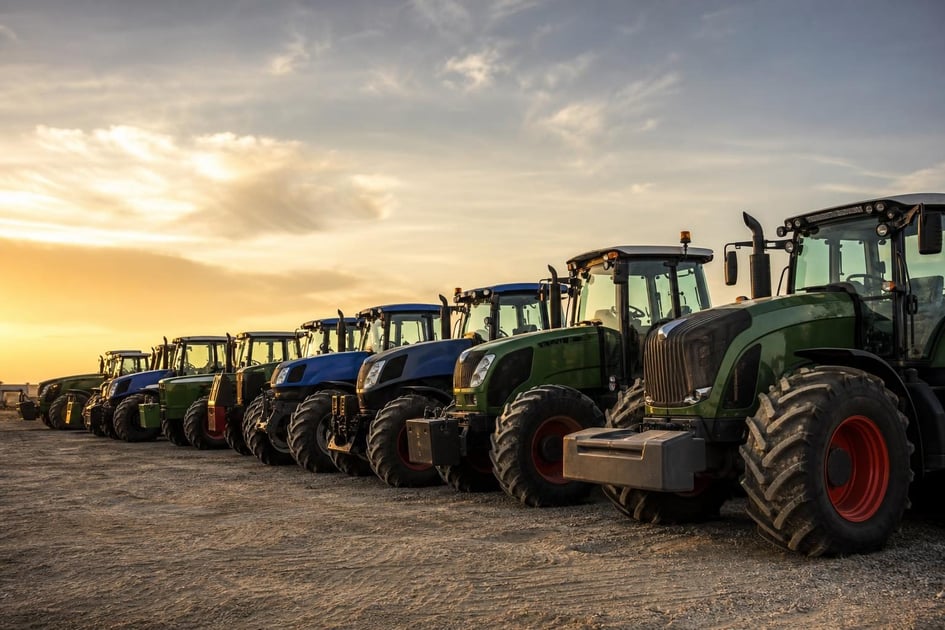
Used agriculture equipment financing lets you acquire essential machinery—tractors, combines, harvesters, and more—without draining the operating capital you need for seed, fuel, and labor. At Provide Capital, we finance used agricultural equipment from $5,000 to $5 million, using the equipment itself as collateral to keep rates competitive. Same-day approvals are possible, and we work with farmers and ranchers nationwide across row-crop, livestock, dairy, and specialty operations.
If you are weighing a used purchase against new, or trying to understand how financing terms shift for older iron, this guide covers what actually determines approval, cost, and suitability for your operation.
Why Used Equipment Matters for Modern Farm Operations
Buying used is not a compromise for most farmers—it is a calculated decision. A quality used tractor or combine can deliver years of reliable service at a fraction of the replacement cost, which matters when commodity prices fluctuate and input costs keep rising.
The depreciation curve on agricultural equipment is steep in the first few years. A machine that loses 20 to 30 percent of its value in year one can represent significant savings on the used market, even with low hours and strong maintenance records. For owner-operators managing tight margins, that difference often means acquiring one critical machine now rather than deferring the purchase for another season.
Used equipment also avoids the long lead times that have plagued new machinery orders. When planting or harvest windows are fixed by weather, having a machine in the barn in days—not months—can protect yield. That immediacy is why many experienced operators shop the used market first, then structure financing around the actual cash flow of the operation rather than the sticker shock of new.
Key Insight: A late-model combine can often be found on the used market for 30 to 50 percent below its original sticker price, yet it still carries the majority of its productive life if maintenance records are clean.
Already have a machine in mind?
Provide Capital finances new and used equipment from $5,000 to $5 million, with same-day decisions possible.
Apply NowWhat Types of Used Agricultural Equipment Can Be Financed
Provide Capital finances a wide range of used agricultural assets. Eligible equipment includes tractors, combines, forage harvesters, planters, tillage tools, sprayers, hay balers, mowers, rakes, tedders, grain carts, augers, irrigation systems, utility vehicles, and more. The U.S. Census Bureau tracks farm machinery manufacturing trends; its Census Bureau farm machinery data shows how equipment production shifts in response to commodity cycles.
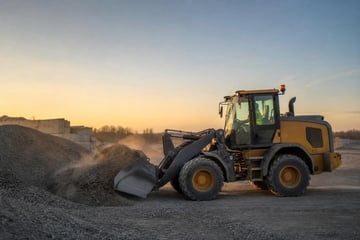
For operations needing material handling or general farm support, we also offer Skid Steers financing and Wheel Loaders financing. These machines move feed, clear pens, load grain, and maintain roads. Because they serve multiple roles across crop and livestock operations, they are some of the most frequently financed used assets outside of traditional field equipment.
The equipment must be intended for business use, and the seller can be a dealership, auction house, or private party. We do not require the seller to be a licensed dealer, which opens up auction and private-sale inventory that might be priced below retail. The key is that the equipment has a verifiable serial number, a clear title, and a reasonable remaining useful life.
How Used Agriculture Equipment Financing Works
The financing process for used farm equipment is straightforward, but it differs from unsecured business loans because the equipment itself secures the transaction. That collateral structure reduces risk for the lender, which typically translates to more competitive rates and longer terms than an unsecured line of credit would offer.
Loan amounts range from $5,000 up to $5 million, with repayment terms that generally run from two to seven years depending on the equipment’s age, condition, and expected useful life. A used tractor with 2,000 hours and strong resale value might qualify for a five-year term, while an older machine with higher hours might be limited to three years.
Rates vary by credit profile, equipment age, and term length. Because the collateral is physical and depreciating, lenders weigh the borrower’s creditworthiness alongside an appraisal or valuation of the machine. Providing a recent inspection, maintenance records, or a dealer appraisal can strengthen the file and improve the structure of the offer.
Same-day approvals are possible when the application is complete and the equipment documentation is clear. Once approved, funds are typically sent directly to the seller or, in the case of a private party, handled through an escrow or title process that protects both buyer and seller.
By the Numbers: Provide Capital finances used agricultural equipment from $5,000 up to $5 million. Terms generally range from two to seven years, and same-day approvals are possible when documentation is complete.
New vs. Used Agricultural Equipment Financing
The decision between new and used financing affects your payment, term options, and tax strategy. New equipment often supports longer terms—sometimes seven to ten years—because the collateral has a longer expected life and stronger resale value. Used equipment usually commands slightly shorter terms and may require a larger down payment if the machine is more than ten years old or has high hours.
However, the lower acquisition cost of used equipment means your total interest expense over the life of the loan is often smaller, even if the rate is marginally higher. That is the math that drives many experienced operators toward late-model used machines with documented service histories. According to WSJ farm equipment financing analysis, repayment terms for farm equipment loans typically range from one to ten years, with the equipment itself securing the loan.
The table below summarizes the typical trade-offs:
| Factor | New Equipment Financing | Used Equipment Financing |
|---|---|---|
| Purchase Price | Higher; full current model year cost | Lower; depreciation absorbed by first owner |
| Loan Term | Up to 7–10 years | Typically 2–7 years |
| Down Payment | Often 0–10% | Often 10–20% for older machines |
| Rate Structure | Rates vary by credit profile, equipment age and term | Rates vary by credit profile, equipment age and term |
| Availability | Subject to manufacturer lead times | Immediate; auction, dealer, or private party |
| Depreciation Hit | Steepest in years 1–3 | Already absorbed by prior owner |
Neither choice is universally better. A new machine with a full warranty makes sense for a high-hour operation where downtime is expensive. A three-year-old combine with 500 separator hours can deliver 90 percent of the productivity at 60 percent of the cost, which is why the used market remains active even when credit is tight.
Lease vs. Loan for Used Farm Equipment
Some farmers consider leasing used equipment to preserve capital and avoid obsolescence. A true lease—where you do not take ownership at the end—can lower monthly outflows and may offer tax advantages, though the exact treatment depends on whether the lease is classified as an operating lease or a finance lease under current accounting standards.
An equipment loan, by contrast, builds equity. You own the machine outright at the end of the term, and you can claim depreciation and any applicable first-year expensing. For used equipment that still has a long service life ahead of it, a loan is often the better fit because the residual value at the end of financing is real—you can trade it, sell it, or continue operating it without a balloon payment.
Leasing used equipment is less common than leasing new, largely because the lessor must estimate residual value on a machine that has already depreciated. When it is available, it tends to be through captive finance arms at major dealers. Independent financing through an equipment loan is usually the more flexible path for auction or private-party purchases.
What It Takes to Qualify
Qualification for used agriculture equipment financing hinges on three factors: the borrower’s credit and financial history, the characteristics of the equipment, and the structure of the deal.
Credit history matters, but a perfect score is not required. Lenders look at your track record of managing debt, any past delinquencies, and your overall debt-service coverage. If your farm has consistent revenue and manageable existing obligations, you can often qualify even if your personal credit has a few blemishes.
Time in business also plays a role. Farms that have been operating for two or more years typically have an easier time documenting revenue and proving cash flow. That said, we do work with newer operations when the borrower has relevant industry experience and the equipment generates identifiable income.
The equipment itself is scrutinized. Lenders prefer machines that are less than fifteen years old, with fewer than 5,000 to 8,000 hours depending on category. A well-maintained tractor with 4,000 hours and a clean service log is often viewed more favorably than a low-hour machine with no records. Serial numbers must match titles, and there cannot be outstanding liens.
Documentation generally includes a purchase agreement or invoice, proof of insurance naming the lender as loss payee, a current driver’s license or business registration, and recent bank statements. For larger requests—approaching $1 million or more—tax returns and a current balance sheet help demonstrate repayment capacity.
For farms exploring government-backed options, SBA loan programs offer another capital path, though they often require more documentation and longer timelines than equipment-secured financing. If you have found the machine you need and want to move quickly, you can see what you qualify for by starting an application. A same-day decision is possible when your file is complete and the equipment is easy to value.
See what you qualify for
The equipment itself secures the financing, which keeps rates competitive. Checking your options takes minutes.
Check Your OptionsTax Treatment and Section 179 for the 2026 Tax Year
The tax treatment of financed used farm equipment can significantly affect your after-tax cost. Under the tax code, used equipment qualifies for the same depreciation methods as new, including bonus depreciation and Section 179 first-year expensing, provided the equipment is new to you and is placed in service during the tax year.
For the 2026 tax year, Section 179 limits and phase-out thresholds apply. Because these figures are adjusted annually for inflation and may be subject to legislative change, you should consult a CPA to confirm the exact 2026 limit before making a purchase decision. Used equipment must meet the same original use and business-use requirements as new to qualify for immediate expensing.
If you finance the equipment with a loan, you can generally deduct the interest portion of your payments as a business expense while also claiming depreciation on the asset itself. That dual benefit—interest deduction plus depreciation—can make financing more attractive than paying cash, because it preserves liquidity while still delivering tax relief. A CPA familiar with farm tax rules can model the exact benefit for your operation.
Common Mistakes When Financing Used Farm Equipment
One of the most expensive errors is failing to inspect before you buy. Unlike new equipment with a factory warranty, a used machine’s condition is everything. Bring a mechanic, review the service history, and run the diagnostics if the seller allows it. A $500 inspection can save you from a $15,000 repair bill.
Another mistake is choosing a term that is too long for the machine’s remaining life. Stretching a seven-year loan on a twelve-year-old tractor might lower the monthly payment, but you risk owing more than the machine is worth when it needs replacement. Match the term to the realistic service life left in the asset.
Some borrowers also overlook insurance requirements. Lenders require full coverage naming them as loss payee, and premiums on older equipment can vary. Get an insurance quote before you commit to the loan so the total monthly cost is clear.
Finally, do not assume that dealer financing is your only option. Shopping an independent lender can often yield faster turnaround and more flexible structures, especially if you are buying at auction or from a private seller who needs payment within days.
Pro Tip: Before bidding at auction, line up your financing approval. Many auction houses require payment within 24 to 48 hours, and a pre-approval letter lets you bid with a hard ceiling rather than guessing what a lender will fund later.
Industry-Specific Equipment Needs
Row-crop operations typically finance the highest-dollar used equipment: combines, planters, and large tractors. Because the planting and harvest windows are narrow, reliability is paramount. Many corn and soybean operators target machines that are three to five years old, which balances modern precision-ag features with meaningful depreciation savings.
Livestock and dairy farms finance a different mix. Feed mixers, manure spreaders, balers, and handling equipment see constant use but lower per-unit prices. For these operations, the ability to finance multiple pieces of used equipment under one approval—say, a baler and a wrapper together—can simplify bookkeeping and reduce origination costs.
Specialty crop growers—vineyards, orchards, and vegetable operations—often need narrow-profile tractors, sprayers, and harvesting platforms. This equipment is harder to find used because production volumes are lower, so when a suitable machine appears, having pre-approved financing lets you act before another buyer moves.
Across all sectors, Agriculture equipment financing from Provide Capital is structured around the realities of seasonal income. Payments can often be aligned with harvest cycles or deferred to match your cash-flow calendar.
What Documentation You Need at Closing
To close quickly, gather the following before you apply: a signed purchase agreement or bill of sale with the seller’s contact information, the equipment serial number and year, photos showing general condition, proof of insurance with the lender listed as loss payee, and your most recent three months of business bank statements.
For requests above $250,000, be prepared to provide two years of tax returns and a current profit-and-loss statement. If the equipment is being purchased at auction, a copy of the auction terms and the auctioneer’s wire instructions will also be needed.
Private-party sales require extra attention to title transfer. The seller must provide a clear title, and any existing lien must be satisfied before or at closing. Provide Capital handles the payoff and title transfer as part of the funding process, which protects you from inheriting someone else’s debt.
What Happens After Approval
Once your application is approved, the closing process typically takes 24 to 72 hours. The lender verifies final equipment details, confirms insurance is bound, and prepares the loan documents. After you sign and return them, funds are wired directly to the seller or auction house.
Your first payment is usually due 30 to 45 days after funding, though seasonal deferrals may be available for ag clients who need to align the first payment with crop revenue. Throughout the term, you can access your account online to review balances, request payoff quotes, or explore early payment options.
Ready to move forward?
More than 10,000 businesses have financed equipment with Provide Capital. See what you qualify for today.
Get StartedFrequently Asked Questions
Can I finance used farm equipment from a private seller?
Yes. Provide Capital finances used agricultural equipment purchased from dealerships, auctions, and private parties. The equipment must have a clear title, a verifiable serial number, and a reasonable remaining useful life.
Does used equipment qualify for Section 179?
Yes, used equipment qualifies for Section 179 expensing if it is new to your business and placed in service during the 2026 tax year. Because annual limits adjust, confirm the current-year ceiling with your CPA before purchasing.
How old can the equipment be?
Most lenders prefer used agricultural equipment that is less than fifteen years old, with hour counts that align with the machine’s category. A well-documented maintenance history can improve the chances of approval for older assets.
What credit score do I need?
There is no fixed minimum. Approval depends on your overall credit profile, time in business, cash flow, and the equipment’s value. Stronger files receive better rates and longer terms, but we work with a range of credit histories.
How fast can I get funded?
Same-day approvals are possible when the application and equipment documentation are complete. After approval, funding typically occurs within 24 to 72 hours.
Is a down payment required?
Down payment requirements vary based on the equipment age, your credit profile, and the loan amount. Newer used equipment may qualify with little or no money down, while older machines often require 10 to 20 percent.
Can I finance multiple pieces of used equipment at once?
Yes. You can bundle several used machines into a single financing arrangement, which simplifies payments and may reduce total origination costs compared to separate transactions.
What happens if the equipment breaks down?
Because the equipment is collateral, you are required to maintain insurance covering damage or loss. Repairs are your responsibility as the owner, which is why a pre-purchase inspection is strongly recommended.
Take the Next Step
Used agriculture equipment financing is a practical tool for growing or maintaining an operation without sacrificing liquidity. Whether you are replacing a worn-out combine before harvest or adding a second tractor to expand acreage, the right financing structure keeps your cash reserves intact and your equipment turning.
If you have a specific machine in mind, get a same-day decision on your equipment by applying now. Our team understands agricultural cycles and can structure terms that match your farm’s cash flow.
Disclaimer: The information provided in this article is for general educational purposes only and is not financial, legal, or tax advice. Funding terms, qualifications, and product availability may vary and are subject to change without notice. Provide Capital does not guarantee approval, rates, or specific outcomes. For personalized information about your business funding options, contact our team directly.