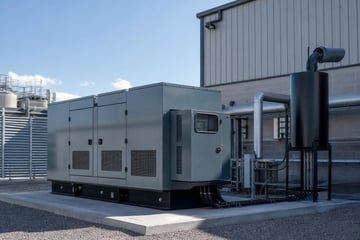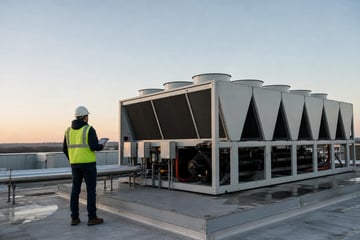
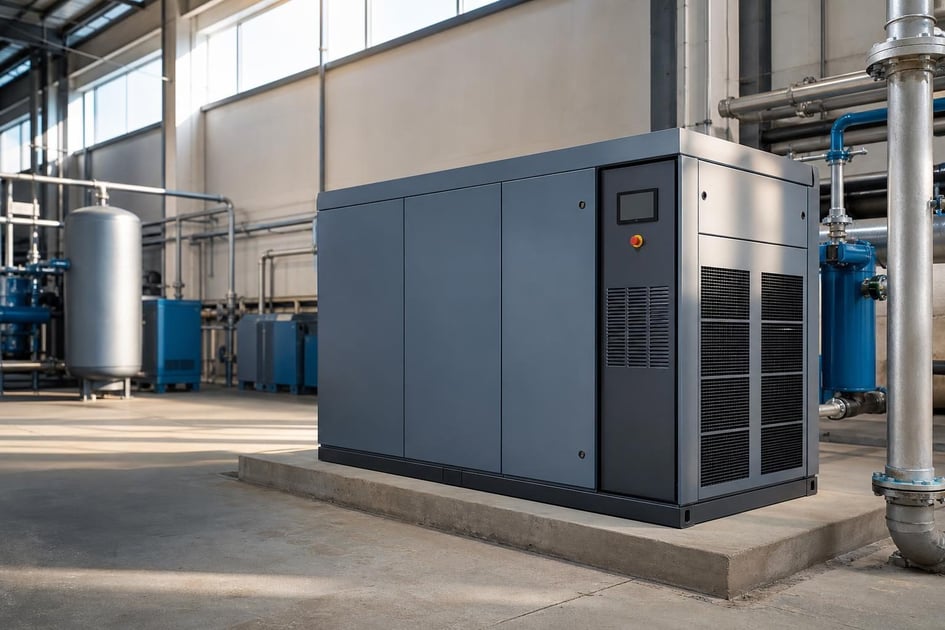
An air compressor is not a luxury for most small businesses—it is the engine behind pneumatic tools, spray systems, and production lines. Whether you are replacing a failing 20-gallon unit in an auto shop or adding a 200-horsepower rotary screw system to a manufacturing floor, the question is rarely whether you need the machine, but how to pay for it without draining operating cash. Air compressor financing for small business spreads the cost over time while the equipment starts earning its keep immediately. This guide explains what to expect from the application process through the first payment, including how lenders evaluate your deal, what documentation you need, and how the choice between a loan and a lease changes your tax position in 2026.
When you are ready to move, see what you qualify for and keep your shop running.
Why Air Compressors Matter for Small Business Operations
Compressed air powers a wider range of tools than most owners realize. In construction, it drives nail guns, impact wrenches, and jackhammers. In manufacturing, it runs conveyor systems, robotic arms, and precision painting rigs. Dental practices use oil-free compressors for patient chairs, while restaurants rely on them for beverage carbonation and kitchen ventilation controls. The common thread is that when a compressor fails, work stops. A broken unit can idle a crew of five or shut down an assembly line. Because downtime costs more than the monthly payment on a replacement, financing the purchase preserves cash flow and gets the business back to full output quickly. The equipment itself serves as collateral, which means you do not need to pledge real estate or other assets to secure the deal. According to U.S. Census Bureau data, small businesses in the construction and manufacturing sectors continue to account for a significant share of private equipment investment, with many owner-operators financing rather than purchasing outright to preserve liquidity.
Get a fast decision on your equipment
Applying takes just a few minutes, and decisions can come as soon as the same day.
Start Your ApplicationNew vs. Used Air Compressor Financing
When New Makes Sense
A new rotary screw compressor typically arrives with a manufacturer warranty of three to five years, predictable maintenance intervals, and lower energy consumption thanks to modern variable-speed drive technology. For a shop running three shifts, the efficiency gain can offset the higher upfront cost within the first two years. Lenders also view new equipment as stronger collateral, which can improve approval odds and extend the maximum term. If you are financing through a program like Air Compressor financing, a new unit often qualifies for the longest terms available because the residual value is easier to forecast.
When Used is the Smarter Buy
Used compressors sell for 30 to 60 percent less than new ones, depending on hours, brand, and service history. For a second location or an additional facility, that discount can mean the difference between a 10-horsepower unit and a 25-horsepower unit for the same monthly outlay. The trade-off is shorter available terms—often 36 to 48 months instead of 60—and a larger down payment requirement if the unit is more than seven years old. Before you buy used, verify the serial number with the manufacturer to confirm service records and remaining warranty. A compressor with 8,000 hours and no maintenance history is a gamble, even at a steep discount.
Key Insight: A rotary screw compressor running at full load consumes roughly 7 to 9 kW per 10 horsepower. On a three-shift operation at $0.12 per kWh, a 50-horsepower unit can add $3,000 to $4,000 per month to your electric bill. Financing a newer, more efficient model often costs less per month than the energy savings it generates.
Equipment Loan vs. Equipment Lease for Air Compressors
The best structure depends on how long you plan to keep the compressor and whether you want to own it at the end.
Loan: You own the compressor from day one. You claim depreciation and any available Section 179 deduction for the 2026 tax year. At the end of the term, you hold a clear asset with residual value.
Lease: You make monthly payments for a set term—often 24 to 60 months—and either return the equipment, buy it for fair market value, or extend the lease. Operating leases keep the debt off your balance sheet, which some owners prefer for covenant compliance, but you do not own the asset unless you exercise a purchase option.
| Feature | Equipment Loan | Equipment Lease |
|---|---|---|
| Ownership | Immediate | At end if purchase option exercised |
| Monthly Payment | Usually higher | Usually lower |
| Tax Treatment (2026) | Section 179 and depreciation | Deduct payments as operating expense |
| Balance Sheet Impact | Asset and liability recorded | May stay off balance sheet |
| Best For | Long-term use, ownership goals | Short-term projects, frequent upgrades |
| End of Term | You own the compressor | Return, renew, or buy |
For a permanent shop location where the compressor will run for ten years, a loan is usually the stronger financial move. For a contractor taking on a two-year infrastructure project, a lease preserves flexibility.
What Determines Your Financing Terms
Lenders evaluate air compressor deals on three main factors.
Credit Profile
Your personal and business credit scores influence both approval and the rate range you are offered. A strong credit profile—generally a personal score above 680 and clean business trade lines—opens access to longer terms and lower monthly payments. That does not mean a lower score kills the deal. Because the compressor is collateral, lenders can approve files with credit challenges by adjusting the term, requiring a down payment of 10 to 20 percent, or shortening the equipment age they will accept. Rates vary by credit profile, equipment age and term, so the exact payment on a $25,000 compressor will differ from one applicant to the next.
Equipment Age and Type
A new Ingersoll Rand or Atlas Copco rotary screw unit is the easiest collateral to finance. Used piston compressors over ten years old are harder because the resale market is thinner. Lenders also look at whether the compressor is for a mobile service truck or a fixed industrial installation. Mobile equipment sees harder use and higher theft risk, which can tighten terms.
Time in Business
Most equipment lenders prefer two years in business. If you have been operating for a shorter period, a larger down payment and strong personal credit can still open doors. The Small Business Administration emphasizes that equipment loans remain one of the most accessible forms of financing for established businesses because the collateral itself reduces the lender's exposure. If you have been operating for five years and can show tax returns or bank statements proving consistent revenue, you are likely to see more competitive structures.
By the Numbers: Provide Capital finances new and used business equipment from $5,000 to $5 million. A mid-size 25-horsepower rotary screw compressor with dryer and tank typically falls in the $15,000 to $35,000 range, while large industrial systems can exceed $100,000. Same-day approvals are possible once your documentation is complete.
Tax Treatment for 2026
For the 2026 tax year, the IRS allows businesses to expense qualifying equipment under Section 179, subject to an annual limit that adjusts for inflation. As of 2026, the exact cap and phase-out threshold have been updated from prior years. Rather than quote a number that may change with final IRS guidance, the safe approach is to speak with your CPA about the 2026 Section 179 limit and whether your compressor purchase qualifies for the full deduction in year one.
If you finance the compressor with a loan, you can still claim Section 179 on the full purchase price even though you have not paid the full cash amount upfront. That creates a powerful cash-flow advantage: you deduct the equipment in 2026 while paying for it over three to five years. With a true operating lease, you do not depreciate the asset; instead, you deduct the lease payments as a business expense. The distinction matters if you are trying to maximize a first-year deduction versus smooth expenses evenly across multiple years. Your CPA can model both scenarios against your expected 2026 taxable income.
See what you qualify for
The equipment itself secures the financing, which keeps rates competitive. Checking your options takes minutes.
Check Your OptionsDocumentation You Will Need
A smooth approval requires three categories of paperwork.
First, identity and business verification: a driver's license, articles of incorporation or LLC operating agreement, and a voided business check.
Second, financial evidence: the last three months of business bank statements, the most recent year of tax returns or an interim financial statement, and sometimes accounts receivable aging if your business carries large outstanding invoices.
Third, equipment detail: a quote or invoice from the seller showing the make, model, year, serial number, and purchase price. If you are buying at auction or from a private party, the lender may require an independent appraisal for units over $50,000.
Having these documents ready before you apply is the single biggest factor in turning a same-day approval into a same-day funding. If the lender has to chase paperwork, the clock resets every time. If you have a quote in hand and want to see how the numbers look, get a same-day decision on your equipment without a long application process.
Common Mistakes Buyers Make
One frequent error is sizing the compressor based on price rather than demand. A unit too small runs continuously at max capacity, burns out faster, and costs more in energy. A unit too large cycles too often, creating moisture problems in the tank and wasting power. Work with a compressed-air specialist to calculate your actual CFM and PSI requirements before you shop.
Another mistake is ignoring installation costs. A 200-horsepower unit may require a reinforced concrete pad, new electrical service, and upgraded ventilation. Those soft costs add 10 to 25 percent to the project and are not always rolled into the equipment financing. Ask your lender whether installation, freight, and rigging can be included in the lease or loan.
Finally, do not assume all compressors qualify for the same term. A used piston compressor from a closing shop carries more risk than a new rotary screw from an authorized dealer. The lender sets the term based on collateral life, not just your credit.
Pro Tip: Request a CFM audit from your equipment dealer before you buy. Many shops run at only 60 to 70 percent of installed capacity because they oversized years ago and never adjusted for actual leak rates and tool demand. Right-sizing can drop your horsepower requirement by one full size bracket, which lowers both the purchase price and your monthly energy bill.
Industry-Specific Use Cases
The right compressor and financing structure vary by trade.
Construction
General contractors and specialty trades use towable diesel compressors for remote sites where grid power is unavailable. These units take abuse, retain value well, and typically finance over 36 to 48 months. If your backlog is heavy on municipal infrastructure work, a loan lets you depreciate the asset while the contract revenue covers the payment. For Construction equipment financing, lenders understand seasonal cash flow and can structure skip payments for winter months.
Manufacturing
A fabrication shop or food-packaging plant usually needs a fixed rotary screw system with integrated air treatment. Downtime is expensive here—often hundreds of dollars per hour in lost output—so reliability matters more than upfront savings. Forbes reporting on industrial equipment trends has noted that energy efficiency upgrades are now the primary driver of compressor replacement demand among small and mid-size manufacturers. Manufacturers with strong financials can finance up to $5 million in equipment, meaning the compressor can be bundled with CNC machines, conveyors, and packaging lines under a single facility. Manufacturing equipment financing often includes soft costs like installation, which is critical when the compressor must be piped across a plant floor.
Automotive and Fleet
Auto repair shops run air tools eight to ten hours a day. A 60-gallon vertical tank with a 5-horsepower piston compressor might suffice for a two-bay shop, but a collision center with multiple frame machines and paint booths needs a 15-horsepower or larger rotary screw unit. Because automotive equipment wears hard, many owners prefer a loan with a three-year term to match the payoff to the equipment's productive life.
Agriculture
Farms use compressors for everything from tire inflation to powering pneumatic grain-handling equipment. Seasonal income makes cash purchases difficult in spring when planting expenses peak. Financing spreads the cost across the year, aligning payments with harvest revenue. A used compressor from a dealership with a strong agricultural presence often carries enough residual value to qualify for competitive terms.
What Happens After You Apply
Once you submit your application and equipment quote, the lender reviews credit, verifies time in business, and checks the collateral value. For deals under $150,000, this can be completed in hours. For larger industrial systems or complex credit profiles, expect one to two business days. After approval, you receive a term sheet showing the payment, term, and any down payment required. You sign electronically, the lender pays the vendor or private seller directly, and you take delivery. The first payment is typically due 30 to 45 days after funding, giving you a short window to put the equipment to work before the note comes due. Ready to see what the numbers look like? See what you qualify for with a quick application.
Ready to move forward?
More than 10,000 businesses have financed equipment with Provide Capital. See what you qualify for today.
Get StartedFrequently Asked Questions
Can I finance a used air compressor?
Yes. Used compressors are common collateral. Lenders will look at age, hours, brand, and service history. Expect slightly shorter terms than new equipment.
What credit score do I need?
There is no hard cutoff. Strong credit above 680 opens the best structures, but approvals are possible with lower scores when the equipment value and cash flow support the deal. Rates vary by credit profile, equipment age and term.
How long can I finance an air compressor?
Terms typically range from 24 to 60 months. New equipment from authorized dealers usually qualifies for the longest terms. Used or high-hour units may be limited to 36 or 48 months.
Can I deduct a financed compressor on my 2026 taxes?
If you use a loan, you generally can claim Section 179 expensing and depreciation starting in the 2026 tax year even though you are making payments over time. Consult your CPA for the exact 2026 limits and how they apply to your situation.
Do I need a down payment?
Not always. Well-qualified buyers can secure 100 percent financing for new equipment. Used equipment, larger transactions, or credit challenges may require 10 to 20 percent down.
Can I include installation and freight in the financing?
Often yes, especially with industrial and manufacturing packages. Ask your lender upfront whether soft costs can be rolled into the agreement.
What if I need the compressor for a short-term project?
An operating lease may be the better fit. You make payments for the project duration and either return the equipment or purchase it at fair market value when the job ends.
How fast can I get funded?
Same-day approvals are possible when your documentation is complete. Funding usually follows within 24 to 48 hours after you sign the term sheet.
Next Steps
Financing an air compressor is straightforward when you know what lenders evaluate and how to structure the deal for your tax situation. Start by gathering your equipment quote, your last three months of bank statements, and your most recent tax return. Then talk to a specialist about your specific machine, whether it is a shop-grade piston unit or a plant-wide rotary screw system. The right program preserves your cash, gets you running quickly, and aligns your payments with the revenue the compressor helps generate. If you are ready to move forward, talk to a specialist about your specific machine and see what you qualify for.
Disclaimer: The information provided in this article is for general educational purposes only and is not financial, legal, or tax advice. Funding terms, qualifications, and product availability may vary and are subject to change without notice. Provide Capital does not guarantee approval, rates, or specific outcomes. For personalized information about your business funding options, contact our team directly.