
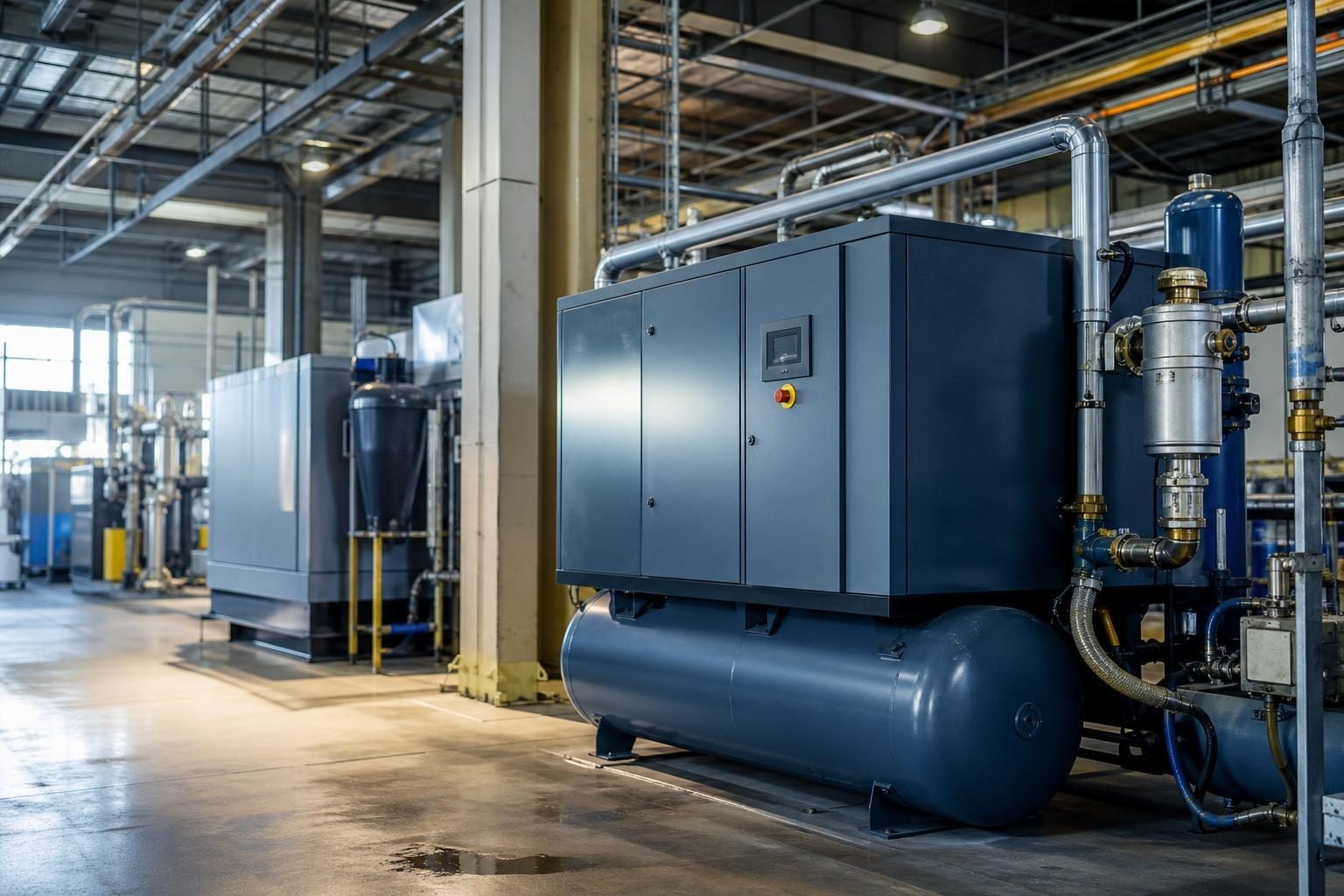
What It Takes to Qualify for Air Compressor Financing
If you are buying an air compressor for your business, financing is usually available if you have been operating for at least a year, generate monthly revenue above $10,000, and have a credit profile that shows you manage debt. The equipment itself acts as collateral, which means the lender can secure the loan against the compressor rather than relying solely on your business assets or real estate. That structure is why Air Compressor financing is accessible to owner-operators who might not qualify for an unsecured bank line.
Before you shop, you should know that rates vary by credit profile, equipment age and term. A borrower with strong credit financing a new unit over 36 months will see different terms than a borrower with challenged credit financing a 10-year-old unit over 60 months. Same-day approvals are possible, but they depend on how complete your documentation is when you apply. Equipment-backed financing is a staple of small-business capital access, and The Wall Street Journal regularly reports on how owner-operators use collateral to preserve cash flow. If you want to see what financing you qualify for on that compressor, the application takes only a few minutes and does not commit you to a specific unit until you are ready.
Key Insight: Lenders often value the compressor’s resale market more heavily than the borrower’s industry. A rotary screw compressor from a major brand with a broad secondary market is easier to finance than a niche specialty unit, even for a borrower in a higher-risk sector.
Credit Profile
Most equipment lenders look for a personal credit score in the mid-600s or higher, but that is not a rigid cutoff. If your score is lower, you can still qualify by offering a larger down payment, choosing a shorter term, or selecting newer equipment. Recent bankruptcies, open tax liens, or accounts in active collections will usually require explanation and may push you toward a larger down payment. The lender is primarily concerned with whether your cash flow can cover the new payment, not just the number itself.
Time in Business
Two years in business is the standard benchmark, but many lenders will work with startups that have been open for as little as one year if revenue is consistent. If you have been operating for less than a year, you may still qualify with a strong personal credit score and a personal guaranty. Some lenders also consider time in the industry: if you ran a previous shop for a decade and just opened this entity six months ago, that history matters.
Revenue and Debt Service
Lenders typically want to see that your existing debt payments do not consume more than half of your monthly revenue. If you are already heavily leveraged, adding a compressor payment may trigger a request for a larger down payment or a co-signer. Bank statements from the last three to six months are the usual proof of revenue. If your business is seasonal, be prepared to explain the cycle; a landscaping company buying a compressor in October may need to show cash reserves to cover winter payments.
Already have a machine in mind?
Provide Capital finances new and used equipment from $5,000 to $5 million, with same-day decisions possible.
Apply NowNew vs. Used: How Equipment Age Affects Qualification
The age and condition of the compressor you choose directly affect your down payment, term length, and rate. New equipment is easier to finance because the collateral value is predictable. Used equipment can save you thousands upfront but may require a larger down payment or a shorter term because the lender’s collateral risk rises as the machine ages.
Pro Tip: A used compressor with under 5,000 hours and a documented maintenance history often qualifies for the same terms as a new unit. Conversely, a high-hour machine with no service records may require 20 percent down or more, even if it runs well.
| Factor | New Air Compressor | Used Air Compressor |
|---|---|---|
| Down payment | Often 0–10% | Typically 10–20% |
| Maximum term | Up to 60–72 months | Usually 36–60 months |
| Rate structure | Lower rates vary by credit profile, equipment age and term | Higher rates vary by credit profile, equipment age and term |
| Collateral value | High; predictable resale | Depends on hours, brand, condition |
| Documentation needed | Invoice or quote | Invoice, photos, serial number, maintenance records |
If you are weighing a used purchase, ask the seller for the hour meter reading, the last service date, and the compressor’s serial number before you apply. Lenders will ask for these details to verify collateral value. Industrial Air Compressor financing covers both new and used units, but the documentation requirements differ.
Lease or Loan: Which Structure Fits Your Shop
An equipment loan means you own the compressor outright once the balance is paid, and you claim the depreciation or Section 179 deduction. A lease—specifically a $1 buyout or 10% purchase option lease—lets you spread the cost with lower monthly payments, but the tax treatment and ownership transfer differ. A true tax lease, where the lessor retains ownership, may offer the lowest monthly payment but does not let you claim the Section 179 deduction.
When to Choose a Loan
Choose a loan if you plan to keep the compressor for its full useful life, if you want to build equity in the asset, and if you want to claim the 2026 Section 179 deduction. Loans are also simpler if you intend to modify the compressor or move it between locations, since you own it from day one.
When to Consider a Lease
A lease makes sense if you need the lowest possible monthly payment to preserve cash flow, if you expect to upgrade to a larger compressor within three to four years, or if you want to avoid a large down payment. At the end of a $1 buyout lease, you pay one dollar and the title transfers to you. With a 10% purchase option lease, you can walk away, renew, or buy the unit for 10% of its original cost.
By the Numbers: A $25,000 compressor financed over 60 months might carry a monthly payment between $475 and $625 depending on credit and structure. The same unit on a 48-month fair-market-value lease could run $375 to $525 per month, but you would not own it at lease end unless you exercise the purchase option.
Tax Treatment for the 2026 Tax Year
For the 2026 tax year, Section 179 allows businesses to deduct the full purchase price of qualifying equipment, including air compressors, up to an annual limit set by the IRS. The exact dollar limit for 2026 is published in IRS guidance for the current tax year. Because inflation adjustments and legislative changes can shift the threshold, you should confirm the 2026 limit with your CPA before you file. If you finance the compressor, you can still take Section 179 on the full equipment cost even if you have not paid the balance in full.
Bonus depreciation is also available in 2026, though the percentage may differ from prior years as the Tax Cuts and Jobs Act phases down. Your CPA can tell you whether Section 179 or bonus depreciation yields the larger benefit for your specific situation. If you lease the compressor under a true tax lease, the lessor takes the depreciation, not you. That trade-off is why many owner-operators choose a loan or $1 buyout lease instead.
Key Insight: Financed equipment qualifies for Section 179 in the year it is placed in service, not the year it is paid off. If you buy a compressor in December 2026 and put it to work the same month, you deduct it on your 2026 return even though you will make payments into 2027 and beyond.
See what you qualify for
The equipment itself secures the financing, which keeps rates competitive. Checking your options takes minutes.
Check Your OptionsReal-World Cost Examples
Here is how financing looks at three common price points. These are illustrative; your actual terms will depend on credit, time in business, and the specific unit.
- Small shop compressor ($8,000): A 60-month term with 10% down might produce a monthly payment in the low $100s. This is common for auto shops and small woodworking operations.
- Mid-size rotary screw ($35,000): A 48-month term with no money down could land in the mid-$600s to low-$800s per month. Manufacturing and Construction equipment financing borrowers often land in this range.
- Large industrial system ($85,000): A 60-month term might run from the high $1,400s to low $1,800s monthly. These systems serve multiple bays or production lines and are common in heavy manufacturing.
None of these examples include specific APR or interest rate figures because rates vary by credit profile, equipment age and term. Use them to budget, then apply for a formal quote based on your actual file.
Industry-Specific Use Cases
Air compressors are not one-size-fits-all, and neither is financing. The way you use the machine affects how much you should spend and how long you should finance it. U.S. Census Bureau data shows that small businesses in manufacturing, construction, and repair services make up a large share of equipment finance volume.
Construction and Contracting
Mobile compressors on service trucks take abuse. Contractors often finance over 48 to 60 months to keep payments low during off-seasons. If you work in regions with hard winters, consider a used unit with lower depreciation risk. Construction equipment financing is built around these seasonal patterns.
Manufacturing and Fabrication
Manufacturing facilities run compressors on two or three shifts, so uptime is everything. A new rotary screw with a warranty is usually worth the premium. Finance it over 60 months to match the depreciation schedule to the machine’s productive life. Manufacturing equipment financing can cover the compressor alongside CNC machines, welders, and material handling equipment in a single package.
Automotive and Fleet Service
Auto shops need reliable air for impact wrenches, paint booths, and tire equipment. A 5-to-10-horsepower unit is standard. Because shop space is limited, vertical tank designs are popular. Finance terms of 36 to 48 months are common because the shop may outgrow the unit or want to upgrade as service volume rises.
Agriculture and Forestry
Farm shops and forestry crews use compressors for equipment repair, spraying, and pneumatic tools. These buyers often finance compressors alongside larger equipment in a bundled transaction. If you are already financing a skid steer or harvester, adding a compressor may require little additional paperwork.
Common Mistakes to Avoid
Many buyers focus only on the monthly payment and overlook the total cost of ownership. Small Business Administration resources emphasize understanding the full cost of borrowed capital before signing. Here are the errors we see most often.
- Buying too small: A compressor running at maximum capacity wears out faster and costs more in maintenance than a properly sized unit. Finance the right size from the start.
- Ignoring maintenance records on used units: Lenders may reject a used compressor with no service history, or they may cut the term and raise the down payment requirement.
- Choosing the longest term without checking prepayment penalties: A 72-month term lowers the payment but may lock you in. Ask whether you can pay the balance early without fees.
- Forgetting soft costs: Installation, piping, electrical work, and dryers add to the total project cost. Some lenders will finance these alongside the compressor; others will not. Clarify upfront.
Documentation You Will Need
Having these items ready speeds up approval and helps you avoid back-and-forth.
- Business bank statements: Last three to six months, all pages.
- Equipment quote or invoice: Must show the seller, serial number (if used), year, make, model, and price.
- Proof of business ownership: Articles of incorporation, LLC operating agreement, or partnership papers.
- Personal identification: Driver’s license or passport for each guarantor.
- Voided business check: For setting up automatic payments.
- Tax returns: One or two years, especially if you are financing above $50,000 or if your business is less than two years old.
If you are buying from a private party rather than a dealer, you may also need a bill of sale and a third-party inspection to verify condition. The lender will tell you whether this is required based on the equipment age and loan size.
What Happens After Approval
Once you are approved, the lender issues a term sheet or finance agreement. Review the payment, term, and any fees. If you accept, the lender pays the seller directly. You take delivery and begin using the compressor. Your first payment is usually due 30 to 45 days later.
During the term, the lender holds a security interest in the compressor. That means you cannot sell it without paying off the balance, but it also means you do not need to pledge unrelated business assets. If you want to get a decision on your equipment, possibly the same day, having your documentation and seller quote ready is the fastest path from application to funding.
Ready to move forward?
More than 10,000 businesses have financed equipment with Provide Capital. See what you qualify for today.
Get StartedFrequently Asked Questions
Can I finance an air compressor with bad credit?
Yes, but expect to put more money down or accept a shorter term. The equipment collateral helps, so lenders can be more flexible than they would be for an unsecured loan. A credit score below 600 usually requires 15 to 20 percent down and a maximum term of 36 to 48 months.
Do I need a down payment?
Not always. Strong credit and two-plus years in business can qualify for zero-down financing on new equipment. Used equipment and challenged credit usually require 10 to 20 percent down. The down payment reduces the lender’s collateral risk and shows you have skin in the game.
How long does approval take?
Same-day approvals are possible for deals under $150,000 with complete files. Larger transactions or deals requiring additional documentation may take 24 to 48 hours. The bottleneck is usually missing bank statements or an incomplete equipment quote.
Can I finance the installation and accessories?
Sometimes. Many lenders will finance 10 to 20 percent of the total project cost in soft costs, such as dryers, filters, piping, and installation, as long as the invoice clearly itemizes them. Standalone service contracts or extended warranties may need to be paid separately.
Is a personal guaranty required?
For most owner-operated businesses, yes. A personal guaranty means you are personally responsible if the business defaults. It is standard for transactions under $1 million. Corporations with strong balance sheets and multiple years of tax returns may occasionally qualify without one.
Can I pay off the loan early?
Most equipment loans allow early payoff, but some charge a prepayment penalty or keep a portion of the remaining interest. Ask your lender for the specific policy before you sign. If you expect a large seasonal cash influx, a loan with no prepayment penalty is worth seeking out.
What happens if I sell the business?
The loan stays with the compressor. You can either pay it off at closing or, with the lender’s consent, have the buyer assume the financing. Assumption is not guaranteed; the buyer must qualify on their own credit and financials.
Does the compressor have to be from a dealer?
No. Private-party sales, auctions, and online marketplaces are all financeable. The lender will verify the serial number, condition, and seller ownership. A third-party inspection may be required for used units sold by individuals.
Your Next Step
If you have a quote in hand or you are still shopping, the next step is to find out what terms your business actually qualifies for. The application takes only a few minutes, does not lock you into a specific unit, and can produce a decision quickly. Start an application in a few minutes and find out how affordable that compressor can be.
Disclaimer: The information provided in this article is for general educational purposes only and is not financial, legal, or tax advice. Funding terms, qualifications, and product availability may vary and are subject to change without notice. Provide Capital does not guarantee approval, rates, or specific outcomes. For personalized information about your business funding options, contact our team directly.
