
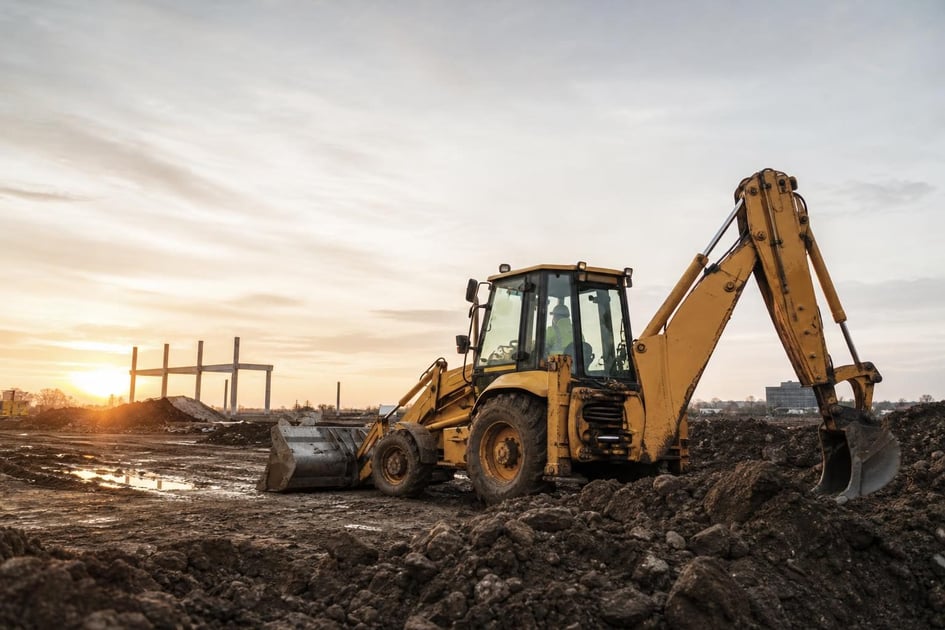
What Backhoe Financing Actually Costs
Most owner-operators who call about backhoe financing want one number. The honest answer is that rates vary by credit profile, equipment age and term. A new 4WD extendahoe from a major manufacturer might carry different terms than a ten-year-old two-wheel-drive unit with 4,000 hours.
New backhoes typically run from $85,000 to $180,000 depending on size, brand, and attachments. Used machines start around $25,000 for older, lower-hour units and climb to $90,000 for late-model, well-maintained equipment. Backhoes financing from Provide Capital covers both ends of that range, from $5,000 up to $5 million, with the equipment itself serving as collateral. That collateral structure is what keeps rates competitive compared to unsecured borrowing.
If you already have a backhoe picked out, you can start an application in a few minutes and see what terms are available.
Monthly payments on a $100,000 backhoe might range from the high hundreds to the low thousands depending on your credit tier, down payment, and whether you choose a 36-, 48-, or 60-month term. A longer term lowers the monthly obligation but increases total interest paid over the life of the contract. Shorter terms save money overall but require stronger cash flow.
Already have a machine in mind?
Provide Capital finances new and used equipment from $5,000 to $5 million, with same-day decisions possible.
Apply NowWhat Shapes Your Monthly Payment
Credit Profile and Time in Business
Lenders look at personal credit for owner-operators because the business and the owner are often financially intertwined. A score above 700 generally opens the door to the most favorable structures, but financing is available across a broader range. Time in business matters too. An excavation company with three years of tax returns and bank statements can document revenue stability in ways a newer operator cannot. That said, we do not require a minimum time in business for every deal; the overall profile determines what is possible.
Equipment Age and Hours
A backhoe with 1,500 hours and a recent service history presents less risk than a machine with 6,000 hours and incomplete maintenance records. Lenders account for that risk in the rate and the advance rate—the percentage of the equipment cost they will finance. New equipment often qualifies for 100 percent financing plus soft costs. Used equipment may require 10 to 20 percent down to align the loan balance with the machine's expected residual value.
Term Length Trade-offs
Most equipment finance agreements for backhoes run 36 to 72 months. A 36-month term on a $90,000 note will carry a higher monthly payment but build equity faster. A 60-month term eases monthly cash flow but leaves you paying on the machine longer, which matters if you plan to trade it before the note matures. Match the term to the equipment's useful life: financing a high-hour used machine over 72 months rarely makes sense because repair bills and loan payments can overlap in the final years.
Key Insight: A backhoe financed over a term longer than its expected useful life creates a negative equity trap. If the machine needs major repairs before the note is paid, you still owe the balance while the equipment's market value has dropped below the payoff. Lenders know this, which is why advance rates drop and rates rise on older units.
Lease vs. Loan: A Side-by-Side Look
Some buyers assume a lease is automatically cheaper. It is not always. An equipment finance agreement, or EFA, functions like a loan: you own the backhoe, build equity, and can sell or trade it at any time. A true lease, sometimes called a fair market value lease, gives you lower monthly payments but no automatic ownership at the end. You either return the machine, buy it at fair market value, or renew the lease.
The right structure depends on how long you plan to keep the backhoe and whether you want the depreciation on your books. If you run a utility contractor crew that cycles equipment every four years to avoid downtime, a lease can make sense. If you are a site developer who runs machines until the frame cracks, an EFA or traditional loan is usually the better path.
| Feature | Equipment Finance Agreement (EFA) | True Lease (FMV) |
|---|---|---|
| Ownership at end | Yes, after final payment | No; purchase option at FMV |
| Monthly payment | Higher | Lower |
| Depreciation | Claimed by you | Claimed by lessor |
| Early payoff | Yes, with stated residual | Restricted or penalized |
| Best for | Long-term owners | Short-term or high-turnover fleets |
Before you sign, ask whether the contract is a $1 buyout lease, an EFA, or an FMV lease. The paperwork language matters for your balance sheet and your tax return.
Tax Treatment for 2026
For tax year 2026, Section 179 allows businesses to deduct the full purchase price of qualifying equipment in the first year, subject to an annual limit adjusted by the IRS. The exact dollar cap for 2026 is set by inflation indexing; consult your CPA to confirm the current-year limit before you structure a deal. Bonus depreciation may also apply to new and used backhoes placed in service during 2026, though the percentage has been phasing down from prior years. Your accountant can model whether Section 179, bonus depreciation, or straight-line MACRS delivers the lowest tax liability for your specific situation.
Because the backhoe itself secures the financing, the interest portion of your payments is generally deductible as a business expense. Principal repayment is not deductible, but the depreciation or Section 179 deduction on the equipment itself often offsets the after-tax cost significantly. Never choose a financing structure solely for tax reasons; the math has to work on a pre-tax basis first. Once it does, the tax treatment sweetens the deal.
Ready to move on a machine? Get a decision on your equipment, possibly the same day, with no obligation to proceed.
Qualification Criteria in Detail
Provide Capital finances backhoes for businesses nationwide, including operators in construction, landscaping, utilities, agriculture, and forestry. The equipment itself is the collateral, which means the underwriting focuses on the machine's value and your ability to service the debt, not just your credit score alone. SBA guidance on equipment loans emphasizes matching term length to equipment life, a principle we apply to every backhoe deal we review.
Documentation You'll Need
Most deals require a completed application, a copy of the equipment quote or invoice, and your most recent business bank statements. For larger requests or newer businesses, two years of tax returns and a current profit-and-loss statement may be requested. If you are buying from a private party rather than a dealer, the lender will need proof of clear title and may require an independent appraisal.
What Happens After You Apply
After you submit an application, underwriting reviews the credit profile, verifies the equipment details, and checks comparable sales to confirm the collateral value. Same-day approvals are possible when the file is complete and the equipment is straightforward. Once approved, you receive a term sheet outlining the rate, payment, and any conditions. After you accept, funds are typically sent directly to the seller or, in private-party transactions, handled through an escrow process to protect both sides.
Pro Tip: If you are buying a used backhoe from a private seller, order your own fluid analysis and independent inspection before the lender requires it. A $300 inspection can save you from financing a machine with a cracked transmission or contaminated hydraulic oil that shows up two months into the note.
New vs. Used Backhoes: Financing Considerations
New backhoes come with manufacturer warranties, known maintenance histories, and the latest emissions and efficiency standards. They also depreciate steeply in the first 24 months. Financing a new machine often means 100 percent financing, competitive rates, and a term that aligns with the warranty period. The downside is the total dollar outlay: even with strong terms, you are financing a larger amount.
Used backhoes offer lower acquisition costs and slower depreciation, but financing terms tighten as the machine ages. A five-year-old backhoe with 2,500 hours might still qualify for 48- to 60-month terms at a reasonable rate. A twelve-year-old unit with 6,000 hours may require a larger down payment and a shorter term. The sweet spot for many owner-operators is a three- to five-year-old machine with documented service records. It has already taken the steepest depreciation hit but still has years of productive life left.
See what you qualify for
The equipment itself secures the financing, which keeps rates competitive. Checking your options takes minutes.
Check Your OptionsIndustry-Specific Use Cases
Construction and Excavation
General contractors and site developers use backhoes for trenching, foundation work, and material handling on job sites where a full-sized excavator is too cumbersome. A 4WD extendahoe with a quick-coupler can switch from bucket to breaker to auger without bringing another machine to the site. For Construction equipment financing, the key is matching the machine's specs to the job mix. A contractor doing mostly residential sewer and water lines needs different dig depth and reach than one doing commercial demolition prep.
Many contractors pair a backhoe with a skid steer for material handling. If you are also looking at compact loaders, see our Skid Steers financing options.
Landscaping and Utilities
Landscape contractors use smaller-frame backhoes for digging irrigation trenches, moving boulders, and loading mulch. Utility contractors favor units with four-wheel drive and enclosed cabs for year-round work in rights-of-way. Because these operators often run lean crews, equipment downtime is costly. Financing a reliable backhoe with a service history—or a new unit under warranty—protects the revenue stream better than saving cash by buying a high-hour auction machine with unknown maintenance.
Seasonal buying patterns matter. Construction firms often shop in late winter to secure machines before the spring rush, which can tighten used inventory and firm up prices. Buying in late fall, when construction slows in northern climates, can uncover motivated sellers and better negotiating leverage. According to U.S. Census Bureau data, construction spending follows clear regional cycles that directly affect equipment availability and pricing.
By the Numbers: A mid-size backhoe consuming 3 gallons of diesel per hour at $3.50 per gallon burns roughly $10.50 in fuel alone every sixty minutes. Over 1,500 annual hours, that is $15,750 in fuel before maintenance, insurance, and the monthly finance payment. When you model total cost of ownership, fuel and maintenance often exceed the finance payment itself.
Common Mistakes Buyers Make
One frequent error is shopping for the machine before checking financing capacity. An operator who falls in love with a $140,000 new backhoe may not qualify for the advance rate needed to cover it, or the monthly payment may strain cash flow during slow months. Get pre-qualified or at least understand your range before you negotiate.
Another mistake is ignoring the total cost of borrowing in favor of the monthly payment. A 72-month term on a used backhoe might produce an attractive monthly number, but if the machine is worth less than the payoff after 48 months, you cannot sell or trade without bringing cash to the closing. Read the prepayment terms too; some contracts apply interest penalties or restrictive residuals that make early payoff expensive.
Buyers also fail to budget for soft costs. Transport, sales tax, warranties, and initial attachment purchases can add 10 to 15 percent above the sticker price. If your financing only covers the machine, those costs come out of working capital.
Worked Cost Examples
Here is how the math breaks down on three realistic deals. These are illustrative; your actual rate and payment will depend on credit profile, equipment age and term. As Reuters market analysis has noted, equipment demand and pricing often track infrastructure spending cycles, so the availability of specific models can shift throughout the year.
Example A: New backhoe, $125,000 purchase price, 60-month term, strong credit. With a standard advance rate and a competitive structure, the monthly payment lands in the low $2,000s. Total outlay over five years includes the principal, interest, and any documentation fees stated upfront.
Example B: Used backhoe, $65,000 purchase price, 48-month term, mid-tier credit. The shorter term and lower principal balance keep the monthly payment in the mid $1,500s to high $1,600s, assuming a standard down payment of 10 to 15 percent.
Example C: Older backhoe, $35,000 private-party sale, 36-month term. The lender may require 20 percent down given the age and hours. The monthly payment on the financed balance falls in the high $900s to low $1,100s range.
In each case, the equipment secures the note, which means the lender's risk is tied to the collateral value, not just your unsecured signature.
Key Insight: When comparing two backhoe financing quotes, look past the monthly payment and calculate the total of payments over the full term. A quote with a $50 lower monthly payment but a 12-month longer term can cost thousands more in total interest. Ask for the total cost to borrow before you decide.
Put the right equipment to work
From $5,000 to $5 million, new or used, Provide Capital helps businesses nationwide finance the equipment they need.
Apply TodayFrequently Asked Questions
What credit score do I need to finance a backhoe?
There is no single cutoff. Strong credit opens the most favorable terms, but financing is available across a range of profiles. The lender looks at the whole file: credit history, time in business, cash flow, and the equipment itself. Because the backhoe serves as collateral, the deal is secured, which allows more flexibility than unsecured credit.
Can I finance a backhoe from a private seller?
Yes. Private-party transactions are common. The lender will verify clear title, may require an independent appraisal, and often handles fund disbursement through an escrow or title-company process to protect both buyer and seller. Be prepared to provide the seller's contact information and the machine's serial number.
How long can I finance a used backhoe?
Term length depends on the machine's age and hours. A three-year-old backhoe with low hours might qualify for a 60-month term. A ten-year-old unit with high hours may be limited to 36 months. The goal is to align the payoff schedule with the equipment's remaining productive life so you are not underwater on the note.
Is a down payment always required?
Not always. New equipment often qualifies for 100 percent financing plus soft costs. Used equipment may require 10 to 20 percent down, depending on age, condition, and credit profile. The down payment protects the lender from depreciation risk and shows your commitment to the asset.
Can I finance attachments along with the backhoe?
Yes. Buckets, hammers, augers, and thumbs can often be rolled into the same financing package if they are part of the initial purchase. Lenders generally prefer to finance attachments that are permanently assigned to the machine rather than loose tools that can walk off a job site.
What is the difference between an equipment finance agreement and a lease?
An equipment finance agreement, or EFA, is a loan structure: you own the backhoe, build equity, and claim depreciation. A true lease, or fair market value lease, gives you use of the machine for a set term with lower payments, but the lessor owns the equipment and claims the tax benefits. At the end of a lease, you return the machine, buy it at fair market value, or renew.
How quickly can I get approved?
Same-day approvals are possible when the application is complete and the equipment is straightforward. Delays usually come from incomplete documentation, private-party title issues, or the need for an appraisal. Submitting a full file upfront—including the equipment quote, your bank statements, and tax returns if requested—is the fastest path.
Can I pay off the financing early?
Most equipment finance agreements allow early payoff, though the terms vary. Some contracts use a simple interest structure with no prepayment penalty. Others may apply a residual or a minimum interest charge. Ask for the prepayment language in writing before you sign so you know the exact cost to exit early.
Next Steps
Start by defining the machine you need: new or used, expected hours per year, and the attachments that matter for your work. Get a firm quote from a dealer or a realistic private-party price. Then review your business bank statements and tax returns so you can answer underwriting questions quickly.
The next step is to see what financing you qualify for on that backhoe and compare your options side by side. Provide Capital finances new and used business equipment from $5,000 to $5 million nationwide, with the equipment itself as collateral. Whether you are trenching in Texas or clearing land in Maine, the process starts with a single application and a clear conversation about what your business can support.
Disclaimer: The information provided in this article is for general educational purposes only and is not financial, legal, or tax advice. Funding terms, qualifications, and product availability may vary and are subject to change without notice. Provide Capital does not guarantee approval, rates, or specific outcomes. For personalized information about your business funding options, contact our team directly.
