
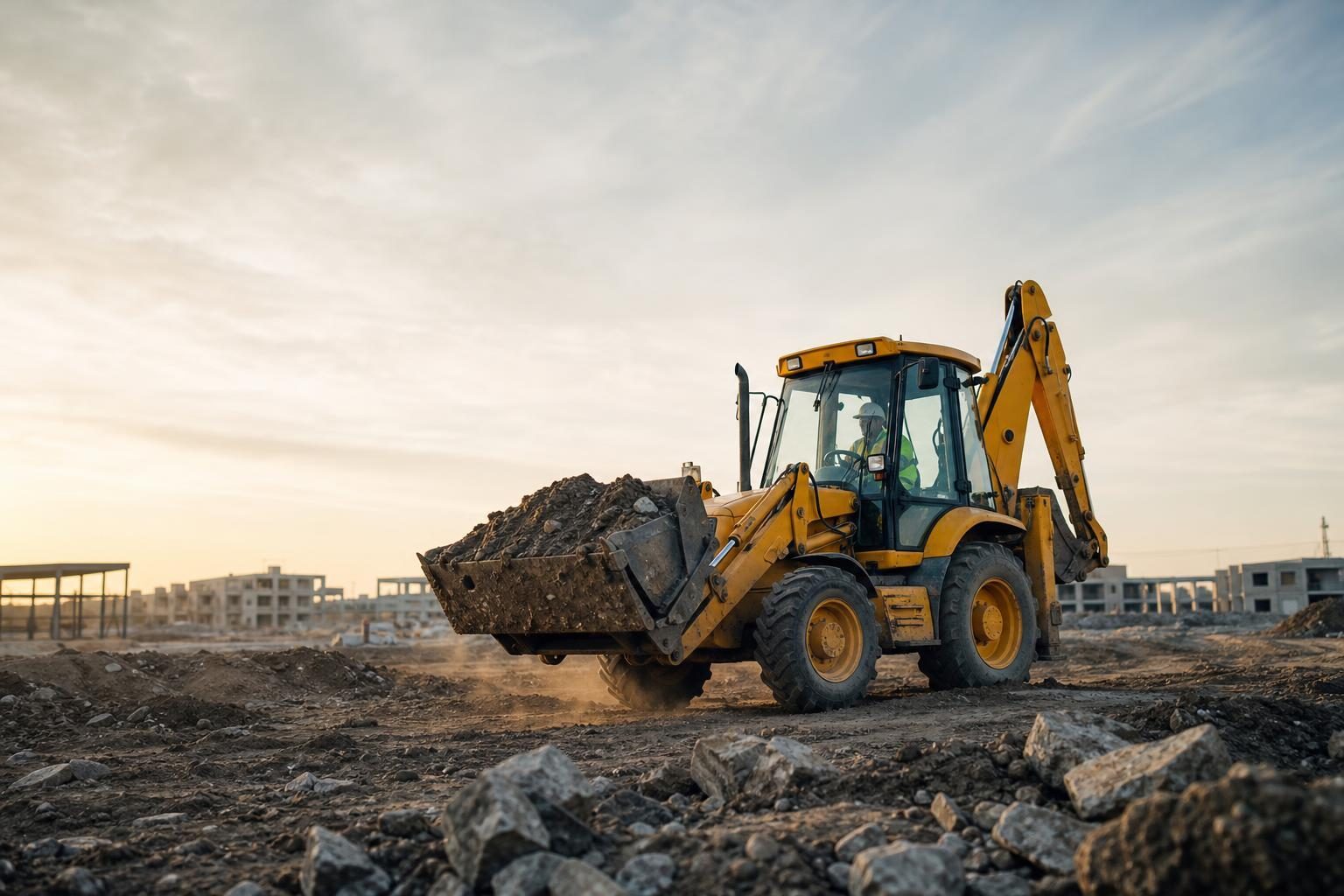
Used Backhoe Financing in 2026: What to Expect
Used backhoe financing works like any other equipment loan, but the age, hours, and condition of the machine shape the terms more than your credit score alone. Lenders look at how much useful life remains, whether the serial number matches the title, and whether the machine has been maintained on a documented schedule. If those details check out, a used backhoe can be financed on the same collateral-backed structure as a new one, with the equipment itself securing the deal. That keeps rates competitive and documentation lighter than an unsecured bank line. If you are weighing a late-model loader against an older unit with higher hours, run the numbers and see what you qualify for on that machine before you negotiate with the seller.
Provide Capital finances used backhoes from $5,000 up to $5 million. Because the equipment serves as collateral, the approval process focuses on the asset value and your business cash flow rather than a perfect credit profile. Same-day approvals are possible when the application is complete and the equipment details are straightforward. For a broader look at how Backhoes financing is structured, our equipment page covers the full range of loader backhoes and compact models we fund.
Already have a machine in mind?
Provide Capital finances new and used equipment from $5,000 to $5 million, with same-day decisions possible.
Apply NowWhat a Used Backhoe Costs by Condition Tier
Pricing for used backhoes falls into clear bands based on age, hours, and brand reputation. Late-model units with under 2,000 hours typically command the strongest resale values because they still carry manufacturer warranty or qualify for extended coverage. Standard two-wheel-drive loader backhoes in this band usually trade between $60,000 and $95,000. Four-wheel-drive models with an extendable dipper stick or enclosed cab can push toward the upper end of that range or slightly beyond, depending on whether attachments are included.
Machines in the 3,000- to 5,000-hour bracket represent the bulk of the secondary market. These units have worked through their initial depreciation but can still deliver years of service if the powertrain and hydraulics are sound. Expect asking prices between $35,000 and $65,000, with exact placement depending on whether the pins and bushings have been turned or replaced and whether the loader arms show stress cracking. High-hour units above 6,000 hours often list below $35,000. Financing becomes more selective at this level, and terms typically shorten to 36 or 48 months to keep the amortization aligned with remaining useful life.
Compact tractor-loader-backhoes, common on smaller utility and landscaping jobs, follow a parallel curve but at lower dollar amounts. Late-model compacts with low hours usually sell between $25,000 and $55,000. Older or high-hour compacts can dip below $20,000, which may fall under minimum thresholds unless bundled with attachments or a trailer on the same financing schedule.
By the Numbers: A three-year-old standard backhoe with 2,500 hours financed at $70,000 over 60 months typically carries a lower monthly outlay than a new machine financed at $140,000 over 72 months, even if the rate on the used unit is slightly higher. The total interest paid over the life of the shorter used deal is often substantially less because the principal and term are both smaller.
How Used Backhoe Financing Works
Equipment financing for a used backhoe is a secured transaction. The lender files a UCC-1 lien against the machine, which means the backhoe itself is the collateral. If your business has been operating for at least two years and shows consistent deposits, the approval process is largely a matter of verifying the asset and confirming cash-flow coverage. Businesses with thin credit or limited operating history can still qualify, but they usually need to contribute a larger down payment or accept a shorter term. The SBA 7(a) loan program offers another path for equipment purchases, though many owner-operators prefer direct equipment financing for faster decisions and collateral-based underwriting.
Application Timeline and Same-Day Approvals
Most applications start with a one-page credit app, the equipment invoice or listing, and three months of business bank statements. If the file is clean and the machine is less than ten years old, an approval decision can come back the same day. Delays usually happen when the title shows an unreleased lien, the serial number does not match the documentation, or the seller is a private party without a dealership license. Ordering a title search early prevents those surprises.
Down Payment, Term Length, and Collateral
Down payments on used backhoes typically range from 0% to 20% of the purchase price, with the exact amount driven by credit profile, time in business, and equipment age. A 10% down payment on a $75,000 machine reduces the financed amount to $67,500, which improves the monthly payment and the lender's collateral cushion. Terms on used equipment generally run 36 to 60 months. New machines can stretch to 72 months, but lenders rarely amortize a used backhoe beyond five years because depreciation accelerates after year five and they do not want the loan balance to exceed the resale value.
Pro Tip: Align your term with the machine's realistic remaining life, not just the longest option on the menu. A 72-month term on a backhoe that already has 4,000 hours can leave you upside down when the engine needs a rebuild at hour 6,500. A 48-month term on that same machine builds equity faster and matches the payment to the window where the backhoe is most productive.
New vs. Used Backhoe Financing Comparison
The choice between new and used is not just about purchase price. It affects your monthly payment, tax timing, maintenance reserve, and how quickly you build equity in the asset.
| Factor | New Backhoe | Used Backhoe |
|---|---|---|
| Typical price range | $100,000 – $180,000 | $35,000 – $95,000 |
| Common term length | 48 – 72 months | 36 – 60 months |
| Down payment expectation | 0% – 15% | 5% – 20% |
| Warranty status | Full manufacturer coverage | Expired or limited |
| Section 179 benefit | Full first-year expensing eligible | Full first-year expensing eligible |
| Maintenance reserve | Lower initially | Higher; budget 8% – 12% of value annually |
| Time to equity | Slower due to higher principal | Faster due to lower principal |
| Resale predictability | Higher | Varies by brand and condition |
Used machines win on upfront cost and speed to payoff. New machines win on warranty coverage and access to the longest terms. If your work is seasonal or your backlog is project-based, the lower monthly outlay of a used backhoe can preserve working capital for payroll and materials. Get a decision on your equipment, possibly the same day, and compare the payment paths side by side.
Tax Treatment and Section 179 for 2026
Used backhoes qualify for the same tax treatment as new equipment under the Internal Revenue Code, provided the machine is new to your business and is placed in service during the tax year. For tax year 2026, the Section 179 expense deduction limit is $2,560,000, and the phase-out threshold begins when total qualifying property placed in service exceeds $4,090,000. Most single-unit backhoe purchases fall well below that threshold, which means the full cost of the machine can often be deducted in the first year.
Beyond Section 179, bonus depreciation may also apply, though the percentage has been stepping down from its peak. Even if bonus depreciation is lower in 2026 than in prior years, combining Section 179 with regular MACRS depreciation still creates meaningful tax shielding. Lease payments, by contrast, are typically deductible as operating expenses, but you forgo depreciation and Section 179 benefits because you do not own the asset.
Tax rules change frequently, and your eligibility depends on your business structure, income, and other equipment purchases during the year. Consult a CPA before you decide between expensing and depreciating a used backhoe.
Key Insight: If you finance a $70,000 used backhoe in 2026 and elect Section 179, the deduction can offset ordinary business income, but it cannot create a net operating loss. If your taxable income is lower than the equipment cost, the unused portion carries forward. A CPA can model whether spreading the deduction over five years via MACRS yields a better outcome than front-loading it.
Find the right financing structure
Tell us about the equipment you need and we will show you the options that fit your business.
See Your OptionsEquipment Loan vs. Lease for a Used Backhoe
A loan makes sense when you plan to keep the backhoe for its full useful life and want to build equity. At the end of the term, you own the machine outright, and the UCC lien is released. A lease makes sense when you need the backhoe for a specific contract duration or want to avoid the residual-value risk of an aging machine. Operating leases keep the liability off the balance sheet in some accounting treatments, though ASC 842 has tightened those rules. As Forbes coverage of equipment financing notes, the key is aligning the structure with your cash-flow cycle and the revenue the asset is expected to generate.
The trade-off with leasing a used backhoe is that lessors often charge a higher implicit rate on older collateral because residual value is harder to predict. If the machine suffers a major hydraulic failure near the end of the lease, you may face repair charges or a balloon payment to buy it. With a loan, you bear the repair risk, but you also control the timing of resale or trade-in. For owner-operators who run their equipment hard, ownership through financing is usually the cleaner path.
Industries Where Used Backhoes See Heavy Use
Used backhoes move between industries more than almost any other machine. A unit that starts in municipal sewer work may finish its life on a farm. The common thread is versatility: the loader bucket handles material, and the rear digger trenches for utilities, foundations, or drainage.
Construction equipment financing represents the largest share of used backhoe transactions. General contractors, site developers, and underground utility crews use them for footing excavation, backfill, and loading. In the transportation sector, used backhoes clear ditches along right-of-way and load riprap for erosion control. Agriculture buyers look for older units with faded paint but solid engines to maintain drainage tile and dig stock ponds. Forestry and logging operations use them to pull stumps and build access roads before forwarding equipment moves in. Strong demand from data-center and infrastructure buildouts has kept construction equipment utilization high across North America, with major manufacturers reporting double-digit revenue growth in their construction segments in 2026, according to CNBC reporting on Caterpillar's Q2 2026 results.
Because the applications vary, lenders do not treat every backhoe the same. A machine bound for highway construction may command better terms than one destined for demolition, where frame stress and impact damage are more likely. When you apply, describe the intended use accurately; it helps the underwriter assess residual value and set the term accordingly. Contractors who also need hauling capability often pair a backhoe with Dump Trucks financing on the same project schedule.
Common Mistakes Buyers Make
The most expensive error is buying a machine with a cloudy title. Always run a UCC search on the serial number before you hand over a deposit. If a prior lender still shows a lien, the seller must provide a release letter before financing can close. The second most common mistake is overpaying for attachments that do not add proportional value. A hydraulic thumb or four-in-one bucket is useful, but it rarely increases the collateral value by its full retail price.
Buyers also underestimate the cost of delivery. A backhoe that sells for $55,000 in another state can cost $3,000 to $5,000 to transport on a lowboy. If you finance the machine, ask whether freight can be rolled into the loan or whether it must be paid out of pocket. Another pitfall is skipping the fluid analysis. A transmission that shifts smoothly at idle may show metal contamination in the oil that signals an impending failure. Spending $200 on analysis before purchase can save $8,000 to $12,000 in rebuild costs.
Pro Tip: Private-party sellers often price their machines based on what they owe rather than market value. Cross-reference the asking price against auction results for the same model year and hour range. If the seller owes more than the machine is worth, they may need to bring cash to closing to clear their lien, which can delay your financing by weeks.
Documentation You Need to Apply
The paperwork for a used backhoe is lighter than a real estate closing, but it is not zero. Gather the following before you submit:
- A signed one-page credit application
- Three months of business bank statements
- The equipment invoice, listing, or purchase agreement
- A clear photo of the serial number plate
- Proof of insurance naming the lender as loss payee
- For deals above $150,000, two years of business tax returns
If the seller is a private party rather than a dealership, the lender may also require a bill of sale, a title search, and verification that the seller has the legal right to transfer ownership. Dealership sales are simpler because the dealer handles title transfer and can provide a temporary tag. Private-party deals can still be financed, but they add a few days to the closing timeline while the lender verifies clean title.
What Happens After Approval
Once approved, you receive a term sheet stating the financed amount, monthly payment, term length, and any documentation fee. Review it for prepayment penalties or minimum interest clauses. Most equipment lenders do not charge a prepayment penalty, but some structure the contract with a minimum number of payments. If you plan to pay the loan off early from a seasonal revenue spike, confirm that the contract allows it without fee.
After you sign the term sheet, the lender issues a check or wires funds directly to the seller. You take delivery, activate the insurance policy, and the lender files the UCC lien. Your first payment is typically due 30 to 45 days after funding. Some lenders offer seasonal skip structures for construction businesses, where you can defer one payment per quarter during the off-season. Ask whether that option is available if your cash flow is cyclical.
Put the right equipment to work
From $5,000 to $5 million, new or used, Provide Capital helps businesses nationwide finance the equipment they need.
Apply TodayFrequently Asked Questions
Can I finance a backhoe that is more than ten years old?
Yes, but expect stricter terms. Lenders may cap the term at 36 months and require a down payment of 15% to 20%. The collateral value of a machine that old depreciates quickly, so the lender wants a larger equity cushion. If the backhoe has exceptionally low hours or a recent engine overhaul, provide maintenance records to strengthen the file.
Does the equipment need to come from a dealership?
No. Private-party sales are financeable, though they require extra title verification. The lender will run a UCC search to confirm no prior liens remain unreleased. If the seller still owes on the machine, the transaction may need to be structured as a payoff and release, which adds a few days but is routine.
How does my personal credit affect the approval?
Personal credit is one factor among several. Strong business cash flow and a clean equipment title can offset a lower personal score. If your credit is thin, a larger down payment or a co-signer may improve the terms. Rates vary by credit profile, equipment age, and term length.
Can I bundle attachments or a trailer into the same financing?
Yes. Bundling is common and often necessary to reach minimum financing thresholds on smaller deals. A backhoe, hydraulic thumb, and trailer can be financed on a single schedule with one monthly payment. The lender will require an invoice for each item.
What insurance is required?
Physical damage insurance covering the replacement value of the backhoe is standard. The lender must be named as loss payee on the policy. General liability is not always required by the lender but is strongly recommended and often mandated by job-site contracts.
Is a used backhoe eligible for Section 179?
Yes, as long as it is new to your business and is placed in service during the 2026 tax year. The Section 179 limit for 2026 is $2,560,000. Talk to your CPA about whether to expense the full cost immediately or spread depreciation over multiple years.
How long does funding take after approval?
For dealership purchases, funding usually occurs within 24 to 48 hours of signed documents. Private-party deals may take an extra two to three days while title clearance is confirmed. Same-day approvals are possible on clean files, but funding still requires document execution and verification.
Can I pay off the loan early?
Most equipment loans allow early payoff without penalty, but you should verify the specific contract. Some agreements include a minimum interest charge or a sliding prepayment fee during the first year. Read the term sheet carefully before signing.
Next Steps
Used backhoe financing is a practical way to add versatile earthmoving capability without tying up the cash you need for payroll, materials, and fuel. The key is matching the machine's remaining life to a term that builds equity quickly and keeps the payment manageable. Get your maintenance records and bank statements together, verify the title, and start an application in a few minutes to see what terms are available on the backhoe you have in mind.
Disclaimer: The information provided in this article is for general educational purposes only and is not financial, legal, or tax advice. Funding terms, qualifications, and product availability may vary and are subject to change without notice. Provide Capital does not guarantee approval, rates, or specific outcomes. For personalized information about your business funding options, contact our team directly.
