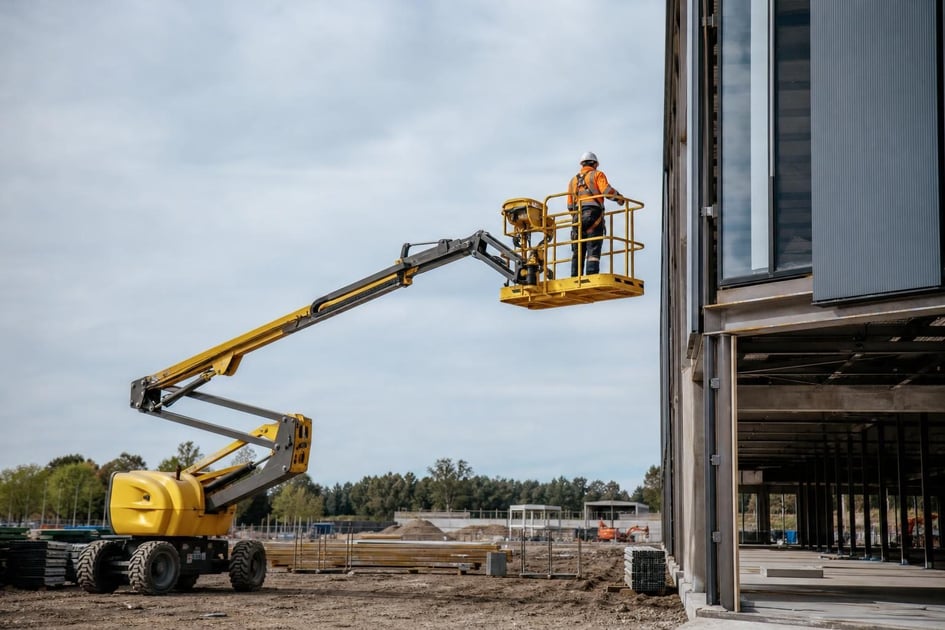
Expect boom lift financing rates to vary by your credit profile, the age of the machine, and the length of your term. Rates are competitive because the equipment itself serves as collateral. Borrowers with established credit histories and newer equipment typically see the most favorable terms, while older lifts or shorter repayment windows may carry higher rates. Same-day approvals are possible when your documentation is in order.
What Determines Your Boom Lift Financing Rate
Three factors carry the most weight when a lender prices your Boom Lifts financing transaction: your credit profile, the age and condition of the lift, and the length of the repayment term.
Credit profile includes both your personal and business credit histories. Lenders look at time in business, revenue consistency, and existing debt obligations. A track record of on-time payments and low credit utilization signals lower risk, which translates to better rates. That does not mean businesses with limited operating history or owners with past credit challenges cannot qualify. Provide Capital finances equipment across a broad credit spectrum, but the rate will reflect the risk profile.
Most lenders prefer a debt-to-income ratio below 50 percent, though equipment financing can accommodate higher ratios because the collateral reduces the lender's exposure. If your business carries existing equipment debt or a recent large project tied up working capital, mention it early in the application. Transparency about your full debt picture prevents surprises during underwriting and keeps the timeline on track.
Equipment age matters because the lift serves as collateral. A new unit with a full manufacturer warranty and predictable maintenance schedule holds value better than a ten-year-old machine with high hours. Newer equipment typically qualifies for longer terms and lower rates because the lender's collateral risk is reduced. Used equipment can absolutely be financed, but expect terms to adjust to reflect the machine's remaining useful life.
Term length creates a trade-off. A 24-month term means higher monthly payments but less total interest paid over the life of the financing. A 60-month term spreads payments out, improving monthly cash flow, but the rate may edge up slightly to account for the extended risk window. Most borrowers choose terms between 36 and 60 months for boom lifts.
Key Insight: A boom lift financed over 60 months will often have a slightly higher rate than the same lift financed over 36 months, but the monthly payment can drop by 30 to 40 percent. The right term depends on your monthly revenue from the equipment, not just the rate.
Already have a machine in mind?
Provide Capital finances new and used equipment from $5,000 to $5 million, with same-day decisions possible.
Apply NowNew vs. Used Boom Lift Financing
The decision between new and used affects your rate, your down payment, and your total cost of ownership. New boom lifts from manufacturers like JLG, Genie, or Skyjack come with warranties, known maintenance histories, and the latest safety features. Lenders view them as stronger collateral, which generally produces better financing terms.
Used boom lifts are where many owner-operators find value. A three- to five-year-old machine with under 2,000 hours can cost 30 to 50 percent less than new while still offering years of service. Financing a used lift is common, but lenders typically cap the term based on the machine's age at origination. A five-year-old lift might qualify for a 48-month term, while a ten-year-old unit might be limited to 24 or 36 months.
Condition matters as much as age. A lift with a documented maintenance history, no accident damage, and current OSHA inspections will finance more easily than one bought at auction with unknown history. If you are buying used, request the hour meter reading, maintenance logs, and inspection records before applying for financing.
Pro Tip: Buying a used boom lift through a dealer often yields better financing terms than buying from a private party. Dealers can provide refurbishment records and limited warranties that lenders treat as added collateral protection.
Lease vs. Loan: Choosing the Right Structure
Boom lifts can be financed through an equipment loan or a lease. The best structure depends on how long you plan to keep the machine, your tax strategy, and your balance sheet preferences.
With an equipment loan, you own the lift outright once the final payment clears. The equipment appears as an asset on your balance sheet, and you may claim depreciation and interest deductions. Loans typically run 24 to 60 months and require the equipment as collateral.
A lease lets you use the lift for a set period while making monthly payments. At the end of the term, you may have the option to purchase the equipment at fair market value, for a nominal amount, or return it. Leases can preserve working capital and sometimes offer lower monthly payments, but the total cost over time may exceed a loan depending on the buyout terms.
| Factor | Equipment Loan | Lease |
|---|---|---|
| Ownership | You own the lift after final payment | Ownership transfers at buyout or not at all |
| Monthly payment | Higher than lease in some cases | Often lower, improving cash flow |
| Tax treatment | Depreciation and interest deduction | Lease payments may be fully deductible |
| Term flexibility | 24 to 60 months typical | 12 to 60 months, structured to usage |
| Best for | Long-term ownership and heavy use | Short-term projects or technology refresh |
If you plan to run a boom lift for eight to ten years in a high-utilization operation, a loan usually makes more sense. If you need the lift for a two-year project and want to upgrade afterward, explore a lease.
2026 Tax Treatment for Boom Lifts
For the 2026 tax year, boom lifts qualify as Section 179 property, meaning businesses may be able to deduct the full purchase price in the year the equipment is placed in service rather than depreciating it over time. The exact deduction limit for 2026 is set by the IRS and adjusted annually for inflation. Speak with a CPA to confirm the current-year threshold and whether your business qualifies.
Bonus depreciation may also apply in 2026, though the percentage has been phasing down in recent years. The specific bonus depreciation rate for 2026 depends on federal tax legislation. Your accountant can model whether Section 179, bonus depreciation, or standard MACRS depreciation delivers the best outcome for your situation.
One detail often missed: the equipment must be placed in service by December 31, 2026, to claim the deduction on your 2026 return. Financing the purchase in November but not receiving the lift until January pushes the deduction into the 2027 tax year. If you are planning a year-end purchase, confirm delivery and installation dates with your dealer.
By the Numbers: A construction contractor in a 24 percent federal tax bracket who finances a $75,000 boom lift and claims Section 179 for the 2026 tax year could see a first-year deduction that substantially offsets the equipment's net cost. The actual savings depend on state taxes, income level, and IRS limits for 2026.
What It Takes to Qualify
Qualifying for boom lift financing is straightforward compared to unsecured lending because the equipment secures the transaction. Provide Capital finances equipment from $5,000 to $5 million, which covers everything from a compact trailer-mounted lift to a fleet of articulating boom lifts. The SBA loan programs page explains how equipment-backed financing differs from general business term loans.
Lenders typically want to see six months or more in business, though exceptions exist for well-qualified buyers. Bank statements showing consistent revenue, a reasonable debt-to-income ratio, and a credit history without recent bankruptcies or unresolved liens will position you well. For larger transactions, expect to provide tax returns or profit-and-loss statements.
The equipment itself must meet collateral standards. It should be free of title issues, not excessively aged for the requested term, and intended for business use. Personal use does not qualify for equipment financing.
See what you qualify for by submitting a quick application. Same-day decisions are possible when you have your documentation ready.
Find the right financing structure
Tell us about the equipment you need and we will show you the options that fit your business.
See Your OptionsDocumentation You Need
Having paperwork organized speeds up approval and helps you lock in terms before rates shift. For transactions under $150,000, most lenders need a one-page application and three months of business bank statements. For amounts above that threshold, add the last two years of tax returns, a current year-to-date profit and loss statement, and an equipment quote or invoice.
If you are buying from a private seller, you will also need proof of ownership, a bill of sale, and possibly a lien search to confirm the title is clean. Dealer purchases are simpler because the dealer handles much of this paperwork.
Insurance is required before funding. You will need a certificate of insurance naming the lender as loss payee, with coverage equal to or greater than the financed amount. Most commercial equipment policies satisfy this requirement.
What Happens After Approval
Once approved, you receive a term sheet detailing the rate, payment amount, term length, and any fees. Review it carefully. Ask questions about prepayment penalties, late fees, and what happens if you pay off the balance early. Some lenders charge a prepayment penalty; others do not.
After you accept the terms, the lender issues a purchase order or funds the transaction directly. For dealer purchases, payment usually goes straight to the dealer. For private-party sales, the lender may issue a check to the seller and a separate check to you if you are rolling in soft costs like delivery or training.
You take delivery, activate your insurance, and put the lift to work. Your first payment is typically due 30 to 45 days after funding. Set up automatic payments to avoid late fees and build a positive payment history for future equipment purchases.
Common Mistakes When Financing Boom Lifts
The most common error is focusing only on the monthly payment instead of the total cost of financing. A lower monthly payment stretched over 72 months can cost significantly more in total interest than a higher payment over 48 months. Run the full numbers before signing.
Another mistake is failing to verify equipment condition before financing. If the lift has hidden mechanical issues, you are paying for a machine that generates repair bills instead of revenue. Always inspect used equipment in person or hire a qualified technician.
Some borrowers also forget to factor in soft costs. Delivery, training, and initial maintenance supplies add up. If you need these costs wrapped into the financing, mention it upfront. Not all lenders finance soft costs, and those that do may cap them at a percentage of the equipment cost.
A fourth mistake is accepting the first approval without comparing structures. A lease quote and a loan quote for the same machine can produce very different tax and cash-flow outcomes over a five-year horizon. Request both structures if you are unsure which fits your operation better.
Industry-Specific Considerations
Boom lifts are essential across multiple industries, but financing needs vary by sector. In Construction equipment financing, boom lifts face heavy seasonal demand. Contractors in northern states often buy in late winter to secure equipment before the spring rush, while southern operators may purchase year-round. Census Bureau construction data shows how spending patterns shift across regions and seasons, which directly affects equipment availability and pricing.
Healthcare and dental practices use boom lifts for facility maintenance and expansion, though their utilization is lower than construction. Lower hours often mean longer equipment life, which can support longer financing terms.
Manufacturing and warehouse operations run boom lifts for building maintenance and inventory management. These buyers often finance multiple pieces of equipment at once, which can streamline approval and potentially improve rates through volume.
Transportation and logistics companies use boom lifts for fleet maintenance and loading dock work. Forestry and agriculture operators need rough-terrain models with four-wheel drive and oscillating axles, which cost more but hold value well in rural markets.
Agriculture operators often need boom lifts for grain bin maintenance and barn construction. Demand in farming communities rises after harvest season when capital frees up and operators prepare facilities for the next cycle. Financing applications in October and November can align well with this seasonal cash flow pattern.
Restaurants and food service businesses occasionally need boom lifts for HVAC maintenance and exterior building work. These lower-utilization buyers should consider whether a shorter term or seasonal payment structure makes sense. The SBA business guide offers additional context on how seasonal revenue affects equipment purchasing decisions.
Key Insight: The construction sector accounts for a significant share of boom lift demand, and equipment availability tightens in March and April across most of the United States. Financing in January or February often means better equipment selection and more attentive dealer support.
Ready to move forward?
More than 10,000 businesses have financed equipment with Provide Capital. See what you qualify for today.
Get StartedFrequently Asked Questions
Can I finance a boom lift with bad credit?
Yes, but the rate and term will reflect the increased risk. Lenders may require a larger down payment or shorten the repayment period. The equipment itself serves as collateral, which makes approval possible across a wider credit spectrum than unsecured lending.
How long can I finance a boom lift?
Terms typically range from 24 to 60 months. New equipment may qualify for the full 60 months, while used equipment is usually capped based on age and remaining useful life. A ten-year-old lift is unlikely to qualify for a 60-month term.
Is a down payment required?
Not always. Well-qualified borrowers can sometimes finance 100 percent of the equipment cost plus soft costs. If your credit profile or the equipment age presents higher risk, expect a down payment in the 10 to 20 percent range.
Can I finance a boom lift from a private seller?
Yes, though the process requires extra documentation. The lender needs to verify clear title, and you may need to arrange an independent inspection. Dealer purchases are simpler, but private-party financing is common and readily available.
Does the lender file a UCC lien on the equipment?
Yes. The lender files a UCC-1 financing statement to perfect its security interest in the boom lift. This is standard practice for equipment financing and does not appear as a judgment on your credit report. The lien releases once you satisfy the obligation.
Can I pay off the financing early?
Most equipment financing allows early payoff, but the terms vary. Some lenders charge a prepayment penalty or require you to pay all remaining interest. Others apply a simple interest calculation with no penalty. Read the term sheet carefully before accepting.
What insurance do I need?
You need a commercial equipment policy that covers theft, damage, and liability. The lender must be named as loss payee. Coverage must equal or exceed the financed balance. If your general liability policy does not cover the lift, you will need an inland marine or equipment-specific policy.
How fast can I get funded?
Same-day approvals are possible for well-documented applications, especially on transactions under $150,000. Funding usually occurs within 24 to 72 hours after approval, once insurance is in place and the purchase order is issued.
Next Steps
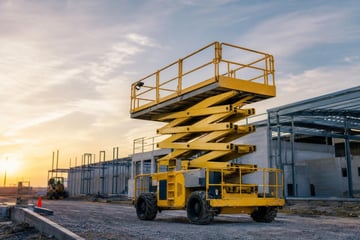
Boom lift financing rates depend on your specific situation, but the process does not need to be complicated. Gather your bank statements, confirm the equipment you want, and get a same-day decision on your equipment. Whether you need a single articulating lift for a construction crew or a mixed fleet of telescopic and Scissor Lifts financing, Provide Capital offers financing from $5,000 to $5 million with the equipment itself as collateral.
Disclaimer: The information provided in this article is for general educational purposes only and is not financial, legal, or tax advice. Funding terms, qualifications, and product availability may vary and are subject to change without notice. Provide Capital does not guarantee approval, rates, or specific outcomes. For personalized information about your business funding options, contact our team directly.