
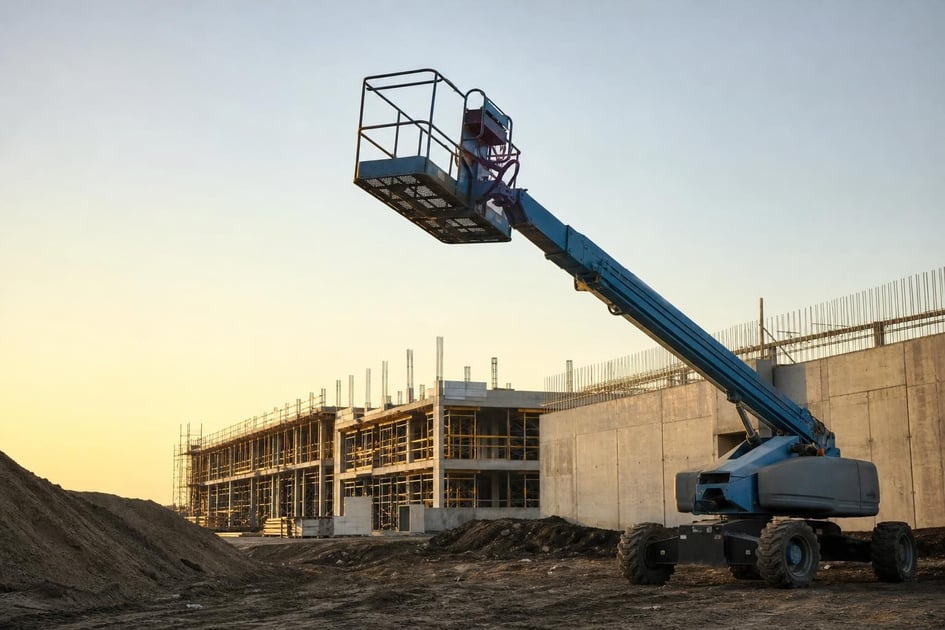
Why Buy Used Boom Lifts?
A used boom lift can do the same work as a new one for 40% to 60% less upfront cost. For owner-operators in construction, facilities maintenance, and tree care, that gap means adding reach without tying up cash reserves. The market for used aerial work platforms has grown steadily as manufacturers face long lead times and tariff-related cost pressures. According to Reuters reporting on 2026 equipment demand, construction segment sales have been volatile, pushing many contractors to consider pre-owned machines that are available now rather than waiting months for new inventory. Forbes analysis of the 2025-26 construction outlook notes that interest rates have kept non-residential construction relatively flat, prompting contractors to control capital costs by buying reliable used equipment.
Used does not mean worn out. Many boom lifts coming off three- to five-year lease agreements have under 1,000 hours and receive regular factory service. The key is knowing what to inspect: weld integrity on the base, hydraulic hose condition, battery date codes, and software updates for the control system. If you already have a unit picked out, you can see what financing you qualify for on that boom lift in a few minutes.
Key Insight: A boom lift with 800 to 1,200 hours is often in its sweet spot—past initial depreciation, but with enough service life remaining to outlast a 48- or 60-month finance term. Always request the previous operator’s maintenance log before you commit.
Get a fast decision on your equipment
Applying takes just a few minutes, and decisions can come as soon as the same day.
Start Your ApplicationWhat Used Boom Lift Financing Looks Like
Equipment financing for a used boom lift works like a standard term loan, but the machine itself is the collateral. Because the lender can secure the debt against the asset, rates vary by credit profile, equipment age and term rather than requiring real estate or a blanket lien on all business assets. Loan amounts typically start around $5,000 and can go up to $5 million, which covers everything from a compact 30-foot electric boom to a heavy-duty 150-foot diesel articulating unit.
Most used boom lift loans run 24 to 60 months. The older the machine, the shorter the term the lender will offer. A 2019 unit might qualify for a 48-month term, while a 2012 unit may be capped at 24 or 36 months. Down payment requirements usually range from 0% to 20% depending on your credit and the equipment’s wholesale value. SBA guidance on buying business assets notes that financing spreads the cost over the equipment’s useful life, preserving working capital for labor and materials.
By the Numbers: On a $45,000 used boom lift, a 48-month term with a 10% down payment leaves a $40,500 balance. Monthly payments vary based on rate and term, but spreading the cost keeps your debt-service coverage ratio healthier than a large cash outlay would.
Loan vs Lease for Used Boom Lifts
A loan makes sense if you plan to keep the boom lift for its full useful life and want to claim depreciation. With an equipment loan, you own the machine outright once the final payment clears. A capital lease works similarly for tax purposes, though the lender retains title until the buyout. An operating lease, by contrast, is closer to a rental: lower monthly payments, no depreciation claim, and you return the unit at the end of the term. For used equipment, operating leases are harder to find because residual values are harder to predict on older machines.
If your goal is to build a fleet you control, a loan or capital lease is usually the better path. If you need the lift for a single multi-year project and want the flexibility to walk away, ask your financing provider whether a fair-market-value buyout lease is available. Keep in mind that on used equipment, many lenders prefer a $1 buyout or 10% purchase option to reduce their residual risk.
New vs Used: A Side-by-Side Comparison
| Factor | New Boom Lift | Used Boom Lift |
|---|---|---|
| Purchase price | $35,000 – $150,000+ | $15,000 – $85,000 |
| Financing term | Up to 72 months | 24 – 60 months |
| Down payment | 0% – 15% | 0% – 20% |
| Delivery time | 3 – 9 months (manufacturer dependent) | Days to a few weeks |
| Depreciation benefit | Full Section 179 or bonus depreciation | Same Section 179 eligibility if new to your business |
| Maintenance risk | Warranty coverage standard | Dependent on prior service history |
| Useful remaining life | 10 – 15 years | 5 – 12 years depending on hours and brand |
The right choice depends on your utilization rate and cash position. If you run the lift 800+ hours a year and plan to keep it for a decade, new may pencil out. If you need the machine for intermittent projects or want to limit capital exposure, used is usually the smarter bet. Boom Lifts financing through Provide Capital covers both new and used units, with the equipment itself serving as collateral.
Tax Treatment for Used Boom Lifts in 2026
Used boom lifts qualify for the same depreciation rules as new ones, provided the unit is new to your business. For tax year 2026, Section 179 allows businesses to expense qualifying equipment purchases up to an inflation-adjusted dollar limit. Because the exact figure is indexed annually and subject to Congressional adjustments, confirm the current-year limit with your CPA before you file. You can also depreciate the asset under MACRS over a five-year recovery period if you do not take the full immediate deduction.
Bonus depreciation may also apply, though the percentage and eligibility rules depend on current law and property type. The key point is that a used Genie, JLG, or Skyjack unit is not treated as a second-class asset for tax purposes. As long as you place it in service during the 2026 tax year and use it more than 50% for business, it can generally be written off on the same schedule as a new machine. Speak with your CPA to determine whether Section 179, bonus depreciation, or straight MACRS gives you the best outcome for your specific tax bracket and income level.
Pro Tip: If you finance the lift in December but it does not arrive on your job site until January, the IRS places it in service in January. That pushes your depreciation deduction into the next tax year. Coordinate delivery and installation carefully if you are counting on a 2026 write-off.
Qualifying for Used Boom Lift Financing
Lenders evaluate three main factors for used equipment: your credit profile, time in business, and the age or condition of the machine. Unlike real estate loans, equipment financing decisions can often be made the same day because the collateral is movable, standardized, and easy to value through auction records or dealer wholesale guides.
Credit Profile
A FICO score in the mid-600s or higher will generally unlock the best terms, but scores below that do not automatically disqualify you. Lenders also look at recent derogatory events, outstanding tax liens, and your debt-service coverage ratio. If your business has strong cash flow but your personal credit took a hit, be prepared to explain the circumstances. Some lenders will accept a guarantor or a slightly larger down payment to offset credit challenges.
Time in Business
Most equipment lenders prefer at least two years of operating history. That said, businesses with shorter track records can still qualify if the owner has relevant industry experience or if the down payment is larger. Startups are a different risk profile and fall outside standard equipment financing guidelines, so if your company is brand new, expect to put 20% to 30% down and show a detailed business plan.
Equipment Condition and Age
The lender cares about the collateral because it is their backstop. A 2018 boom lift from a major brand with documented service history is easier to finance than a 2008 unit from a defunct manufacturer. Most lenders set a hard floor at 10 to 15 years old at the end of the term. That means if you want a 48-month loan in 2026, the lift should generally be a 2012 model or newer. Hours matter too: under 2,000 hours is preferred, though well-maintained units with higher hours can still clear underwriting if the price reflects the usage.
See what you qualify for
The equipment itself secures the financing, which keeps rates competitive. Checking your options takes minutes.
Check Your OptionsIndustry Use Cases
Used boom lifts are not just for high-rise construction. Several industries rely on them for safe, efficient vertical access.
Construction and Roofing
General contractors and roofing crews use 40-foot to 60-foot articulating boom lifts to reach eaves, fascia, and steep pitches safely. On residential jobs where site access is tight, a used 30-foot towable boom lift can be towed behind a standard pickup and set up in minutes. Construction equipment financing from Provide Capital serves contractors nationwide, whether you are framing houses or running commercial envelope work.
Facilities Maintenance
Hospitals, universities, and industrial plants need periodic access to HVAC units, lighting, and exterior cladding. A used electric boom lift with non-marking tires lets maintenance crews work indoors without damaging floors. Because these units often accumulate low annual hours, a five-year-old machine can have a decade of service life left.
Tree Care and Forestry
Arborists use boom lifts to reach canopy-level limbs without climbing. A used rough-terrain diesel unit with four-wheel drive handles muddy job sites better than a scissor lift. If you also need a complement to your boom lift for ground-level pruning, Scissor Lifts financing can round out your fleet.
Common Mistakes When Financing Used Boom Lifts
First, do not overvalue a low-hour machine that has been sitting outdoors for three years. UV damage to hoses, cracked seals, and dead batteries can cost thousands to remedy. Second, avoid buying a unit with outdated controls or unsupported software; if the manufacturer no longer stocks circuit boards, a minor electrical fault can sideline the lift for weeks. Third, make sure the serial number is clear on the title and that there are no undisclosed liens. A UCC search costs little and prevents a lot of pain. Finally, do not stretch your term just to lower payments if the lift will age out of useful service before the loan matures. You do not want to owe money on a machine that no longer runs.
Key Insight: Lenders value used boom lifts using recent auction data, not the asking price on the dealer lot. If you overpay by $8,000, you may have to make up the difference with a larger down payment because the lender will only advance a percentage of their appraised value, not your purchase price.
The Documentation You Will Need
Having your paperwork ready speeds up approval. Most lenders will ask for:
- A signed equipment invoice or purchase agreement
- Proof of insurance naming the lender as loss payee
- Your last three business bank statements
- A current year-to-date profit and loss statement
- A personal financial statement or tax return for the guarantor
- The equipment serial number, year, make, model, and hours
If you are buying from a private party rather than a dealer, the lender may also require an independent appraisal. Some lenders will accept a recent service report from a certified technician in lieu of a full appraisal for units under $75,000.
What Happens After Approval
Once the lender issues a term sheet, review the payment schedule, prepayment penalties, and end-of-term obligations. Most equipment loans have no prepayment penalty, but some capital leases charge a fee if you pay off early. After you accept, the lender typically wires funds directly to the seller or issues a check payable to both you and the seller. You will need to add the lender as loss payee on your insurance binder before the funds release.
From application to funding, the process can take as little as 24 to 48 hours for deals under $150,000. Larger transactions or private-party sales may take three to five business days while the title and UCC filing are verified. Get a decision on your equipment, possibly the same day, by starting an application now.
Put the right equipment to work
From $5,000 to $5 million, new or used, Provide Capital helps businesses nationwide finance the equipment they need.
Apply TodayFrequently Asked Questions
Can I finance a boom lift that is more than 10 years old?
Sometimes, but expect a shorter term and possibly a larger down payment. Most lenders want the unit to be no older than 10 to 15 years at the end of the loan. A 2014 boom lift financed over 36 months would be 15 years old at payoff, which is at the edge of most underwriting guidelines.
Does a used boom lift qualify for Section 179 in 2026?
Yes, used equipment qualifies as long as it is new to your business and placed in service during the 2026 tax year. The deduction is subject to annual limits and taxable income restrictions. Confirm the exact 2026 limit with your CPA before you file.
What credit score do I need for used boom lift financing?
There is no universal cutoff. Strong credit in the 700s will get you the best rates and lowest down payment, but many lenders approve deals in the 600s with compensating factors such as strong cash flow or a larger down payment.
How much should I put down on a used boom lift?
Down payments typically range from 0% to 20%. A newer machine and stronger credit profile can push the advance ratio higher. Older units or challenged credit may require 15% to 20% to align the loan balance with the collateral value.
Can I finance a boom lift from a private seller?
Yes, though the lender will verify title, run a UCC search, and may require an independent appraisal. The process adds a day or two compared with a dealer purchase, but it is common in the used equipment market.
Is a boom lift loan different from a scissor lift loan?
The structure is the same—equipment-backed term financing—but boom lifts often carry higher price tags and longer useful lives, which can mean larger loan amounts and slightly longer terms. Scissor Lifts financing follows the same approval process.
What happens if the boom lift needs major repairs while I still owe on it?
You are responsible for maintenance. The lender’s interest is in the collateral value, so most loans require you to keep the equipment insured and in working order. If a major repair arises, you pay for it just as you would if you owned the machine free and clear.
Can I pay off the loan early without penalty?
Most equipment loans allow early payoff without penalty, but capital leases sometimes do not. Read your term sheet carefully before you sign. If prepayment flexibility matters to you, ask your financing provider to confirm the policy upfront.
Next Steps
Used boom lift financing lets you put the machine to work now while preserving cash for labor, materials, and growth. The key is matching the right unit, the right lender, and the right term to your actual utilization. Review the equipment’s maintenance history, confirm the title is clean, and gather your financial documents before you apply. Start an application in a few minutes to see what terms are available for the lift you need.
Disclaimer: The information provided in this article is for general educational purposes only and is not financial, legal, or tax advice. Funding terms, qualifications, and product availability may vary and are subject to change without notice. Provide Capital does not guarantee approval, rates, or specific outcomes. For personalized information about your business funding options, contact our team directly.
