
What a Box Truck Financing Calculator Actually Tells You
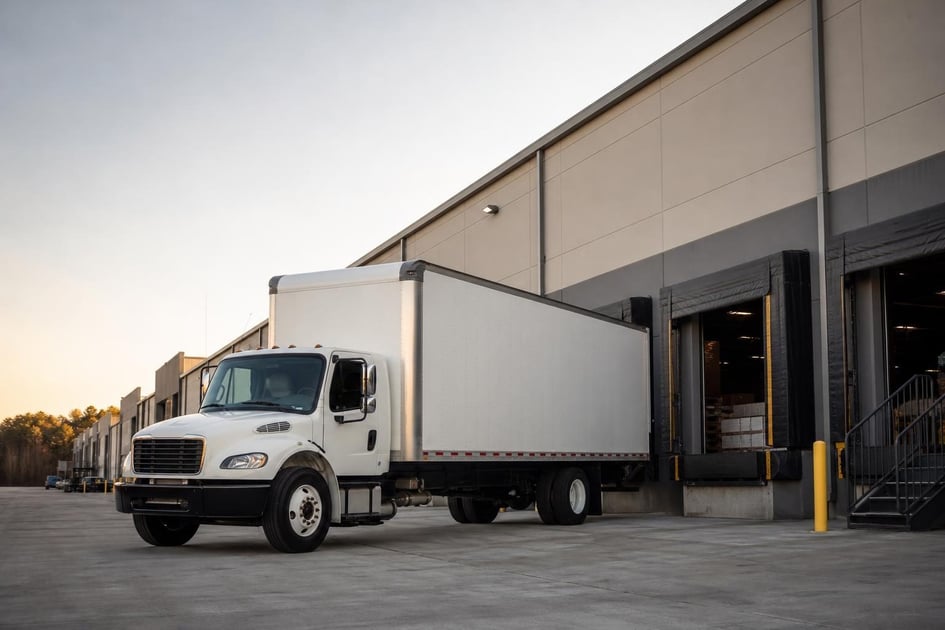
A box truck financing calculator is not a binding offer. It is a tool that translates a vehicle's purchase price, your planned down payment, desired term length, and a credit-band assumption into an estimated monthly payment. The output changes the moment any one of those inputs shifts. If you are shopping for a delivery van with a 16-foot cargo box or a Class 6 straight truck with a 26-foot body, the calculator helps you match the equipment cost to your cash flow before you talk to a lender.
At Provide Capital, we finance new and used business equipment from $5,000 to $5 million. The equipment itself serves as the collateral, which keeps rates competitive and lets us serve construction, healthcare, dental, restaurant and food service, manufacturing, Transportation equipment financing, agriculture, HVAC and forestry nationwide. Because the truck secures the financing, the lender's risk is tied more to the asset value and your operating history than to real estate or outside guarantees. Same-day approvals are possible once the application and supporting documents are complete.
If you already have a truck picked out, start an application to see what you qualify for and replace the estimate with real numbers.
Already have a machine in mind?
Provide Capital finances new and used equipment from $5,000 to $5 million, with same-day decisions possible.
Apply NowThe Variables That Move Your Monthly Payment
Every calculator output rests on four levers. Understanding them keeps you from being surprised when the formal quote arrives.
Credit profile and business history
Lenders look at both your personal credit and the time your business has been operating. A longer track record with documented revenue gives the underwriter confidence that the truck will generate enough cash to cover the payment. Businesses with two or more years of operation and clean bank statements usually see the most favorable structures, but we work with a range of profiles because the collateral matters.
Equipment age, mileage and condition
A 2026 Isuzu NPR with 10,000 miles commands different terms than a 2018 model with 300,000 miles. Older trucks carry more maintenance risk, so lenders may shorten the allowable term or ask for a larger down payment to keep the loan balance in line with the asset's remaining useful life. For box trucks, lenders often view diesel engines and well-documented maintenance records as mitigating factors even on higher-mileage units.
Down payment and term length
Putting 10% to 20% down lowers the financed amount and the lender's exposure. Stretching the term from 36 to 60 months lowers the monthly obligation but increases the total cost of ownership. Most owner-operators target a payment that leaves room for fuel, insurance, maintenance and a contingency reserve.
By the Numbers: Financing a $55,000 box truck with 15% down leaves a $46,750 balance. Over 48 months, that payment is noticeably higher than the same balance spread over 60 months, but the shorter term cuts the total interest cost and builds equity faster. On a used unit, many lenders cap the term at the number of years the truck is expected to remain in service, often 48 to 60 months for models under five years old.
New vs. Used Box Trucks — Financing Differences
The new-or-used decision is not only about purchase price. It shapes your financing structure, tax timing and maintenance risk.
New box trucks
New units come with manufacturer warranties, predictable maintenance schedules and the latest fuel-efficiency standards. From a financing perspective, new trucks also carry the strongest collateral value, which can support longer terms and lower down-payment requirements. If you plan to keep the truck for seven to ten years and drive high annual mileage, new may be the better total-cost play despite the higher monthly payment.
Used box trucks
Used trucks let you enter the market at a lower price point, but financing becomes more sensitive to condition. Lenders typically require a third-party inspection or a clean bill of sale from a reputable dealer. Mileage above 200,000 often triggers a closer review, and units older than seven years may need a larger down payment or a shorter amortization. If you are buying at auction, arrange your financing line beforehand; auction purchases usually require payment within 24 to 48 hours.
Pro Tip: Dealer purchases are easier to finance than private-party or auction buys because the dealer provides a standardized bill of sale and often handles title transfer. If you buy from an individual, you will need to verify there are no liens on the title and obtain a completed inspection report before the lender releases funds.
Whether you choose new or used, Box Trucks financing follows the same equipment-secured structure, with the truck itself backing the transaction. If your routes involve temperature-sensitive cargo, Reefer Truck financing is available under the same collateral-based model.
Lease vs. Loan — Which Structure Fits Your Route?
Some owner-operators assume financing always means a loan. Leasing is a parallel path with different accounting and end-of-term implications.
| Feature | Equipment Loan | Finance Lease |
|---|---|---|
| Ownership | You own the truck; lender holds a lien | You may own or return at term end depending on structure |
| Down payment | Typically 10%–20% | Often one or two payments upfront |
| Monthly obligation | Principal plus interest | Rental payment |
| Tax treatment | Interest deductible; depreciation on the asset | Payment often fully deductible as operating expense |
| End of term | Lien release; you keep the truck | $1 buyout, fair-market purchase, or return |
| Best for | High-mileage operators planning to keep the truck long term | Businesses wanting lower payments or frequent upgrades |
When a loan makes sense
If you plan to rack up 40,000 miles a year and run the truck for eight years, a loan builds equity. Once the lien is released, the payment disappears and the remaining resale value belongs to you. Loans also pair cleanly with Section 179 expensing because you are the owner.
When a lease makes sense
If your routes change often or you expect emission-regulation upgrades in your state, a lease preserves flexibility. You avoid the risk of the truck depreciating faster than expected, and your monthly outlay is usually lower. Just confirm whether the lease is a true tax lease or a finance lease, because the accounting differs.
If you are unsure which structure fits your books, get a decision on your equipment, possibly the same day, and compare the schedules side by side.
Tax Treatment for Box Trucks in the 2026 Tax Year
Box trucks used more than 50% for business generally qualify for favorable tax treatment. For the 2026 tax year, Section 179 allows expensing up to $2,560,000 of qualifying equipment, with that limit phasing out dollar-for-dollar once total purchases exceed $4,090,000. Because most box trucks exceed 6,000 pounds GVWR, they usually avoid the tighter caps placed on passenger vehicles, though your CPA should confirm the exact classification based on the truck's weight rating and usage log.
Bonus depreciation continues its scheduled phase-down in 2026. Rather than cite a percentage that Congress may adjust, speak with your tax preparer about how bonus depreciation interacts with Section 179 for the specific truck you are buying. If your business has taxable income to offset, combining the two can front-load the deduction and improve first-year cash flow.
Remember that you must place the truck in service during the 2026 tax year to claim 2026 benefits. A December purchase that sits idle until January shifts the deduction timeline. For authoritative vehicle-specific guidance, see Forbes guidance on Section 179 vehicle rules.
See what you qualify for
The equipment itself secures the financing, which keeps rates competitive. Checking your options takes minutes.
Check Your OptionsQualification Criteria Lenders Actually Review
Understanding what the underwriter sees helps you prepare a file that moves quickly. We look at:
- Time in business. Two years or more is the standard sweet spot, though we review younger companies with strong collateral and documented revenue.
- Monthly revenue and bank statements. Consistent deposits show the truck will have work. Large seasonal swings are fine if you explain the cycle.
- Credit history. Personal credit is reviewed because small-business owners often guarantee the debt. Negative marks do not automatically disqualify you, but they affect structure and down-payment requirements.
- Equipment specs and seller details. Year, make, model, mileage, VIN, and seller contact information. Private sellers need extra verification.
- Intended use. A truck hauling retail freight on established routes carries different risk than a truck bought for speculative contract bidding.
Key Insight: Lenders classify box trucks by Gross Vehicle Weight Rating. A Class 3 truck (under 14,000 lbs) is financed differently than a Class 6 or 7 truck (19,501–33,000 lbs). Heavier trucks often qualify for longer terms because they are built for commercial duty and retain value better in the secondary market. Always have the GVWR ready when you request a quote.
Documentation You Should Have Ready
Gathering paperwork before you apply prevents delays. Most deals need:
- Last three months of business bank statements
- Current driver's license
- Equipment invoice or purchase agreement with VIN
- Proof of insurance quote or binder for the new truck
- Voided business check for ACH setup
- Two years of business tax returns (if available)
If you are buying from a private seller, add a lien-search report and a mechanic's inspection. If the truck is coming from out of state, confirm how your state handles title transfer and sales-tax collection; some states tax based on where the truck is registered, not where it is purchased.
Common Mistakes Buyers Make
Avoiding these errors saves money and headaches.
Shopping for the truck before checking financing. Buyers often find the perfect unit, negotiate the price, then discover the lender requires 20% down instead of 10%. Pre-qualification locks your structure so you can negotiate with confidence.
Ignoring total cost of ownership. The monthly payment is only one line item. Diesel box trucks average 8 to 12 miles per gallon depending on load and route. Annual maintenance on a used unit can run $3,000 to $6,000. Insurance for a commercial box truck under your own authority often exceeds $10,000 a year for a single unit. Run the full math before you sign.
Buying the wrong GVWR for the job. A light-duty box truck costs less upfront but wears quickly if you are hauling 8,000 pounds daily. Overloading leads to transmission repairs and tire failures that dwarf any monthly savings.
Skipping the inspection. Even low-mileage trucks can hide frame rust, lift-gate hydraulic leaks or transmission issues. A $300 inspection protects a $50,000 decision.
Transportation remains one of the largest small-business employer categories in the country, according to Census Bureau trucking classifications. Getting the equipment right matters to both your books and your safety record.
What Happens After You Apply
Once you submit your application and documents, the review typically follows this sequence:
- Initial review. We verify identity, business registration and equipment details.
- Credit and collateral check. Your credit profile is reviewed alongside the truck's book value and listed price.
- Approval or counter-offer. You receive a term sheet with the approved amount, term, down payment and structure. If the file needs adjustment—more down payment or a co-signer—we tell you exactly what is required.
- Documentation and funding. You sign the finance agreement and provide proof of insurance. We pay the seller directly, usually within 24 to 48 hours.
- Title and lien recording. The title is transferred to your business name and the lender's lien is recorded with the state.
For larger capital investments, some owners also explore the SBA 504 loan program for real estate and heavy equipment, though our equipment-secured financing often closes faster for single-asset purchases.
Put the right equipment to work
From $5,000 to $5 million, new or used, Provide Capital helps businesses nationwide finance the equipment they need.
Apply TodayFrequently Asked Questions
Can I finance a box truck with no money down?
Zero-down offers are rare in commercial equipment financing. Most lenders require 10% to 20% down to align your equity with the asset and reduce default risk. Strong credit and a long operating history may push the requirement toward the lower end.
Does the lender need to approve the seller?
Not necessarily, but the seller must provide a clear title and a valid bill of sale. Dealer sales are simplest. Private-party sales require extra steps to verify liens and equipment condition.
How long can I finance a used box truck?
Terms vary by age and mileage. Trucks under five years old often qualify for 48- to 60-month terms. Units older than seven years may be capped at 36 months or require a larger down payment.
Will financing a truck help my business credit?
Yes, provided the lender reports to business credit bureaus and you pay on time. An equipment installment builds a tradeline that strengthens your profile for future borrowing.
Can I finance the liftgate, shelving and upfits?
Soft costs like upfitting are sometimes included in the equipment financing if they are part of the original purchase invoice and permanently attached to the truck. Standalone accessories bought separately usually need to be paid out of pocket.
What if I want to pay off the loan early?
Most equipment loans allow early payoff, but review the prepayment terms. Some structures include a prepayment penalty during the first year or two; others apply a small remaining-interest charge. Ask for the exact language before you sign.
Do I need a commercial driver's license?
For most box trucks under 26,000 pounds GVWR, a standard driver's license is sufficient. Heavier units or those hauling hazardous materials require a CDL. Your insurance carrier will also have licensing requirements that may be stricter than state law.
Can I add a second truck later under the same line?
Each truck is typically financed on its own schedule, but returning customers with clean payment histories often receive streamlined approvals. If you are building a fleet, discuss a master equipment line that lets you add assets without repeating the full underwriting process each time.
Next Step
A financing calculator is a useful starting point, but the real number depends on the truck you choose, your credit profile and how you structure the deal. If you have a vehicle in mind or just want to know your budget before you shop, see what financing you qualify for on that box truck. We review applications quickly and can often give you a decision the same business day, so you can negotiate with the seller from a position of certainty.
Disclaimer: The information provided in this article is for general educational purposes only and is not financial, legal, or tax advice. Funding terms, qualifications, and product availability may vary and are subject to change without notice. Provide Capital does not guarantee approval, rates, or specific outcomes. For personalized information about your business funding options, contact our team directly.
