
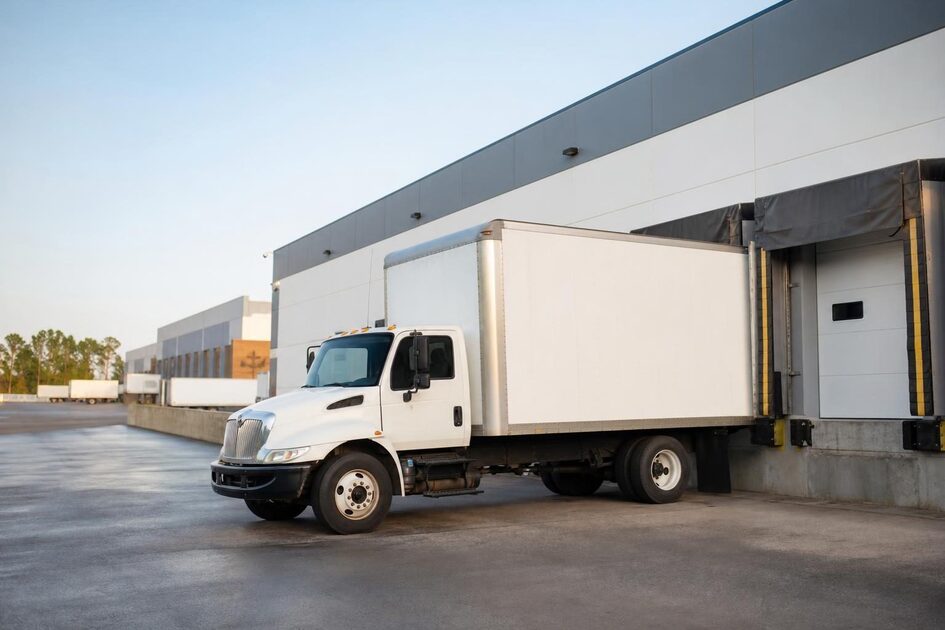
What It Takes to Qualify for Box Truck Financing
Most lenders want to see a credit score in the mid-600s or higher to finance a box truck, though some programs accept lower scores with additional collateral or a larger down payment. Your personal credit history carries weight, especially if your business is newer or has limited commercial credit established. Bankruptcies less than two years old, multiple recent delinquencies, or unresolved tax liens will typically push an application into a secondary review or require compensating factors.
Time in business matters too. Two years or more under the same EIN or DBA makes the process smoother, but owner-operators with six to twelve months of operating history can still qualify if revenue is documented and consistent. A limited operating history usually requires a stronger personal credit profile or additional collateral to offset the thinner file. If you are preparing to see what financing you qualify for on that box truck, pulling your own credit report first will help you anticipate questions.
The equipment itself acts as collateral, which is why box truck financing rates vary by credit profile, equipment age and term. A 2024 or 2025 dry freight box truck with under 50,000 miles will command better terms than a 2018 model approaching 200,000 miles. Lenders calculate loan-to-value ratios based on auction or guidebook pricing, not the asking price on the lot. If the seller is asking $55,000 but the guidebook value is $48,000, the lender will cap the advance against the lower figure.
Key Insight: Lenders rarely finance private-party box truck purchases at the same advance rate as dealer transactions. A dealer sale includes an inspection, warranty documentation, and a clear title history that private sales often lack. If you buy from an individual seller, expect to put down 15% to 20% even with strong credit, compared to 10% at a licensed dealership.
Already have a machine in mind?
Provide Capital finances new and used equipment from $5,000 to $5 million, with same-day decisions possible.
Apply NowHow Lenders Evaluate the Equipment
Age and mileage are the primary depreciation factors. A Class 3 through Class 6 box truck loses value fastest in its first three years, then the curve flattens. Lenders know this and structure terms accordingly. A new or nearly new unit may qualify for a 60-month term, while a truck with 300,000 miles might be capped at 36 months regardless of your credit. The goal is to keep the remaining balance below the liquidation value for as much of the term as possible.
Configuration also influences approval. A 16-foot dry box on a cutaway chassis is easier to finance than a highly customized refrigerated box with a liftgate and specialized interior racking. The more standardized the build, the broader the resale market, which lowers the lender's risk. If you need a Reefer Truck financing solution for temperature-controlled freight, expect the appraisal to account for the reefer unit's hours and service records separately from the chassis.
Usage type matters. A box truck running local last-mile delivery accumulates stop-and-go wear differently than one running regional highway routes. Lenders may ask for estimated annual mileage and the type of freight. Hazmat or oversized loads can trigger additional insurance requirements that affect your total monthly cost, even if they do not change the financing approval itself.
New vs. Used Box Trucks: Financing Differences
New box trucks offer longer terms, lower down payments, and full warranty coverage, but they also carry higher acquisition costs and steeper first-year depreciation. Used trucks cost less upfront and have already absorbed the initial depreciation hit, yet they may require larger down payments and shorter terms to keep the lender's risk in line with collateral value.
| Factor | New Box Truck | Used Box Truck (3–5 Years) | Used Box Truck (6+ Years) |
|---|---|---|---|
| Typical down payment | 0%–10% | 10%–15% | 15%–25% |
| Maximum term | 60–72 months | 48–60 months | 24–36 months |
| Rate influence | Credit-driven | Credit + age-driven | Credit + age + mileage |
| Warranty status | Manufacturer included | Extended available | Buyer-funded or none |
| Monthly payment profile | Higher total, lower rate | Moderate | Lower total, shorter term |
The monthly payment on a used truck is not always lower. A $35,000 truck financed over 36 months can produce a higher payment than a $55,000 truck over 60 months, even at a slightly better rate. Owner-operators focused on cash flow sometimes prefer the new-truck term stretch, while those building equity quickly or working in seasonal markets favor the shorter used-truck schedule.
By the Numbers: A $45,000 box truck at a common equipment financing rate structure over 60 months produces a monthly payment roughly between $850 and $1,050 depending on credit tier and term. The same unit financed over 36 months after a 15% down payment runs approximately $1,100 to $1,350 monthly. Neither example is a quote—rates vary by credit profile, equipment age and term—but the spread illustrates why term length deserves as much attention as rate.
Loan vs. Lease: Which Structure Fits Your Operation
Equipment financing agreements, fair market value leases, and $1 buyout leases each treat the box truck differently on your balance sheet and tax return. An equipment finance agreement (EFA) functions like a loan: you own the truck from day one, the lender holds a lien, and you build equity with every payment. At the end of the term you hold title free and clear.
A fair market value (FMV) lease lowers the monthly payment because you are not buying the truck over the term; you are renting it with a purchase option at the end. If you expect to replace the truck every four to five years to avoid maintenance risk or emission-regulation changes, an FMV lease preserves capital. The trade-off is that you do not automatically own the asset at the end. If you plan to run the truck for a decade, an FMV lease is usually the more expensive path.
A $1 buyout lease straddles the two. The payments are higher than an FMV lease but lower than an outright purchase loan in some structures. At the end you pay one dollar and the truck is yours. This works well for borrowers who want the balance-sheet presentation of a lease—sometimes preferred by certain corporate structures—but intend to keep the equipment long term. Your accountant can tell you whether the lease-versus-loan distinction affects your debt-covenant calculations or net-operating-loss carryforward strategy.
Pro Tip: If you operate under a carrier lease-purchase program, read the contract carefully before layering third-party financing on top. Some carrier agreements treat the driver as an independent contractor but retain title to the equipment, creating a lien conflict if another lender tries to secure the same truck. Resolve title and lien priority before submitting an application.
Tax Treatment for Box Trucks in 2026
For tax year 2026, Section 179 allows businesses to deduct the full purchase price of qualifying equipment in the first year, subject to an annual limit. The specific dollar cap for 2026 is set by the IRS and adjusted for inflation. If your box truck costs less than the 2026 Section 179 limit and your business has sufficient taxable income, you may be able to write off the entire acquisition in the year you place it in service. Talk to your CPA to confirm whether your net income and entity structure support the deduction.
Bonus depreciation is also available in 2026, though the percentage has stepped down from prior years. You can pair bonus depreciation with Section 179, but the order matters: Section 179 is taken first, then bonus depreciation applies to the remaining basis, then regular MACRS depreciation follows. The interplay is complex enough that a generic online calculator often misses entity-specific constraints. The IRS publishes annual guidance on Section 179 limits, and your CPA should reference the 2026 figures before filing.
Leasing changes the picture. With a true FMV lease, you generally deduct the lease payments as an operating expense rather than depreciating the asset. With an EFA or $1 buyout lease, you typically claim depreciation and interest. The distinction can swing your effective after-tax cost by thousands of dollars over the life of the deal. Because tax law shifts year to year, any figure mentioned here should be verified against 2026 IRS guidance.
State sales tax treatment varies as well. Some states exempt commercial trucks from sales tax if they are used exclusively for interstate commerce or if they exceed a certain weight threshold. Others collect sales tax on the full purchase price upfront, which can add $3,000 to $6,000 on a $50,000 truck. Ask your dealer or seller whether they collect tax at the point of sale or if you must remit it directly to the state department of revenue.
Documentation You Will Need
Lenders verify three things: who you are, how your business earns money, and what you are buying. For identity and entity verification, have your driver's license, Social Security card or EIN confirmation letter, and articles of incorporation or DBA registration ready. If the business has multiple owners, anyone owning 20% or more usually must provide a personal guarantee and their own credit authorization.
For revenue proof, three to six months of business bank statements are standard. Some lenders accept tax returns instead, especially for deals over $150,000. If your revenue is seasonal—common in agriculture, holiday retail, or construction—include a brief written explanation or an annual summary so the underwriter does not misread a slow month as a decline. A year-to-date profit and loss statement prepared by a bookkeeper or CPA adds credibility. The Small Business Administration business guide emphasizes the importance of maintaining separated business banking records when seeking external financing.
For the equipment itself, the lender needs the seller's information, the vehicle identification number, mileage, and a spec sheet or invoice. A conditional sales agreement or purchase order is often required before funding. If the truck is used, expect to provide maintenance records or a pre-purchase inspection report. Lenders financing Transportation equipment financing deals see enough repossession volume to know that skipped oil changes predict defaulted loans.
Find the right financing structure
Tell us about the equipment you need and we will show you the options that fit your business.
See Your OptionsIndustry-Specific Use Cases
Last-mile delivery contractors for major carriers often finance box trucks in the $25,000 to $65,000 range. These trucks typically run light Class 3 or Class 4 chassis with 14- to 18-foot boxes. The route density in suburban and exurban zones has driven demand for medium-duty box trucks that can navigate residential streets without CDL requirements. The U.S. Census Bureau tracks freight and transportation sector growth through retail and trade indicators. If you are expanding a delivery fleet, stagger your acquisitions so you are not replacing multiple trucks in the same financing cycle.
Moving and storage companies use larger Class 5 or Class 6 box trucks with liftgates and attic configurations. These units run $55,000 to $95,000 new and hold value well because the moving industry has consistent baseline demand. A used 26-foot box truck with a liftgate can command 60% to 70% of its original price at five years if maintained. That strong resale supports better advance rates from lenders.
HVAC and electrical contractors fit 16- to 20-foot box trucks with interior shelving, conduit racks, and parts bins. The upfit can add $8,000 to $15,000 to the chassis cost. Lenders treat the upfit as part of the equipment collateral if it is permanently attached, but loose tools and inventory are not financeable. List the upfit separately on the invoice so the lender can secure the full amount.
Forestry and landscaping contractors sometimes convert box trucks into mobile chipper or debris-hauling units. These applications demand reinforced floors and heavy-duty liftgates, pushing the financed amount toward the upper end of the medium-duty range. Because the collateral is purpose-built, lenders may request photographs and a detailed equipment description to confirm resale value in a default scenario.
Common Mistakes Owner-Operators Make
The first mistake is shopping for the truck before shopping for financing. When you find the perfect unit and need to move in 48 hours, you accept whatever terms are available. Pre-qualification takes little time and puts you in a stronger negotiating position with the seller. You can also get a decision on your equipment, possibly the same day, which lets you bid on trucks with confidence.
The second mistake is ignoring total cost in favor of monthly payment. A 72-month term on a $50,000 truck might produce a manageable monthly number, but if the truck is worth $12,000 after five years and you still owe $18,000, you are underwater. That gap becomes a problem when you need to trade in or when insurance pays actual cash value after a total loss. Gap coverage helps, but the better solution is a term that tracks depreciation.
The third mistake is underinsuring the financed unit. Lenders require full coverage including collision and comprehensive, with the lienholder listed. As Wall Street Journal business reporting has noted, carrying only liability coverage on a financed truck can violate your loan agreement and leave you exposed to losses. If you switch to liability-only to save money, you breach the loan agreement and trigger an event of default. The lender can force-place insurance at double or triple the market rate and add it to your balance. Read the insurance covenant before you sign.
The fourth mistake is buying a truck with a branded or salvage title. Some owner-operators see a steep discount and assume the savings offset the risk. Lenders almost never finance salvage-title equipment, and if they do, the down payment requirement jumps dramatically. Even a rebuilt title from a flood or accident state can disqualify the truck. Run the VIN through a commercial vehicle history service before you apply.
Key Insight: If you plan to operate interstate, confirm the truck meets current EPA and DOT emission standards for the states you will enter. California CARB compliance, in particular, can make a non-compliant truck unsellable in that market and unfinanceable through national lenders who fear stranded collateral. A 2021 or newer diesel usually satisfies current rules, but older models may need retrofit or exemption paperwork.
What Happens After You Apply
Once you submit an application with the required documents, the lender runs credit and verifies your business existence through the Secretary of State or D&B. For requests under $150,000, automated scoring often returns a decision within hours. Larger requests or marginal credit profiles go to a human underwriter who reviews the file in one to two business days.
If approved, you receive a term sheet or equipment finance agreement outlining the payment, term, buyout structure, and any prepayment penalties. Review the UCC filing language to confirm the lender will file a lien only against the specific truck, not a blanket lien on all business assets, unless you agreed to a broader structure. Some programs for lower-credit borrowers use blanket liens as compensating security.
After you sign and return the agreement, the lender issues a funding letter or pays the seller directly. Direct-to-seller payment is standard for dealer purchases; private-party deals sometimes route through an escrow or title service. You take delivery once the seller confirms funds. The whole process, from application to delivery, routinely finishes in two to five business days for clean files. Complicated deals with title issues, missing documents, or third-party payoffs can stretch to two weeks.
Put the right equipment to work
From $5,000 to $5 million, new or used, Provide Capital helps businesses nationwide finance the equipment they need.
Apply TodayFrequently Asked Questions
Can I finance a box truck with a 600 credit score?
Yes, though the down payment will likely be larger and the term shorter. Lenders offset lower credit scores with additional equity in the deal. Strong revenue, low existing debt, and a clean commercial driving record can all help compensate.
How long can I finance a used box truck?
It depends on age and mileage at closing. A three-year-old truck with 80,000 miles might qualify for 60 months. A seven-year-old truck with 250,000 miles is typically capped at 24 to 36 months. The lender wants the loan paid down before the collateral value drops too far.
Is a CDL required to get financing?
No. Lenders do not require a commercial driver's license to approve the financing; they require it only if the operation legally demands one. Non-CDL box trucks under 26,000 GVWR are common in last-mile delivery and contractor fleets, and lenders finance them routinely.
Can I include upfitting and wrap costs in the loan?
Permanently attached upfits like liftgates, shelving, and refrigeration units can usually be financed as part of the equipment cost. Vinyl wraps, loose tools, and inventory are generally excluded. Ask the lender to review the invoice line by line before you commit to the upfit vendor.
Will the lender check my business credit?
Most lenders check both personal and business credit. If your business credit file is thin, the decision relies more heavily on your personal score and business bank deposits. Building business credit with vendor tradelines and a dedicated business credit card strengthens future applications.
Can I pay off the financing early?
Most equipment finance agreements allow early payoff, but the savings vary. Some contracts use a simple interest structure where you save all future interest. Others include a prepayment penalty or a minimum interest clause that limits the benefit. Read the prepayment language before you sign.
What if I need multiple box trucks?
Fleet acquisitions are common. Lenders may structure them as separate loans per unit or as a master line of credit. A master line lets you add trucks over six to twelve months under one approval, which reduces paperwork and keeps terms consistent. Strong financials and two or more years in business improve your chances for a master line.
Does it matter whether I buy from a dealer or a private seller?
Yes. Dealers provide clear title, warranty options, and standardized invoices that streamline underwriting. Private sales require more diligence: title verification, lien payoff confirmation, and often a higher down payment. Both are financeable, but dealer purchases close faster.
Next Steps
Qualifying for box truck financing comes down to four factors: a credit profile that shows you honor obligations, business revenue that supports the payment, equipment that holds value, and documentation that proves all three. If you have those pieces in place, the financing process moves quickly. If one area is weak, you can often compensate with a larger down payment or a shorter term.
Before you visit the dealership or call a private seller, gather your bank statements, business formation documents, and a rough idea of the truck specs you need. Then start an application in a few minutes to see where you stand. Whether you need a light-duty delivery van or a heavy-duty Dump Trucks financing solution for a related fleet expansion, understanding the qualification landscape upfront keeps you from surprises at the closing table.
Disclaimer: The information provided in this article is for general educational purposes only and is not financial, legal, or tax advice. Funding terms, qualifications, and product availability may vary and are subject to change without notice. Provide Capital does not guarantee approval, rates, or specific outcomes. For personalized information about your business funding options, contact our team directly.
