
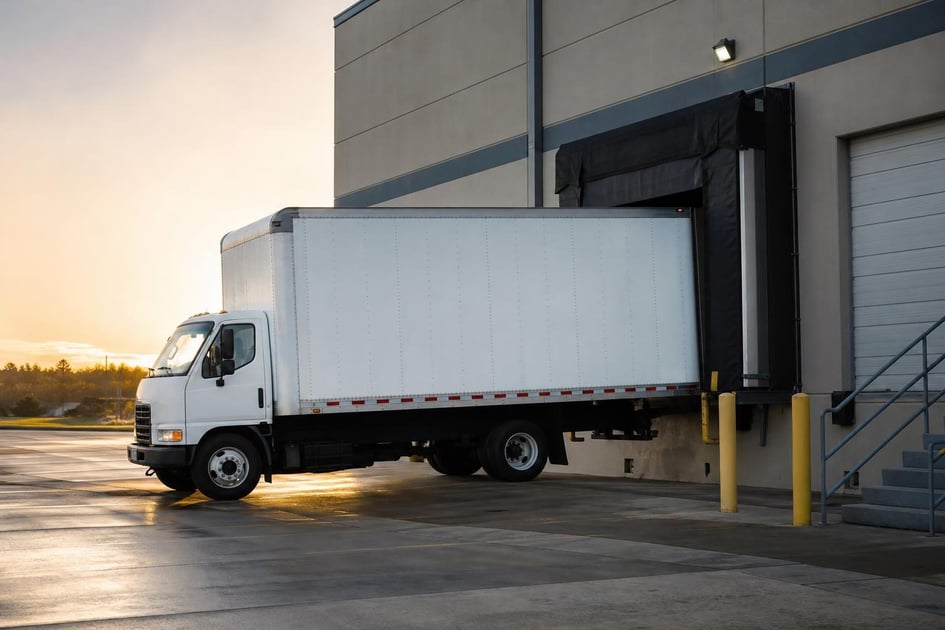
If you are buying a box truck to expand a delivery route, replace an aging fleet vehicle, or launch a last-mile operation, the financing requirements are straightforward but specific. Lenders evaluate your business stability, the equipment itself, and how the payment fits your cash flow. Understanding those three pillars before you apply will save you time and prevent surprises at closing. You do not need perfect credit or a massive down payment, but you do need to show that the truck will generate revenue and that your business can absorb the obligation. The box truck market remains active across the country, with independent contractors and small fleets replacing older units and adding capacity to meet steady freight demand.
What Lenders Actually Look For When You Finance a Box Truck
Box trucks sit in a middle ground for lenders. They are commercial vehicles, but they are not as specialized as reefers or as heavy-duty as semis. That means the approval criteria are accessible to established owner-operators and mid-size fleets alike. Most lenders, including Provide Capital, finance box trucks from $5,000 up to $5 million, with the truck itself serving as collateral. Because the equipment secures the deal, lenders are often more flexible than they would be for an unsecured working capital loan. The key is showing that the truck will earn more than it costs.
Credit Profile and Time in Business
Your personal credit and business history are the starting point. Most equipment lenders want to see a FICO score in the mid-600s or higher, though exceptions exist when the deal structure is strong elsewhere. Two or more years in business is the standard benchmark. If you have been operating for less than that, expect to provide a larger down payment or additional documentation showing consistent revenue. The equipment itself is the collateral, which keeps rates competitive, but your credit profile still drives the pricing tier you land in. Rates vary by credit profile, equipment age and term.
Lenders also look at your debt-service coverage ratio, or DSCR. This is your net operating income divided by your total debt payments. A DSCR of 1.25 or higher is generally preferred, meaning you have $1.25 in income for every $1.00 of debt obligation. If your business carries existing equipment loans or a line of credit, the underwriter will factor those payments into the calculation. Strong bank statements showing consistent deposits can sometimes offset a shorter time in business or a lower credit score.
If you have a truck picked out and want to know where you stand, see what financing you qualify for on that unit in just a few minutes.
Down Payment Expectations
For a used box truck, plan on 10 to 20 percent down. New trucks can sometimes be financed with zero down for strong borrowers, though 10 percent is more common for businesses under three years old. The down payment protects the lender from initial depreciation and shows you have skin in the game. If you are buying at auction or from a private seller, some lenders require a slightly higher down payment because the valuation is less standardized than dealer inventory.
Equipment Age and Mileage
Lenders care about the asset they are collateralizing. Box trucks with over 200,000 miles or more than ten model years old can still be financed, but the term will shorten and the rate will reflect the higher risk. Many lenders cap financing at trucks that are 15 years old at the end of the term. That means if you are buying a 2018 truck in 2026 and want a five-year term, the truck would be 13 years old at payoff—usually acceptable. A 2012 truck with the same term would be 19 years old at payoff and likely ineligible without a larger down payment or shorter term.
Key Insight: A 2022 box truck with 80,000 miles financed over 48 months will usually qualify for a longer term and better structure than a 2016 model with 180,000 miles, even if the monthly payment on the older truck is lower. The collateral quality affects the lender's risk, which affects your rate more than the loan amount does.
Seller Type and Its Impact on Approval
Where you buy the truck matters. Dealer purchases are the easiest to finance because the lender can verify the seller's legitimacy and the truck's history through established channels. Private sellers require more due diligence. The lender will want a clear title, a bill of sale, and may require an independent inspection. Auction purchases can be financed, but timing is tighter because auction houses demand fast payment. If you plan to buy at auction, get pre-approved so you know your maximum bid and the lender can move quickly. Online marketplaces are increasingly common for box truck sales, but they add another layer of verification. Always confirm the seller's identity and the truck's location before sending any deposit.
Already have a machine in mind?
Provide Capital finances new and used equipment from $5,000 to $5 million, with same-day decisions possible.
Apply NowNew vs. Used Box Trucks: How Requirements Change
The financing requirements shift noticeably depending on whether you are buying new or used. New trucks come with manufacturer warranties, predictable maintenance schedules, and straightforward valuations. Used trucks offer lower upfront costs but require more scrutiny from the underwriter. According to Census Bureau data on business formation, small transportation fleets continue to grow, and many opt for used trucks to manage cash flow.
| Factor | New Box Truck | Used Box Truck (3–7 Years) | Used Box Truck (8+ Years) |
|---|---|---|---|
| Down payment | 0–10% | 10–15% | 15–20% |
| Typical term | 60–72 months | 48–60 months | 36–48 months |
| Rate structure | Most competitive | Standard | Higher to reflect risk |
| Collateral life | Full useful life | Remaining useful life | Limited remaining life |
| Documentation | Dealer invoice | Inspection, maintenance records | Full inspection, lien check |
Why Used Trucks Often Make More Sense
A three- to five-year-old box truck has already absorbed the steepest depreciation but still has plenty of service life left. For a delivery contractor adding a second or third vehicle, this is often the sweet spot. The lower acquisition cost means a smaller total financed amount, which improves your debt-service coverage ratio and can make approval easier even if your credit is not perfect. A $45,000 used truck with a solid maintenance history often makes more financial sense than an $85,000 new truck when the monthly revenue per truck is modest.
When New Is Worth the Premium
If you are running high-mileage routes five or six days a week, or if you need specific upfit configurations that are only available new, the warranty coverage and lower maintenance risk can justify the higher payment. New trucks also tend to qualify for the most favorable Section 179 deductions in the 2026 tax year, though you should confirm your specific situation with a CPA.
Pro Tip: If you are buying used, pull a vehicle history report and have a diesel or heavy-duty mechanic inspect the truck before the lender orders its own appraisal. Addressing transmission wear, frame rust, or ECM issues before underwriting begins prevents delays and renegotiations.
Lease vs. Loan: Which Structure Fits Your Operation?
Not every box truck acquisition should be a loan. The right structure depends on how long you plan to keep the truck, how many miles you drive annually, and whether you want to own the asset outright. SBA guidance on small business financing emphasizes matching the financing term to the asset's useful life, and that principle applies directly here.
Equipment Finance Agreement (Loan)
An equipment finance agreement, or EFA, is essentially a loan secured by the truck. You own the truck from day one, and the lender files a UCC-1 lien against it. At the end of the term, the lien releases and you hold clear title. This is the right choice if you plan to run the truck for its full useful life or if you want to take advantage of 2026 Section 179 depreciation. Monthly payments are fixed, and there is no mileage limit.
Fair Market Value Lease
An FMV lease functions like a rental with a buyout option. You make lower monthly payments than a loan would require, and at the end of the term you can return the truck, extend the lease, or buy it at its then-current fair market value. This works well if you replace trucks every four to five years to avoid major maintenance, or if your route volume might change and you do not want to be stuck with an asset you no longer need. You do not own the truck during the lease, so the tax treatment differs—consult your CPA about deducting lease payments versus depreciation.
$1 Buyout Lease
A $1 buyout lease is technically a lease for accounting purposes, but it functions like a loan. You make higher payments than an FMV lease, but at the end you own the truck for one dollar. This structure is useful if your accountant wants the liability off the balance sheet or if you are working with a vendor that offers special lease pricing. For most owner-operators, an EFA is simpler and more transparent.
By the Numbers: On a $75,000 used box truck, a 60-month EFA might run roughly $1,550 to $1,750 per month depending on credit and term. An FMV lease on the same truck over 48 months could run $1,200 to $1,400 per month, but you would owe a fair-market buyout of roughly $15,000 to $20,000 if you want to keep it. Choose the structure based on total cost and your exit strategy, not just the monthly payment.
Find the right financing structure
Tell us about the equipment you need and we will show you the options that fit your business.
See Your OptionsTax Treatment for Box Trucks in 2026
The tax year 2026 offers meaningful incentives for box truck buyers, but the rules are detailed and you should always verify them with a CPA before making a purchase decision.
Section 179
Section 179 allows businesses to deduct the full purchase price of qualifying equipment in the year it is placed in service, subject to an annual inflation-adjusted limit and a phase-out threshold. For tax year 2026, those limits will be set by the IRS based on inflation adjustments. Box trucks used more than 50 percent for business generally qualify. If you place a box truck in service during 2026, you may be able to deduct some or all of the cost in year one, subject to your taxable income, business-use percentage, and the current-year ceiling. A CPA can confirm the exact 2026 limits and whether your specific purchase falls within them.
Bonus Depreciation
Bonus depreciation continues to phase down in 2026 from the higher percentages available in prior years. The exact percentage for tax year 2026 depends on current federal law. You may be able to combine bonus depreciation with Section 179, but the math is sequential and income-limited. Again, a CPA should model this for your exact situation using the 2026 rates.
Transportation equipment financing covers a range of vehicles, and the tax treatment varies by type. Box trucks generally qualify for the same depreciation schedules as other commercial vehicles between 6,001 and 14,000 pounds GVWR, but weight ratings matter. A truck over 14,000 pounds GVWR may fall under different rules. Check your door placard and confirm with your accountant.
Ready to see how the numbers work for your operation? Get a decision on your box truck, possibly the same day, and know exactly what you are working with before you talk to the seller.
Pro Tip: If you are buying in November or December 2026, confirm the exact in-service date with your CPA. The IRS looks at when the truck is delivered and ready for use, not when you signed the financing paperwork. A delay in delivery that pushes placement into January 2027 could shift your entire deduction strategy.
Documentation You'll Need
Having your paperwork organized before you apply will speed up approval and avoid back-and-forth. Here is what most lenders request for a box truck deal.
Business Financials
Expect to provide the last three months of business bank statements, your most recent business tax return, and a current profit-and-loss statement. If your business is newer and lacks a full tax history, be prepared to explain your revenue model and provide any contracts or customer agreements that show future income. Underwriters look for consistent deposits, healthy average balances, and no recent overdrafts. A single large deposit that is not recurring revenue may help your cash position but will not convince an underwriter that you can handle a monthly payment.
Equipment Details
The lender needs the year, make, model, VIN, mileage, and seller information. If you are buying from a dealership, the invoice or purchase agreement is usually sufficient. If you are buying from a private seller or auction, you may need to arrange an independent appraisal. Photos of the cab, box, and interior can also help, especially for used trucks. For trucks with liftgates or specialized upfits, document those features because they affect resale value and therefore collateral coverage.
Personal Guarantee
Most box truck financings under $500,000 require a personal guarantee from the majority owner. This is standard in equipment finance and does not mean the lender doubts your business. It simply means that if the business fails, the lender has recourse to the personal assets of the guarantor. Some lenders will waive the personal guarantee for large, well-capitalized borrowers, but that is the exception, not the norm.
Dump Trucks financing follows a similar documentation path, though heavier-duty trucks sometimes require a CDL and DOT authority verification. For box trucks under 26,001 pounds GVWR, a standard driver's license and business registration are usually sufficient unless state law says otherwise.
References and Background Checks
Some lenders will call your landlord or major vendor to confirm you are in good standing. If you lease your facility, have the landlord's contact information ready. A short conversation verifying that your rent is current can remove a red flag before it becomes an issue. This step is more common for deals over $250,000 or for borrowers with less than two years in business, but it can come up on any application.
Common Mistakes Owners Make
The most frequent error is shopping for the truck before understanding what you qualify for. If you put a deposit down on a 2015 box truck with 250,000 miles and then learn your lender caps terms at 36 months for that age, your monthly payment may be higher than you budgeted. Get your financing parameters first, then negotiate with sellers from a position of certainty.
Another mistake is ignoring the total cost of ownership. Fuel economy, insurance, and maintenance vary widely between a gas-powered 16-foot box truck and a diesel 26-foot model with a liftgate. A lower monthly payment on an older diesel can be erased by a single injector failure or DEF system repair. Reuters coverage of transportation sector costs has documented how maintenance spikes on older commercial vehicles can strain small operators.
Some buyers also forget to line up commercial auto insurance before closing. Lenders require proof of insurance naming them as loss payee before they will fund. If you wait until the last minute to get a quote, you could delay funding by several days. Call your insurance agent early in the process and get a binder ready.
Finally, do not forget to verify the title status. Salvage or rebuilt titles are nearly impossible to finance. Even a clean title with a prior lien that was not properly released can delay closing by days or weeks. Run a title search before you commit to the purchase. Lenders almost never finance box trucks that will be used for personal moving or non-business purposes. If your business plan involves occasional personal use, be transparent about it. Mixed-use financing can still work if the primary purpose is commercial, but hiding personal use from the underwriter is grounds for default if discovered.
What Happens After You Apply
Once you submit an application, most equipment lenders can give you a credit decision within a few hours to one business day. Same-day approvals are possible when the deal is straightforward and the documentation is complete. After approval, the lender issues a term sheet outlining the rate, term, down payment, and any conditions.
You review and sign the term sheet, then the lender orders a UCC search to confirm the truck has no existing liens. If the truck is clear, the lender prepares closing documents. You sign, send the down payment, and the lender pays the seller directly or wires funds to escrow. The entire process from application to funding typically takes two to five business days, though simple deals can move faster. If you are buying from a dealer, funding is often completed within 24 to 48 hours of signed documents. Private sales take longer because the lender must verify the title transfer and may need to coordinate with your insurance agent to add the loss payee endorsement.
If the lender finds a lien on the truck or discovers that the seller owes back taxes, those issues must be resolved before funding. This is why it pays to work with reputable dealers or to do your due diligence on private sellers before you apply. The transportation sector continues to see steady demand, which means the secondary market for box trucks remains active and lenders are comfortable with these assets.
Box Trucks financing is one of the more straightforward categories in commercial equipment lending because the assets are common, the values are well established, and the secondary market is liquid. That liquidity benefits you directly: because lenders know they can resell a repossessed box truck, they are willing to offer longer terms and larger approvals than they would for niche equipment.
Ready to move forward?
More than 10,000 businesses have financed equipment with Provide Capital. See what you qualify for today.
Get StartedFrequently Asked Questions
What credit score do I need to finance a box truck?
Most lenders look for a minimum FICO score of 620 to 650. Scores above 700 will qualify for the best structures, while scores below 600 may still be approved with a larger down payment or shorter term. Your business history and cash flow matter almost as much as the score itself.
Can I finance a box truck if I have been in business less than two years?
Yes, but the requirements tighten. Expect to put down 15 to 25 percent and to provide strong documentation of your revenue stream. Some lenders specialize in newer businesses, though the rate will reflect the additional risk.
How long can I finance a used box truck?
Terms typically range from 36 to 60 months for used trucks. The exact term depends on the truck's age and mileage at the time of purchase. Most lenders want the truck to be no more than 12 to 15 years old at the end of the term.
Is a personal guarantee required?
For most transactions under $500,000, yes. A personal guarantee is standard in equipment finance. If your business has substantial revenue and assets, or if you are financing multiple trucks in a fleet deal, the lender may negotiate this point.
Can I finance a box truck from a private seller?
Yes. Private-party sales are common in the box truck market. You will need a purchase agreement, a clear title, and often an independent appraisal. The lender will handle the lien filing and payment directly with the seller to protect both parties.
What is the difference between a box truck and a Reefer Truck financing deal?
A reefer truck includes a refrigerated unit that adds cost, complexity, and maintenance risk. Financing requirements are similar, but the appraisal is more specialized and the lender may require proof of maintenance on the refrigeration unit for used units.
Does the truck's GVWR affect financing?
It can. Trucks over 26,001 pounds GVWR require a CDL to operate, and lenders may want to verify that you or your driver hold the proper license. For trucks under that threshold, a standard license is usually fine, and the financing process is simpler.
Can I deduct the full cost of the box truck in 2026?
You may be able to deduct the full cost under Section 179 for tax year 2026, subject to the inflation-adjusted limit and your taxable income. Bonus depreciation is also available at a reduced rate for 2026. Speak with a CPA to confirm your eligibility and the optimal strategy.
Ready to Move Forward?
Box truck financing is not complicated, but it is specific. The lenders want to see a stable business, a quality asset, and a payment that fits your cash flow. If you have those three elements, approval is well within reach. Know the truck's age and mileage, have your financials ready, and understand whether a loan or lease makes more sense for your tax situation and long-term plans.
Start an application in a few minutes and get a clear picture of what you qualify for. Whether you are adding one truck or building a fleet, the financing should be the straightforward part of the transaction.
Disclaimer: The information provided in this article is for general educational purposes only and is not financial, legal, or tax advice. Funding terms, qualifications, and product availability may vary and are subject to change without notice. Provide Capital does not guarantee approval, rates, or specific outcomes. For personalized information about your business funding options, contact our team directly.
