
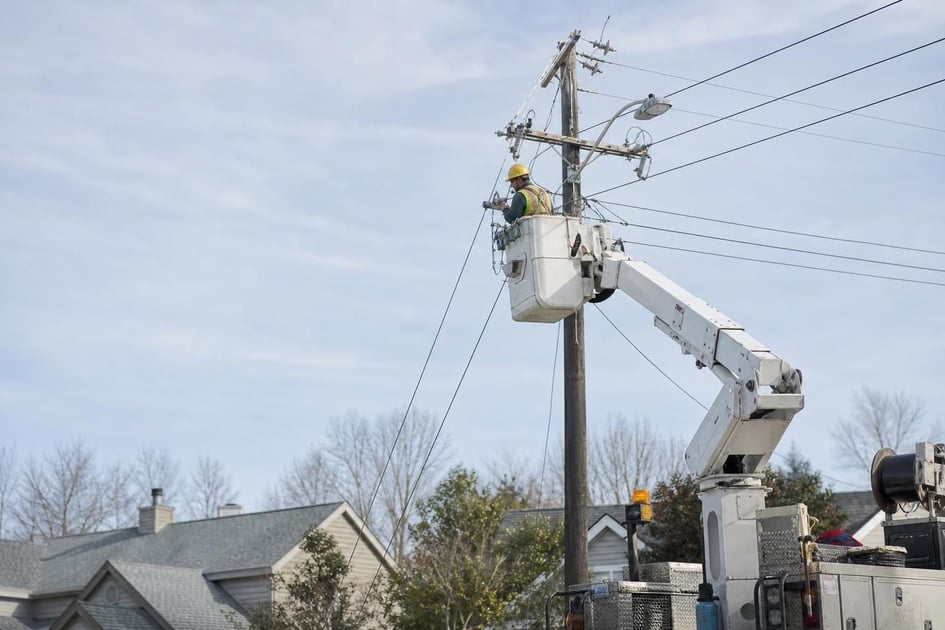
A bucket truck financing calculator gives you a quick estimate of monthly payments based on the truck's price, your credit profile, and the term length you choose. It is not a binding offer, but it does help you decide whether a $65,000 aerial lift fits your cash flow before you spend time on an application. Rates vary by credit profile, equipment age and term length, so treat any online estimate as a starting point, not a guarantee. If you are exploring Bucket Trucks financing options and already have a truck picked out, you can start an application in a few minutes and see what terms you qualify for.
What a Bucket Truck Financing Calculator Actually Does
Most calculators ask for four pieces of information: equipment cost, estimated credit tier, desired term, and down payment amount. They run those inputs against current rate ranges and return an approximate monthly payment. Some also show an amortization schedule so you can see how much of each payment goes toward principal versus interest.
The key thing to understand is that the calculator uses average ranges. It does not pull your credit report, verify your business revenue, or inspect the specific truck you want to buy. A 2018 forestry bucket truck with 80,000 miles will finance differently than a new unit straight from the dealer. That distinction matters because the equipment itself serves as collateral, which keeps rates competitive but also means the lender cares about resale value.
Calculators are most useful for two decisions. First, they show whether a monthly payment lands within your operating budget. Second, they let you compare how changing the term—from 36 months to 60 months, for example—affects cash flow. A longer term lowers the monthly obligation but increases total interest paid over the life of the loan. A shorter term does the opposite. Neither is inherently better; the right choice depends on how many billable hours you expect the truck to generate each month.
Already have a machine in mind?
Provide Capital finances new and used equipment from $5,000 to $5 million, with same-day decisions possible.
Apply NowWhat Inputs Drive the Estimate
Credit Profile and Time in Business
Lenders look at both personal and business credit. A score above 700 generally unlocks the most favorable terms, though financing is available across a broader range. Time in business also matters. An electrical contractor with three years of tax returns and steady revenue will see stronger offers than a newly formed LLC with six months of history. That does not mean new businesses are excluded, but the structure of the deal may change.
Equipment Age and Condition
New bucket trucks typically qualify for longer terms and lower rates because the collateral holds value. Used trucks can absolutely be financed—Provide Capital finances both new and used business equipment—but older units may require larger down payments or shorter amortization. The cutoff varies by lender, yet trucks older than ten years or with exceptionally high hours often need additional equity from the borrower.
Term Length
Terms for bucket truck loans usually range from 24 to 84 months. Shorter terms mean higher monthly payments but less total interest. Longer terms preserve working capital. If your truck will generate revenue immediately—say, you already have a signed utility maintenance contract—a shorter term may make sense. If the truck is an expansion purchase and revenue will ramp up over six months, a longer term provides breathing room.
Down Payment
Down payments for equipment financing commonly run from zero to 20 percent, depending on credit and equipment age. A larger down payment reduces the lender's risk and can improve the rate. It also lowers the monthly obligation. However, putting too much cash into a depreciating asset can strain your liquidity. The calculator lets you test both scenarios.
Pro Tip: Run the calculator twice—once with your best-case credit assumption and once with a more conservative tier. If the conservative payment still leaves room for fuel, insurance, and maintenance, the purchase is likely sustainable even if the final offer comes in slightly higher than hoped.
New vs. Used Bucket Trucks: How Age Affects the Numbers
Bucket trucks depreciate quickly in the first five years, then level off. That depreciation curve affects financing terms more than most borrowers expect. A new Altec or Versalift unit may cost $120,000 to $180,000 depending on specs, while a five-year-old model with documented maintenance might run $70,000 to $95,000. Both can be financed, but the deal structure changes.
| Factor | New Bucket Truck | Used Bucket Truck (5–7 Years) |
|---|---|---|
| Typical price range | $120,000 – $180,000 | $55,000 – $95,000 |
| Maximum term | Up to 84 months | Usually 48–72 months |
| Down payment | Often 0–10% | Often 10–20% |
| Rate environment | More competitive | Slightly higher, varies by condition |
| Collateral confidence | High resale value | Depends on hours, brand, maintenance |
The equipment itself is the collateral, which keeps rates competitive across both categories. However, lenders will verify the serial number, condition, and market value before finalizing terms. If you buy used, have the inspection report ready. If you buy new, the dealer invoice usually suffices.
Lease vs. Loan: A Side-by-Side Look
Some owners assume leasing is always cheaper. That is not necessarily true for bucket trucks, which tend to stay in service for ten to fifteen years. If you plan to own the truck outright and deduct depreciation, a loan is usually the better fit. If you want to upgrade every four years and do not mind returning the unit, a lease may work. The SBA guidance on equipment financing and leasing outlines how capital leases differ from operating leases, and when each structure makes sense.
| Feature | Equipment Loan | Capital Lease | Operating Lease |
|---|---|---|---|
| Ownership at end | Yes, after final payment | Yes, often for $1 buyout | No, return the equipment |
| Monthly payment | Moderate | Higher than operating lease | Lowest |
| Tax treatment | Depreciation + interest deduction | Depreciation + interest deduction | Rental expense deduction |
| Ideal for | Long-term ownership | Eventual ownership with lower upfront | Short-term or seasonal use |
| Collateral | The truck | The truck | The truck, owned by lessor |
Key Insight: Many utility contractors choose a loan over a lease because bucket trucks accumulate custom fittings—tool racks, auxiliary generators, sign storage—that are hard to remove before returning a leased unit. If you plan to modify the truck, ownership avoids end-of-lease restoration costs that can run into the thousands.
Tax Treatment for the 2026 Tax Year
For the 2026 tax year, Section 179 allows businesses to expense up to $2,560,000 of qualifying equipment placed in service, with a phase-out beginning at $4,090,000 in total purchases. That means a single bucket truck purchase will rarely hit the cap, but if you are buying multiple units or combining the truck with other major equipment, the threshold matters. Always confirm your specific situation with a CPA before relying on any tax figure.
Bonus depreciation has been phasing down. For 2026, the first-year bonus depreciation percentage is lower than in prior years, so Section 179 often provides the larger immediate deduction for small and mid-sized contractors. Interest paid on the equipment loan is generally deductible as a business expense. The exact allocation between Section 179, bonus depreciation, and regular MACRS depreciation depends on your taxable income, entity type, and other capital purchases during the year. Speak with a CPA who understands construction or utility accounting to map out the optimal strategy.
Qualification Criteria in Detail
Provide Capital finances new and used business equipment from $5,000 to $5 million nationwide. Same-day approvals are possible when the application is complete and the equipment details are straightforward. The basic criteria include:
- At least six months in business, though two years or more strengthens the file.
- Personal credit score generally above 600; higher scores unlock better terms.
- Monthly revenue sufficient to cover the proposed payment with room for operations.
- The equipment must be for business use, not personal.
- A valid equipment quote or invoice from a dealer, auction, or private seller.
Because the equipment itself is the collateral, lenders place heavy weight on the asset's value. A well-maintained Terex or Altec unit from a reputable dealer will move faster than a no-name chassis with a homemade boom. If you are buying at auction, expect to provide additional documentation such as an independent appraisal.
By the Numbers: A $75,000 bucket truck financed over 60 months with a 10 percent down payment might carry a monthly payment in the low four figures, depending on credit and equipment age. Over the full term, the total cost of ownership still often comes in below leasing two successive trucks across the same period, assuming the unit remains in service for ten years or more.
See what you qualify for
The equipment itself secures the financing, which keeps rates competitive. Checking your options takes minutes.
Check Your OptionsIndustry-Specific Use Cases
Bucket trucks serve several industries, and each has its own buying pattern. Electrical contractors often purchase in Q1 ahead of storm season. Tree care companies buy in late winter before the spring pruning rush. Municipal utility departments tend to buy on fiscal year cycles, which means used inventory hits the market predictably. U.S. Census Bureau construction spending data shows that nonresidential infrastructure work follows seasonal and governmental budget patterns, which directly affects when contractors need to add capacity.
Transportation equipment financing covers a wide range of vocational trucks, and bucket trucks sit at the intersection of construction and utility work. If your fleet also includes dump trucks or flatbeds, bundling multiple units under one financing arrangement can simplify paperwork and sometimes improve terms. You can explore Transportation equipment financing to see how vocational trucks fit into broader fleet strategies. Related equipment like Dump Trucks financing often faces similar qualification criteria, which makes bundling efficient.
Forestry and vegetation management contractors face a unique consideration: many work on federal or state contracts that require specific safety certifications. If your bucket truck needs ANSI A92.2 compliance or chipper-compatible towing, make sure those specs are listed on the quote. Lenders do not necessarily understand boom mechanics, but they do verify that the equipment matches the invoice.
Common Mistakes When Using Financing Calculators
First, borrowers often forget to add sales tax, delivery, and upfitting to the equipment cost. A $90,000 truck becomes a $98,000 transaction after tax and freight, which changes the payment estimate. Second, some owners select the longest possible term to minimize monthly payments, not realizing that financing a truck past its useful life means making payments on a unit that is no longer revenue-generating. Third, calculators cannot account for seasonal cash flow. A tree service with 70 percent of revenue between March and October should model whether winter payments are sustainable.
Another error is comparing a calculator result to a lease quote without adjusting for ownership. At the end of a loan, you own a depreciated but still functional asset. At the end of a lease, you own nothing unless you exercise a purchase option. The monthly payment is only one variable in total cost.
What Documentation You Actually Need
A complete application moves faster. Have these items ready before you start:
- Equipment quote or purchase agreement showing year, make, model, VIN, and price.
- Last three months of business bank statements.
- Most recent business tax return, or personal return if the business is new.
- Driver's license and proof of insurance for the operating company.
- Evidence of any required licenses—electrical contractor, arborist certification, or CDL if applicable.
If the truck is used, add maintenance records and a condition report. Lenders want to know the boom hours, chassis mileage, and whether the outriggers pass inspection. The more transparency you provide, the faster the approval.
Pro Tip: If you are buying from a private seller rather than a dealer, get a third-party inspection before applying. Lenders will require it anyway, and discovering a hydraulic leak early gives you leverage to renegotiate price or walk away.
What Happens After You Apply
Once you submit an application, the lender reviews credit, verifies revenue, and validates the equipment value. For deals under $150,000, this can happen in hours. For larger transactions or specialized equipment, it may take one to two business days. Same-day approvals are possible when the file is clean and the equipment is standard.
After approval, you receive a term sheet outlining the monthly payment, term, down payment requirement, and any fees. Read it carefully. Look for prepayment penalties, UCC filing requirements, and insurance stipulations. Once you sign, the lender pays the seller directly or funds your account if the truck is already paid for and you are seeking reimbursement. To get a decision on your equipment, possibly the same day, submit your application with the details you've gathered.
Ready to move forward?
More than 10,000 businesses have financed equipment with Provide Capital. See what you qualify for today.
Get StartedFrequently Asked Questions
Can I finance a bucket truck with bad credit?
Financing is available across a range of credit profiles, though terms adjust to reflect risk. A lower credit score may require a larger down payment or a shorter term. Because the equipment serves as collateral, lenders have more flexibility than with unsecured lending. Providing strong revenue documentation can offset a weaker credit history.
How long can I finance a used bucket truck?
Used bucket trucks typically finance over 48 to 72 months, depending on age and condition. Trucks under five years old may qualify for terms up to 84 months. Units older than ten years usually need larger down payments or shorter amortization. The lender will consider the remaining useful life when setting the term.
Is a bucket truck considered a commercial vehicle for financing?
Yes. Bucket trucks are classified as commercial equipment, not passenger vehicles. That means they qualify for equipment financing rather than consumer auto loans, and they are eligible for Section 179 depreciation. Insurance requirements differ from personal auto policies, so factor commercial premiums into your cost model.
Can I finance the sales tax and delivery costs?
Many lenders allow you to roll soft costs—sales tax, delivery, installation, and initial inspection—into the loan amount. The total financed amount must still align with the equipment's value and your credit profile. Ask your lender whether soft costs are included before you finalize the quote.
What is the difference between a bucket truck and a boom truck for financing?
The terms are often used interchangeably, but boom trucks sometimes refer to cranes or sign trucks with different weight classifications. For financing purposes, the key detail is the chassis GVWR and the boom's reach and capacity. Make sure the quote accurately describes the unit so the lender can verify collateral value.
Do I need a CDL to finance a bucket truck?
You do not need a CDL to obtain financing, but you will need one to operate the truck if the combined GVWR exceeds 26,000 pounds or if the truck has air brakes. Lenders care about business use and revenue, not driver licensing. However, your insurance carrier will require appropriate licensing for operators.
Can I buy from a private seller instead of a dealer?
Yes. Private-party sales are financeable, but the process requires extra steps. The lender needs a bill of sale, a title search, and usually an independent appraisal. Funds are typically sent directly to the seller rather than to you. Start the conversation early if you are buying privately.
Should I use my bank or an equipment finance specialist?
Banks often move slowly and may not understand vocational trucks. An equipment finance specialist evaluates the collateral directly and can structure around seasonal revenue or mixed credit. The Forbes Advisor analysis of equipment financing notes that comparing specialized lenders against bank offers often yields better terms for small contractors.
Closing Next Step
A financing calculator is a useful planning tool, but the real test is the application. Gather your quote, bank statements, and tax return, then run the numbers one more time with your actual credit tier. If the payment works, move forward before the truck sells to another buyer. Ready to move forward? See what financing you qualify for on that bucket truck and get back to work.
Disclaimer: The information provided in this article is for general educational purposes only and is not financial, legal, or tax advice. Funding terms, qualifications, and product availability may vary and are subject to change without notice. Provide Capital does not guarantee approval, rates, or specific outcomes. For personalized information about your business funding options, contact our team directly.
