
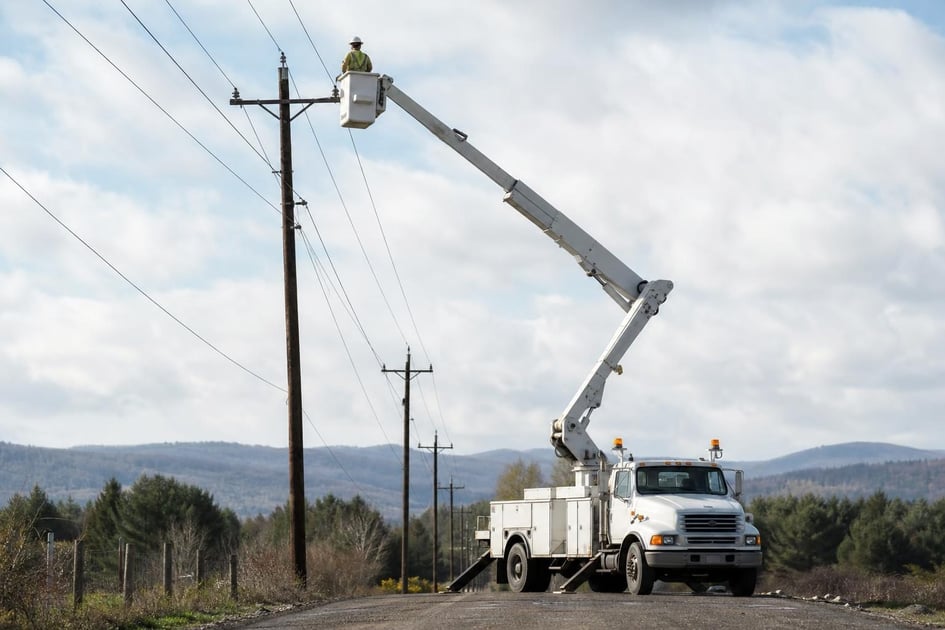
What to Expect When Financing a Bucket Truck
Financing a bucket truck works like most other equipment-backed loans: the truck itself serves as collateral, which keeps rates competitive and lets lenders offer longer terms than unsecured credit. At Provide Capital, we finance new and used Bucket Trucks financing from $5,000 up to $5 million, with same-day approvals possible when the file is complete. Rates vary by credit profile, equipment age and term, so the best way to know your exact payment is to see what you qualify for on the unit you have picked out.
Most buyers fall into three categories: utility contractors replacing an aging boom, tree-care companies adding a second truck for storm season, and sign installers expanding into LED retrofits. Each brings a different credit profile, equipment age and down-payment capacity, but the core requirements stay the same. You need a verifiable business, documented revenue, a credit history that shows you can handle debt, and a truck that matches the loan amount with enough useful life left to justify the term.
Already have a machine in mind?
Provide Capital finances new and used equipment from $5,000 to $5 million, with same-day decisions possible.
Apply NowHow Credit, Revenue and Time in Business Shape Approval
Credit Profile
Lenders look at both personal and business credit. A personal FICO score in the mid-600s or higher generally opens the door to more competitive structures, though we regularly approve files below that when cash flow is strong and the equipment is newer. Recent bankruptcies, unresolved tax liens or multiple accounts in collections will slow the process down, but they do not automatically disqualify you. If your credit has dents, be ready to explain them with dates and resolutions. The underwriter wants to see a story that makes sense, not a perfect record. Public records matter, too: civil judgments, especially those tied to prior business failures, can linger on a report for seven years and color the lender’s view of risk even when the dollar amount is small.
Revenue and Time in Business
Two years in business is the traditional benchmark, yet many one-year-old companies secure financing when they can show six months of steady deposits and a pipeline of signed work. Annual revenue of $120,000 or more is a common baseline for bucket trucks in the $40,000 to $150,000 range. If the truck costs more than $200,000, expect the lender to scrutinize debt-service coverage more closely. They want to see that your monthly equipment payment stays comfortably below your average monthly gross profit. Seasonal businesses should present a full annual cycle; a tree-care outfit that does 60 percent of its revenue between March and June can still qualify if the bank statements show consistent season-over-season growth and reserve balances that cover the lean winter months.
Equipment Age, Hours and Specifications
The truck matters as much as the borrower. A 2024 aerial device on a low-mileage chassis will command better terms than a 2012 unit with 200,000 miles and 5,000 boom hours. Lenders worry about residual value. If you default, they need to recover their capital at auction. That means the boom model, chassis brand, service history and any recent inspections all influence pricing. For used trucks, most lenders cap eligibility at 10 to 15 model years, though exceptions exist for refurbished units or dealer-certified inventory. Transmission type matters as well: an Allison automatic in a medium-duty chassis is easier to resell than a manual transmission in the same class, and that liquidity premium sometimes translates into a better rate.
Key Insight: Lenders often discount the value of a bucket truck with more than 8,000 boom hours, even if the chassis mileage is low. Hours tell them how much structural fatigue the aerial device has absorbed, and that directly affects the advance rate and term they will offer. A truck showing 3,000 hours but 150,000 miles may actually fetch stronger terms than one with 50,000 miles and 9,000 hours.
New vs. Used Bucket Trucks: Financing Trade-offs
New trucks mean warranty coverage, predictable maintenance and the latest safety standards, but they also mean steeper depreciation in the first 36 months. Used trucks preserve capital and often come with upfitter equipment already installed, yet they carry higher interest margins and shorter maximum terms. Your choice should hinge on utilization rate, annual mileage and whether you have a shop that can handle repairs in-house. Fleet owners running 40,000 miles a year usually prefer new because downtime costs exceed the depreciation hit. Owner-operators doing 12,000 miles a year and storing the truck indoors often find better value in a five- to seven-year-old unit.
| Factor | New Bucket Truck | Used Bucket Truck (5–10 Years) |
|---|---|---|
| Typical financing term | 5–7 years | 3–5 years |
| Down payment range | 0–10% | 10–20% |
| Collateral confidence | High; strong residual | Moderate; depends on hours |
| Monthly payment | Higher total, spread out | Lower total, compressed |
| Warranty protection | Full manufacturer coverage | Limited or aftermarket only |
| Best fit for | High-mileage fleets, prestige bids | Cash-conscious owner-operators |
If you are buying used, pull the boom-hour meter reading and the chassis ECM report before you apply. Lenders will ask for them, and having them ready signals that you are a serious buyer. You can get a decision on your equipment, possibly the same day, by starting an application with those details in hand.
New Bucket Trucks
A new Class 7 or 8 bucket truck from a major manufacturer often runs between $140,000 and $280,000 depending on boom height, material handler options and chassis spec. Financing can stretch to seven years, keeping the monthly payment aligned with the truck’s revenue generation. Because the collateral is fresh, lenders may advance 100 percent of the invoice, including soft costs like delivery and initial upfitting. That preserves working capital for fuel, insurance and payroll during the first few months of service. If you are bidding municipal or utility contracts, a new truck with current ANSI standards can also satisfy safety prequalification requirements that older units cannot meet.
Used Bucket Trucks
The used market is larger and more fragmented. A ten-year-old, 60-foot aerial on a Freightliner M2 might list for $65,000, while a seven-year-old 75-foot over-center model on a tandem axle can still command $125,000. Terms rarely exceed five years, and the lender may cap the loan-to-value ratio at 85 percent. That means you need either a cash down payment or a trade-in to bridge the gap. Always budget for an independent boom inspection; a $400 out-of-pocket inspection can save you from financing a unit with hidden corrosion or hydraulic leaks. Check whether the aerial device was removed and remounted on a newer chassis, a common practice that can extend useful life but complicates title and lien paperwork.
Pro Tip: When you shop used, prioritize units that were fleet-maintained by utility cooperatives or municipal electric departments. Those trucks usually have documented boom inspections every six months and replacement cycles that retire the truck before catastrophic wear sets in. Ask for the preventive maintenance log; it is worth more than a fresh paint job when a lender reviews collateral value.
Lease or Loan: Picking the Right Structure
Equipment loans and leases both let you put a bucket truck to work without paying the full price upfront, but they treat ownership, tax deductions and end-of-term obligations differently. An equipment loan puts the title in your name day one, with the lender holding a lien until the final payment. A lease keeps title with the lessor until you exercise a purchase option. As Forbes notes in its 2026 small-business loan guide, having a clear revenue plan for the equipment strengthens your application regardless of the structure you choose. Your accountant and your lender should review the structure together so there are no surprises at tax time or at the end of the term.
Equipment Loan
Loans suit owners who plan to run the truck until the wheels fall off. You claim depreciation and any available Section 179 deduction on the 2026 tax return, and you build equity with every payment. At the end of the term, you own the truck free and clear, which matters if you expect to get six or seven years of productive life beyond the payoff date. The trade-off is a slightly higher monthly payment than a lease because you are amortizing the full cost. Loans also make sense if you plan to customize the truck heavily—adding a chip box, hydraulic tool circuits or specialty lighting—because those modifications add value to your asset, not the lessor’s.
Fair Market Value Lease
An FMV lease works like a rental with a buyout option. Monthly payments are lower because you are only covering the truck’s expected depreciation during the lease period, not the entire purchase price. At the end of the term—typically 36 to 60 months—you can return the truck, renew the lease or purchase it at fair market value. This structure makes sense if you expect rapid changes in boom technology or if your contracts are short-term and you need flexibility. Be aware that excess mileage or hour charges can apply, so read the rider carefully if you plan to run the truck heavily.
$1 Buyout Lease
A $1 buyout lease is technically a lease for accounting purposes, but it functions like a loan. You make higher monthly payments than an FMV lease, and at the end you buy the truck for one dollar. For tax purposes in 2026, the IRS generally treats $1 buyout leases as conditional sales, meaning you may be able to take depreciation just as you would with a loan. Confirm the exact treatment with your CPA before you sign, because lease accounting rules have shifted in recent years. This structure is popular with borrowers who want the simplicity of a lease document but the economic benefits of ownership.
By the Numbers: On a $100,000 bucket truck, a five-year equipment loan might carry a monthly payment roughly 15 to 25 percent higher than a 60-month FMV lease, but the loan builds equity and leaves you with an unencumbered asset at payoff. Over 60 months, the difference in total cash outlay can be negligible once you factor in the resale value of the owned truck. Run both scenarios with your accountant to see which preserves more cash after taxes.
Tax Treatment for the 2026 Tax Year
For the 2026 tax year, the Section 179 deduction allows businesses to expense qualifying equipment purchases up to an inflation-adjusted annual limit. The exact dollar ceiling changes each year, so speak with your CPA about the 2026 threshold before you count on a specific write-off. Bonus depreciation may also apply to new and used bucket trucks placed in service during 2026, though the percentage has been stepping down annually and the precise rate for 2026 should be verified with a tax professional. Bucket trucks qualify as heavy equipment, and because they are used more than 50 percent for business, they meet the IRS business-use test provided your logs support the claim.
Because bucket trucks are heavy equipment used for business, they generally qualify for both Section 179 and bonus depreciation if purchased outright or financed with a $1 buyout lease. FMV leases are usually treated differently; the lessor claims depreciation while you deduct the lease payment as a rental expense. The best structure depends on your 2026 taxable income, your existing depreciation schedules and whether you need to show equipment assets on your balance sheet for bonding or contractual reasons. Never choose a financing structure solely for tax reasons, but do run the numbers both ways with your CPA. If you are in a high-tax state, the state treatment of Section 179 may differ from federal rules, so ask about both.
See what you qualify for
The equipment itself secures the financing, which keeps rates competitive. Checking your options takes minutes.
Check Your OptionsDocumentation You Need at Application
Underwriters cannot approve what they cannot verify. Having these documents ready before you apply shortens the timeline from days to hours. The goal is to prove that the business exists, that it generates enough cash to cover the new debt and that the equipment is worth what you have agreed to pay.
Business Verification
Be prepared with your articles of incorporation or organization, a current business license and a voided business check. If you operate under a DBA, bring the filing that connects the trade name to the legal entity. Lenders also want to see the driver’s licenses of all owners with 20 percent or greater ownership. Some lenders will pull a business credit report automatically; others ask for a recent Dun & Bradstreet profile. If you have an existing lending relationship, bring the most recent statement showing satisfactory payment history.
Equipment Details
The invoice or purchase agreement is essential. For used trucks, add the title history, the current odometer reading, boom-hour meter photo and any recent inspection reports. If you are buying from a private seller rather than a dealer, the lender may require an independent appraisal to confirm value. Photos of the chassis, boom, outriggers and any rust or damage should be clear and dated. If the truck has been refurbished, include the reconditioning invoice; it can support a higher advance than the year alone would suggest.
Financial Records
Three months of business bank statements are standard; some files need six or twelve depending on the advance amount. If your revenue fluctuates seasonally—common in tree care and storm restoration—include a brief narrative explaining the cycle. Tax returns for the prior two years help, but they are not always mandatory for deals under $150,000. For larger requests, expect to provide a current year-to-date profit and loss statement as well. Interim financials should be prepared on an accrual basis if that is how you file; consistency between your tax returns and your application package reduces underwriter questions.
Industry-Specific Buying Patterns
Bucket trucks are not a monolithic market. How you finance one depends heavily on the industry you serve and the seasonal rhythm of your work. Current Census Bureau construction spending data shows sustained investment in power and transportation infrastructure, which underpins demand for aerial equipment across the country. States with aggressive utility hardening programs tend to see stronger used-truck prices because demand outstrips supply, while regions with heavy storm seasons create short-term spikes in rental rates that make ownership more attractive.
Utilities and Telecommunications
Line contractors for electric cooperatives and fiber installers tend to buy new or nearly new trucks because downtime is expensive. These buyers often run multiple trucks and use Dump Trucks financing alongside aerial devices to move trench spoils and poles. Financing terms stretch longer because the revenue stream is steady and the equipment is well maintained. If you are bidding on storm-recovery contracts, having a truck under five years old can be a prerequisite in the bid documents, making the higher payment a cost of entry.
Tree Care and Forestry
Arborists face intense spring and fall seasons followed by winter lulls. A used 60-foot chipper-body bucket truck bought in November can be financed over four years with a larger down payment to offset the seasonal risk. If you are adding a chip truck as well, look into Transportation equipment financing to bundle the approvals and close faster. Because tree care is highly weather-dependent, lenders may ask for two years of bank statements to verify that you have managed through a slow season without overdrafts.
Sign, Lighting and HVAC Installation
These contractors often need smaller boom heights—45 to 55 feet—and may buy used because annual mileage stays low. A sign company running local service routes might put only 8,000 chassis miles per year on a truck, so a ten-year-old unit with 80,000 miles still has plenty of life. The key is matching the truck’s spec to the job; overbuying boom height wastes capital, while underbuying forces you to rent for tall installs. Many sign shops also run crane trucks for monument work, so consider whether a bucket truck with a material handler jib can do double duty before you finance a second specialized unit.
Common Mistakes Owners Make
Underinsuring the Aerial Device
A standard commercial auto policy covers the chassis but may exclude the boom. Lenders require proof of inland marine or equipment-specific coverage that names them as loss payee. If you assume your general liability policy handles it, you could face a forced-placement policy at closing that adds hundreds to your monthly cost. Get the certificate of insurance correct the first time: list the lender’s name and address exactly as requested, include the VIN and serial number of the boom, and set the deductible no higher than $2,500 unless the lender approves a higher retention.
Ignoring Boom Hours and Payload
Chassis mileage gets all the attention, but boom hours are the real wear indicator. A truck with 50,000 chassis miles and 6,000 boom hours may be more fatigued than one with 120,000 miles and 2,000 boom hours. Also verify GVWR and payload against your tools and material load; overweight fines and premature suspension wear erase the savings from a cheap truck. If the truck has a rear-mounted boom, remember that the outrigger footprint limits where you can set up, and overweight permits do not exempt you from local bridge laws.
Stretching the Term Too Long
A seven-year loan on a twelve-year-old truck is risky. You may still owe money when the boom needs a major overhaul or when the truck no longer meets emissions standards. Match the term to the useful life. If the truck is already eight years old, keep the term at four years or less so you are not underwater on a unit with depreciated value. A good rule of thumb is to finance for no more than half the truck’s expected remaining service life if you plan to trade before payoff.
What Happens After You Apply
Same-Day Review
When the file is complete—meaning all documents and the equipment spec sheet are in hand—decisions can come back the same day. Provide Capital reviews the application, runs credit and evaluates the collateral in one pass. If the story is straightforward and the equipment checks out, you receive a term sheet with the structure, down payment and monthly payment range. Rates vary by credit profile, equipment age and term, so the term sheet outlines the scenario rather than a single fixed quote. Conditional approvals may require proof of insurance or a final invoice before docs are released.
Funding and Titling
After you accept the terms, the lender issues a purchase order or drafts a check to the seller. For dealer purchases, funds usually move within 24 to 48 hours. For private-party sales, the title transfer and lien perfection can add two to three business days. The truck must be insured before funds release, and the lender’s lien is recorded on the title. Once the seller is paid, you pick up the truck and start putting it to work. If you are buying across state lines, confirm that the seller’s title is free of liens and that the odometer statement is accurate; out-of-state DMV offices can delay funding if the paperwork is inconsistent.
Pro Tip: If you buy from a private seller, ask the lender upfront whether they require a dealer invoice or if they can work with a bill of sale and an independent appraisal. Some lenders only fund dealer transactions, while others—like Provide Capital—routinely handle private-party sales on bucket trucks up to $5 million. For businesses also acquiring real estate alongside fleet expansion, the SBA 504 loan program offers long-term, fixed-rate financing that can complement your equipment line.
Put the right equipment to work
From $5,000 to $5 million, new or used, Provide Capital helps businesses nationwide finance the equipment they need.
Apply TodayFrequently Asked Questions
Can I finance a bucket truck with bad credit?
Yes, though the structure changes. Expect a larger down payment—often 15 to 25 percent—and a shorter term. Strong revenue and a newer truck can offset a lower credit score. Rates vary by credit profile, equipment age and term, so the best approach is to apply and see what options come back.
How long can I finance a bucket truck?
New trucks generally qualify for five to seven years. Used trucks usually top out at three to five years, depending on age and boom hours. The lender wants the note paid off while the truck still has reliable market value.
Is a down payment always required?
Not for new trucks with strong credit. Zero-down options exist, especially for borrowers with two or more years in business and solid cash flow. Used trucks and challenged credit files almost always require some equity, typically 10 to 20 percent.
Can I finance a bucket truck from a private seller?
Yes. You will need a bill of sale, a clear title and usually an independent appraisal. The process takes slightly longer than a dealer purchase because the lender must verify lien clearance and ownership history.
Does the lender need to inspect the truck?
Most deals under $150,000 rely on photos, hour-meter readings and the purchase invoice. Higher advances and older units may trigger a physical inspection or a third-party appraisal to confirm condition and value.
What insurance do I need?
Physical damage coverage on the boom and chassis, naming the lender as loss payee, plus general liability. If you have employees, workers compensation is also required in most states. The lender will verify coverage before funding.
Can I refinance an existing bucket truck?
Refinancing is possible if you have equity and the truck is less than ten to twelve years old. The lender pays off the existing note and restructures the remaining balance. This works well if your credit or revenue has improved since the original purchase.
How fast can I get funded?
With a complete file, approval can come the same day and funding within 24 to 48 hours for dealer purchases. Private-party and out-of-state transactions may add a few days for title work.
Your Next Step
Bucket trucks are revenue tools, not vanity purchases. The right financing structure keeps your cash flow intact, puts the tax advantages of the 2026 code to work for your business and gets the truck onto your job site before the next contract starts. Whether you are looking at a brand-new 75-foot over-center unit or a proven fleet refurb, the requirements are straightforward: a viable business, a credit story that makes sense and a truck worth collateralizing.
Gather your bank statements, equipment spec sheet and insurance quote, then start an application in a few minutes to see what financing you qualify for on that bucket truck. If you have questions about which structure fits your fleet, our team can walk through the numbers before you commit.
Disclaimer: The information provided in this article is for general educational purposes only and is not financial, legal, or tax advice. Funding terms, qualifications, and product availability may vary and are subject to change without notice. Provide Capital does not guarantee approval, rates, or specific outcomes. For personalized information about your business funding options, contact our team directly.
