
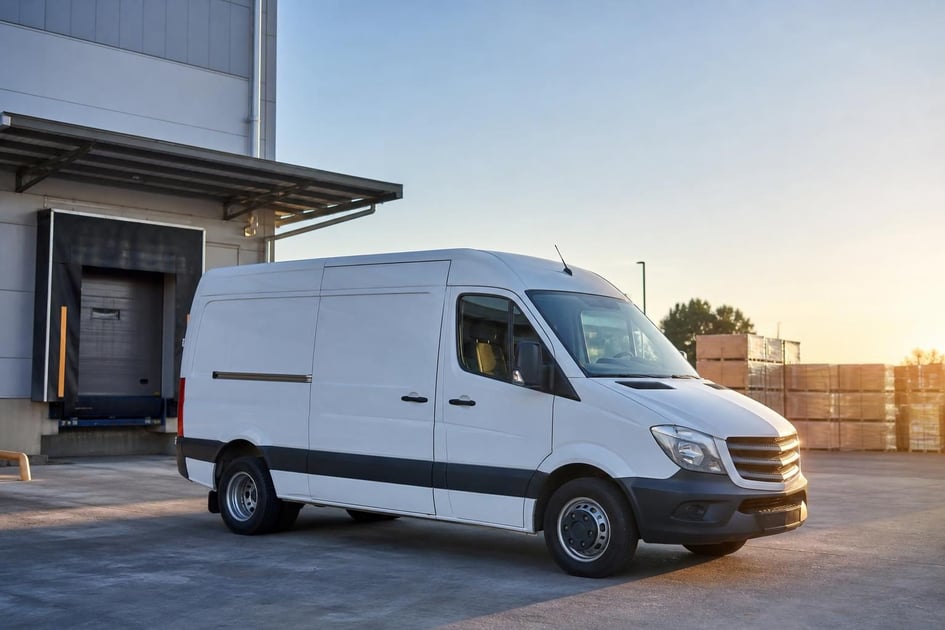
Most owners who need a cargo van want to know one thing: will I qualify? If your business has been operating for at least a year, shows steady revenue, and the van you are buying is essential to operations, you are already in the conversation. Lenders like Provide Capital finance cargo vans from $5,000 to $5 million, using the equipment itself as collateral. That means your approval depends as much on the asset and your business cash flow as it does on your personal credit score. Same-day approvals are possible once you have the right paperwork ready. Whether you are adding a Mercedes-Benz Sprinter to a delivery fleet or buying a used Ford Transit for a service route, the qualification process follows a predictable pattern. This guide breaks down what you actually need to qualify for Cargo Vans financing, how used versus new affects your terms, and the documentation that speeds up the decision.
What Lenders Evaluate for Cargo Van Financing
Financing a cargo van is different from an unsecured business loan. The van secures the deal. Still, lenders weigh several factors to set the advance amount, term length, and your down payment. The SBA loan programs framework treats equipment-backed financing as a lower-risk path for small businesses, which is why private lenders can offer competitive terms when the asset itself is the collateral.
Time in Business and Revenue Stability
Most equipment lenders prefer at least one to two years in operation. That history shows you can generate revenue and manage fixed costs. If you are newer, you may still qualify, but expect a larger down payment or a shorter term. Monthly revenue should comfortably cover the proposed payment. A common rule of thumb is that your existing cash flow should absorb the new payment without pushing your debt-service coverage ratio below 1.25. Some lenders will work with a 1.15 ratio for well-collateralized deals, but stronger cash flow always improves the offer.
Credit History and Down Payment Range
Your personal and business credit profiles both matter. A stronger score—usually 650 and above—opens access to longer terms and lower down payments. Scores below that do not disqualify you, but they shift the structure. Down payments on cargo vans typically run from 5% to 20% depending on credit tier, equipment age, and term length. A used van with high mileage may require 10% to 15% even for strong credits, while a new van with a factory warranty might close at 5% to 10%. Rates vary by credit profile, equipment age and term, so the exact structure is always tailored to the file.
The Asset Itself as Collateral
The lender will verify the van's year, make, model, mileage, and condition. They may request an inspection or a dealer invoice. Because the equipment is the collateral, lenders care about resale value. A 2024 Ford Transit 250 with under 30,000 miles is easier to finance than a 2012 model with 180,000 miles. That said, used vans are financed every day; the terms simply adjust to match the asset's remaining useful life.
Key Insight: Lenders often cap the term at the asset's remaining useful life. For a new cargo van, that might be 60 to 72 months. For a used van with 100,000 miles, the term might max out at 36 to 48 months even if your credit is excellent.
New vs. Used Cargo Vans: How Condition Shapes Your Deal
The age and mileage of your cargo van directly affect amortization, down payment, and the lender's risk assessment.
| Factor | New Cargo Van | Used Cargo Van (1-5 years) | Used Cargo Van (6+ years) |
|---|---|---|---|
| Typical Term | 60-72 months | 36-60 months | 24-48 months |
| Down Payment | 5%-10% | 10%-15% | 15%-20% |
| Collateral Value | High; factory warranty | Moderate; dealer CPO helps | Lower; inspection often required |
| Depreciation Risk | Steepest in years 1-2 | Slower; better value retention | Minimal; fully depreciated |
| Best For | High-mileage fleets, warranty needs | Owner-operators balancing cost and reliability | Cash-flow conscious buyers with repair resources |
Depreciation and Loan Term Alignment
A new van can lose 20% to 30% of its value in the first year. Lenders account for this by structuring the first 24 months so that the principal paydown outpaces depreciation. With a used van, the steepest depreciation has already occurred, which reduces the lender's exposure. However, older vans carry higher maintenance risk, so the lender shortens the term to ensure the asset is paid off while it is still productive.
When Used Makes More Sense
If you are an owner-operator running local routes, a two- to three-year-old van with 40,000 to 60,000 miles often hits the sweet spot. It has depreciated enough to lower your monthly payment, but it still has enough life to cover a 48-month note. For businesses adding a second or third vehicle, used keeps the debt stack manageable and preserves borrowing capacity for future growth.
By the Numbers: A $45,000 new cargo van on a 60-month term with a 10% down payment leaves a $40,500 balance. A comparable three-year-old unit at $32,000 with 15% down leaves a $27,200 balance. On the same term length, the monthly outlay drops significantly, which can improve your debt-service coverage ratio and make qualification easier.
Lease vs. Loan: Choosing the Right Structure
You can acquire a cargo van through an equipment loan or a fair-market-value lease. The best choice depends on how long you plan to keep the asset, how many miles you drive, and your tax strategy.
| Feature | Equipment Loan | Fair Market Value Lease |
|---|---|---|
| Ownership | You own the van; lender holds lien | Lessor owns the van; you return or buy at end |
| Monthly Payment | Higher; building equity | Lower; paying for use, not full value |
| Mileage Limits | None | Typically 12,000-20,000/year; overage fees apply |
| Tax Treatment (2026) | Section 179 deduction or depreciation; interest deductible | Payments deducted as operating expense; consult your CPA |
| End of Term | Free and clear title | Purchase at FMV, renew, or walk away |
| Best For | Owners who drive 25,000+ miles/year or customize vans | Fleets that refresh every 3-4 years or need lower payments |
Tax Treatment for Tax Year 2026
For tax year 2026, Section 179 allows businesses to deduct the full purchase price of qualifying equipment up to an inflation-adjusted annual limit. Cargo vans with a gross vehicle weight rating above 6,000 pounds generally qualify. Bonus depreciation may also apply, though the percentage has been stepping down in recent years. Because the exact 2026 dollar limits and bonus depreciation rates depend on final IRS guidance, speak with your CPA before you structure the deal. If you lease, you typically deduct the monthly payment as an operating expense, which simplifies record-keeping but changes the timing of your tax benefit.
Pro Tip: If you plan to upfit the interior with shelving, refrigeration, or custom racking, a loan is usually the better path. Lessors often restrict modifications, and you do not want to invest $8,000 in upfits on a vehicle you must return in three years. For standard delivery use with no alterations, a lease keeps the monthly cost lower.
Industry-Specific Use Cases
Cargo vans serve different industries in different ways. How you use the van affects the lender's view of the deal because the revenue model must support the payment. Commercial vehicle demand continues to grow as businesses expand local delivery networks. AP News business coverage has tracked steady investment in light commercial fleets even as broader economic conditions fluctuate.
Delivery and Last-Mile Logistics
E-commerce growth has kept demand high for compact, fuel-efficient cargo vans. If you are contracting with regional carriers or running an independent route, lenders want to see your service agreements or revenue history per route. A van dedicated to a proven route with steady daily stops is strong collateral because the income is predictable. Delivery Van financing works similarly, though cargo vans offer more flexibility if your routes vary in package size.
Service Trades
HVAC technicians, plumbers, and electricians often use cargo vans as mobile warehouses. The van is not just transportation; it is inventory storage. Lenders understand this model because the van directly enables billable hours. If you can show that the new van replaces an aging unit that has caused downtime, the deal looks even stronger. Transportation equipment financing covers these scenarios, but the service trades often see faster approvals because of the high utilization rate.
Mobile Businesses and Healthcare Support
Mobile grooming, pet services, and non-emergency medical transport all rely on cargo vans. These businesses sometimes need specialized upfits, which increases the total financed amount. Be prepared to quote the upfit separately or bundle it into the equipment loan. The lender will verify that the combined cost still aligns with the resale value of a standard cargo van, since custom upfits rarely add dollar-for-dollar collateral value.
The Application Process and What You Need
Qualifying is only half the task. Moving from application to approval quickly requires the right paperwork.
Documentation to Gather
Before you apply, collect:
- One to two years of business tax returns
- Last three months of business bank statements
- A current profit-and-loss statement
- Your driver's license and a voided business check
- The equipment quote or invoice, including year, make, model, VIN, and mileage
- Proof of insurance quoting the lender as loss payee
If you are buying from a private seller, you will also need the title history and a bill of sale. Some lenders require a third-party inspection for private-party deals on used vans.
From Submission to Decision
Once the file is complete, the underwriter reviews your credit, verifies cash flow, and evaluates the asset. For deals under $150,000, this can often be done the same day. Larger deals or more complex ownership structures may take 24 to 48 hours. After approval, you receive a term sheet outlining the advance amount, term length, down payment, and any documentation fees. You review, sign, and the lender pays the seller directly. You then insure the van, register it, and put it to work.
If your van quote is ready and your books are in order, see what you qualify for today.
Common Mistakes Owners Make
Even qualified buyers slow down the process or hurt their own terms by overlooking details.
Underinsuring the Asset
Lenders require full-coverage insurance naming them as loss payee. Some owners try to save money with liability-only coverage during the first month. This will delay funding or violate the loan agreement. Secure your insurance quote before you sign.
Stretching the Term Too Long
A 72-month term on a used van with 120,000 miles is risky. You may owe more than the van is worth when major repairs hit. Match the term to the asset's remaining life. If you need a lower payment, put more down or choose a less expensive van rather than extending the amortization.
Failing to Match the Van to the Revenue Stream
Buying a high-roof, extended-length Sprinter for occasional local deliveries is overkill. The payment will strain cash flow. Conversely, buying a compact van for heavy freight routes leads to excess wear and early replacement. Lenders notice when the equipment does not fit the business model, and it can raise questions about your operational judgment. According to Census Bureau business data, transportation and warehousing remains one of the largest small-business employment sectors in the United States, which means lenders see these deals daily and can spot a mismatch quickly.
Key Insight: Most lenders will not fund a cargo van with a salvage or rebuilt title. Even if the price is attractive, the collateral value is too uncertain. Always verify clean title status before you apply.
Worked Cost Example
To see how qualification works in practice, consider a plumbing contractor buying a 2023 Ram ProMaster 2500 with 45,000 miles. The dealer asks $36,000. The contractor has two years in business, $25,000 in average monthly revenue, and a credit score in the mid-600s.
The lender approves a 48-month term with a 15% down payment. The contractor puts down $5,400 and finances $30,600. The monthly payment fits comfortably under the contractor's existing cash flow, keeping the debt-service coverage ratio above 1.30. Because the van is under five years old, the lender does not require an independent inspection—just the dealer invoice and a clean title.
If the same contractor chose a 2020 model with 95,000 miles priced at $28,000, the lender might offer a 36-month term with 15% down ($4,200) to match the shorter remaining useful life. The monthly payment would be higher, but the total interest cost would be lower, and the van would be paid off before major drivetrain expenses typically arise.
How Down Payment Affects Approval Odds
In the example above, if the contractor had offered 20% down instead of 15%, the lender might have stretched the term to 48 months even on the older van, because the lower principal reduces their exposure. Down payment is often the fastest way to improve your offer without changing your credit profile. If you are borderline on time in business or cash flow, a larger down payment can move an application from a decline to an approval.
Rates vary by credit profile, equipment age and term, so your specific structure will differ. The key is that the lender is looking for a logical fit between the asset, the term, and your cash flow. For programs designed around service vehicles, Service Vans financing follows a similar qualification path.
Frequently Asked Questions
Can I finance a cargo van if my business is less than two years old?
Yes, but the structure changes. Startups and very young businesses face tighter scrutiny because there is less track record to evaluate. If you have been operating for six to twelve months, you may still qualify with a larger down payment—sometimes 15% to 25%—and a shorter term. Strong personal credit and documented revenue from your first few months help. Keep in mind that lenders prefer to see the equipment generate revenue immediately, so a van for an active route is stronger than a van for a planned expansion.
Does the van's mileage affect whether I qualify?
Absolutely. Mileage is a proxy for remaining useful life. A cargo van with 150,000 miles may still qualify, but the lender will likely shorten the term and increase the down payment requirement. Many lenders draw a line at 100,000 to 125,000 miles for standard terms. Above that, expect a 36-month maximum and a required inspection. The make and model matter too; a Mercedes Sprinter with 120,000 highway miles may be viewed more favorably than a domestic van with the same mileage in stop-and-go city use.
Can I finance a cargo van from a private seller?
Yes. Private-party sales are common, especially for used cargo vans. The lender will require a bill of sale, the current title, and often a third-party inspection to confirm condition and value. Funds are typically sent directly to the seller or to an escrow agent, not to your business account. Be sure the seller has a clean title with no liens. If there is an existing loan on the van, the lender will coordinate payoff as part of the funding process.
Is a cargo van different from a delivery van for financing purposes?
The distinction is more about use case than financing structure. A cargo van is generally an enclosed, unibody vehicle with no separate cab, while a delivery van may be a cutaway chassis with a separate box. For financing, both are treated as commercial vehicles. The key difference is often the GVWR and upfit cost. Delivery vans with refrigerated boxes or lift gates may require specialized insurance and slightly different collateral valuations, but the qualification criteria remain the same. Refrigerated Cargo Van financing handles the added complexity of cold-chain equipment.
Can I include upfits and shelving in the loan amount?
Usually, yes. Many lenders allow you to bundle the van and essential upfits into a single equipment loan, provided the total does not exceed the lender's advance limits. The catch is that custom upfits do not always hold resale value. A $4,000 aluminum shelving package is more likely to be included than a $12,000 custom refrigeration install on a standard van. The lender will compare the total financed amount to the street value of a similarly equipped van in the secondary market.
What happens if I want to pay off the loan early?
Most equipment loans allow early payoff, but the terms vary. Some lenders charge a prepayment penalty—often 1% to 3% of the remaining balance—if you pay off within the first 12 to 24 months. Others offer a simple interest structure with no penalty after a certain point. Read the term sheet carefully before you sign. If you anticipate a cash windfall or plan to sell the van before the term ends, negotiate the prepayment clause upfront.
Do I need a commercial driver's license to finance a cargo van?
In most cases, no. Standard cargo vans fall under the CDL weight limits and do not require a commercial driver's license for operation. However, if the van has a GVWR over 26,000 pounds or is used to haul hazardous materials, CDL requirements may apply. Those cases are rare for typical cargo vans but worth confirming with your state's DMV and your insurance carrier. The lender cares more about your business revenue and credit profile than your license class, provided you can legally operate the vehicle.
Next Steps
Cargo van financing is straightforward when you understand how lenders view the asset, your cash flow, and the structure of the deal. Gather your financials, choose a van that matches your revenue model, and decide whether you want to own the asset or lease it. If you have a quote in hand and at least a year of operating history, you are in a strong position to move forward.
Get a same-day decision on your equipment by submitting your application with a dealer invoice and your latest bank statements. A specialist can review your file, match you to the right term and down payment, and help you put the van to work fast.
Disclaimer: The information provided in this article is for general educational purposes only and is not financial, legal, or tax advice. Funding terms, qualifications, and product availability may vary and are subject to change without notice. Provide Capital does not guarantee approval, rates, or specific outcomes. For personalized information about your business funding options, contact our team directly.
