
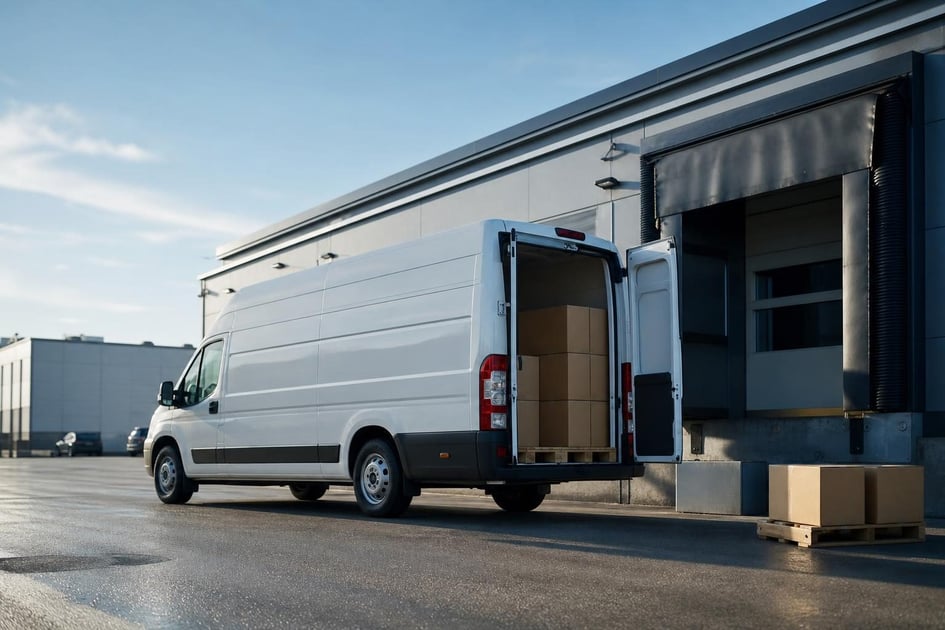
What to Expect from Cargo Van Financing Terms
Cargo van financing terms typically run from 24 to 72 months with down payments ranging from zero to 20 percent of the purchase price. Rates vary by credit profile, equipment age and term length. The equipment itself serves as collateral, which keeps financing accessible for owner-operators across delivery, trades and passenger transport. If you already have a van picked out, see what financing you qualify for on that vehicle before you negotiate the price. For a complete overview of how we structure these transactions, see our Cargo Vans financing page.
Already have a machine in mind?
Provide Capital finances new and used equipment from $5,000 to $5 million, with same-day decisions possible.
Apply NowTypical Financing Terms and Structures
Most lenders structure cargo van loans as equipment financing rather than simple auto loans because the vehicle is purchased for business use. Loan amounts generally start around $5,000 and can go up to $5 million for fleet purchases, though most single-van transactions fall between $25,000 and $75,000 depending on whether you are buying a basic delivery van or a high-roof Sprinter with interior upfits. The financing amount can also include permanently attached equipment such as refrigeration units, shelving or ladder racks, which turns a standard van into a purpose-built revenue generator.
Term lengths usually range from 24 to 72 months. A 36- or 48-month term is common for a used van because lenders want the note paid down before the vehicle accumulates excessive mileage. New vans often qualify for 60- or 72-month terms because the collateral retains value longer. The longer the term, the lower the monthly payment, but the total interest paid over the life of the loan increases. A shorter term clears the debt faster and reduces total interest, though the monthly obligation is higher. Neither approach is universally correct; the right term depends on how many miles you drive annually and how long you plan to keep the vehicle in service.
Down payments are typically expressed as a percentage of the van's cost. Well-qualified buyers with two or more years in business can sometimes finance 100 percent of the purchase price. Borrowers with shorter operating histories or lower credit scores should expect to put 10 to 20 percent down. Rates vary by credit profile, equipment age and term length, so the strongest files on new equipment receive the most competitive pricing. Borrowers should always compare the total of payments figure on any quote, not just the monthly number, because a low monthly payment stretched over an extended term can disguise a significantly higher total cost.
By the Numbers: A $45,000 cargo van financed over 60 months with a 10 percent down payment leaves $40,500 on the note. Extending the same deal to 72 months drops the monthly payment but adds roughly 12 to 15 percent more in total interest cost over the life of the loan.
New vs. Used Cargo Van Financing
New and used cargo vans are financed on noticeably different terms. New vehicles usually command lower rates, longer available terms and smaller down payments because the collateral value is easier to verify and manufacturer incentive programs sometimes subsidize financing. Used vans are still financeable, but lenders tighten terms: rates typically run several points higher, terms are shorter because the lender caps the loan to the van's realistic remaining working life, and down payments often increase to offset depreciation risk.
A high-mileage used van is harder to finance confidently than a low-mileage unit of the same age. Most lenders cap used van financing at vehicles no older than 10 to 15 model years, and some require a maximum of 150,000 miles at origination. When comparing new versus used, look at the total financed cost rather than the sticker price alone. A $22,000 used van with a $6,000 down payment and a shorter term can have a higher monthly obligation than a $40,000 new van stretched over 60 months with zero down. Maintenance costs also factor into the decision. A new van carries a factory warranty and predictable service intervals, while a used van may need immediate repairs that strain cash flow during the initial months of ownership.
| Factor | New Cargo Van | Used Cargo Van |
|---|---|---|
| Typical term range | 48 to 72 months | 24 to 60 months |
| Down payment | 0% to 10% | 10% to 20% |
| Rate positioning | More competitive | Several points higher |
| Mileage limit | N/A | Usually under 150,000 miles |
| Age limit | Current or prior model year | Up to 10 to 15 years |
| Warranty status | Factory warranty included | Varies; may be expired |
Lease vs. Loan: Which Fits Your Operation?
Financing a cargo van with an equipment loan means the title transfers to your business with the lender holding a lien. Once the final payment clears, the lien releases and you own the van outright. A fair market value lease works differently: you pay for the depreciation you use over the lease term, then return the van or buy it at the predetermined residual value. A $1 buyout lease behaves almost exactly like a loan for accounting purposes, but not all lenders offer it on light commercial vehicles.
Leases usually offer lower monthly payments than loans, but they come with mileage limits, wear-and-tear clauses and restrictions on upfitting. If you plan to install ladder racks, shelving or refrigeration, a loan is usually the better structure because you can modify the asset as needed. Additionally, most leases prohibit signage or custom paint, which can be a problem for businesses that rely on branded vehicles for marketing.
The right choice depends on how long you plan to keep the van and how many miles you expect to drive. Delivery contractors who put 40,000 miles a year on a van often prefer a loan because they will exceed standard lease mileage caps quickly. Local service trades that drive fewer miles and replace vehicles on a predictable three- to five-year cycle may find a fair market value lease more economical. If you intend to keep the van for seven to ten years, a loan is almost always the lower total-cost option.
| Consideration | Equipment Loan | Fair Market Value Lease |
|---|---|---|
| Ownership at end | Yes | Optional buyout |
| Mileage restrictions | No | Yes |
| Upfitting allowed | Yes | Limited or prohibited |
| Monthly payment | Higher | Lower |
| Best for | Long-term ownership | Short-term fleet cycling |
Qualification Criteria in Detail
Lenders evaluate cargo van applications on four main factors: credit profile, time in business, cash flow and the equipment itself. Most equipment finance companies look for a personal credit score in the mid-600s or higher for standard programs, though some will work with scores in the upper 500s if the rest of the file is strong. The van itself is the collateral, which keeps rates competitive, but the borrower's credit still drives pricing and structure. A strong credit profile can mean the difference between a zero-down deal and a 20 percent down requirement.
Time in business matters because a two-year operating history gives lenders documented revenue to underwrite against. Startups and businesses with less than one year of history can still qualify, but they usually need a larger down payment or a strong personal credit profile to offset the limited track record. Some lenders also consider prior industry experience; a technician who spent five years as a W-2 employee before launching a repair business presents less risk than a complete newcomer. Lenders may also review your business's tax returns for the previous two years to verify consistent revenue. If your business shows seasonal fluctuations, be prepared to explain them; a delivery contractor with peak revenue in November and December may still qualify if the annual average supports the payment. Monthly revenue should comfortably cover the proposed payment; most underwriters want to see a debt-service coverage ratio of at least 1.25 to 1.
The age, mileage and condition of the van also affect approval. Lenders want to know that the collateral will outlast the loan term. A 2014 high-mileage van financed over 60 months is a harder sell than a 2022 model with 30,000 miles on a 48-month note. Providing a detailed equipment description, including VIN, mileage, service history and upfit details, speeds the underwriting process. For private-party purchases, lenders may require an independent inspection to verify condition before funding.
Key Insight: Lenders often approve cargo van deals faster than heavy truck deals because most vans fall under the 10,000-pound gross vehicle weight threshold. That means simpler title work, no commercial driver's license requirement for the underwriter to verify and a larger secondary market, all of which reduce the lender's risk and speed up the decision timeline.
Tax Treatment for the 2026 Tax Year
For the 2026 tax year, businesses that purchase cargo vans may be able to deduct a significant portion of the cost under Section 179 of the Internal Revenue Code. The maximum Section 179 deduction for tax year 2026 is $2,560,000, with the benefit beginning to phase out once total equipment purchases exceed $4,090,000. Cargo vans that weigh more than 6,000 pounds but no more than 14,000 pounds qualify for a specific Section 179 limit of $32,000 for tax year 2026.
Bonus depreciation may also apply to qualifying new and used cargo vans, though the exact percentage depends on current federal guidance. Because tax rules change frequently and every business situation differs, speak with a CPA before structuring a purchase around a specific deduction. The information here reflects the 2026 tax year; do not assume it will carry forward unchanged. Keep in mind that the vehicle must be placed in service by December 31, 2026 to count toward this year's deduction.
See what you qualify for
The equipment itself secures the financing, which keeps rates competitive. Checking your options takes minutes.
Check Your OptionsIndustry-Specific Use Cases
Cargo vans serve a wide range of industries, and the financing structure often reflects how the vehicle will be used. In the Transportation equipment financing sector, last-mile delivery contractors typically need multiple vans with standardized shelving and telematics. These buyers often prioritize low monthly payments to preserve cash flow for fuel and payroll, making longer terms attractive even if total interest is higher.
Contractors and HVAC technicians usually need upfitted service vans with ladder racks and parts bins. Service Vans financing often bundles the upfit cost into the same note as the vehicle, so the business makes one payment instead of managing separate loans. Food distributors and caterers may need Refrigerated Cargo Van financing to keep perishables cold; the refrigeration unit adds cost but is usually financeable as part of the same transaction.
Florists, mobile groomers and shuttle operators sometimes choose Passenger Van financing or Delivery Van financing depending on seating and cargo configurations. Sprinter Van financing is popular with trades that need standing room inside the cargo bay, while Step Van financing remains common for bread-route operators and uniform delivery services. Landscapers and mobile detailers often choose cargo vans over open trucks because the enclosed cargo area protects tools and supplies from weather and theft. Their financing needs are similar to general contractors, though they may place more value on fuel efficiency due to the high number of daily stops.
Pro Tip: If you are buying a van to replace an existing vehicle, time the new financing so the old van sells before the first payment on the new note comes due. A 30-day overlap in payments can strain cash flow, especially if the old unit takes longer than expected to move on the secondary market.
Common Mistakes to Avoid
One of the most common mistakes is focusing only on the monthly payment instead of the total cost of financing. A lower monthly figure stretched over a longer term can cost thousands more in total interest. Another error is buying too much van. A high-roof extended-length Sprinter looks impressive, but if your routes fit inside a standard wheelbase Transit, the extra purchase price and fuel cost erode margins with every mile.
Buyers also underestimate the total cost of ownership. Insurance, maintenance, tires and fuel often add $8,000 to $12,000 per year per van in heavy-use delivery applications, according to fleet management insights from Forbes. Failing to budget for these expenses alongside the loan payment is a leading cause of early default. Finally, some borrowers neglect to get a payoff quote before trading in a van with an existing note. Negative equity from the old loan can roll into the new financing and raise the monthly obligation unexpectedly.
For smaller amounts, some buyers explore SBA microloans, which feature interest rates generally between 8% and 13% with terms up to seven years. If you know your approximate credit profile and the van you want, get a decision on your equipment, possibly the same day through our online application.
What Documentation You Need
Most cargo van finance applications require three basic categories of documents: business verification, financial records and equipment details. Business verification usually includes articles of incorporation or a business license, plus a federal tax ID. Financial records typically mean the last three to six months of business bank statements and the most recent business tax return. If the business is new, lenders may ask for personal tax returns and a personal financial statement to supplement the limited business history.
Equipment details include the vehicle identification number, a quote or purchase agreement from the dealer or seller, and a description of any upfits. For used vans, lenders often want a condition report or inspection. Having these documents ready before you apply can shorten the approval timeline from several days to a matter of hours. If you are buying from a private seller, obtain a clean title report and verify that no existing liens remain on the vehicle, because a lender will not fund a purchase until the title is clear. If you are buying at auction, the lender may require additional documentation such as a bill of sale and proof that the auction house has clear title. Auction purchases can close quickly, so having a pre-approval letter from your lender gives you a competitive advantage when bidding.
What Happens After Approval
Once approved, the lender issues a term sheet or finance agreement outlining the loan amount, term, payment schedule and any prepayment penalties. Review the total of payments figure carefully; this shows the full cost of the loan including interest and fees. If the terms are acceptable, you sign and return the agreement. The lender then pays the seller or dealer directly, or funds your business account if you are buying from a private party.
According to the U.S. Census Bureau's Business Formation Statistics, transportation and warehousing accounted for roughly 34,000 new business applications in October 2026 alone, underscoring how many entrepreneurs are entering delivery and logistics. Most cargo van deals fund within one to three business days after signed documents are returned. Same-day funding is possible when the file is complete and the van is ready for immediate delivery. The lender files a lien on the title, and once the final payment is made, the lien releases and the clean title arrives by mail. After funding, the lender typically reports the account to business credit bureaus, which helps build your company's credit profile for future borrowing. Setting up automatic payments ensures you never miss a due date and protects both your credit and the relationship with the lender.
By the Numbers: Provide Capital finances business equipment from $5,000 to $5 million. The equipment itself is the collateral, which keeps rates competitive. Same-day approvals are possible for complete files, and we serve construction, healthcare, dental, restaurant and food service, manufacturing, transportation, agriculture, HVAC and forestry nationwide.
Put the right equipment to work
From $5,000 to $5 million, new or used, Provide Capital helps businesses nationwide finance the equipment they need.
Apply TodayFrequently Asked Questions
What credit score is needed to finance a cargo van?
Most equipment lenders prefer a personal credit score in the mid-600s or higher for standard cargo van programs. Borrowers with scores in the upper 500s may still qualify with a larger down payment or shorter time in business, though rates vary by credit profile, equipment age and term length.
Can I finance a cargo van with no money down?
Well-qualified buyers with two or more years in business and strong credit can sometimes finance 100 percent of the purchase price. Startups or borrowers with challenged credit should expect to put 10 to 20 percent down to offset the lender's risk.
How long can I finance a used cargo van?
Used cargo van terms typically range from 24 to 60 months depending on the age and mileage of the vehicle. Most lenders cap used van financing at 10 to 15 model years and prefer mileage under 150,000 miles at the time of origination.
Is a cargo van loan different from a consumer car loan?
Yes. Cargo van financing is structured as business equipment financing rather than a consumer auto loan. The vehicle is titled in the business name, the equipment itself serves as collateral, and the underwriting focuses on business cash flow and credit rather than personal debt-to-income ratios alone.
Can I finance the upfit along with the van?
In most cases, yes. Shelving, ladder racks, refrigeration units and other permanent upfits can usually be bundled into the same financing transaction as the vehicle. This is common in Service Vans financing and Refrigerated Cargo Van financing.
What tax benefits are available for cargo vans in 2026?
For tax year 2026, cargo vans that qualify may be eligible for Section 179 deduction up to $32,000 for vehicles weighing between 6,000 and 14,000 pounds. Bonus depreciation may also apply. Consult a CPA to determine how these rules apply to your specific situation.
How fast can I get approved for cargo van financing?
Same-day approvals are possible when the application is complete and the equipment details are clear. Most deals fund within one to three business days after all signed documents are returned and the lender verifies the collateral.
Can a startup business finance a cargo van?
Yes, though startups usually face stricter requirements. Expect to provide a larger down payment, personal guarantees and documentation of any prior industry experience. Some lenders specialize in newer businesses and can structure terms accordingly.
Moving Forward
Cargo van financing terms are flexible enough to fit owner-operators and growing fleets alike. The key is matching the structure to your credit profile, cash flow and how hard you plan to drive the vehicle. Gather your documents, know your numbers and choose a term that keeps the van earning long after the note is paid off. Whether you need one delivery van or a fleet of ten, understanding the terms before you shop puts you in a stronger negotiating position and helps you avoid costly surprises. Ready to move forward? Start an application in a few minutes and see what financing structure works for your next cargo van.
Disclaimer: The information provided in this article is for general educational purposes only and is not financial, legal, or tax advice. Funding terms, qualifications, and product availability may vary and are subject to change without notice. Provide Capital does not guarantee approval, rates, or specific outcomes. For personalized information about your business funding options, contact our team directly.
