
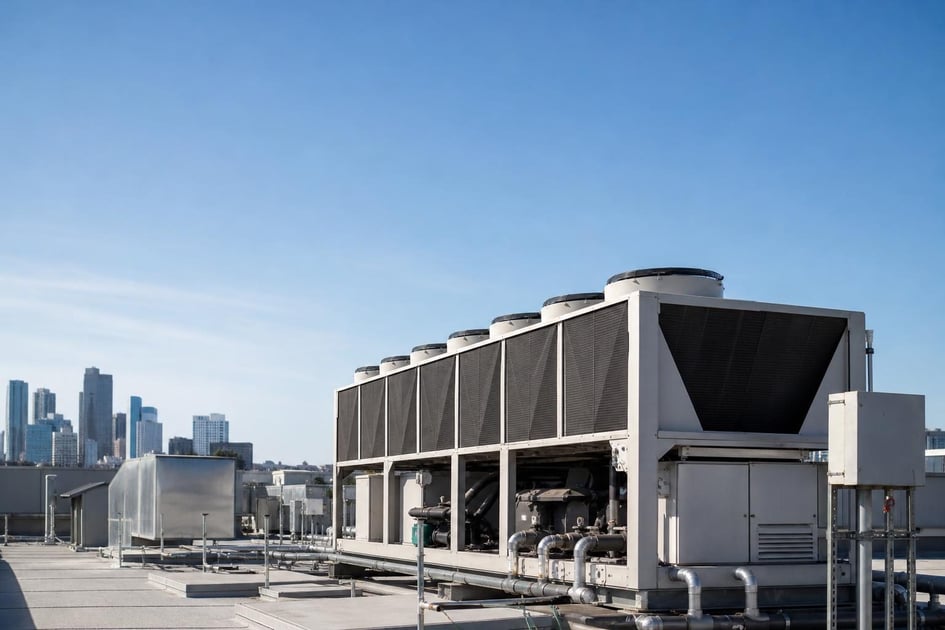
Can You Finance a Chiller with Bad Credit?
Yes. Businesses with credit challenges can still finance chillers, but the structure of the deal changes. Because the equipment itself serves as collateral, lenders are often more willing to extend capital than they would be for an unsecured loan. That does not mean approval is automatic. With a lower credit profile, you should expect a larger down payment, a shorter term, or additional documentation showing consistent revenue. If you are facing an urgent replacement or trying to bid on a job that requires climate control, start an application to see what terms you qualify for on that chiller—the process takes only a few minutes and does not lock you into a decision.
Most equipment financiers, including Provide Capital, look at the full picture rather than a single number. A business generating solid monthly revenue with two years of history can often secure Chiller financing even if the owner’s personal credit score sits below 650. The key is showing that the equipment will generate enough cash flow to cover the payments, and that your business has enough runway to weather normal fluctuations.
Key Insight: Lenders in the equipment space often care more about your last six months of bank-statement deposits than they do about a credit score from three years ago. A chiller that preserves perishable inventory or keeps a manufacturing floor operational is viewed as revenue-protecting collateral, which can offset a weaker credit profile.
Get a fast decision on your equipment
Applying takes just a few minutes, and decisions can come as soon as the same day.
Start Your ApplicationHow Bad Credit Affects Your Chiller Financing Terms
Rates vary by credit profile, equipment age and term. With a strong credit history and established business, you may see lower monthly payments spread over five to seven years. With bad credit, the same lender may offer a three- to five-year term to reduce exposure. The down payment often moves from roughly 10 percent to 20 or 30 percent of the equipment cost. That upfront cash serves two purposes: it lowers the lender’s risk and it proves you have skin in the game.
Equipment age matters just as much as personal credit. A new 100-ton chiller from a major manufacturer holds value better than a 15-year-old unit with obsolete refrigerant. If you have bad credit and you are shopping for used equipment, expect the lender to request an inspection, photos, or a serial-number check to verify remaining useful life. Some lenders cap the age of financed equipment at 10 or 15 years, especially for borrowers with credit challenges.
Time in business also shifts the calculation. A contractor who has operated for five years and can show $30,000 in monthly deposits is a different risk than a two-year-old startup with irregular revenue. Most equipment lenders prefer at least one year in business, but exceptions exist if the equipment is directly tied to a signed contract or purchase order. If you are newer, be ready to show a personal guarantee and possibly a larger down payment.
The Role of Equipment as Collateral
Chillers are hard assets with established resale markets. When a lender secures the loan with the chiller itself, the worst-case scenario is liquidation of a tangible machine rather than chasing unsecured debt. That security allows lenders to work with borrowers they might otherwise decline. However, the lender will file a UCC lien on the chiller, meaning you cannot sell or transfer ownership until the balance is cleared. The lien is released once the final payment posts, and you own the unit free and clear.
Pro Tip: If you are buying a used chiller, get the service records before you apply. A unit with documented preventive maintenance and a recent compressor replacement is easier to finance than one with a blank history. Lenders view maintenance records as a proxy for how well the asset will hold value.
What Lenders Evaluate Beyond Your Credit Score
Credit score is only the opening filter. Underwriters will dig into your business bank statements, usually the most recent three to six months. They look for positive ending balances, steady deposit patterns, and whether you have recent NSF fees or negative days. A single overdraft will not kill a deal, but a pattern of them suggests cash-flow stress that could make monthly payments difficult.
Industry experience counts. An HVAC contractor who has installed and serviced chillers for a decade is a safer bet than a restaurant owner buying a chiller for the first time to expand into catering. The lender assumes you know how to operate, maintain, and monetize the equipment. If you are crossing into new territory, be prepared to explain the revenue model in detail, with customer contracts or projections.
The vendor or dealer you buy from also plays a role. Established distributors with clear titles and invoicing systems make closings faster. A private-party sale on a loading dock introduces title-risk and valuation questions that can slow funding. If you have bad credit, buying through a recognized dealer can tip the approval in your favor because the lender trusts the source of the collateral.
For businesses in the climate-control trades, Hvac equipment financing is structured around seasonal cash flow. Lenders understand that an HVAC contractor’s December deposits may look different from July deposits. Providing a full year of statements, rather than just the last three months, helps smooth out seasonality and shows the true health of the operation.
New vs. Used Chillers: Cost and Financing Differences
New chillers range from smaller 5-ton rooftop units suitable for light commercial use to 500-ton industrial machines for manufacturing plants and hospitals. Prices start around $5,000 for entry-level models and can climb past $500,000 for large custom installations. With bad credit, financing a new chiller is often easier because the lender can rely on manufacturer warranties and predictable depreciation schedules. The equipment’s longer remaining life supports a longer term, which keeps monthly payments manageable.
Used chillers typically trade at 40 to 60 percent below comparable new models, depending on age, hours, and refrigerant type. That lower acquisition cost means less total debt, but it also means the lender has less margin for error if the unit fails. Financing terms on used equipment are usually shorter, and down-payment requirements are often higher. If the chiller uses a refrigerant being phased out under EPA regulations, some lenders will decline the deal outright because resale value is uncertain.
| Factor | New Chiller | Used Chiller |
|---|---|---|
| Acquisition cost | Full retail price | 40–60% below new |
| Typical financing term | 48–84 months | 36–60 months |
| Down payment (bad credit) | 10–20% | 20–30% |
| Warranty coverage | Full manufacturer warranty | Limited or expired |
| Lender approval ease | Higher | Lower; may require inspection |
| Resale risk for lender | Lower | Higher if refrigerant is obsolete |
Installation costs are another variable. A new chiller may qualify for financing that wraps the unit, rigging, and startup into one note. With used equipment, some lenders will finance only the machine itself, leaving you to cover delivery and installation out of pocket. Ask your financing contact exactly what is included before you sign the vendor quote. If you need the full system replaced, including pumps and cooling towers, Commercial Hvac System financing may be a better fit than a standalone chiller loan.
By the Numbers: A $50,000 used chiller financed over 48 months with a 25% down payment leaves a $37,500 balance. At a shorter term and higher rate band, the monthly payment could run roughly $950 to $1,200. A new $80,000 unit at 60 months with 15% down spreads the remaining $68,000 across five years, often producing a similar monthly outlay despite the higher price because the term is longer and the rate band is tighter.
Lease vs. Loan: Which Works Better with Bad Credit?
An equipment loan makes you the owner from day one. You claim depreciation, take any available Section 179 deduction for tax year 2026, and build equity in an asset you can eventually sell. The lender holds a lien, but the chiller is yours. Loans are the better choice if you expect to run the unit for its full useful life—typically 15 to 20 years for a well-maintained chiller—and you want the tax benefits of ownership.
A fair-market-value (FMV) lease is essentially a long-term rental. You make lower monthly payments, and at the end of the term you can return the chiller, buy it at fair market value, or upgrade to a new unit. FMV leases rarely require a down payment, which helps preserve cash, but you do not own the asset and cannot claim depreciation. For a borrower with bad credit, an FMV lease may be harder to obtain because the lessor bears the residual risk and wants a stronger balance sheet.
A $1 buyout lease splits the difference. You make payments as if leasing, but at the end you own the unit for one dollar. This structure works for borrowers who need to keep monthly payments low but still want ownership. However, $1 buyout leases often carry higher effective costs than loans, and with bad credit you may not qualify for the most competitive structures. As Forbes guidance on buying business equipment notes, financing tends to be easier to obtain than pure leases when the borrower has credit challenges because the collateral itself secures the deal.
See what you qualify for
The equipment itself secures the financing, which keeps rates competitive. Checking your options takes minutes.
Check Your OptionsTax Treatment for Chillers in 2026
For tax year 2026, the Section 179 deduction allows businesses to expense qualifying equipment purchases up to a specific dollar limit set by Congress. The exact limit adjusts annually for inflation, and the phase-out threshold changes as well. Rather than cite a figure that may shift with last-minute legislation, speak with your CPA about the 2026 limit before you file. If your business is profitable, Section 179 can produce a meaningful first-year deduction that offsets the cost of the chiller immediately, though you must have taxable income to absorb it.
Bonus depreciation has been phasing down. For 2026, the percentage is lower than in prior years, so relying on bonus depreciation alone may not yield the same upfront deduction it once did. Again, your accountant can model whether Section 179, bonus depreciation, or standard MACRS depreciation produces the best outcome for your 2026 return.
If you lease the chiller, the tax treatment is simpler: you generally deduct the monthly lease payment as a business expense. There is no depreciation schedule and no Section 179 calculation. The trade-off is that you do not build equity. According to SBA guidance on equipment financing programs, understanding the tax implications of your financing structure before you sign can prevent surprises when quarterly estimates come due.
Pro Tip: If you finance a chiller late in 2026, you may still place it in service before December 31 and qualify for that tax year’s deductions. However, the unit must be both purchased and operational by year-end. Waiting until mid-December creates risk if shipping or installation delays push the in-service date into January 2027.
Documentation You Will Need
Preparing your paperwork before you apply speeds up the decision. Most lenders request the following:
- Three to six months of business bank statements
- One or two years of business tax returns
- A detailed equipment quote or invoice from the vendor
- A copy of your driver’s license
- A voided business check for ACH setup
- Evidence of insurance covering the equipment
If your business is newer and cannot produce two years of returns, some lenders will accept a personal tax return and a year-to-date profit-and-loss statement. For larger chillers—those above $100,000—you may also need to provide an interim balance sheet and a brief description of how the equipment fits into your operations.
Vendors who work with lenders regularly can sometimes submit a portion of this documentation on your behalf. Ask your dealer if they have a preferred financing partner and whether they can provide digital copies of the invoice and equipment specifications directly to the underwriter. That coordination can cut days off the timeline. If you have your quote in hand and your bank statements ready, get a decision on your equipment, possibly the same day, by submitting a complete package upfront.
Common Mistakes When Financing with Bad Credit
Owners with credit challenges often make unforced errors that cost them approvals or better terms. The first is shopping for equipment without knowing their budget. If you pick a chiller first and then hope financing appears, you may waste time on a unit that requires a down payment larger than you can produce. Get pre-qualified based on your cash position, then shop within that range.
The second mistake is ignoring total cost of ownership. A cheap used chiller with a failing compressor and outdated refrigerant may cost less upfront but drain cash on repairs and regulatory compliance. Lenders see that risk too. If the equipment is likely to become a money pit, the approval odds drop because the collateral value is uncertain.
Third, some borrowers apply to multiple lenders simultaneously, not realizing that each hard inquiry can depress their credit score further. In equipment financing, it is often better to work with one lender who specializes in your industry and can give you a clear yes or no based on the full file. Provide Capital focuses on equipment-backed transactions, which means the decision hinges on the asset and the cash flow, not just a credit algorithm.
Finally, do not forget to factor in installation, electrical, and plumbing. A chiller sitting on a loading dock is useless until it is piped and powered. Some borrowers finance only the machine, then discover they are short on cash for the hookup. Either negotiate a financing package that includes soft costs, or confirm you have the liquidity to cover them. U.S. Census Bureau data shows that private nonresidential construction spending remains robust, which means contractor labor for installation is in demand and pricing should be locked in early.
What Happens After Approval
Once approved, you will receive a term sheet or finance agreement outlining the payment amount, term, and any buyout provisions. Review it carefully. Check whether the payment is monthly, seasonal, or structured to match your cash flow. Confirm there are no prepayment penalties if you plan to pay the note off early.
After you sign, the lender typically pays the vendor directly. You do not take possession of the cash. The vendor ships or installs the chiller, and you sign a delivery and acceptance certificate confirming the unit is what you ordered and is in working condition. That certificate triggers the start of your payment obligation. Insurance must be bound before funding, and the lender will be listed as loss payee on the policy.
First payments are usually due 30 to 45 days after funding. Some lenders offer a 90-day deferred option for an additional fee, but with bad credit you should expect standard terms. Set up autopay from the account where your revenue deposits. Consistent on-time payments rebuild your credit profile and position you for better terms on the next equipment purchase. If you also need rapid-cooling capability for food processing or medical applications, Blast Chiller financing can be added to your relationship once the first deal performs.
Put the right equipment to work
From $5,000 to $5 million, new or used, Provide Capital helps businesses nationwide finance the equipment they need.
Apply TodayFrequently Asked Questions
What credit score do I need to finance a chiller?
There is no universal minimum. Some equipment lenders approve deals with scores in the low 500s if the business shows strong revenue and the equipment holds value. Others set a floor near 600. Because the chiller serves as collateral, the threshold is usually lower than for unsecured credit. Rates vary by credit profile, equipment age and term, so a lower score typically means a higher payment band.
Can I finance a used chiller with bad credit?
Yes, but expect stricter terms. Used equipment carries more risk for the lender, so down payments are often larger and terms shorter. The unit may need to pass an inspection, and lenders usually cap the age at 10 to 15 years. If the chiller uses a refrigerant facing regulatory phase-out, financing may be difficult regardless of credit.
How much down payment is required?
For borrowers with good credit and established business history, down payments can be as low as zero to 10 percent. With bad credit, expect 15 to 30 percent. The exact amount depends on the equipment cost, your revenue, and how long you have been in business. A $20,000 chiller at 20 percent down requires $4,000 out of pocket.
Does the chiller itself serve as collateral?
Yes. In most equipment financing arrangements, the chiller is the collateral. The lender files a UCC lien against the specific asset. If you default, the lender can repossess and resell the unit to recover losses. That security is why chiller financing is accessible even to borrowers with imperfect credit.
How long does approval take?
Many equipment lenders can render a decision within one business day if your documentation is complete. Same-day approvals are possible for straightforward deals under $100,000. Larger transactions, or those involving used equipment from private sellers, may take two to five days while the lender verifies title and value.
Can I deduct my chiller purchase on my 2026 taxes?
If you buy the chiller outright or finance it with a loan, you may be eligible for Section 179 expensing and depreciation for tax year 2026. The exact limits and phase-out thresholds change annually, so confirm the current figures with your CPA before you rely on a specific deduction amount. Lease payments are generally deductible as operating expenses.
What if my project needs ductwork, pumps, and controls in addition to the chiller?
Many lenders can bundle related costs into a single equipment financing agreement if they are part of the same installation and quoted together. If the total package includes significant construction or building modifications, the deal may need to be structured differently. Ask your lender whether soft costs can be included in the equipment note.
Will financing a chiller help rebuild my credit?
On-time payments on an equipment loan can strengthen your business credit profile over time. Make sure the lender reports to business credit bureaus. Even if they do not, a paid-off equipment note becomes a positive reference on your next application. The key is consistency: late payments on a secured loan hurt more than late payments on a utility bill because the lender has extended real capital.
Moving Forward
Bad credit is a hurdle, not a wall. If your business generates revenue and the chiller you need has a clear purpose, equipment financing is designed for exactly this situation. The collateral protects the lender, which in turn protects your access to capital. Gather your bank statements, get a firm quote, and be realistic about the down payment you can produce. The terms may not match those of a prime borrower, but the alternative—lost contracts, spoiled inventory, or idle workers—is usually far more expensive than the cost of financing.
Provide Capital finances new and used business equipment from $5,000 to $5 million nationwide. If you are ready to replace a failing unit or expand capacity, see what financing you qualify for on that chiller and move your project forward without draining your operating account.
Disclaimer: The information provided in this article is for general educational purposes only and is not financial, legal, or tax advice. Funding terms, qualifications, and product availability may vary and are subject to change without notice. Provide Capital does not guarantee approval, rates, or specific outcomes. For personalized information about your business funding options, contact our team directly.
