CNC Machine Financing in California: What Owner-Operators Need to Know
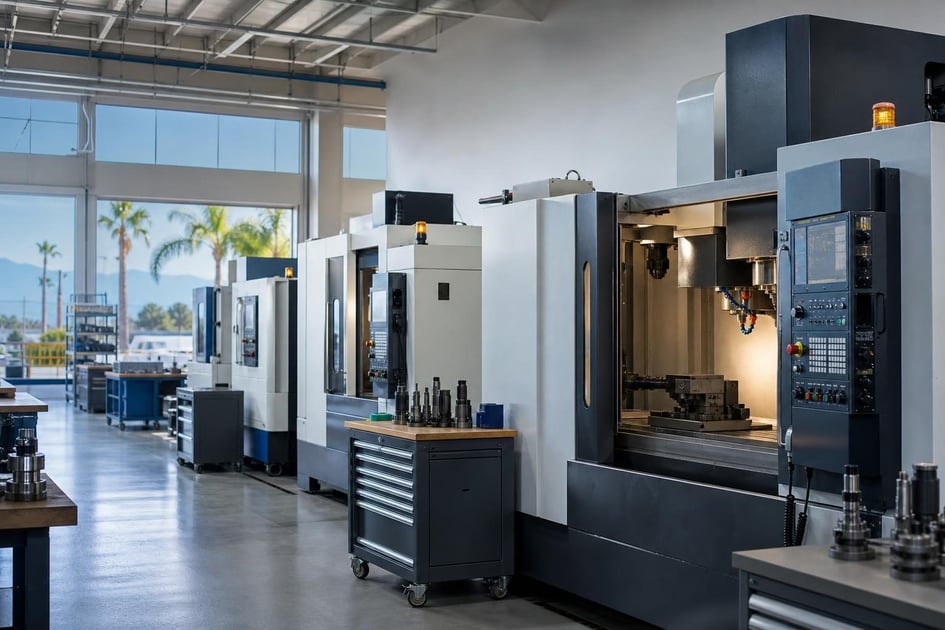
California manufacturers, machine shops, and fabrication businesses can finance CNC mills, lathes, routers, and plasma cutters without draining working capital. Whether you run a five-person job shop in Southern California or a production facility in the Central Valley, equipment financing lets you acquire the machine now and pay over its useful life. The equipment itself serves as collateral, which keeps rates competitive and lets owner-operators preserve cash flow for payroll, materials, and rent.
At Provide Capital, we finance new and used business equipment from $5,000 to $5 million, including Cnc Machines financing for California borrowers. Rates vary by credit profile, equipment age, and term length. Same-day approvals are possible when your documentation is complete.
If you are looking at a specific machine, get a same-day decision on your equipment and see how the numbers fit your shop's budget.
Why California Shops Finance Rather Than Pay Cash
California manufacturing is concentrated in distinct corridors. Aerospace and defense suppliers cluster in Southern California. Precision machining and semiconductor-adjacent fabrication fill the Bay Area and Silicon Valley. Agriculture-related manufacturing and food-processing equipment dominate the Central Valley. Each region faces the same challenge: CNC equipment is expensive, and tying up cash in a single machine can stall growth.
A new 3-axis vertical machining center can run $80,000 to $250,000 depending on brand, spindle speed, and table size. A 5-axis mill or large-format router can easily exceed $400,000. Even quality used CNC lathes from reliable brands often sell for $35,000 to $120,000. Financing spreads that cost over 24 to 84 months, leaving liquidity intact for the unexpected costs that come with California operations—high commercial rent, strict environmental compliance, and energy rates that run above the national average.
Key Insight: California machine shops often see stronger deal flow in the first and fourth quarters. Many owner-operators time equipment purchases around tax season and year-end budget surpluses, which means inventory at dealers moves faster and lead times stretch. Financing pre-approval before you shop lets you lock in a machine when you find it, not after a week of paperwork delays.
New vs. Used CNC Machines: What California Buyers Should Consider
The decision between new and used equipment affects your monthly payment, tax treatment, and maintenance budget. New machines arrive with manufacturer warranties, training packages, and the latest controls, but they depreciate rapidly in the first two years. Used machines offer lower entry costs and slower depreciation, though you inherit whatever wear the prior owner put on the spindle, ball screws, and coolant system.
California buyers have an advantage: the state's major ports in Southern California and the Bay Area see a steady flow of imported manufacturing equipment. This means dealers in Southern California and the Bay Area often carry large used inventories from Japanese and European manufacturers. However, California buyers also face stricter environmental and electrical codes. A machine shipped from the Midwest may need retrofitting to meet local air-quality or electrical standards, adding $3,000 to $10,000 to the total project cost.
When financing a used CNC machine, lenders look closely at age, hours, and brand reputation. Machines under ten years old from established brands like Haas, Mazak, Okuma, or DMG Mori generally qualify for the best terms. Machines older than fifteen years or from defunct manufacturers may require a larger down payment or a shorter term. Rates vary by credit profile, equipment age, and term, so a 2018 Haas VF-2 will typically finance on better terms than a 2008 no-name import with unknown service history.
Pro Tip: Before you commit to a used CNC machine, request the maintenance logs and a recent spindle drawbar force test. Lenders may not require it, but a machine with documented service history is easier to finance and less likely to need a $15,000 spindle rebuild in the first year of ownership.
Lease vs. Loan: Which Structure Fits Your California Shop?
Most CNC acquisitions are structured as either an equipment loan or a finance lease. A loan puts the title in your name immediately; you own the machine and claim depreciation and Section 179 deductions. A finance lease is essentially a loan in accounting terms—you own the equipment at the end for a nominal buyout—but the paperwork may differ slightly depending on the lender.
An operating lease, by contrast, treats the machine as a rental. You do not own it at the end unless you exercise a purchase option. This keeps the debt off your balance sheet in some accounting treatments and may offer lower monthly payments, but you lose the depreciation benefits. For a California shop planning to keep a CNC machine for ten to fifteen years, a loan or finance lease is usually the better choice. If you need the machine for a specific contract and plan to upgrade in three years, an operating lease merits consideration.
| Feature | Equipment Loan | Finance Lease | Operating Lease |
|---|---|---|---|
| Ownership | You own from day one | You own after final payment | Lessor owns; optional buyout |
| Monthly payment | Higher than operating lease | Similar to loan | Lower, but no equity |
| Tax deduction | Depreciation + Section 179 | Depreciation + Section 179 | Lease payments as expense |
| Best for | Long-term ownership | Long-term ownership | Short-term or upgrade-heavy shops |
| Typical term | 36–84 months | 36–84 months | 24–60 months |
The table above is a starting point, not a recommendation. Your CPA can model the exact after-tax cost of each structure based on your 2026 tax situation and California state tax obligations.
How to Qualify for CNC Machine Financing in California
Qualification is straightforward for established shops. Lenders want to see that your business generates enough cash flow to cover the new payment, that the equipment has value as collateral, and that you have a track record of managing business credit.
Credit and Financial Documentation
Most equipment finance companies look for a personal credit score in the mid-600s or higher for owner-operators, though exceptions exist for strong businesses with compensating factors. You will typically need to provide the last three months of business bank statements, your most recent business tax return, and a current profit-and-loss statement. If your shop is newer or has thin credit, be prepared to explain any prior bankruptcies, liens, or judgments.
California's high cost of living can show up in personal credit reports when owner-operators mix personal and business expenses. Keeping business accounts separate strengthens your application. If your business is structured as an LLC or S-corp, make sure your articles of organization and EIN documentation are current.
Equipment Specifications and Vendor Details
The lender will want an invoice or purchase agreement showing the machine's make, model, year, serial number, and price. If you are buying from a private seller rather than a dealer, expect additional scrutiny. Private-party sales carry more risk because there is no dealer warranty and the seller may not accept payment directly from a lender. Some finance companies only fund dealer transactions; others will handle private sales with a title search and UCC filing.
If the machine is coming from out of state, factor in shipping costs. Moving a 12,000-pound VMC from Illinois to California can cost $4,000 to $8,000 depending on whether you need a rigging crew and flatbed truck. That shipping cost can be rolled into the financing package if you structure it upfront.
By the Numbers: A California buyer financing a $150,000 CNC machining center over 60 months might see monthly payments ranging from roughly $2,800 to $3,400 depending on credit profile, equipment age, and term. Over the life of the agreement, the total cost of financing typically adds 8% to 15% above the purchase price, though rates vary by credit profile, equipment age and term. That spread is the cost of preserving $150,000 in working capital.
Tax Treatment and Section 179 for the 2026 Tax Year
For the 2026 tax year, Section 179 allows businesses to deduct the full purchase price of qualifying equipment in the year it is placed in service, subject to annual limits and a phase-out threshold. The exact dollar limits for 2026 are set by the IRS; if you are reading this before the IRS releases the final 2026 inflation-adjusted figures, speak with your CPA about the projected limits based on current indexing trends. Never assume a prior year's limit applies to 2026.
Bonus depreciation has been stepping down from its peak levels. For 2026, the bonus depreciation percentage may be lower than in earlier years, again making it essential to consult a CPA who knows your specific entity structure and California state tax position. California does not always conform to federal depreciation rules, so a deduction available at the federal level may be treated differently on your California state return.
The key point: financing does not prevent you from taking Section 179 or bonus depreciation. As long as you are the owner for tax purposes—which is true under a standard equipment loan or finance lease—you can generally claim the deduction. An operating lease is different; you deduct the lease payments as a business expense rather than depreciating the asset. Your CPA can run the numbers for your 2026 tax year and tell you which structure delivers the lower after-tax cost.
Industry-Specific CNC Use Cases in California
California's economy is larger than that of many countries, and its manufacturing base is equally diverse. According to Census Bureau data, the state consistently ranks among the top states for manufacturing output. The CNC machine you need depends heavily on what you make and where you sit in the supply chain.
Aerospace and Defense in Southern California
The aerospace cluster across coastal Southern California remains one of the largest in the world. Suppliers in this space machine titanium, Inconel, and aluminum structural components to tight tolerances. Five-axis CNC mills and large-format gantry routers are common purchases. These machines run $300,000 to $5 million for high-end configurations, and financing terms often stretch to 72 or 84 months to match the long production cycles of defense contracts.
Manufacturing equipment financing in this sector often requires additional documentation, such as proof of vendor certifications or ITAR registration, because the equipment itself may be used for defense-related work. The SBA's resources for small manufacturers offer guidance on navigating these requirements.
Agriculture and Food Processing in the Central Valley
Towns across the Central Valley are not just farming communities; they host fabrication shops that build and repair agricultural equipment, food-processing lines, and packaging machinery. CNC plasma cutters and routers are popular here because they handle sheet metal and composite materials efficiently. These machines tend to fall in the $50,000 to $200,000 range, making them accessible to smaller shops with limited cash reserves.
Seasonal cash flow is a reality in agricultural regions. A shop that does most of its business during planting and harvest may see slow winters. Financing with seasonal payment structures—higher payments in peak months, lower or deferred payments in off months—can smooth cash flow. Not every lender offers this, but it is worth asking about if your revenue follows crop cycles.
Cannabis and Emerging Manufacturing
California's legal cannabis industry has created demand for precision extraction equipment, packaging machinery, and custom fabrication. CNC machines build molds, trimming equipment, and specialized processing tools. Because cannabis remains federally restricted, some traditional banks avoid the sector. Equipment finance companies that specialize in collateral-based lending—where the machine itself secures the deal—are often more flexible than banks with rigid industry restrictions.
Common Mistakes California Buyers Make
Even experienced shop owners trip over predictable errors when buying CNC equipment.
Ignoring total cost of ownership. The sticker price is only the beginning. Installation, rigging, electrical work, coolant, tooling, and training can add 15% to 25% to the first-year cost. Financing only the machine and paying cash for the rest is one approach, but some lenders will bundle soft costs into the finance agreement if you document them upfront.
Buying too much machine. A 5-axis mill with pallet changer and through-spindle coolant is impressive, but if 90% of your jobs are 3-axis aluminum work, you are paying for capacity you do not use. Match the machine to your actual job mix, not your aspirational one.
Skipping the site readiness check. California building codes are strict. A 15-horsepower CNC lathe may require a phase converter, upgraded electrical panel, or reinforced concrete foundation. Discovering this after delivery means downtime and unexpected costs. Have an electrician and rigging specialist inspect your shop before you sign the purchase agreement.
Neglecting resale value. If you finance a machine over seven years but plan to upgrade in four, choose a brand with strong resale demand. Haas, Mazak, and Fanuc-controlled machines hold value better than obscure imports. A machine with residual value is easier to trade in or sell when you need to upgrade.
Pro Tip: California buyers purchasing from out-of-state dealers should verify that the machine meets CARB (California Air Resources Board) requirements if it includes an internal combustion component or certain coolant systems. While most CNC mills are electric, auxiliary equipment like parts washers or backup generators may trigger compliance checks. Many shops also eventually need material handling equipment; if you are expanding your floor, consider planning for Skid Steers financing alongside your machine purchase.
What Happens After You Apply
The financing process moves quickly when you are prepared. After you submit your application and supporting documents, the underwriter reviews your credit, business financials, and equipment details. For loans under $250,000, this can take a few hours to one business day. Larger requests or complex credit situations may take two to three business days.
Once approved, you receive a term sheet showing the monthly payment, term length, and any down payment required. Read it carefully. Pay attention to prepayment penalties, late fees, and whether the lender files a UCC lien on the equipment. After you accept the terms, the lender pays the vendor or private seller directly, and you take delivery of the machine.
Your first payment is typically due 30 to 45 days after funding. Some lenders offer a 90-day deferred payment option for qualified buyers, which can help if you need time to install the machine and ramp up production before the payments begin.
Talk to a specialist about your specific machine and timeline. We can review your deal structure before you commit to a purchase and help you understand what documentation to gather.
Frequently Asked Questions
Can I finance a CNC machine if I buy it from a private seller?
Yes, though it is more complex than buying from a dealer. The lender will verify the machine's value, condition, and clear title before releasing funds. Private sellers may also be uncomfortable waiting for lender payment, so clear communication about timing is essential.
Does my personal credit score matter if my business is an LLC?
Yes. For most owner-operated shops with fewer than 50 employees, the lender will review both business and personal credit. A strong business can offset weaker personal credit, and vice versa, but expect both to be considered.
How long does approval take?
Same-day approvals are possible for straightforward deals under $250,000 with clean credit and complete documentation. Larger or more complex requests may take one to three business days.
Can I include shipping, installation, and tooling in the financing?
Often yes, up to a limit. Many lenders allow soft costs to represent 10% to 20% of the total financed amount. You will need invoices for each cost, and the lender may pay those vendors directly rather than reimbursing you.
What happens if I want to pay off the loan early?
It depends on the lender and the specific agreement. Some loans carry a prepayment penalty for the first 12 to 24 months; others allow early payoff with no penalty after a short period. Ask about this before you sign.
Can I finance a CNC machine for a startup shop?
Provide Capital focuses on established businesses rather than startups. If your shop has at least two years of operating history and documented revenue, you stand a much stronger chance of approval than a brand-new entity with no financial track record.
Is a down payment always required?
Not always, but it helps. Zero-down options exist for strong credit and established businesses. A down payment of 5% to 20% improves your approval odds if your credit or cash flow is marginal, and it lowers your monthly payment.
Can I claim Section 179 if I finance the machine in 2026?
Generally yes, provided you are the owner for tax purposes—standard for equipment loans and finance leases. The 2026 Section 179 limits and bonus depreciation rules should be confirmed with your CPA before you file. California state depreciation rules may differ from federal treatment.
Moving Forward With Your California CNC Purchase
California manufacturing is competitive, and the right CNC machine can move your shop from quoting jobs to winning them. According to Forbes analysis of manufacturing trends, shops that invest in modern equipment during expansion cycles tend to capture market share faster than those that delay. Financing lets you acquire capability now without draining the cash reserves you need for payroll, materials, and the unexpected costs of running a business in one of the nation's most expensive states.
Whether you are buying a used 3-axis mill for a job shop in the Central Valley or a 5-axis machining center for an aerospace supplier in Southern California, the structure of your financing matters. Compare lease and loan options, understand your 2026 tax implications with a CPA, and gather your documentation before you shop.
See what you qualify for and get a decision on your next CNC machine. We finance new and used equipment from $5,000 to $5 million nationwide, including throughout California's manufacturing corridors.
Disclaimer: The information provided in this article is for general educational purposes only and is not financial, legal, or tax advice. Funding terms, qualifications, and product availability may vary and are subject to change without notice. Provide Capital does not guarantee approval, rates, or specific outcomes. For personalized information about your business funding options, contact our team directly.