
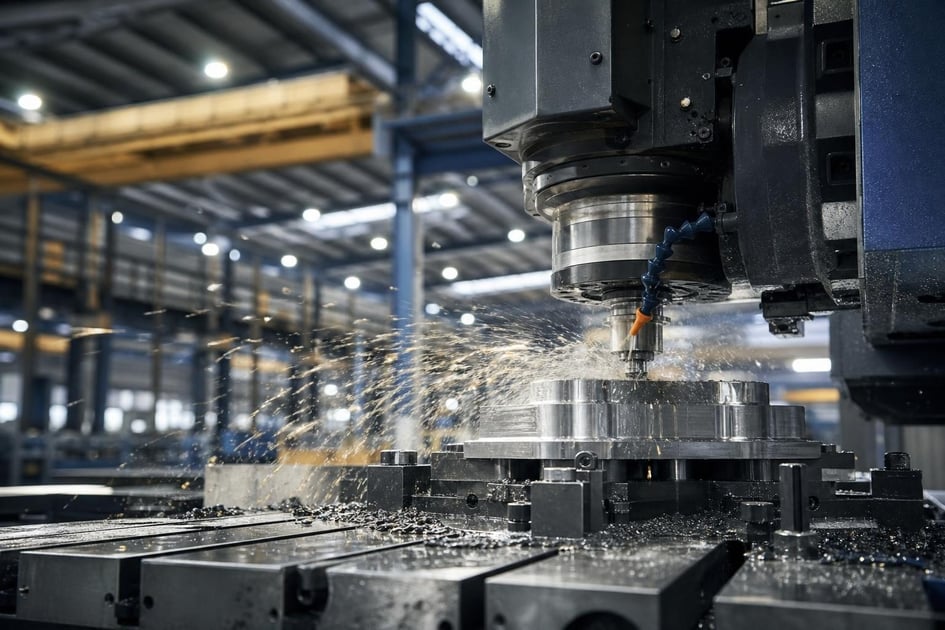
If you are looking at a machining center for your shop and wondering what Cnc Machines financing actually requires, the short answer is: a credit profile that shows you can handle the payment, a business with some operating history, and equipment that holds resale value. Because the machine itself serves as collateral, lenders can offer competitive terms even when a borrower is not a perfect credit risk. At Provide Capital, we finance new and used business equipment from $5,000 up to $5 million, which covers everything from entry-level mills to multi-axis turning centers.
Key Insight: Lenders price CNC deals based on the machine’s remarketability. A name-brand 3-axis vertical machining center from 2022 will command better terms than a niche 6-axis custom builder from 2015 because the collateral value is easier to verify at auction.
What Lenders Evaluate for CNC Financing
Approval decisions rest on three pillars: the borrower, the equipment, and the cash flow. No single factor automatically disqualifies you, but weakness in one area usually means another area must be stronger to compensate.
Credit and Time in Business
Most equipment lenders prefer to see a personal credit score in the mid-600s or higher and at least two years in business. That said, because the CNC machine is the collateral, some lenders will work with a 620 score if revenue is strong and the machine is desirable. Startups with no operating history face tougher scrutiny; this post focuses on established owner-operators and shops with financials to review.
Equipment Age, Brand, and Condition
The machine’s specs matter. A Haas VF-2SS from 2021 with low spindle hours is easier to collateralize than an off-brand mill of unknown provenance. Lenders may request an appraisal or a qualified inspection for used equipment priced above $100,000. For new machines, the invoice from the distributor usually suffices.
Revenue and Bank Statements
Expect to submit the last three to six months of business bank statements. Lenders want to see consistent deposits that cover the proposed payment by a comfortable margin. If your shop generates $40,000 in monthly revenue and the CNC payment is $1,200, the deal looks comfortable. If the payment is $4,000 and revenue is inconsistent, the underwriter will ask questions.
By the Numbers: Down payments on CNC equipment typically range from 0% to 20%. A new machine for a qualified borrower often qualifies for 100% financing, while a used machine over five years old may require 10% to 20% down to offset collateral risk.
New vs. Used CNC Machines
One of the first decisions a shop owner faces is whether to buy new or used. Both are financeable, but the terms and total cost of ownership differ.
| Factor | New CNC Machine | Used CNC Machine |
|---|---|---|
| Upfront cost | Higher; 100% financing possible | Lower; may require 10% to 20% down |
| Warranty | Full manufacturer warranty | Limited or expired |
| Depreciation | Rapid first-year drop | Slower; much of the loss already absorbed |
| Approval ease | Simpler; invoice and specs are clear | May need third-party appraisal |
| Delivery time | Can be 8 to 16 weeks for popular models | Often available immediately |
| Technology | Latest control software and speeds | May need retrofit or software license |
When Used CNC Equipment Makes Sense
If you need capacity now and the machine has been maintained, used is often the smarter move. You avoid the long lead times that have plagued the machine-tool industry. Just be sure to budget for software licensing, tooling, and any retrofit costs that do not appear on the purchase invoice. Many borrowers forget these ancillary expenses and end up paying cash for items that could have been wrapped into the financing package.
When a New Machine Is the Better Bet
New equipment makes sense when tolerances are tight, volume is high, or you need the manufacturer’s support network. New machines also tend to qualify for the most favorable financing terms because the collateral value is transparent. If you are expanding into medical or aerospace work, a new machining center with traceable maintenance records and modern controls reduces client audit risk.
Lease vs. Loan for CNC Equipment
Should you lease or finance with a loan? The choice affects your balance sheet, your tax position, and what happens at the end of the term.
| Feature | Equipment Loan | Finance Lease ($1 Buyout) |
|---|---|---|
| Ownership | You own the machine from day one | You own it after the final payment |
| Monthly payment | Typically lower total cost | Usually slightly higher |
| Tax deduction | Interest plus depreciation (Section 179/bonus) | Full lease payment may be deductible |
| Collateral | Machine secures the loan | Lessor holds title until buyout |
| End of term | Free and clear | $1 buyout transfers title |
| Credit impact | Debt on balance sheet | May appear as operating expense |
Many shop owners choose a loan when they want equity in the asset and plan to keep the machine for ten years or more. A lease with a nominal buyout can make sense if you want to preserve bank lines for working capital and prefer a fixed payment you can deduct in full. Talk to your CPA about which structure fits your 2026 tax strategy.
Pro Tip: Request a financing quote for the machine plus tooling, software, and freight. A lender that allows you to finance the total project cost keeps more cash in your business for payroll and material. At Provide Capital, we can structure deals that include these soft costs when they are documented on the vendor invoice or purchase agreement.
Tax Treatment and Section 179 in 2026
CNC machines are tangible personal property used in business, so they qualify for depreciation. For tax year 2026, Section 179 allows businesses to deduct the full purchase price of qualifying equipment, subject to annual limits and phase-out thresholds. The exact dollar limits for 2026 are set by the IRS; because these figures are adjusted for inflation and can be affected by late-year legislation, you should verify the current-year cap with your CPA before making a purchase decision.
Bonus depreciation may also apply in 2026, though the percentage has been stepping down from prior highs. Rather than cite a specific percentage that could change, the safe approach is to ask your accountant how first-year bonus depreciation interacts with Section 179 for your specific entity type and income level.
If you lease, you typically deduct the lease payments as a business expense rather than depreciating the asset. This simplifies bookkeeping but may yield a different total deduction over the life of the agreement. Again, a CPA can model the after-tax cost of each option for 2026.
Industries That Depend on CNC Financing
CNC machines are not limited to large manufacturing plants. Small and mid-sized shops across several sectors use them to turn raw material into finished parts. Because the equipment is the collateral, lenders do not need to specialize in your industry to fund the deal; they only need to confirm the machine’s value.
That said, some verticals have unique buying patterns. In Manufacturing equipment financing, CNC acquisitions often track with capital budget cycles, meaning most purchases close in Q4 or Q1. Construction-related machine shops may buy lathes and mills in late winter to be ready for spring building season. Medical and dental device manufacturers sometimes need five-axis machines to machine titanium and cobalt-chrome implants, which pushes purchase prices toward the upper end of the range.
Other heavy equipment you might already own, like Skid Steers financing for site prep or Dump Trucks financing for material haulage, can be financed under the same program. If you run a diversified contractor shop with both field equipment and machining capability, consolidating your financing relationship simplifies reporting.
Manufacturing remains a core part of the U.S. economy, as reflected in U.S. Census Bureau manufacturing sector data. Equipment loans are a well-established path for growth, recognized by programs like those at the Small Business Administration. Equipment finance volumes tend to follow business investment cycles, a pattern tracked by publications such as Forbes coverage of capital investment trends.
Common Mistakes to Avoid
Forgetting Ancillary Costs
The machine itself is only part of the project. Tooling, probes, workholding, software post-processors, and rigging can add 15% to 30% to the total cash required. If you finance only the machine and pay cash for the rest, you drain working capital that could cover payroll during a slow month.
Choosing a Term That Outlives the Machine
A seven-year loan on a 3-axis mill that you plan to replace in four years can leave you upside down. Match the financing term to the machine’s useful life in your specific shop. If you know you will need to upgrade when a certain contract ends, structure the deal so you are not stuck with a balance that exceeds trade-in value.
Skipping the Inspection on Used Equipment
A used CNC machine with bad ball screws or a failing spindle can cost tens of thousands to repair. Spend the money on a qualified inspector or bring your own machinist to run test cuts. The $500 to $1,500 you spend upfront can save you from financing a machine that immediately needs a $20,000 rebuild.
Key Insight: Lenders view CNC routers differently than CNC mills and lathes. Routers used in woodworking or sign-making depreciate faster and have a narrower resale market, so they often require a larger down payment or a shorter term than metal-cutting equipment.
Documentation You Will Need
Having your paperwork ready is what separates a same-day approval from a week-long back-and-forth. At minimum, gather the following:
- The equipment invoice or purchase agreement, including serial number and specifications
- Last three to six months of business bank statements
- A brief business summary or recent tax return; some lenders ask for one year, others for two
- Proof of insurance naming the lender as loss payee, required before funding
- For used machines over a certain price, a third-party appraisal or inspection report
If the seller is a private party rather than a dealer, the lender may also want a bill of sale and evidence of clear title. The cleaner your documentation, the faster the file moves.
What Happens After Approval
Once approved, the lender issues a term sheet or commitment letter. Review it carefully for prepayment penalties, documentation fees, and any requirements for automatic payments. If everything looks correct, you sign and return the documents. The lender then pays the vendor or private seller directly. You do not take possession until the seller confirms payment, which protects both parties.
From first call to funding, the timeline can be as short as 24 to 48 hours for deals under $250,000 with clean paperwork. Larger transactions or those requiring an appraisal may take five to ten business days. If you need the machine by a specific date to start a job, build in buffer time for shipping and rigging.
If you have a machine picked out and want to know what terms look like for your credit profile and revenue, see what you qualify for today. A quick conversation can give you a firm budget before you negotiate with the seller.
Frequently Asked Questions
Can I finance a CNC machine if I have bad credit?
Bad credit is not an automatic denial. Because the equipment secures the deal, lenders place more weight on cash flow and collateral than on an unsecured loan. Expect to put down 10% to 20% and to show stronger revenue to offset the risk.
How long can I finance a CNC machine?
Terms typically range from 24 to 84 months. New machines usually qualify for the longest terms, while older used equipment may be capped at 36 or 48 months. The goal is to keep the term aligned with the machine’s remaining useful life.
Is it better to lease or buy a CNC machine?
It depends on your tax situation and how long you plan to keep the asset. A loan builds equity and lets you claim depreciation. A lease may offer a faster write-off of payments and preserve bank lines. Ask your CPA to run a side-by-side comparison for tax year 2026.
Can I include tooling and software in the financing?
Yes, many lenders allow you to bundle soft costs if they are itemized on the vendor invoice. This is one of the easiest ways to preserve cash. Be sure to ask upfront so the quote covers the full project.
Do I need a down payment?
Not always. Well-qualified borrowers can often secure 100% financing on new equipment. Used machines, especially those over five years old, more commonly require 5% to 20% down. The exact amount depends on credit, time in business, and the machine’s collateral value.
What types of CNC machines can be financed?
Almost any machine used for business purposes qualifies: vertical and horizontal machining centers, CNC lathes and turning centers, 5-axis mills, CNC routers, EDM machines, and Swiss-style lathes. The key is that the equipment is used to produce income.
How fast can I get funded?
With complete documentation, funding can happen in one to two business days for smaller deals. Larger transactions or those needing an appraisal may take closer to a week. Same-day approvals are possible when the file is clean and the equipment is easy to value.
Will the lender place a UCC filing on my business?
Yes, most equipment lenders file a UCC-1 lien on the specific machine or on business assets generally. This is standard practice and simply secures the lender’s interest in the collateral. The lien is released once the final payment clears.
Ready to Finance Your Next CNC Machine?
Financing a CNC machine is straightforward when you know what lenders value and what documentation to prepare. Focus on matching the equipment to your revenue, choosing a term that fits the machine’s life, and bundling all related costs into one clean transaction. Whether you are buying a new Haas VF-4 or a used Mazak Integrex, the right structure keeps cash in your business and gets chips flying faster.
Provide Capital finances new and used business equipment from $5,000 to $5 million nationwide. If you are ready to move forward, get a same-day decision on your equipment and talk to a specialist who understands machine tools.
Disclaimer: The information provided in this article is for general educational purposes only and is not financial, legal, or tax advice. Funding terms, qualifications, and product availability may vary and are subject to change without notice. Provide Capital does not guarantee approval, rates, or specific outcomes. For personalized information about your business funding options, contact our team directly.
