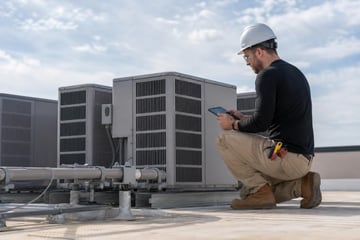
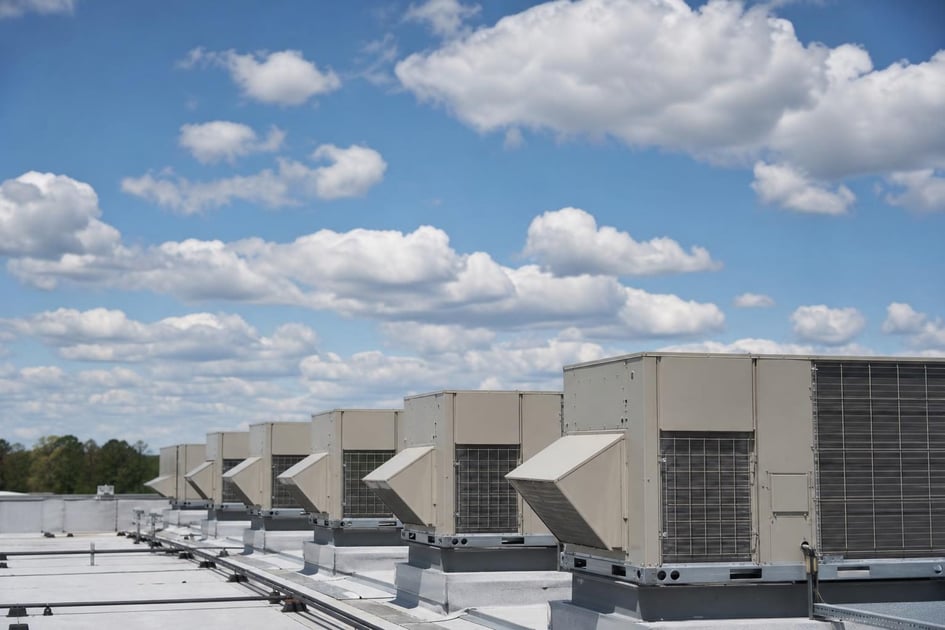
Commercial HVAC system financing in Georgia lets business owners acquire heating and cooling equipment without draining operating accounts. Whether you run a warehouse in Dalton, a medical clinic in Savannah, or a restaurant in Atlanta, the equipment itself serves as collateral, which keeps rates competitive and approvals moving fast. Provide Capital finances new and used commercial HVAC systems from $5,000 to $5 million nationwide, with same-day approvals possible for qualified applicants.
Why Georgia Businesses Replace HVAC on a Different Schedule
Georgia's climate is not kind to rooftop units. The state sits across ASHRAE climate zones 2A (hot-humid) along the coast and 3A (warm-humid) through the Atlanta metro and northern Piedmont. That means cooling systems run hard from April through October, with peak loads arriving in June, July, and August when Atlanta highs exceed 88°F and Savannah averages 91°F in July. Relative humidity above 70% forces longer run cycles and adds latent load that strains compressors and condenser coils.
The result is a compressed replacement cycle. A commercial rooftop unit that might last 15 to 20 years in a milder climate often needs major overhaul or replacement at 12 to 15 years in Georgia. Coastal businesses in Savannah, Brunswick, and St. Marys face an additional threat: salt-air corrosion accelerates degradation of condenser fins and electrical components, cutting effective equipment life even further inland than in Florida's comparable zones.
Then there is the pollen factor. Every March and April, Georgia pine pollen coats outdoor coils and overwhelms air filters. Commercial properties that do not increase filter change frequency during these months see restricted airflow and higher head pressure, which shortens compressor life. Many Georgia facility managers schedule coil cleaning and filter swaps in late April, right before the summer surge, to avoid mid-July failures when contractor lead times stretch to three or four weeks.
Heat pumps dominate the Georgia market because winters are mild enough for efficient operation most of the season, but cold snaps in January can drop Atlanta below 20°F and trigger auxiliary electric heat. Standard air-source heat pumps lose efficiency below 35°F, so businesses in the mountains around Blue Ridge and Ellijay need systems sized for real heating loads, sometimes with propane or natural gas backup. If you are replacing equipment in North Georgia, the sizing calculation differs materially from the Atlanta standard.
Key Insight: Fulton, Gwinnett, and Cobb counties see the highest permit application volumes for commercial HVAC installations between May and September. If you are planning a replacement, submitting permits in March or April often avoids the inspection backlog that pushes September projects into October, when shoulder-season maintenance demand competes for contractor availability.
Already have a machine in mind?
Provide Capital finances new and used equipment from $5,000 to $5 million, with same-day decisions possible.
Apply NowWhat Commercial HVAC Systems Cost in Georgia
Prices vary by equipment type, tonnage, efficiency rating, and installation complexity. A small retail space or professional office needing a 3- to 5-ton split system might face a total project cost between $15,000 and $35,000, including equipment, basic ductwork modifications, and permits. A mid-size commercial building with a 10- to 20-ton rooftop unit typically falls in the $40,000 to $120,000 range, depending on whether crane rental is needed and if the curb requires structural repair.
Large facilities with variable air volume (VAV) systems, chillers, or multi-zone building automation can easily exceed $150,000 and approach $500,000 or more when controls, ductwork, and electrical service upgrades are bundled. Georgia Power offers efficiency rebates up to $50 per ton for qualifying high-SEER2 systems, which can offset first costs for businesses willing to invest in equipment rated 16 SEER2 or higher. Those rebates are typically processed through the installing contractor.
Installation costs in the Atlanta metro often run higher than in South Georgia due to crane access restrictions, tighter staging areas, and higher labor rates. Buildings in historic districts or dense urban cores may also require after-hours installation or specialized rigging, adding 10% to 20% to the labor line. If your electrical panel needs upgrading to handle a larger unit or three-phase conversion, that work is outside the HVAC scope and requires a separate electrical contractor under Georgia's trade licensing rules.
By the Numbers: Georgia is home to more than 1.4 million small businesses, according to the latest SBA state profile. Many operate commercial facilities with aging HVAC stock. A 15-year-old rooftop unit running R-22 refrigerant can cost 40% to 60% more to operate annually than a current high-efficiency model, and R-22 service costs have risen sharply since production bans took full effect. For a 20-ton unit, that efficiency gap often translates to thousands of dollars in annual power bills alone.
Equipment Financing vs. Paying Cash
Paying cash preserves no monthly payment, but it also removes capital that could cover payroll, inventory, or emergency repairs. For most Georgia owner-operators, financing the HVAC system keeps liquidity intact while spreading the cost over the equipment's useful life. Because the equipment serves as collateral, lenders can offer competitive terms without requiring additional real estate or blanket liens on all business assets.
Rates vary by credit profile, equipment age, and term length. Borrowers with strong credit and established business history typically see the most favorable terms, while newer businesses or lower credit scores may still qualify but at higher rates or shorter durations. Terms generally range from 24 to 84 months, with 36-, 48-, and 60-month structures being the most common for commercial HVAC.
Lease vs. Loan
A $1 buyout lease functions almost identically to a loan for tax and accounting purposes: you deduct interest and depreciation, and you own the equipment at the end. A fair market value (FMV) lease offers lower monthly payments but requires returning the equipment or purchasing it at fair market value when the term ends. FMV leases work best for businesses that plan to upgrade technology frequently or are uncertain about long-term facility needs.
Operating leases may keep the debt off the balance sheet, though accounting rule changes have narrowed that treatment. For a Georgia business planning to stay in the same location for a decade, a $1 buyout lease or equipment loan usually wins on total cost. If you are leasing the building itself and may relocate in three to five years, an FMV lease limits the risk of owning equipment you cannot easily move.
New vs. Used Equipment
New units carry full manufacturer warranties, current efficiency ratings, and eligibility for Georgia Power rebates. Used or refurbished commercial HVAC can cut acquisition costs by 30% to 50%, but warranty coverage is shorter or nonexistent, and efficiency ratings lag current standards. Financing used equipment is common, though lenders typically cap terms based on the unit's remaining useful life. A five-year-old rooftop unit might qualify for a 36- or 48-month term instead of 60 or 72 months.
Provide Capital finances both new and used commercial HVAC systems. If you are considering used equipment, have a licensed contractor document the compressor amp draw, refrigerant charge, and coil condition before applying. Lenders want confirmation the unit has sufficient remaining life to outlast the loan term.
| Factor | Equipment Loan / $1 Buyout Lease | FMV Lease | Cash Purchase |
|---|---|---|---|
| Upfront cost | Low to none | Low to none | Full project cost |
| Monthly obligation | Fixed payment | Lowest payment | None |
| Ownership at end | Yes | Purchase optional | Immediate |
| Tax treatment | Depreciation + interest deduction | Payment deduction (operating lease) | Depreciation only |
| Best for | Long-term owner-occupants | Frequent upgraders, short leases | High cash reserves |
See what you qualify for based on your equipment quote and business financials.
Pro Tip: If you are replacing a unit that failed in July, ask your contractor for a temporary portable cooling solution while financing closes. Many Atlanta-area contractors maintain rental fleets during summer, and a $2,000 rental spend can prevent a $50,000 revenue loss while you finalize a $75,000 equipment loan. Do not let urgency push you into a high-cost cash-advance product when equipment financing can close in days.
How to Qualify for Commercial HVAC Financing
Provide Capital looks at the overall health of the business, not just a credit score. Underwriting criteria typically include time in business, annual revenue, bank account history, and the equipment's cost relative to the company's income. A business generating $500,000 in annual revenue can generally qualify for HVAC equipment well into the six figures, provided cash flow supports the monthly payment.
Most programs require the business to have operated for at least one to two years, though exceptions exist for strong credit profiles or borrowers with significant industry experience. You do not need perfect credit. Equipment financing is secured by the HVAC unit itself, which reduces lender risk and opens the door for borrowers across a wider credit spectrum than unsecured lending.
Documentation requirements are lighter than SBA loans. You will typically need a current equipment quote or purchase agreement, recent bank statements, and basic business financials. For larger transactions above $250,000, two years of tax returns and a year-to-date profit and loss statement may be requested. Same-day approvals are possible when the file is complete and the equipment quote is itemized.
Find the right financing structure
Tell us about the equipment you need and we will show you the options that fit your business.
See Your OptionsTax Treatment for the 2026 Tax Year
The tax treatment of commercial HVAC equipment depends on how it is classified and the current-year limits set by Congress. Under Section 179, qualifying HVAC equipment may be eligible for immediate expensing in the year it is placed in service, subject to annual dollar caps and taxable income limitations. For tax year 2026, the specific deduction limit and phase-out threshold are set by inflation-adjusted IRS revenue procedures. Because these figures change annually and interact with bonus depreciation rules, you should consult a CPA before making a purchase timing decision.
Bonus depreciation may also apply to commercial HVAC systems placed in service during 2026, potentially allowing additional first-year write-offs beyond Section 179. The interplay between Section 179, bonus depreciation, and regular MACRS depreciation is complex, especially if your business is approaching the equipment spending thresholds where deductions phase out. A CPA can model whether placing equipment in service in December versus January changes your effective after-tax cost.
Georgia state tax treatment follows federal depreciation schedules in most cases, but state incentives for energy-efficient commercial equipment vary by year. Verify current Georgia Department of Revenue guidance before relying on state-level deductions. Your CPA can also determine whether a lease payment structure or loan structure produces a better net tax outcome for your specific bracket and liability profile.
Documentation You Will Need
Gathering paperwork before applying speeds approval and reduces back-and-forth. At minimum, have the following ready:
- An itemized equipment quote from a licensed Georgia Conditioned Air Contractor
- Three to six months of business bank statements
- Most recent business tax return (two years for requests above $250,000)
- Year-to-date profit and loss statement
- Proof of business entity registration and any required licenses
For commercial HVAC in Georgia, the installer must hold a Conditioned Air Contractor license from the Georgia Construction Industry Licensing Board. Class I covers systems up to 175,000 BTU; Class II is unrestricted and required for large rooftop units and chillers. Verify your contractor's license status before signing a quote, because lenders may request the license number as part of the funding package.
Common Mistakes Georgia Owners Make
Undersizing is the most expensive error. A system that cannot handle Georgia's latent cooling load will run continuously without reaching setpoint, driving up power bills and shortening compressor life. Demand that your contractor perform Manual J or equivalent commercial load calculations using Georgia-specific weather data, not rule-of-thumb sizing.
Another mistake is scheduling replacement during peak summer. Contractors are booked solid from June through August, and emergency replacements command premium pricing. Financing also moves slower in summer because lenders field higher volumes. March, April, and October typically offer better contractor availability, faster permitting, and cooler installation conditions for rooftop work.
Some owners assume used equipment is always the better value. In Georgia's climate, a used unit with degraded coils or marginal compressor capacity will fail faster than in a milder state. The savings on the purchase price can evaporate in higher operating costs and earlier replacement. If you finance used equipment, negotiate a shorter term so the loan does not outlast the unit's reliable service life.
Industry-Specific Use Cases in Georgia
Georgia's economy spans sectors that all have distinct HVAC demands. Understanding your industry's typical system requirements helps you choose the right equipment and financing structure.
Manufacturing and Warehousing
Georgia has outpaced the Southeast in manufacturing GDP growth over the last decade, with major operations in automotive, aerospace, and food processing. Manufacturing facilities generate substantial internal heat loads from machinery, often requiring year-round cooling even in January. Large warehouse spaces with high ceilings need destratification fans paired with rooftop units to prevent temperature layering. Hvac equipment financing for these environments often involves multiple 20- to 30-ton units or chiller systems that fall well within the $5,000 to $5 million range.
Agriculture and Food Processing
With 9.9 million acres of operating farmland, Georgia's agribusiness sector relies on climate-controlled processing, packing, and cold storage. Post-harvest cooling is time-sensitive; a failed unit during peach or blueberry season can destroy inventory. Many agricultural processors finance backup cooling capacity or redundant split systems to protect against single points of failure. Used equipment is common in this sector, but lenders like to see a maintenance log proving the unit was serviced regularly.
Restaurants and Food Service
Kitchen exhaust systems create negative pressure that fights against rooftop units. Georgia restaurants often need makeup air units paired with their HVAC to maintain comfortable dining room temperatures. The combination of grease-laden exhaust and Georgia humidity also accelerates coil corrosion. Restaurant owners should budget for quarterly coil cleanings and consider financing packages that include maintenance contracts or extended warranties.
Healthcare and Dental
Medical practices require precise temperature and humidity control for patient comfort and equipment operation. Dental offices with CAD/CAM milling equipment and imaging suites generate heat loads that standard commercial systems were not designed to handle. Financing for medical HVAC often includes HEPA filtration upgrades and humidity controls that add 15% to 25% to base equipment costs but are necessary for compliance and patient safety.
Film and Production Studios
Georgia's film industry operates sound stages and production facilities with massive cooling demands from lighting and equipment. These spaces often need industrial-grade air handling with silent operation during filming. The specialized nature of this equipment means financing terms may require vendor verification of specifications before funding.
What Happens After Approval
Once approved, Provide Capital issues a funding authorization that your equipment vendor can verify. Funds are typically disbursed directly to the supplier upon delivery and installation confirmation, or to an escrow arrangement if the project spans multiple milestones. You begin making monthly payments according to the amortization schedule, with no prepayment penalty on most programs.
If you are financing a replacement unit, coordinate the installation date with your contractor and the funding timeline. Most Georgia HVAC contractors require a deposit to order equipment, with the balance due at completion. A financing approval letter often satisfies the deposit requirement, preserving your cash until closing. After installation, retain all permits, inspection sign-offs, and warranty paperwork. Lenders do not usually require these, but you will need them for insurance claims and eventual resale or trade-in.
Get a same-day decision on your equipment when you submit a complete application with a current quote.
Put the right equipment to work
From $5,000 to $5 million, new or used, Provide Capital helps businesses nationwide finance the equipment they need.
Apply TodayFrequently Asked Questions
Can I finance a used commercial HVAC system in Georgia?
Yes. Provide Capital finances both new and used equipment. Used units must have sufficient remaining useful life to outlast the loan term, and a licensed contractor should verify compressor health, refrigerant type, and coil condition before purchase.
Do I need a specific license to install commercial HVAC in Georgia?
Georgia requires a Conditioned Air Contractor license from the Georgia Construction Industry Licensing Board for all paid HVAC work. Class I covers systems up to 175,000 BTU; Class II has no limit. The installer must also hold EPA Section 608 certification for refrigerant handling.
How long does approval take for commercial HVAC financing?
Same-day approvals are possible for complete applications with clear credit and supporting documentation. More complex files or larger transactions may take 24 to 72 hours. Funding typically follows within one to three business days after approval.
Will the lender file a lien on my building?
No. The equipment itself serves as collateral through a UCC-1 filing. The lender does not typically take a lien on real estate or other business assets unless the transaction size or risk profile requires additional security.
Can I include installation, ductwork, and controls in the financing amount?
Yes. Soft costs such as installation labor, ductwork modifications, controls, and crane rental can often be bundled into the financing package, provided they are itemized on the contractor's quote and do not exceed typical percentages of the total project.
What credit score do I need to qualify?
There is no hard minimum. Equipment financing is secured by the HVAC unit, which allows lenders to work with a broader range of credit profiles than unsecured lending. Strong credit and established business history produce the most favorable terms, but businesses with challenges in either area may still qualify.
Are there tax benefits for financing versus paying cash?
Both financed and cash purchases generally allow depreciation deductions. With a loan or $1 buyout lease, you may also deduct interest or lease payments. For tax year 2026, Section 179 and bonus depreciation rules may allow immediate expensing of qualifying equipment, but you should confirm your specific situation with a CPA before purchasing.
Is it better to replace my HVAC in spring or fall?
In Georgia, spring (March-April) and fall (October-November) offer the best contractor availability, shorter permit timelines, and comfortable installation weather. Summer replacements are possible but face longer lead times and higher emergency rates.
Commercial Hvac System financing through Provide Capital covers rooftop units, split systems, VRF systems, chillers, and packaged units for businesses across Georgia. Whether you are upgrading a single unit in Macon or outfitting a new manufacturing facility in Gainesville, the equipment itself secures the loan, keeping the process straightforward and preserving your working capital for payroll, inventory, and growth. Hvac System financing options are also available for smaller split systems and heat pumps that serve professional offices, retail shops, and light commercial spaces. Business owners exploring cost-effective building upgrades can review strategies outlined by the Forbes Business Council on retrofitting, while statewide economic data from the Census Bureau's economic census confirms the scale of commercial activity driving HVAC demand across the state.
Disclaimer: The information provided in this article is for general educational purposes only and is not financial, legal, or tax advice. Funding terms, qualifications, and product availability may vary and are subject to change without notice. Provide Capital does not guarantee approval, rates, or specific outcomes. For personalized information about your business funding options, contact our team directly.