
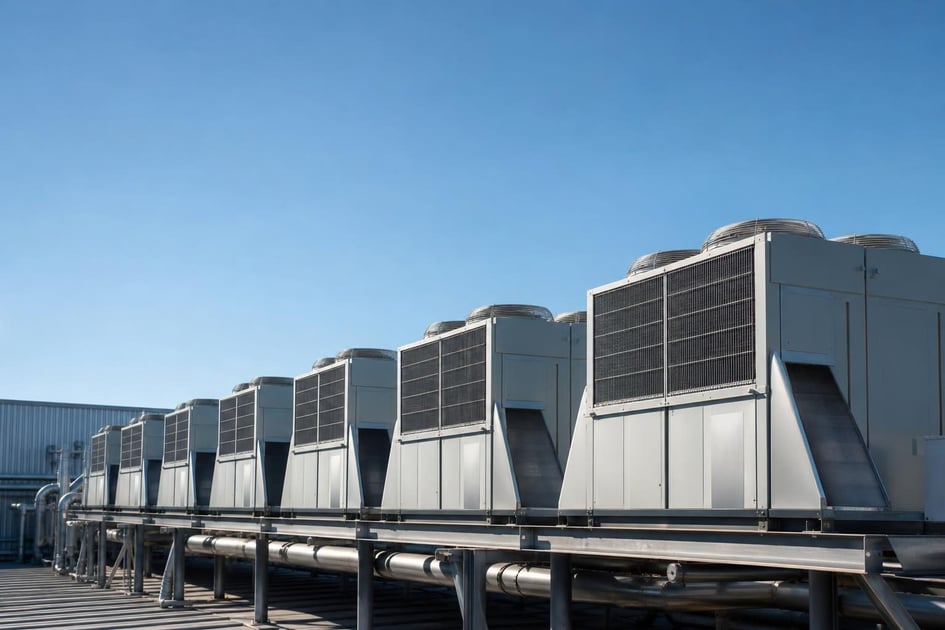
Commercial HVAC system financing typically runs 24 to 84 months, with the equipment itself serving as collateral. Rates vary by credit profile, equipment age and term length, and same-day approvals are possible for well-documented applications. Whether you are replacing a 15-ton rooftop unit or financing a full building retrofit, understanding the structure ahead of time keeps you from signing terms that strain your cash flow.
If you are comparing quotes on a new system, you can see what financing you qualify for on that unit without committing to a hard pull upfront.
How Lenders Structure HVAC Equipment Financing
Most commercial HVAC deals are structured as equipment term loans or finance leases. In both cases, the lender files a UCC-1 lien against the equipment, which serves as the primary collateral. Because the loan is secured by a hard asset with measurable resale value, lenders can offer more competitive terms than unsecured working capital products. This structure is similar to the approach outlined in Small Business Administration financing programs, where collateral reduces risk for both parties.
Loan lengths for HVAC equipment usually fall between 24 and 84 months. Shorter terms mean higher monthly payments but lower total cost. Longer terms improve monthly cash flow but increase the total interest paid over the life of the agreement. For a $50,000 rooftop unit, the difference between a 36-month and a 60-month term can shift the monthly obligation by several hundred dollars.
Down payments are not always required. Many lenders offer 100 percent financing for qualified buyers, especially on new equipment from established manufacturers. If your credit profile is weaker or the equipment is used and more than ten years old, a down payment of 10 to 20 percent may be requested to reduce the lender's exposure.
Key Insight: Lenders often reserve the longest terms for new equipment under five years old. Used systems older than ten years may be capped at 36 or 48 months, which can push monthly payments above what your cash flow supports. Always match the term to the equipment's remaining useful life.
Already have a machine in mind?
Provide Capital finances new and used equipment from $5,000 to $5 million, with same-day decisions possible.
Apply NowNew vs. Used HVAC Equipment: Financing Differences
New commercial HVAC systems carry stronger financing terms because the collateral value is predictable. Manufacturers like Trane, Carrier and Lennox have established resale markets, so lenders can estimate liquidation value if the loan defaults. New equipment also carries warranties that reduce the risk of a major repair draining your operating account right after purchase.
Used equipment can still be financed, but the underwriting is tighter. Lenders will want to know the unit's age, total runtime hours, maintenance history and whether replacement parts remain available. A used 10-ton chiller that is eight years old and has been serviced annually is a very different risk than the same model with no maintenance records.
For used equipment, expect slightly shorter maximum terms and potentially a larger down payment requirement. The savings on the purchase price can still make used equipment the right choice, but you should factor in the financing trade-offs when comparing quotes.
If you are weighing a new installation against a used replacement, get a decision on your equipment, possibly the same day, so you can compare real numbers side by side.
Lease vs. Loan: A Side-by-Side Comparison
Not every business wants to own its HVAC equipment outright. Leasing preserves capital and may offer different tax treatment depending on the structure. The table below breaks down the practical differences.
| Factor | Equipment Term Loan | Finance Lease |
|---|---|---|
| Ownership | You own the equipment from day one | Lender owns it until final payment or buyout |
| Down payment | Often $0 for qualified borrowers | Usually one or two payments upfront |
| Monthly obligation | Fixed principal and interest | Fixed lease payment |
| Tax treatment | Depreciation and Section 179 | Payments may be deductible as operating expense |
| End of term | Equipment is yours, no balloon | $1 buyout or fair market value purchase |
| Typical term | 24 to 84 months | 24 to 60 months |
The right structure depends on your tax strategy and how long you plan to keep the building. If you own the property and expect to stay for 15 years, a loan usually wins. If you are in a leased space with a five-year remaining term, a lease with a fair market value buyout may align better.
By the Numbers: A restaurant financing a $75,000 replacement rooftop unit over 60 months might see monthly payments in the low four figures on a loan structure, while a 36-month lease on the same unit would push that obligation higher but leave the door open for an equipment refresh sooner. The total cost difference over the full life of the agreement can exceed $10,000.
What It Takes to Qualify
Credit profile
Your personal and business credit history are the starting point. Most equipment lenders look for a personal credit score north of 600, though some programs accept lower with compensating factors. Recent bankruptcies, open tax liens or judgments will slow down approval and may require additional documentation or a larger down payment.
Time in business
Two years in operation is the standard threshold for the best terms, but startups with strong credit and industry experience can still qualify. If your business is newer, expect the lender to weigh your personal credit more heavily and possibly cap the term or require a down payment.
Equipment as collateral
Because the HVAC unit itself secures the deal, lenders care deeply about what you are buying. They will verify the make, model, serial number, condition and vendor. Buying from a licensed dealer with a warranty is smoother than buying from a private seller with no documentation. The equipment's value must support the loan amount.
Pro Tip: Prepare a quote or invoice from your vendor before applying. Lenders move faster when they can verify the equipment details, sale price and vendor legitimacy upfront. A vague request for "HVAC financing" without a specific unit in mind adds days to the process.
Tax Treatment for the 2026 Tax Year
For the 2026 tax year, Section 179 allows businesses to deduct the full purchase price of qualifying equipment in the year it is placed in service, subject to an annual limit. The exact dollar limit for 2026 is set by the IRS and adjusted for inflation. You should confirm the current-year ceiling with your CPA before finalizing any purchase, because it changes annually and your specific situation may limit what you can claim.
Bonus depreciation is also available in 2026, though the percentage has been phasing down from the peak levels of prior years. The combination of Section 179 and bonus depreciation can substantially reduce the after-tax cost of a new HVAC system, but the rules are complex. A used system qualifies for Section 179 if it is new to your business, though bonus depreciation rules differ for used equipment.
Lease payments, by contrast, are typically treated as operating expenses and deducted as paid. This simplifies bookkeeping but may not deliver the large front-loaded deduction that ownership provides. Your CPA can model which structure leaves more money in your account after taxes.
Key Insight: The IRS requires that equipment be placed in service during the tax year you claim the deduction. If you finance a commercial HVAC system in December 2026 but the contractor does not complete installation until January 2027, the deduction shifts to the 2027 tax year. Schedule installation before mid-December to avoid surprises.
Find the right financing structure
Tell us about the equipment you need and we will show you the options that fit your business.
See Your OptionsDocumentation You'll Need
A complete application package moves faster. Gather these items before you start:
- Equipment quote or invoice showing make, model, serial number and sale price
- Last three months of business bank statements
- One or two years of business tax returns
- Personal financial statement or personal tax return for the business owner
- Business formation documents and EIN verification
For larger requests approaching the upper end of the lender's range, you may also need a business debt schedule and interim financials. If the equipment is used, maintenance records and a third-party inspection report strengthen your file.
Common Mistakes Owners Make
Buying based on monthly payment alone is the most expensive error. A lower monthly cost stretched over 84 months can mean you pay far more in total than a 60-month option. Always calculate the total cost of ownership including interest, fees, installation and expected maintenance.
Another mistake is financing equipment without verifying the vendor. Lenders will check whether the seller is legitimate. If you buy from an unlicensed contractor or a private seller with no verifiable business address, the deal may stall while the lender conducts extra due diligence.
Failing to match the term to the equipment life is also common. Financing a rooftop unit over seven years when its expected service life is ten years leaves you with payments on a system that may need replacement before the loan is paid off. Aim to retire the debt while the equipment still has productive years ahead.
What Happens After You Apply
Once you submit an application, the lender reviews your credit, business financials and equipment details. For straightforward deals under $150,000 with strong credit, approval can come the same day. Larger requests or files with credit challenges may take 24 to 72 hours while the lender requests additional documentation.
After approval, you receive a term sheet or lease agreement outlining the monthly payment, term, any down payment required and the collateral description. Review it carefully. If the terms match what you discussed, you sign and the lender pays the vendor directly. You take delivery and the clock starts on your monthly obligations. Ask your lender whether they pay the vendor before or after delivery, because a delay in funding can push installation back by weeks if your contractor needs a deposit to order the unit.
Industries That Rely on Commercial HVAC Financing
Restaurants and food service operators cannot afford a failed health inspection because the air conditioning went down in July. A finance lease on a replacement walk-in cooler condenser or rooftop package unit keeps the dining room open without draining the account that covers payroll.
Healthcare and dental practices have strict temperature and humidity requirements for patient comfort and equipment performance. Financing a precision climate control system through Hvac equipment financing programs preserves the capital needed for compliance upgrades elsewhere in the practice.
Manufacturing facilities and warehouses often need industrial-scale systems that run harder and longer than standard commercial units. For heavy-duty installations, Industrial Hvac System financing covers larger tonnages and specialized ventilation equipment that falls outside standard commercial lending programs.
Agriculture operations, including indoor growing facilities and dairy barns, depend on climate control for livestock health and crop yield. Seasonal cash flow makes large upfront purchases difficult, so spreading the cost over the equipment's productive life aligns payments with revenue.
Construction companies also face seasonal swings. When summer temperatures rise, crews need climate-controlled break areas and proper ventilation in enclosed job sites. A short-term equipment loan on portable or modular HVAC units lets the job stay on schedule without tying up the bond line.
Transportation and trucking firms with maintenance garages need reliable heating and exhaust systems to keep bays operational through winter. According to Reuters analysis of commercial electricity price trends, energy costs remain a significant line item for facilities with high ventilation demands. Financing those upgrades through Commercial Hvac System financing keeps diesel bays at workable temperatures without diverting cash reserved for fuel and payroll.
Businesses across the country invest heavily in productive equipment. U.S. Census Bureau data on business capital spending shows that equipment investment continues to grow across sectors that depend on climate-controlled environments.
Put the right equipment to work
From $5,000 to $5 million, new or used, Provide Capital helps businesses nationwide finance the equipment they need.
Apply TodayFAQ
What credit score do I need to finance a commercial HVAC system?
Most equipment lenders prefer a personal credit score above 600, though approvals are possible below that with additional documentation or a larger down payment. The equipment itself serves as collateral, which gives lenders more flexibility than unsecured products.
Can I finance a used commercial HVAC unit?
Yes. Used equipment is financeable, but expect shorter maximum terms and possibly a down payment requirement. The lender will want maintenance records, age verification and confirmation that replacement parts are still manufactured.
How long does approval take?
Well-documented applications for amounts under $150,000 can receive approval the same day. Larger requests or files with credit complications may take 24 to 72 hours while the lender verifies financials and collateral value.
Is a down payment always required?
No. Many qualified borrowers receive 100 percent financing on new equipment. Used equipment or weaker credit files may trigger a 10 to 20 percent down payment request to reduce lender risk.
Can I deduct the full cost in the first year?
For the 2026 tax year, Section 179 may allow a first-year deduction up to the IRS annual limit, which is adjusted for inflation. Bonus depreciation is also available in 2026 but has been phasing down. Consult your CPA to determine exactly how much you can deduct based on your specific tax situation.
What is the difference between a loan and a lease for HVAC equipment?
A loan makes you the owner from day one and allows depreciation and Section 179 deductions. A lease treats the equipment as the lender's asset; you make fixed payments and may have a buyout option at the end. The right choice depends on your tax strategy and how long you plan to keep the equipment.
Will the lender pay my contractor directly?
Most equipment lenders pay the vendor or contractor directly after delivery and signed invoice confirmation. Some issue a purchase order upfront. Clarify the funding timeline with your lender before you schedule installation to avoid delays.
Can I include installation costs in the financing?
Many lenders allow soft costs like installation, freight and training to be rolled into the equipment financing agreement, up to a certain percentage of the equipment cost. Ask your lender what portion of the total project can be financed.
Next Steps
If you have a quote in hand for a new or replacement commercial HVAC system, the next move is to compare real financing terms side by side. Gather your bank statements, tax returns and equipment invoice, then start an application in a few minutes to see what structure fits your cash flow. For most business owners, the process moves faster than expected and puts the project on schedule without draining operating capital.
Disclaimer: The information provided in this article is for general educational purposes only and is not financial, legal, or tax advice. Funding terms, qualifications, and product availability may vary and are subject to change without notice. Provide Capital does not guarantee approval, rates, or specific outcomes. For personalized information about your business funding options, contact our team directly.
