Can You Finance a Commercial Mower with Bad Credit?
Yes. A low personal credit score does not automatically disqualify you from Commercial Mower financing. Equipment finance companies evaluate the whole picture: the collateral value of the mower, your business revenue, time in operation, and the size of your down payment. Because the equipment itself secures the loan, lenders can approve deals that unsecured lenders would decline.
At Provide Capital, we finance new and used business equipment from $5,000 to $5 million. The machine serves as the collateral, which keeps rates competitive even when credit is challenged. Same-day approvals are possible for well-documented applications, though they are never guaranteed. We work with owner-operators across construction, healthcare, dental, restaurant and food service, manufacturing, transportation, agriculture, HVAC and forestry nationwide. Landscaping and lawn care companies fit squarely into that footprint.
If you have a mower invoice or equipment quote in hand, see what you qualify for and get a same-day decision on your equipment.
Get a fast decision on your equipment
Applying takes just a few minutes, and decisions can come as soon as the same day.
Start Your ApplicationHow Equipment Financing Works When Your Credit Is Challenged
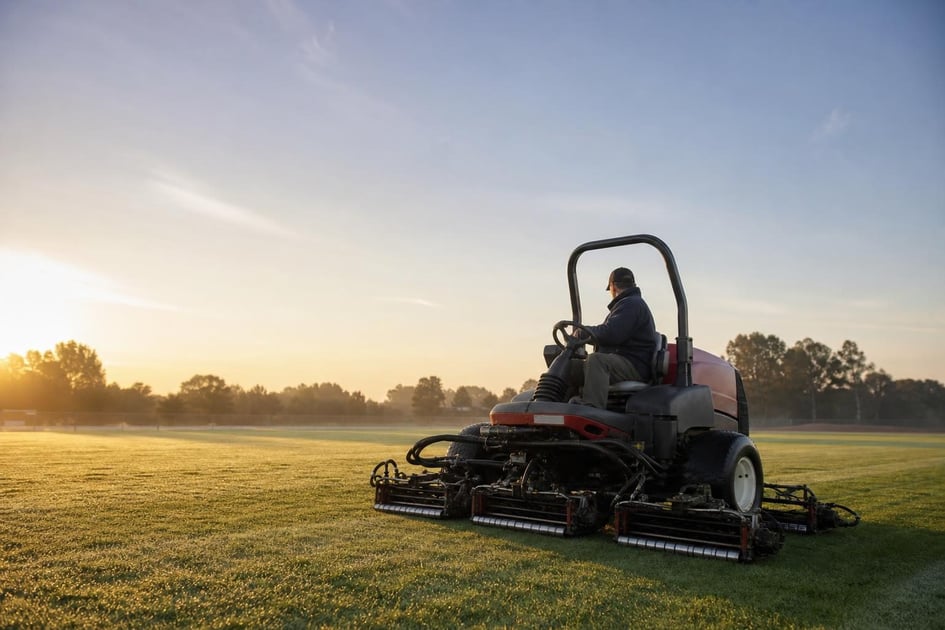
Traditional banks often treat a sub-650 FICO score as a hard stop. Equipment lenders do not. The underwriting model is different because the lender holds a security interest in a tangible asset that can be remarketed. A commercial zero-turn mower, stand-on mower, or tractor mower has a serial number, a known resale channel, and a measurable remaining useful life. Those characteristics reduce the lender's risk and open the door for borrowers with past credit problems.
Why Collateral Changes the Lender's Risk Calculation
In an unsecured working-capital loan, the lender has nothing to recover if the borrower defaults. In equipment financing, the lender can repossess and resell the mower. That recovery value is built into the pricing and the approval decision. A borrower with a 580 credit score and a demonstrated ability to generate revenue from mowing contracts is often a better risk than a borrower with a 720 score but no clear path to pay the debt from business cash flow.
The Small Business Administration notes that asset-backed lending is a foundational tool for small businesses that lack long credit histories or perfect scores. Equipment finance falls into this category. The lender files a UCC-1 lien on the mower, which protects their interest and gives them confidence to extend credit they otherwise would not.
What Lenders Review Beyond the FICO Score
Expect the lender to ask for three to six months of business bank statements. They want to see revenue coming in, even if it is seasonal. They will verify that your business is active and that the equipment purchase aligns with your service capacity. Time in business matters: a lawn care company operating for two years with tax returns and a stable customer list is viewed differently than a brand-new entity with no track record.
Down payment size can offset credit weaknesses. Putting 10 to 20 percent down reduces the loan-to-value ratio and signals commitment. Some applicants with significant credit challenges also strengthen their file by adding a co-signer or providing a personal guarantee backed by additional collateral.
Key Insight: Equipment lenders underwrite the collateral as heavily as the borrower. A commercial mower with a strong resale market and identifiable serial number can offset a credit score below 600, because the lender's loss severity drops if repossession becomes necessary.
New vs. Used Commercial Mowers: Financing Differences
The age and condition of the mower you choose directly affect your approval odds, the term length, and your monthly payment. Both new and used machines can be financed with challenged credit, but the trade-offs are worth understanding before you shop.
Financing a New Mower with Bad Credit
New equipment carries a higher price tag, which increases the monthly obligation. However, it also comes with manufacturer warranties, predictable maintenance costs, and the longest possible useful life. Lenders like new equipment because the collateral value is highest at origination and depreciates on a known curve. If you have consistent revenue and can handle the payment, a new mower may earn approval despite a lower credit score because the asset quality supports the risk.
The downside is the larger capital requirement. A new commercial zero-turn mower can cost $12,000 to $20,000 or more. With bad credit, the lender may cap the term at 36 or 48 months to limit their exposure, which pushes the monthly payment higher than a longer-term used-equipment deal.
Used Equipment as a Path to Approval
A used mower in good working condition lowers the total financed amount. That is the single easiest way to improve your debt-service coverage ratio. Many lenders prefer used equipment for challenged-credit borrowers because the monthly payment fits more comfortably within existing cash flow. The key is to buy from a reputable dealer who can provide a detailed invoice, maintenance history, and clear title. Private-party sales are harder to finance because verification is more difficult.
Look for machines that are less than ten years old and have under 2,000 hours. Equipment in that range still commands resale value and gives the lender confidence. If you successfully pay off a used mower loan, that positive trade line often makes your next equipment purchase easier to approve and cheaper to finance.
Pro Tip: If your credit is below 620, request financing on a used mower that is three to seven years old. The lower principal amount reduces the lender's exposure, and the equipment still retains enough useful life to generate revenue that covers the payment.
Lease vs. Loan: What Makes Sense for Mowers?
Both structures let you put the mower to work immediately, but the ownership implications, tax treatment, and end-of-term options differ. For borrowers with bad credit, the choice often comes down to which structure the lender will approve and which better matches how long you intend to keep the machine.
| Feature | Equipment Loan | Equipment Lease |
|---|---|---|
| Ownership | You own the mower; lender holds a lien | Lessor owns the mower; you are the lessee |
| Monthly payment | Often higher, but builds equity | Often lower, especially for short terms |
| Down payment | Typically 0 to 20% | Usually first and last payment upfront |
| Credit flexibility | More flexible with strong collateral | May require stronger credit for best rates |
| End of term | Title releases when paid off | Return, buyout, or renew depending on structure |
| Tax treatment | Depreciation and interest deduction | Lease payments generally deductible |
For most owner-operators buying a primary mower, a loan makes more sense because you intend to run the machine for many years. A lease can work if you upgrade equipment frequently or want the lowest possible monthly outlay while you rebuild credit. Rates vary by credit profile, equipment age and term in both structures.
What You Actually Need to Qualify
Understanding the checklist helps you gather documents before you apply and avoids surprises. While every lender sets its own thresholds, the following framework covers what Provide Capital and similar equipment finance companies typically review.
Credit Score Ranges and What They Mean
There is no universal cutoff. Borrowers with scores in the low 600s routinely receive approvals when the rest of the file is strong. Scores in the 500s are not automatic denials, but they usually require compensating factors: a larger down payment, longer time in business, or newer equipment with strong collateral value. Scores below 550 face more scrutiny, yet deals still close when revenue is documented and the equipment cost is modest.
Lenders also look at the story behind the score. A single foreclosure from five years ago is different from three recent charge-offs. Be prepared to explain major derogatory items. Underwriters are often willing to listen if you can show that the event was isolated and your business has stabilized.
Time in Business and Revenue Documentation
Most equipment lenders prefer at least one year in operation. Two years is better. If you are newer, you may still qualify with a strong personal credit co-applicant or a significant down payment. Revenue documentation usually means recent bank statements showing deposits that support the proposed payment. Some lenders also request tax returns or profit-and-loss statements for larger requests.
Seasonal businesses should not hide their seasonality. A lawn care company that earns most of its revenue from May through September should present twelve months of statements so the lender sees the full cycle. Hiding the slow months looks suspicious; explaining them shows you understand your business.
The Equipment's Role in Underwriting
The lender will verify the equipment description, serial number, seller information, and purchase price. They may request an appraisal or inspection for high-value or older used equipment. Financing through a licensed dealer simplifies this process because dealers are accustomed to providing the documentation lenders need. Private sellers can drag out the timeline because title verification and condition assessments take longer.
By the Numbers: Provide Capital finances equipment from $5,000 to $5 million. Commercial mower loans typically run 24 to 60 months. A $15,000 used zero-turn mower at 48 months often carries a monthly payment in the low-to-mid hundreds, though rates vary by credit profile, equipment age and term.
See what you qualify for
The equipment itself secures the financing, which keeps rates competitive. Checking your options takes minutes.
Check Your OptionsTax Treatment for Mowers in 2026
Commercial mowers qualify as business equipment under the tax code. For tax year 2026, Section 179 allows businesses to deduct the full purchase price of qualifying equipment up to an annual limit that adjusts for inflation. The exact 2026 limit will be published by the IRS; consult your CPA to confirm the current-year ceiling and whether your taxable income supports the deduction.
Bonus depreciation may also apply to new and used equipment in 2026, though the percentage has been phasing down in recent years. Your accountant can tell you the precise rate for 2026 and whether your entity structure makes bonus depreciation more advantageous than Section 179. Either way, the tax benefits of acquiring a mower can offset a meaningful portion of the first-year cost, improving your net cash flow.
Lease payments, if you choose a lease structure, are generally fully deductible as a business expense. The deduction timing differs from depreciation, so ask your CPA which approach aligns with your 2026 tax strategy. Never make an equipment financing decision based solely on tax benefits, but do factor them into your total cost of ownership.
Industries That Rely on Commercial Mower Financing
Landscaping and lawn care companies are the obvious buyers, but they are not the only ones. Municipal parks departments, schools, golf courses, cemeteries, and agricultural operations all use commercial-grade mowers. Provide Capital serves these sectors nationwide.
For agricultural operators, a mower may be a pasture topper, a rotary cutter for fence lines, or a finishing mower for grounds maintenance alongside barns and outbuildings. These machines are essential for land management and often need replacement on short notice during pre-season windows. Agriculture equipment financing covers these use cases, with terms that respect the seasonal cash flow patterns of farming and ranching operations.
According to U.S. Census Bureau data, landscaping services and agricultural support activities represent a substantial share of small business employment in rural and suburban communities. Financing access keeps these businesses growing without draining the cash reserves needed for payroll, fuel, and maintenance.
Many landscaping companies eventually diversify into snow removal, irrigation, or hardscaping. When that time comes, they need more than mowers. Provide Capital finances equipment across dozens of categories, including Commercial Mower financing and Commercial Dryer financing for businesses expanding into multi-service operations or commercial laundry services alongside their groundskeeping work.
Key Insight: Landscaping revenue peaks from April through October in most U.S. markets. Structuring your first payment due in May rather than January gives the mower three months to earn before the initial outflow, which lenders will note favorably in your cash-flow analysis.
Common Mistakes to Avoid
Bad credit already puts you under the microscope. Avoid these errors that slow down or kill applications.
Applying Without Knowing Your Credit Profile
Pull your own credit reports before you shop. You need to know what the lender will see, and you need to be able to explain any major derogatory marks. Surprises waste time. If you find errors, dispute them before applying. Even a small score improvement can shift you into a more favorable pricing tier.
Choosing the Wrong Term Length
A 24-month term gets you out of debt faster but creates a large monthly obligation that strains cash flow. A 60-month term lowers the payment but increases total interest cost and may extend beyond the equipment's reliable lifespan. Match the term to the mower's expected useful life and your revenue stability. For used equipment, be conservative: do not finance a five-year-old mower for five more years.
Forgetting Seasonal Cash Flow Patterns
Lawn care is seasonal in most of the country. A $600 monthly payment feels manageable in June but can be terrifying in February if you have no snow removal income. Build an off-season reserve or negotiate a seasonal payment structure if the lender offers it. Some equipment finance companies allow skip payments or reduced winter payments for landscaping clients.
The Documentation You'll Need
Gather these items before starting the application:
- Three to six months of business bank statements
- Current equipment invoice or quote from the seller
- Business formation documents (articles of incorporation, LLC operating agreement, or DBA registration)
- Driver's license or other government-issued ID
- Voided business check for ACH setup
- Previous year business tax return (for loans above a certain threshold)
Having these ready speeds the process. Lenders move faster when they do not have to chase paperwork. For deals under a certain size, some lenders waive tax returns and rely solely on bank statements. Ask upfront what the specific documentation requirements are for your requested amount and credit profile.
What Happens After You Apply
Once you submit a complete application, the lender reviews credit, verifies equipment, and analyzes cash flow. For straightforward deals, this can happen within hours. Same-day approvals are possible, but they are never guaranteed. Complex files—those with credit challenges, older used equipment, or private-party sellers—may take one to three business days.
If approved, you receive a term sheet outlining the monthly payment, term length, down payment requirement, and any fees. Read it carefully. Ask questions about prepayment penalties, late fees, and what happens if you want to pay off the loan early. Once you accept, the lender pays the seller directly or funds your account if the equipment is already purchased. You then take delivery and put the mower to work.
Throughout the relationship, timely payments are recorded on your business credit profile. A year of on-time payments on an equipment loan can raise your business credit score and make your next equipment purchase significantly easier.
How to Strengthen Your Application
If you are worried about rejection, take these steps before applying:
- Increase your down payment. Even an extra 5 percent can move the loan-to-value ratio into an acceptable range.
- Pay down revolving debt. Lower credit utilization improves your score and your debt-to-income picture.
- Add a co-signer. A business partner or spouse with stronger credit can tip the scale.
- Buy from a dealer. Dealer-sponsored financing programs often have more flexibility than direct bank loans.
- Season your business bank account. Avoid negative balances and large unexplained deposits in the months leading up to application.
These actions do not guarantee approval, but they improve the probability and may earn you better terms. Forbes has reported that businesses approaching equipment financing with organized financial records and a clear equipment purpose close faster and at more favorable rates than those applying reactively.
When you are ready to move forward, get a same-day decision on your equipment by submitting your application with a complete file.
Ready to move forward?
More than 10,000 businesses have financed equipment with Provide Capital. See what you qualify for today.
Get StartedFrequently Asked Questions
Can I finance a commercial mower with a credit score under 600?
Yes, it is possible. Equipment lenders focus on collateral value and business cash flow, not just the FICO score. A sub-600 score may require a larger down payment or a shorter term, but approvals happen regularly when the equipment supports the loan and revenue is documented.
Does the lender check my business credit or personal credit?
Most equipment lenders check both. For small businesses and owner-operators, personal credit often carries more weight because the business has not yet established a robust credit file. Some lenders, however, emphasize business revenue and time in operation over personal score.
How much down payment do I need for a mower with bad credit?
Down payments typically range from 0 to 20 percent. With challenged credit, expect to land in the 10 to 20 percent range. The exact amount depends on the equipment age, your revenue, and the total cost. A larger down payment improves your chances and may lower your rate.
Can I finance a mower from a private seller?
Yes, but it is more complicated. The lender must verify title, condition, and value without a dealer's involvement. This usually requires additional documentation and may slow funding. Dealer purchases are smoother because sellers understand the financing process and provide standardized invoices.
Will financing a mower help rebuild my credit?
On-time payments on an equipment installment loan are typically reported to business credit bureaus and sometimes to personal bureaus. A consistent payment history demonstrates reliability and can improve your profile for future borrowing. Missed payments, however, will further damage your credit.
What interest rate will I pay?
Rates vary by credit profile, equipment age and term. Borrowers with stronger credit and newer equipment receive lower rates. Those with significant credit challenges and older equipment pay more to compensate the lender for additional risk. No lender can quote an exact rate without reviewing your full file.
How long does approval take?
Well-documented applications can receive same-day decisions, though approval speed is never guaranteed. Files requiring manual review, equipment inspections, or additional explanation of credit issues may take one to three business days.
Should I choose a loan or a lease for my commercial mower?
If you plan to keep the mower for its full useful life and want to build equity, choose a loan. If you prefer the lowest monthly payment or upgrade equipment every few years, a lease may fit better. Both options have tax implications, so discuss the choice with your CPA before signing.
Ready to Finance Your Commercial Mower?
Bad credit is a hurdle, not a wall. If your business generates revenue and the equipment you want has solid value, financing is within reach. The key is to work with a lender that understands equipment collateral and underwrites deals based on real business metrics, not just a credit score.
Provide Capital finances new and used commercial mowers for owner-operators nationwide. We serve landscaping professionals, agricultural operators, municipal crews, and any business that puts a mower to work. Whether you need Commercial Mower financing or want to explore other equipment categories, we can structure a solution that fits your situation.
Ready to add a commercial mower to your fleet? Talk to a specialist about your specific machine and find out how quickly you can get to work.
Disclaimer: The information provided in this article is for general educational purposes only and is not financial, legal, or tax advice. Funding terms, qualifications, and product availability may vary and are subject to change without notice. Provide Capital does not guarantee approval, rates, or specific outcomes. For personalized information about your business funding options, contact our team directly.