
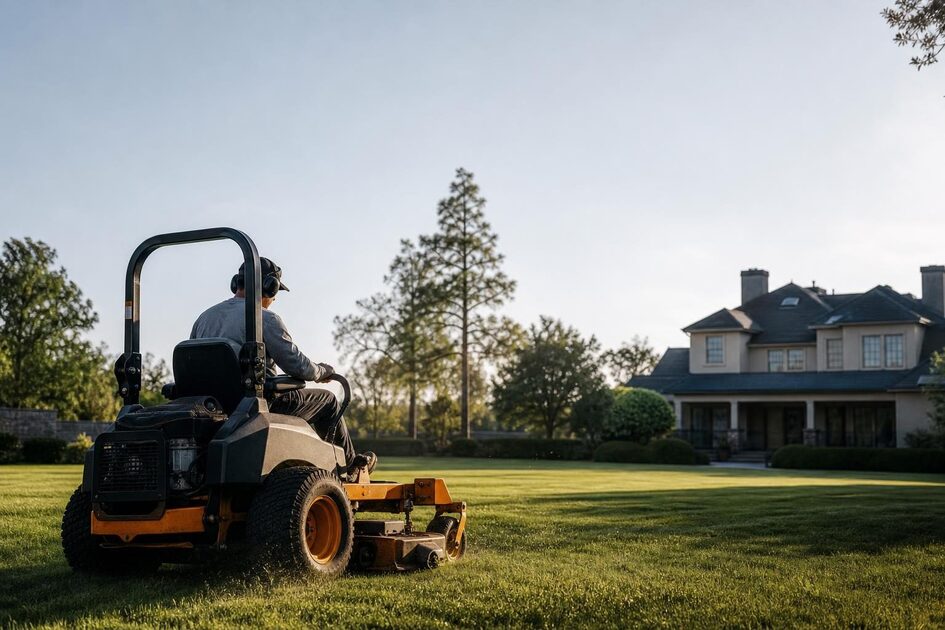
Commercial mower financing is available to established businesses that can show steady revenue and a reasonable credit history. Because the mower itself serves as collateral, lenders can often offer more competitive terms than an unsecured line of credit. At Provide Capital, we finance new and used business equipment from $5,000 to $5 million, which covers everything from a single stand-on mower for a two-person crew to a full fleet of zero-turn machines for a municipal contractor.
Rates vary by credit profile, equipment age and term. A landscaping company with strong books financing a new machine will see different numbers than a newer operation buying a five-year-old unit. Same-day approvals are possible when the application is complete and the equipment quote is already in hand.
The landscaping sector continues to grow. According to Census Bureau data on landscaping services, thousands of new establishments enter the field every year, and each one needs reliable equipment to take on contracted work. Whether you are replacing a broken machine or expanding before spring season, understanding how lenders evaluate your file will save you time and help you borrow on better terms. If you already have a mower selected, see what financing you qualify for on that unit before you talk to the dealer about price.
What Lenders Evaluate for Commercial Mower financing
Credit Profile
Lenders typically look for a credit score in the mid-600s or higher, but the exact floor depends on the lender and the structure. A score above 700 generally unlocks the best available rates and longer repayment terms. Recent bankruptcies, open tax liens, or a pattern of late payments on prior equipment loans will raise flags. If your personal credit has dings, some lenders will still consider the file if the business cash flow is strong and you can offer a larger down payment. The key is transparency. Hiding a recent late payment only slows the process once the credit pull reveals it.
Many owner-operators do not realize that equipment financing relies on both personal and business credit during the early years of a company. Until the business has its own established credit profile, the owner’s personal history will carry significant weight. Pulling your own report before you apply lets you correct errors and address any outstanding collections that could derail an otherwise strong file.
Time in Business
Most equipment lenders prefer to see at least two years of operating history. That does not mean a younger company is automatically declined. Businesses with one year of strong revenue and a clean bank account may still qualify, though usually with a larger upfront payment or a personal guarantee. Seasonal landscaping companies should be ready to show a full year of statements so the underwriter can see the peak months and the winter slowdown. This requirement is similar for businesses in related fields like Agriculture equipment financing, where revenue also fluctuates with the seasons.
A company that started in spring and applies in fall may only have five or six months of statements, which can be enough if the revenue is consistent and the bank balances stay positive. Lenders understand the lawn care cycle. What they do not want to see is a brand-new business with no revenue history asking to finance a $60,000 machine with nothing down.
Revenue and Bank Health
Underwriters want to see that your deposits can support the new payment. They usually review the last three to six months of business bank statements. Consistent deposits matter more than occasional large spikes. If you run a cash-heavy operation, make sure those deposits hit the business account rather than your personal checking. Mixed finances are one of the most common reasons a file gets held up for clarification.
In addition to statement review, some lenders look at average daily balances. Accounts that repeatedly hit zero or overdraft may signal that the business is already stretched. If you know you are applying in the next quarter, clean up your banking habits now. Stop writing personal checks from the business account and avoid depositing business checks into your personal account. The cleaner the paper trail, the faster the approval.
The Equipment Itself
Because the mower is the collateral, its details affect the approval. A new machine from a recognized manufacturer holds residual value better than a high-hour unit from a defunct brand. Lenders will want the year, make, model, serial number, and a description of condition. For used mowers, hours matter. A commercial zero-turn with 1,500 hours is viewed differently than one with 3,000 hours. Attachments, trailers, and accessories can sometimes be bundled into the same financing package if they are part of a single invoice from the seller.
If you are buying from a private party rather than a dealership, expect extra scrutiny. The lender needs to verify clear title and may require an inspection or appraisal for units older than a few model years. Financing a mower is not like buying a car. The collateral supports the loan, so the lender cares deeply about what happens to that asset if the loan goes into default.
Already have a machine in mind?
Provide Capital finances new and used equipment from $5,000 to $5 million, with same-day decisions possible.
Apply NowNew vs. Used Mowers: How Equipment Age Affects Your Terms
New commercial mowers typically qualify for longer terms and lower down payments because the lender can rely on manufacturer warranties and predictable depreciation. A new zero-turn mower financed over 60 months spreads the payment thin and preserves working capital for fuel, payroll, and insurance. The manufacturer warranty also protects the lender’s collateral. A machine under full warranty is less likely to suffer a catastrophic failure that takes it out of service and jeopardizes the borrower’s ability to pay.
Used mowers can still be financed, but the term usually shortens. A unit that is three to five years old might be capped at 36 or 48 months. The lender is managing risk. Older machines break down more often, and a broken mower does not generate revenue to cover the loan payment. That said, a well-maintained used mower from a reputable brand with documented service history can still qualify for attractive terms. The key is documentation. If the seller has maintenance records, hour meter readings, and a clean title, the lender has confidence in the residual value.
The down payment requirement also shifts with age. New equipment can sometimes be financed with zero down for well-qualified buyers, though 10 to 20 percent is common for files with average credit. Used equipment more often requires 10 to 30 percent down, depending on hours, brand, and overall condition. If you are considering a high-hour used mower to save money upfront, run the numbers on maintenance. A $15,000 machine that needs $3,000 in deck repairs and a new engine in the first year may cost more than a $22,000 newer unit with a clean inspection report. When you finance through Provide Capital, we can fund deals starting at $5,000, so even a mid-grade used walk-behind fits the program.
Seasonal demand also affects the used market. Late winter and early spring see inventory move fast at dealerships. Prices firm up and selection narrows. Fall can be a better time to buy used if you have the storage space, because dealers want to clear floorplan before year-end. Financing availability stays steady year-round, but the equipment you want may not wait. Getting pre-qualified lets you move quickly when the right machine appears.
| Factor | New Mower | Used Mower (3-5 Years) |
|---|---|---|
| Typical Term | 48-72 months | 24-48 months |
| Down Payment | 0-20% | 10-30% |
| Rate Environment | More competitive | Rates vary by credit profile, equipment age and term |
| Collateral Value | Higher, warranty-backed | Depends on hours and brand |
| Best For | Long-term fleet additions | Short-term needs or tight budgets |
Equipment Loan vs. Lease: Which Structure Fits Your Cash Flow?
An equipment loan means you own the mower outright once the balance is paid. Each payment builds equity, and at the end of the term you have an asset with residual value that you can sell, trade, or continue using payment-free. Loans make sense for owner-operators who plan to keep a mower for its full useful life, which is often five to seven years for a commercial-grade machine. The tax treatment for loans generally follows depreciation schedules, though Section 179 may allow accelerated first-year deductions for the 2026 tax year.
A lease, by contrast, is essentially a long-term rental with a purchase option. The two most common types are the $1 buyout lease and the fair market value (FMV) lease. With a $1 buyout, you make payments over the term and own the equipment for a nominal final payment. An FMV lease gives you lower monthly payments but requires you to pay the equipment’s fair market value at the end if you want to keep it, or you can return it and lease a newer model. Leases work well for companies that want to rotate equipment every few seasons to always have the latest cutting technology under warranty.
From a qualification standpoint, leases can sometimes be easier to approve because the lessor retains ownership and may be more willing to take a risk on a newer business. However, the total cost over the full term can be higher than a loan, especially on a $1 buyout structure. You should compare the total cash outlay, not just the monthly payment. A $350 monthly lease over 60 months plus a $1 buyout costs more than a $330 loan payment over the same period when fees are included. These financing structures work across equipment types. The same logic that guides a mower loan also applies to Commercial Range financing or a truck lease. The key is matching the term to how long you will use the asset.
For a landscaping business with tight margins in the off-season, an FMV lease with a lower payment can preserve cash flow when revenue dips. Just be sure you understand the end-of-term obligations. Turning in a mower with excess wear above the lease standards can trigger fees. While the SBA loan programs are an option for some businesses, equipment financing through a direct lender is usually faster for mower purchases under $150,000.
See what you qualify for
The equipment itself secures the financing, which keeps rates competitive. Checking your options takes minutes.
Check Your OptionsTax Treatment for the 2026 Tax Year
For the 2026 tax year, businesses that purchase qualifying equipment may be able to deduct some or all of the cost in the first year under Section 179, rather than depreciating the asset over several years. The exact annual deduction limits and phase-out thresholds are set by the IRS and can change with new legislation. Because those figures are subject to adjustment and your specific tax situation matters, consult a CPA before you assume any particular deduction amount.
Bonus depreciation may also apply to new and used commercial mowers in 2026, though the percentage and eligibility rules have shifted in recent years. Again, a qualified accountant can tell you whether your purchase qualifies and how it interacts with other deductions. What does not change is the basic rule: financed equipment is generally eligible for the same tax benefits as cash purchases, provided you are the owner of record. If you choose a true lease where the lessor retains ownership, the tax treatment flips. The lessor claims depreciation, and you deduct the lease payments as an operating expense.
The distinction matters at tax time. A loan with a Section 179 deduction can create a large first-year write-off that offsets taxable income. A lease creates a steady stream of smaller deductions. Neither is automatically better; the right choice depends on your tax bracket, profit level, and whether you need a large deduction this year or spread out relief. The IRS publishes annual guidance on Section 179 limits, and your CPA has the final word on how it applies to your return.
Key Insight: Financing a mower does not reduce your tax deduction. Whether you pay cash or finance, the IRS generally treats the purchase the same for Section 179 purposes, as long as you are the owner. The deduction is based on the purchase price, not the method of payment.
Real-World Payment Scenarios
Saying a mower costs $25,000 does not tell you much about the monthly payment. The final number depends on your credit tier, the age of the machine, the term length, and whether you put money down. Below are three realistic scenarios for owner-operators at different stages. These are illustrations, not quotes. Rates vary by credit profile, equipment age and term. Equipment borrowing remains active across the economy, and Reuters coverage of equipment borrowing trends showed U.S. business equipment borrowings rose sharply early in the year, indicating strong demand across sectors.
A solo operator buying a $12,000 used stand-on mower with 1,200 hours might finance over 36 months. With average credit and a 15 percent down payment, the monthly payment could land in the low $300s. The shorter term means the mower is paid off quickly, and the total interest cost stays manageable.
A growing company adding a $45,000 new zero-turn with a collection system might stretch the term to 60 months to keep the payment low during the ramp-up phase. A well-qualified buyer might see payments in the mid-$800 range with no money down, while a file with average credit and a 10 percent down payment could push the payment closer to the mid-$900s.
A small crew starting out might finance an $8,000 commercial walk-behind and a $2,000 trailer over 24 months. With strong credit, the combined payment could sit in the high $300s. The quick payoff means the business owns the equipment outright before the second full season, freeing up borrowing capacity for the next expansion.
By the Numbers: A $25,000 mower financed over 60 months with average credit and a 10 percent down payment typically produces a monthly payment between $450 and $550, depending on the rate tier assigned. Shortening the term to 36 months raises the payment but cuts total interest expense by roughly 30 to 40 percent.
The Documentation You Will Need
Having paperwork ready before you apply is the single biggest factor in getting a fast decision. Most lenders will ask for the following: a driver’s license or government-issued ID, three to six months of business bank statements, a formal quote or invoice for the mower, and a voided business check for ACH setup. If your business is incorporated, you may need articles of incorporation or an operating agreement. Some lenders also request the prior year’s business tax return, especially for loans above $50,000.
If you are buying from a private seller rather than a dealership, add a bill of sale and proof of clear title to the list. The lender will verify that no liens exist on the equipment before releasing funds. For used mowers, an inspection report or maintenance history is helpful though not always required. Photos of the machine, especially the hour meter and serial plate, can speed up the collateral review.
Sole proprietors should be ready to show a Schedule C or other proof that the business is active and generating revenue. Partnerships may need to provide a partnership agreement that shows who is authorized to borrow on behalf of the company. The more complete the file, the less back-and-forth with the underwriter. Incomplete applications are the main reason approvals stretch from same day to several business days.
What Happens After You Apply
Once you submit a complete application, the process usually moves in four stages. First, the lender reviews your credit and basic business information. Second, they evaluate the equipment quote or invoice to confirm the collateral value. Third, they issue an approval decision with terms, which you review and accept. Fourth, the lender funds the deal, typically by wiring money directly to the dealer or private seller.
Same-day approvals are possible when the file is clean and the equipment is straightforward. Deals involving private sellers, older used machines, or complex ownership structures may take 24 to 72 hours. If the lender requests additional documentation, the clock stops until you provide it. That is why preparation matters.
After approval, you sign the closing documents and the lender pays the seller. You take delivery of the mower and payments begin according to the schedule outlined in your agreement. Most lenders do not hold the title hostage; you own the equipment and the lender files a UCC-1 lien against it until the loan is satisfied. Once the final payment clears, the lien is released. If you are ready to replace a machine before the busy season hits, start an application in a few minutes and we can work toward a fast decision.
Common Mistakes That Slow Down Funding
The most frequent delay comes from applying without a specific mower in mind. Lenders need to underwrite the collateral, not just the borrower. Walking in with a general idea that you need a zero-turn is not enough. Have a quote or a listing ready. The underwriter needs the year, make, model, serial number, and sale price. If you are comparing three machines, pick one and get a formal quote before you apply. You can always change the collateral later if the deal falls through, but the lender cannot move without a target.
Another mistake is mixing personal and business finances so thoroughly that the underwriter cannot tell which deposits belong to the company. If you have been depositing checks into your personal account, pause and clean that up for at least one full statement cycle before applying. Set up a dedicated business checking account if you have not already, and run all revenue and expenses through it. The cleaner your books look, the faster the file moves.
Buyers also hurt themselves by choosing equipment with cloudy title history. A mower that was previously financed and not paid off will carry a lien. The new lender will not fund until the old lien is cleared, which can take days or weeks if the prior lender is slow to respond. Always ask the seller for a clear title or a payoff letter before you commit.
Finally, do not overextend. A $50,000 mower fleet sounds impressive, but if the payments strain your winter cash reserves, you risk default. Lenders evaluate this, and a smart borrower does too. The goal is to match the payment to your revenue cycle. A loan you can pay comfortably in the slow months is better than a larger loan that keeps you up at night.
Pro Tip: Before you shop, pull your own credit report and gather your last three months of bank statements. Fixing a credit error or explaining an unusual deposit ahead of time turns a hesitant underwriter into a confident one.
Put the right equipment to work
From $5,000 to $5 million, new or used, Provide Capital helps businesses nationwide finance the equipment they need.
Apply TodayFrequently Asked Questions
Can I finance a commercial mower from a private seller?
Yes. Private-party sales are common in the mower market. You will need a bill of sale, proof of clear title, and photos of the machine. The lender may require an inspection for older units. Funds are sent directly to the seller after you sign closing documents.
What credit score do I need to qualify?
Most lenders prefer a score in the mid-600s or higher. Files above 700 generally see better terms. Lower scores are not always disqualifying if the business shows strong cash flow or you can offer a larger down payment.
Can I finance a used mower?
Absolutely. Used equipment financing is a large part of what we do. Terms may be shorter and down payments higher than for new machines, but a well-maintained used mower with documented hours can qualify for competitive financing.
Is a down payment always required?
Not always. Well-qualified buyers financing new equipment may qualify for zero-down programs. Most used deals and average-credit files require 10 to 20 percent down. The down payment reduces the lender’s risk and shows your commitment to the asset.
How long are the repayment terms?
New mowers often qualify for 48 to 72 months. Used mowers typically see 24 to 48 months, depending on age and hours. The term affects your monthly payment and total interest cost.
Can I finance attachments, trailers, and accessories?
Yes, if they are on the same invoice from the dealer. Bundling a mower, trailer, and bagging system into one loan simplifies bookkeeping and may improve the collateral package. Standalone accessory-only deals are harder to place.
Will the lender inspect the equipment before funding?
Sometimes. New equipment from authorized dealers rarely needs inspection. Used mowers, especially those over five years old or with high hours, may require a third-party inspection or appraisal photos. The cost is usually borne by the buyer.
What if my business is seasonal?
Seasonal landscaping companies are a standard customer for equipment lenders. You will need to show a full year of bank statements so the underwriter sees both the peak revenue and the winter slowdown. Some lenders offer skip-payment or seasonal structures, though these are less common for smaller loans.
Ready to Finance Your Next Mower?
Commercial mower financing works best when you understand the qualifications before you shop. Know your credit, clean up your bank statements, pick a specific machine, and gather your paperwork. The process moves quickly when the file is complete.
At Provide Capital, we work with owner-operators and growing crews nationwide. We finance new and used business equipment from $5,000 to $5 million, and the equipment itself is the collateral. Whether you run a solo lawn service or a multi-crew operation serving commercial accounts, we can structure a solution that fits your cash flow. Get a decision on your equipment, possibly the same day, and head into the next season with the tools you need to take on more work.
Disclaimer: The information provided in this article is for general educational purposes only and is not financial, legal, or tax advice. Funding terms, qualifications, and product availability may vary and are subject to change without notice. Provide Capital does not guarantee approval, rates, or specific outcomes. For personalized information about your business funding options, contact our team directly.
