
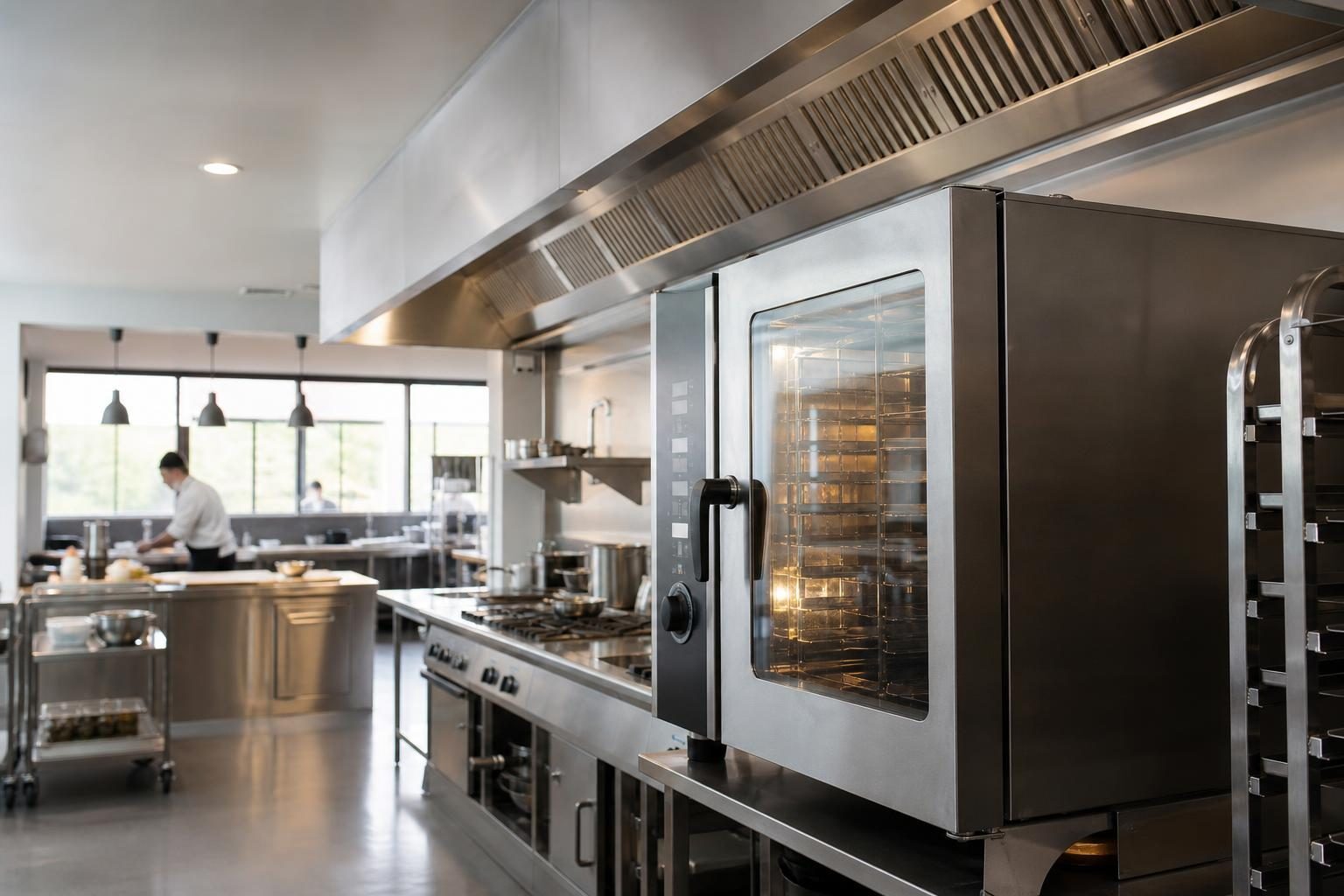
Commercial Ovens Financing in Ohio
Ohio hosts nearly 25,000 restaurants and food service operations from Cleveland to Cincinnati. A commercial oven is often the largest single equipment purchase after the building itself, with installed costs ranging from a few thousand dollars for a countertop convection unit to more than $60,000 for a high-capacity rotary rack oven. Equipment financing lets you spread that cost across the productive life of the machine instead of drawing down the cash reserves you need for payroll and inventory.
Provide Capital finances commercial ovens and other kitchen equipment from $5,000 to $5 million, using the equipment itself as collateral. That structure keeps rates competitive and means same-day approvals are possible for well-documented applications. If you are looking at a specific oven for a Columbus bakery or a Cleveland pizzeria, you can see what financing you qualify for in a few minutes.
Get a fast decision on your equipment
Applying takes just a few minutes, and decisions can come as soon as the same day.
Start Your ApplicationWhat Ohio Operators Actually Pay for Commercial Ovens
As Forbes reporting on restaurant startup costs notes, kitchen equipment is often the largest capital outlay after the building itself. Commercial ovens are not a single product category. The price gap between a countertop convection model and a rotary rack oven is roughly twenty-four to one, driven by capacity, fuel type, and construction.
A half-size countertop convection oven typically runs between $1,500 and $3,500. A full-size single convection oven lands in the $4,500 to $7,500 range for a mid-grade unit. Deck ovens, favored by artisan bread and pizza operations, start around $2,500 for a single deck and climb past $18,000 for a triple-stack stone hearth model. Conveyor ovens, common in high-volume pizza and bakery settings, range from $8,000 to more than $40,000 depending on belt length and zone configuration. Combination ovens that add steam control to convection typically cost $15,000 to $40,000. Rack ovens, which let a baker wheel an entire pan rack into the cavity, generally start near $35,000 and can exceed $60,000 for a double rotary unit.
Those are machine-only prices. Installation frequently adds $2,000 to $15,000 or more for gas line work, electrical upgrades, and floor reinforcement. Ventilation is a separate and often larger line item. A Type 1 grease hood with ductwork, exhaust fan, makeup air, and fire suppression commonly runs $8,000 to $25,000 or more on a fresh install. Many first-time buyers budget for the oven and forget that the ventilation package can cost more than the equipment under it.
By the Numbers: A full-size gas convection oven running ten hours a day, 350 days a year, costs roughly $1.08 per hour in fuel and utilities. Spread the total installed cost over a ten-year life and the all-in hourly cost approaches $1.54. Budgeting only for the purchase price ignores more than half the lifetime expense.
New vs. Used: What the Collateral Difference Means for Ohio Buyers
New equipment carries a full manufacturer's warranty, predictable maintenance schedules, and the longest useful life. Used or refurbished ovens typically sell for 30 to 50 percent less than comparable new units, but may lack warranty coverage and often have higher near-term maintenance needs.
Because the equipment serves as collateral for the financing, its age, condition, and remaining useful life directly affect approval terms. A new oven from an established brand usually qualifies for the most competitive rates and the longest terms. A used oven can still be financed, but the term may be shorter to match the remaining life of the machine, and the rate may reflect the additional risk.
Ohio Administrative Code 3717-1-20 requires food service equipment to be replaced when it no longer complies with sanitation and repair standards, or when a facility changes ownership. If you are buying an existing restaurant in Ohio, plan on replacing at least some of the cooking line to satisfy the health department, even if the previous owner ran the equipment until the closing day. Financing the replacement rather than paying cash preserves liquidity for the inevitable surprises that come with a change of ownership.
Lease vs. Loan: A Side-by-Side Comparison
Restaurant owners in Ohio typically choose between an equipment loan and a capital lease. Both let you acquire the oven without paying the full price upfront, but the structure differs in ownership, tax treatment, and end-of-term obligations.
| Feature | Equipment Loan | Capital Lease |
|---|---|---|
| Ownership | You own the oven from day one; lender takes a security interest | You own the oven at the end of the term after exercising the purchase option |
| Monthly payment | Fixed principal and interest | Fixed lease payment |
| Tax treatment | Depreciation and Section 179 expensing; interest is deductible | Section 179 expensing may apply; lease payments may be deductible |
| Typical term | 3 to 5 years, matching equipment life | 2 to 5 years |
| End of term | No further obligation; clear title | $1 or fair market value buyout to transfer title |
| Best for | Established operators who want clear ownership | Operations that want lower initial payments or flexibility |
For the 2026 tax year, Section 179 allows businesses to expense up to $2,560,000 of qualifying equipment placed in service, with the benefit phasing out once total equipment purchases exceed $4,090,000. Most single-location Ohio restaurants and bakeries fall well below that ceiling, so the full purchase price of a commercial oven is often deductible in the first year. Lease structures may also allow deduction of lease payments, but the exact treatment depends on whether the lease qualifies as a true lease or a finance lease under current IRS standards. A CPA familiar with Ohio tax rules can model which structure saves more for your specific situation.
Pro Tip: If you finance a used oven, verify that the remaining depreciable life is long enough to justify the term you want. A lender will typically not stretch a loan past the equipment's expected useful life, and a five-year-old convection oven may only qualify for a three-year term even if your credit is strong.
How Qualification Works for Restaurant Equipment Financing
Provide Capital looks at three main factors: time in business, credit profile, and revenue. Because the oven itself is the collateral, the equipment value provides a backstop that unsecured lenders do not have. That is why rates vary by credit profile, equipment age, and term length rather than following a single published rate.
Most applicants need at least six months of operating history and a business bank account. If you are replacing an existing oven, the transaction is straightforward: provide a quote or invoice from the vendor, your last three months of bank statements, and a brief application. For transactions above $150,000, two years of tax returns and a year-to-date financial statement help secure the best terms.
We serve owner-operators with established cash flow. If your Ohio pizzeria has been running for two years and you need a second deck oven to handle weekend volume, get a decision on your equipment, possibly the same day.
Ohio's Food Scene and Seasonal Buying Patterns
According to Census Bureau geographic business data, accommodation and food services rank among the top sectors by establishment count nationwide, and Ohio follows that pattern with significant restaurant density in every major metro. The state also supports a significant food processing and bakery manufacturing base, from artisan sourdough operations in Columbus to commercial bakeries supplying grocery chains across the Midwest.
Seasonality matters for equipment buying. Many Ohio restaurants see traffic dip from January through March, which makes the winter an ideal time to install new equipment without sacrificing peak-season revenue. Equipment dealers in the Cleveland and Cincinnati markets often have more installer availability in the first quarter, and closing a financing package in January means the oven is in service before the spring rush. Conversely, trying to schedule a hood and oven installation during the holiday catering season can mean delays and overtime labor rates.
Bakeries face a different calendar. Demand for commercial bread and pastry spikes before Thanksgiving and Christmas, so a September or October installation lets a bakery ramp production ahead of the holidays. If you are a food manufacturer bidding on a private-label contract with a grocery chain, having the oven financed and ordered before the contract start date prevents a capacity bottleneck.
Restaurant Food Service equipment financing covers more than just restaurants. Caterers, institutional kitchens, schools, and food trucks all use commercial ovens, and the same collateral-based structure applies.
See what you qualify for
The equipment itself secures the financing, which keeps rates competitive. Checking your options takes minutes.
Check Your OptionsEquipment Types and What Each One Costs to Finance
The type of oven you choose should be driven by your menu and peak volume, not by what happens to be in stock at the dealer.
Convection ovens are the default for most commercial kitchens. A fan circulates heated air, cooking faster and more evenly than still-air units. A full-size gas convection oven is the workhorse of the independent restaurant, and financing one typically falls in the $5,000 to $12,000 range installed. Commercial Ovens financing through Provide Capital covers convection, deck, and specialty models.
Deck ovens cook by conduction from a heated stone or ceramic deck as well as by radiant heat. They are essential for Neapolitan pizza, artisan bread, and anything that needs a crispy bottom crust. A double-deck gas model commonly runs $10,000 to $18,000, with high-temperature stone hearths pushing toward $30,000.
Combi ovens add controlled steam to convection heat, letting one cabinet roast, steam, poach, proof, and hold. That flexibility commands a premium, with six-pan units starting around $15,000 and high-capacity models exceeding $40,000. They also require water supply, drainage, and often a water treatment system, which adds to installation costs.
Rack and rotary rack ovens are production machines. A single rack oven starts near $35,000, while a double rotary unit can reach $60,000 or more. These are not typical for a single-location restaurant unless you are doing serious catering or wholesale baking, but they are common in Ohio's food manufacturing sector.
If your kitchen also needs a new range, Commercial Range financing can be bundled into the same facility, using the same application and approval.
Common Mistakes Ohio Buyers Make
The most expensive mistake is buying the oven before pricing the installation. Gas line drops, electrical panel upgrades, and hood modifications can add $10,000 to $30,000 to the project. Have a licensed mechanical contractor walk the space before you sign the equipment invoice.
A close second is undersizing ventilation. Ohio building codes and fire marshals enforce NFPA 96 standards for commercial cooking. An underpowered hood or insufficient makeup air will fail inspection, and retrofitting ductwork after the oven is in place costs far more than doing it correctly the first time.
Some buyers also overestimate the useful life of a used oven. A ten-year-old convection oven may have only three to five years of reliable service left, and financing it on a five-year term means you could still be making payments after the machine needs replacement. Match the term to the remaining life.
Key Insight: Ohio health inspectors will red-tag equipment that cannot maintain required holding temperatures or that has damaged food-contact surfaces. If you are financing a replacement because your existing oven failed inspection, order the replacement before the reinspection date. A gap in oven capacity can force a kitchen closure, and reopening without resolving the violation carries escalating penalties under Ohio Administrative Code 3717-1-20.
What Documentation You Need
For transactions under $150,000, the typical file includes a completed application, the last three months of business bank statements, a quote or invoice for the oven and any associated installation, and proof of business ownership or operating authority.
For transactions from $150,000 up to the $5 million program maximum, add two years of business tax returns, a year-to-date profit and loss statement, and a brief description of how the equipment will increase revenue or reduce costs. For larger equipment packages, the SBA 7(a) loan program also supports machinery purchases up to $5 million, though many owner-operators find that direct equipment financing moves faster because the collateral is already identified.
If you are buying from a private seller rather than a dealer, an equipment appraisal or inspection report may be required to establish collateral value.
What Happens After Approval
Once approved, Provide Capital pays the vendor or private seller directly. You do not take possession of the cash; the funds move straight to the equipment source, and you take delivery of the oven. That structure protects both parties and keeps the transaction tied to the collateral.
For standard deals with clean documentation, funding can occur within one to three business days. Same-day approval is possible when the file is complete and the equipment is straightforward. After funding, your first payment is typically due 30 days later, with fixed monthly payments for the remainder of the term.
Pro Tip: If you are ordering a custom-built or imported oven with a long lead time, structure the financing to fund near the delivery date rather than at order. You do not want to start making payments on equipment that will not arrive for twelve weeks.
Ready to move forward?
More than 10,000 businesses have financed equipment with Provide Capital. See what you qualify for today.
Get StartedFrequently Asked Questions
What credit score is needed to finance a commercial oven?
There is no fixed minimum. Approval depends on the overall profile, including time in business, revenue, and the equipment value. Stronger credit unlocks longer terms and more competitive rates, but owner-operators with challenged credit can still qualify because the equipment serves as collateral.
Can I finance a used commercial oven in Ohio?
Yes. Used ovens are common and can be financed, though the term may be shorter than for new equipment to match the remaining useful life. Expect to provide photos, an equipment inspection, or a dealer refurbishment certificate.
Does the equipment need to be from a dealer?
No. Private-party sales can be financed, but the collateral must be inspectable and free of liens. Dealer sales are simpler because the vendor provides clear title and often handles delivery and installation.
How does the 2026 Section 179 deduction work for a financed oven?
For the 2026 tax year, you may be able to deduct the full purchase price of qualifying equipment up to $2,560,000, with the phase-out beginning at $4,090,000 in total equipment purchases. Financing does not reduce the deduction. Consult a CPA to confirm how Section 179 applies to your entity type and tax situation.
Can I include installation and ventilation in the financing?
Yes. Soft costs like installation, delivery, and ventilation can often be rolled into the equipment financing package as long as the total stays within the collateral value and program limits.
What is the typical term for commercial oven financing?
Terms generally range from three to five years, matching the useful life of the equipment. A new convection oven might qualify for five years, while a used deck oven may only support a three-year term.
Will financing an oven affect my ability to borrow for other needs?
Because this is secured financing tied to a specific asset, it typically appears differently on your credit profile than an unsecured line of credit or merchant cash advance. The fixed payment is also predictable, which lenders often view favorably when reviewing future credit requests.
Do you finance ovens for food trucks and mobile catering units?
Yes, provided the operation has established revenue and the equipment can be secured. Mobile kitchens have additional considerations, including commissary agreements and health department permits, but the financing structure is the same.
Next Steps
If you are an Ohio operator looking at a commercial oven, start with a quote that includes the machine, delivery, and installation. Know your peak daily output and choose the oven type that matches it. Then run the numbers on lease versus loan with your CPA, factoring in the 2026 Section 179 limits.
When you are ready, start an application for the equipment you need. Same-day approval is possible, and you can move from quote to installation without draining the cash you need to run the kitchen.
Disclaimer: The information provided in this article is for general educational purposes only and is not financial, legal, or tax advice. Funding terms, qualifications, and product availability may vary and are subject to change without notice. Provide Capital does not guarantee approval, rates, or specific outcomes. For personalized information about your business funding options, contact our team directly.
