
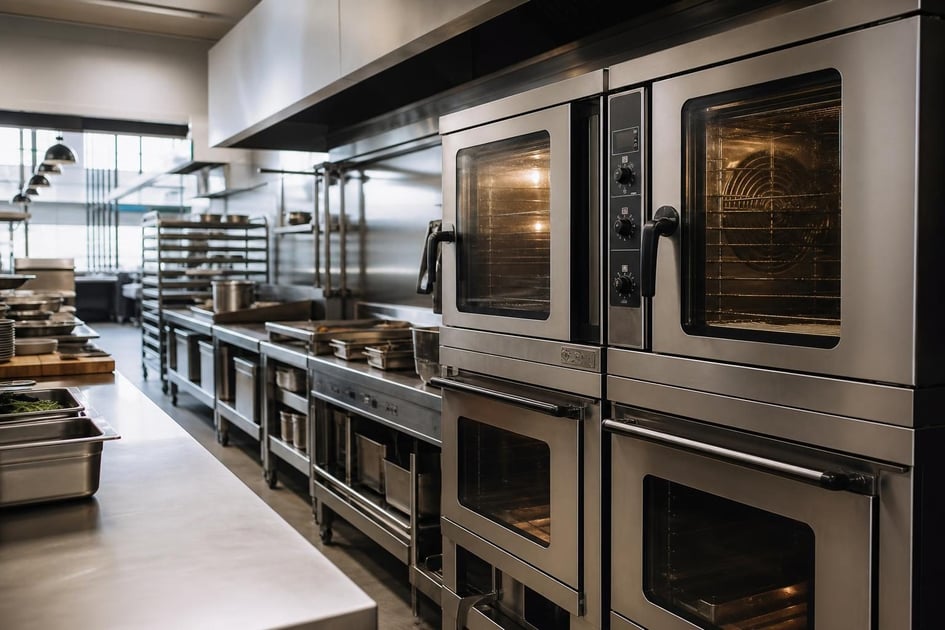
Commercial Ovens Financing in Tennessee
If you are buying a commercial oven for a restaurant, bakery, catering kitchen, or food-manufacturing operation in Tennessee, equipment financing lets you spread the cost over time while the oven itself secures the loan. Provide Capital finances new and used business equipment from $5,000 to $5 million, with same-day approvals possible depending on your credit profile, time in business, and documentation completeness. Rates vary by credit profile, equipment age, and term. You can see what financing you qualify for on that convection or deck oven without committing to a full day of paperwork.
Tennessee's food service sector runs year-round, but equipment buying patterns follow a distinct rhythm. Nashville and Memphis see heavy procurement in late winter and early spring, as owners prepare for the summer tourist season, music festival crowds, and increased foot traffic. Knoxville and Chattanooga follow a similar curve, with university-driven demand spiking before fall semesters and holiday catering contracts. Smaller markets like Johnson City, Murfreesboro, and Franklin experience steadier but less seasonal demand, driven by local population growth and suburban dining expansion. Financing keeps cash on hand for payroll, inventory buildups, and marketing during these seasonal ramps rather than tying it up in a single capital purchase.
Key Insight: The busiest months for used restaurant equipment dealers in Middle Tennessee are February through April. Buyers who secure financing approval in January can move immediately when auction inventory peaks, often negotiating better prices before the spring rush drives costs up.
Already have a machine in mind?
Provide Capital finances new and used equipment from $5,000 to $5 million, with same-day decisions possible.
Apply NowThe Tennessee Market for Restaurant Equipment
Tennessee's eating and drinking places number in the thousands, with recent data from the U.S. Census Bureau showing a dense concentration in Davidson, Shelby, and Knox counties. According to Forbes, restaurants that preserve cash through equipment financing rather than large capital outlays maintain stronger liquidity during expansion phases. That density means competition for quality used equipment is tight. When a well-maintained used convection oven or combi unit appears at restaurant auction or through a dealer, it rarely sits unsold for more than a few days. Financing lets you act quickly without draining the operating cash you need for payroll, inventory, and rent.
The state's regional cuisines and business models also shape equipment needs. Memphis barbecue operations need high-volume holding ovens and smokers alongside standard baking equipment. Nashville's hot chicken explosion and growing fine-dining scene demand combi ovens, precision deck ovens, and rapid-recovery units that can handle extreme temperature swings. East Tennessee's catering companies and event venues often need conveyor ovens for high-volume wedding and conference seasons. In smaller markets, multi-purpose equipment like combination convection-steam ovens offers flexibility when square footage is limited.
Commercial Ovens financing covers all of these categories, from basic single-deck units to triple-stacked convection systems and roll-in rack ovens for high-volume bakeries. The key is matching the equipment to your actual production needs, not just copying what a competitor owns.
Pro Tip: Before you shop, measure your doorways, hallways, and kitchen layout. A double-stack convection oven is useless if it cannot fit through the service entrance. Many Tennessee buyers in historic buildings—common in downtown Nashville and Memphis—face tight clearances that limit equipment size. Bring a tape measure to every inspection.
New vs. Used Commercial Ovens
The choice between new and used affects your interest rate, warranty coverage, maintenance costs, and total cost of ownership over the financing term.
When to Buy New
New ovens command lower rates because the collateral value is predictable and depreciation is straightforward. You receive a full manufacturer warranty, access to the latest energy-efficient technology, and the confidence that the unit has no hidden wear. For operations that run multiple shifts or cannot afford downtime, new equipment often pays for itself through reliability and lower utility bills.
When to Buy Used
Used ovens, especially those over five years old, may require a larger down payment or slightly shorter terms to match the remaining useful life. However, a well-maintained used deck oven from a recently closed restaurant can cost 40 to 60 percent less than a comparable new unit, and financing still keeps your cash reserves intact for other needs. For Tennessee buyers, used equipment sourcing includes restaurant auctions in Memphis, Nashville-area equipment dealers, and private sales from operators exiting the business. Always request a service history and, if possible, a technician's inspection before finalizing a used purchase. The savings disappear quickly if the oven needs a new control board or heating element within the first year.
| Factor | New Oven | Used Oven (Under 5 Years) | Used Oven (Over 5 Years) |
|---|---|---|---|
| Financing rate | Most competitive | Competitive | Higher, shorter terms possible |
| Warranty | Full manufacturer warranty | Limited or expired | Typically none |
| Down payment | Often $0 | Often $0 | May require 10-20% |
| Expected lifespan | 10-15 years | 6-10 years | 3-7 years |
| Availability | Order from dealer | Auction, dealers, closures | Auction, private sale |
Lease vs. Loan: What Tennessee Owners Actually Choose
Equipment loans and leases both let you acquire an oven without paying the full price upfront, but the structure differs in ways that matter for taxes, balance sheets, and long-term planning.
| Feature | Equipment Loan | Equipment Lease |
|---|---|---|
| Ownership | You own the oven at term end | You return or buy out at term end |
| Monthly payment | Higher | Lower |
| Tax treatment | Depreciation or Section 179 deduction | Payment deducted as expense |
| Collateral | The oven secures the loan | The oven secures the lease |
| Best for | Long-term use, established locations | Testing concepts, frequent upgrades |
Most restaurant owners in Tennessee who plan to keep the equipment for more than four years choose a loan. Ownership means no restrictions on modifications, no mileage or hour limits, and an asset on your books. Those testing a new concept, opening a second location with unproven demand, or expecting to upgrade frequently lean toward leasing for the lower monthly burden and flexibility.
Either way, the equipment itself serves as collateral, which keeps rates competitive compared to unsecured credit lines or credit cards. As the Small Business Administration notes, equipment financing is often easier to qualify for than general working capital because the lender has a tangible asset backing the transaction.
How to Qualify for Oven Financing
Lenders evaluate three primary factors: time in business, revenue consistency, and credit profile. Most equipment finance companies prefer at least two years of operating history, though some will work with younger businesses if the owner has strong personal credit and documented revenue. You do not need perfect credit, but significant recent delinquencies, collections, or open tax liens will complicate approval.
Documentation Checklist
Documentation requirements vary by transaction size. For requests under $150,000, you typically need the last three months of business bank statements, a vendor quote or invoice, and basic business verification. For requests between $150,000 and $500,000, add two years of tax returns and a personal financial statement. For requests above $500,000, expect to provide full financial packages, including business tax returns, interim financials, and sometimes equipment appraisals.
What Underwriting Looks For
The process is straightforward. Submit your application with the equipment details, and underwriting reviews your credit, business history, and the equipment value. For standard requests, this takes hours rather than days. If you have the equipment picked out, get a decision on your oven, possibly the same day by submitting complete documentation with your initial application.
By the Numbers: A typical Tennessee restaurant financing a $25,000 combi oven over 60 months might see monthly payments ranging from roughly $520 to $625 for strong-credit borrowers, and up to roughly $700 to $800 for borrowers with challenged credit or older equipment. These ranges illustrate why rates vary by credit profile, equipment age, and term.
2026 Tax Treatment for Commercial Ovens
For the 2026 tax year, Section 179 allows businesses to deduct the full purchase price of qualifying equipment in the year it is placed in service, subject to an annual dollar limit and a total equipment purchase cap. The exact 2026 limits are adjusted for inflation by the IRS and are typically announced in the fall of the prior year. Bonus depreciation may also apply to qualifying new and used equipment, though the percentage has been stepping down from previous peaks.
Because these figures change annually and interact with your overall tax situation—including business income, other deductions, and entity type—consult a CPA before making a purchase decision based on tax benefits alone. A deduction only helps if you have taxable income to offset, and the alternative minimum tax can affect high-income filers differently. Do not rely on internet summaries for a final tax strategy; get professional advice specific to your 2026 return.
See what you qualify for
The equipment itself secures the financing, which keeps rates competitive. Checking your options takes minutes.
Check Your OptionsReal Cost Examples by Oven Type
Here is how financing breaks down for common commercial oven categories in the Tennessee market. These figures assume a 60-month term and illustrate the range you might expect based on credit profile and equipment age.
A single full-size convection oven, typically priced between $8,000 and $15,000 new, might carry monthly payments ranging from roughly $165 to $310. These workhorses suit small cafes, coffee shops with baking programs, and secondary kitchens.
A double deck oven, common in pizzerias and bakeries, usually runs $18,000 to $30,000. Monthly payments on a 60-month term generally fall between roughly $375 and $625. The large thermal mass holds temperature well but requires adequate ventilation and floor reinforcement.
A combination convection-steam oven, or combi, represents a major investment at $25,000 to $45,000 depending on brand and features. These versatile units allow roasting, steaming, and baking in a single footprint. Monthly payments typically range from roughly $520 to $935 over 60 months.
A conveyor oven, favored by high-volume pizza and sandwich operations, ranges from $20,000 to $40,000. Expect monthly payments between roughly $415 and $830 on standard terms.
These ranges are illustrative. Your actual payment depends on your specific credit profile, the equipment's age and condition, and the term length you select. Start an application and find out whether same-day approval is available for your situation.
Industries Beyond Restaurants That Finance Ovens
Restaurants represent the largest buyer group, but Restaurant Food Service equipment financing is only part of the picture. Bakeries, hospital cafeterias, school kitchens, hotel catering departments, and assisted-living facilities all finance ovens through Provide Capital. Commercial Range financing often accompanies oven purchases in full-kitchen buildouts, creating a complete cooking line under one financing agreement.
Construction company cafeterias feeding crews on remote sites need durable, high-capacity ovens that can withstand irregular maintenance schedules. Healthcare facilities face strict sanitation standards and inspection regimes that favor newer equipment, making financing attractive for preserving cash while meeting compliance requirements. Agricultural operations with on-site processing or retail kitchens use commercial ovens for value-added products like baked goods, prepared meals, and specialty items sold at farmers markets or farm stands.
Tennessee's growing brewery and distillery scene also creates demand. Taprooms with kitchen operations need ovens for bar food and small plates, while event spaces attached to production facilities need catering-capable equipment for private parties and tasting events.
Common Mistakes Tennessee Buyers Make
Buying without verifying voltage and venting requirements is the most expensive error a buyer can make. A 208-volt oven will not run safely on standard 240-volt residential or light commercial service without electrical modification, and inadequate hood venting can delay installation by weeks or require costly ductwork changes. Always confirm electrical service, gas line capacity if applicable, and HVAC compatibility before signing a purchase quote.
Another frequent mistake is underestimating delivery and installation costs. A heavy double deck oven may require a forklift, a reinforced floor to support 1,000 pounds or more, and a certified technician to connect gas or high-voltage electrical. Ask the seller for a total landed cost including rigging, delivery, and initial setup, so your financing request covers the full project rather than leaving you with a cash shortfall.
Some buyers spend months shopping for the perfect oven without ever checking their financing eligibility. They develop a budget based on hopeful assumptions, then discover their credit profile, time in business, or revenue documentation does not support the terms they expected. It is better to get pre-qualified early in the process, understand your approved range and rate structure, then shop within those parameters. This approach also strengthens your negotiating position with sellers, who prefer buyers who can close quickly.
Failing to account for ongoing maintenance is another oversight. New ovens include warranty coverage, but used units may need immediate attention. Set aside reserves for annual calibration, element replacement, and door gasket maintenance. A financed oven that breaks down during your busiest season helps no one.
What Happens After You Apply
Once you submit an application with your equipment quote and supporting documents, underwriting reviews your credit history, business operating history, and the equipment's appraised value. For requests under $150,000 with standard collateral like recognized oven brands, this review can take hours. Same-day approvals are possible when documentation is complete, the equipment is readily valued, and there are no complicating factors.
After approval, the process moves to documentation. You review and sign the finance agreement, and Provide Capital either pays the vendor directly or reimburses you if you have already purchased the equipment. You take delivery, complete installation, and begin making monthly payments. At the end of the term, the oven is yours if you chose a loan. If you leased, you either return the equipment, extend the lease, or exercise your buyout option.
Throughout the term, the lender holds a security interest in the equipment. This is standard practice and does not affect your daily operations, but it does mean you cannot sell the oven without paying off the balance. Most finance agreements also require you to maintain insurance covering the equipment.
Ready to move forward?
More than 10,000 businesses have financed equipment with Provide Capital. See what you qualify for today.
Get StartedFAQ
What credit score do I need to finance a commercial oven?
There is no single hard cutoff. Strong personal and business credit speeds approval and improves rates, but Provide Capital works with a range of credit profiles. Significant recent bankruptcies, unresolved collections, or active tax liens are harder to overcome and may require additional collateral or a larger down payment.
Can I finance a used oven?
Yes. Used equipment financing is common in the restaurant industry. The oven's age, brand, condition, and remaining useful life affect the rate and term length. A recent model from a recognized manufacturer with service records will qualify more easily than an obscure brand with unknown history.
How long does approval take?
Same-day approvals are possible for well-documented applications on standard equipment. More complex requests, larger financing amounts, or non-standard collateral may take one to two business days. Submitting complete documentation with your initial application is the single best way to speed the process.
Is the oven itself the collateral?
Yes. The equipment secures the financing, which is why rates stay competitive compared to unsecured credit cards or lines of credit. If you default, the lender can repossess the oven, but this structure also means you do not need to pledge real estate or other personal assets in most cases.
Can I include installation, delivery, and soft costs?
Often yes. Tell us the total project cost, including rigging, electrical work, venting modifications, and even sales tax, and we can structure the financing to cover it. This prevents the cash crunch that occurs when you finance the equipment but pay setup costs out of pocket.
What if I have a tax lien or past bankruptcy?
An active tax lien makes approval more difficult but not always impossible. It depends on the lien amount, age, whether you are on a payment plan, and your overall credit picture. Discharged bankruptcies more than two years old, with re-established credit, are often workable. Be transparent about these issues upfront so underwriting can structure the best possible solution.
What terms are available for oven financing?
Terms typically range from 24 to 72 months, depending on the equipment cost, age, and your qualifications. Shorter terms mean higher monthly payments but less total interest. Longer terms improve monthly cash flow. We can help you model the trade-offs.
Do I need a down payment?
Not always. Many transactions are approved with no money down, especially for borrowers with strong credit financing new equipment. A down payment can improve your rate, extend the available term, or help secure approval if your credit or business history is marginal.
Ready to Finance Your Next Oven?
Tennessee's restaurant and food service market rewards operators who move fast and keep cash reserves intact for opportunities and emergencies. Whether you need a single convection oven for a new cafe in Germantown, a double deck for a pizza expansion in Knoxville, or a full complement of combi and conveyor ovens for a growing catering operation in Nashville, financing keeps your working capital available for staff, inventory, marketing, and unexpected repairs.
The equipment itself serves as collateral, which keeps rates competitive and approval times short. Rates vary by credit profile, equipment age, and term, so the best way to understand your specific situation is to apply. See what you qualify for and get back to running your kitchen.
Disclaimer: The information provided in this article is for general educational purposes only and is not financial, legal, or tax advice. Funding terms, qualifications, and product availability may vary and are subject to change without notice. Provide Capital does not guarantee approval, rates, or specific outcomes. For personalized information about your business funding options, contact our team directly.
