Can You Finance a Concrete Mixer With No Down Payment?
Yes. Concrete mixer financing with no down payment is widely available to established contractors and construction businesses. The equipment itself serves as collateral, which allows lenders to finance the full purchase price without requiring cash upfront. Rates vary by credit profile, equipment age and term. Same-day approvals are possible, but they depend on the strength of your application and the completeness of your documentation.
At Provide Capital, we finance new and used business equipment from $5,000 to $5 million nationwide. That range covers everything from a portable towable mixer for a small crew to a volumetric truck for a full-scale ready-mix operation. Because the machine secures the financing, you can preserve working capital for labor, materials and job-site overhead instead of tying it up in a single asset.
Key Insight: "No down payment" does not always mean "no cash required at closing." Some transactions still need a documentation fee, a UCC filing charge or the first payment in advance. Ask your financing specialist for the total cash out-of-pocket before you sign.
What Concrete Mixers Cost and Why Financing Fits
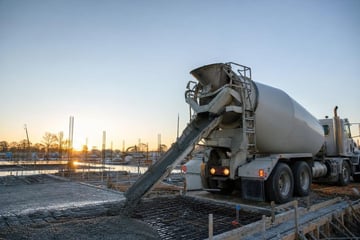
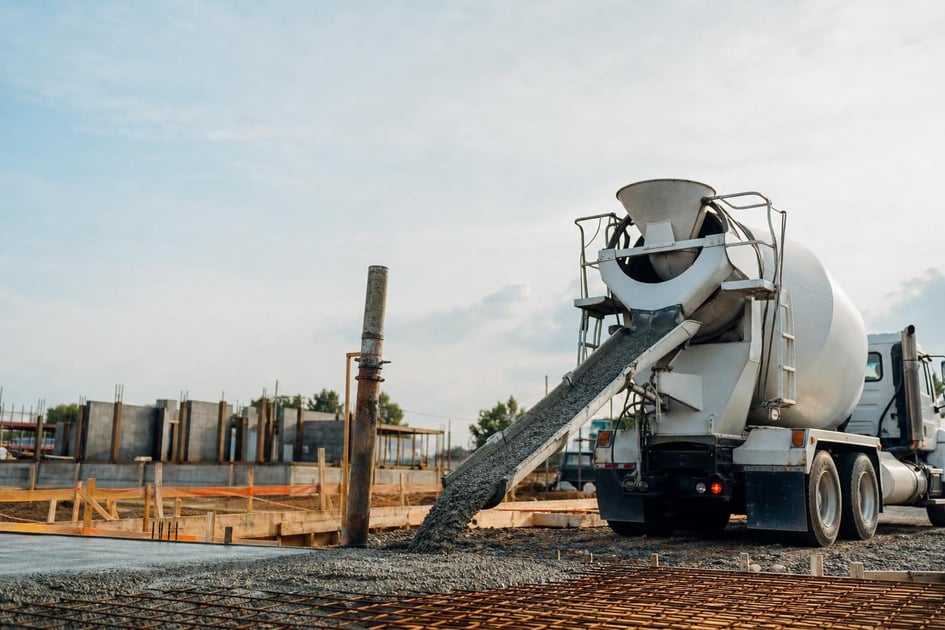
Concrete mixers span a wide price spectrum. A new towable mixer with a 6- to 9-cubic-foot drum typically runs $3,000 to $7,000. Mid-size Commercial Mixer financing candidates—stationary or skid-mounted units with 12-cubic-yard capacity—can fall between $15,000 and $45,000. Volumetric mixers, which batch concrete on-site and reduce waste, often start around $120,000 and can exceed $300,000 depending on chassis and output options. Truck-mounted ready-mix units regularly reach $150,000 to $250,000 for late-model used equipment and considerably more for new builds.
Financing becomes practical when a single purchase represents a large share of your available cash. Contractors who finance keep liquidity for bonding, payroll and unexpected repairs. Spreading the cost over 24 to 60 months aligns the payment with the revenue the equipment generates. As Forbes coverage of equipment financing strategies notes, using the equipment itself as collateral lowers the lender's risk and makes it easier for businesses to acquire machinery without large upfront outlays.
By the Numbers: A $75,000 volumetric mixer financed over 48 months with no down payment keeps roughly $75,000 in your operating account. If that capital covers three months of payroll and fuel during a slow winter, the financing cost is often smaller than the opportunity cost of a cash purchase.
New vs. Used Concrete Mixer Financing
The age and condition of the mixer directly affect your approval odds, rate and term. Lenders treat new and used equipment differently because resale value changes quickly.
New Mixers
New concrete mixers come with manufacturer warranties, lower maintenance risk and longer useful life. Lenders like this predictability. If your credit and business history are solid, new equipment usually qualifies for the longest terms and the most competitive rates. You can also bundle soft costs—delivery, initial training, spare parts—into the financing amount on many transactions.
Used Mixers
Used equipment keeps the monthly payment lower, but lenders scrutinize it more closely. Most prefer units less than ten years old with documented maintenance records. A used mixer with high hours and no service history may require a shorter term or a larger equity cushion, which can mean a down payment. If you need true zero-down financing on a used unit, stick to late-model machines sold by reputable dealers who can provide inspection reports.
How Equipment Age Affects Terms
As a general rule, the older the mixer, the shorter the maximum term. A new unit might qualify for 60-month financing. A seven-year-old unit may be capped at 36 or 48 months. Shorter terms mean higher monthly payments, so balance the purchase price against the payment you can support from current cash flow.
Lease vs. Loan: Which Works for Your Mixer?
Both structures let you acquire a mixer without a down payment, but they treat ownership, tax deductions and end-of-term options differently. A loan is usually the better fit if you plan to keep the machine for its full life. A lease can make sense if you expect technology to change or if you want a lower monthly outlay and do not need to own the asset.
| Feature | Equipment Loan | Equipment Lease |
|---|---|---|
| Ownership | You own the mixer from day one; lender holds a lien | Lessor owns the mixer; you are the lessee |
| Down payment | Often $0 for qualified buyers | Usually $0; first and last payments may be required |
| Monthly payment | Higher than a lease; builds equity | Lower; pays for use, not ownership |
| Tax treatment | Interest deduction + depreciation (Section 179/bonus) | Payments often fully deductible as operating expense |
| End of term | Lien released; you keep the asset | Return, purchase for FMV, or renew |
| Best for | Long-term use, high annual hours, established fleets | Short projects, trial periods, rapid replacement cycles |
If you are unsure which structure fits your tax situation, speak with a CPA before you sign. The difference between depreciation and an operating-expense deduction can shift your 2026 tax outcome significantly.
See what you qualify for and compare loan and lease quotes side by side without affecting your credit.
Who Qualifies for Zero-Down Equipment Financing?
No-down-payment financing is not reserved for perfect-credit borrowers, but it does require a lender to see enough stability to justify 100% collateral exposure. Provide Capital evaluates several factors.
Credit Profile
A strong personal credit score helps, but it is not the only criterion. Lenders also look at business credit history, recent derogatory events and debt-service coverage. If your business has two or more years of profitable tax returns and manageable existing debt, you have a solid chance at zero-down approval even if your personal score is mid-tier.
Time in Business
Businesses operating for two or more years have the easiest path to no-down-payment financing. Startups or new businesses are outside our scope, but contractors with an established track record can often secure full financing in the first week of operation if they bring strong financials and industry experience.
Equipment as Collateral
The concrete mixer secures the transaction. That means the lender can recover most of its exposure by repossessing and reselling the machine if necessary. Because of this, the make, model, age and market demand for the specific mixer matter. A Cemen Tech volumetric unit or a McNeilus rear-discharge truck holds resale value better than an obscure off-brand import, which makes the lender more comfortable at 100% advance.
Pro Tip: Buying from a dealer with a national service network improves your approval odds on a zero-down deal. Lenders know that a dealer-backed unit is easier to remarket if they ever need to liquidate it. Private-party sales can still qualify, but they may require extra documentation or a slightly larger equity stake.
Tax Treatment for Concrete Equipment in 2026
The 2026 tax year offers several incentives for businesses that purchase or finance concrete equipment, but the exact deduction limits and phase-out thresholds should be confirmed with a CPA because they adjust annually.
Section 179 allows qualifying businesses to deduct the full purchase price of eligible equipment in the year it is placed in service, subject to an annual limit and a total investment cap. For tax year 2026, consult your accountant for the current-year ceiling. If your total equipment purchases exceed that ceiling, the deduction phases out dollar for dollar. Bonus depreciation may also apply to new and used equipment, though the percentage has been stepping down in recent years. Again, verify the 2026 percentage with a tax professional before you rely on it for cash-flow planning.
With a loan, you generally deduct the interest portion of each payment and depreciate the equipment according to IRS schedules. With a lease, you typically write off the full lease payment as an operating expense. Which route saves more tax depends on your marginal rate, profit level and whether you are trying to offset a high-income year.
Talk to a specialist about your specific machine and how the 2026 tax rules could affect your net cost.
Industry-Specific Use Cases
Concrete mixer demand follows construction cycles. In the Midwest and Northeast, many contractors buy in late winter so the machine is ready for the spring paving season. In the South and Southwest, where freezes are rare, buying patterns are steadier year-round. U.S. Census Bureau construction spending data shows that private nonresidential investment in structures remains a leading indicator of demand for concrete equipment, which means lenders continue to view mixer financing as a stable asset-backed category.
Construction equipment financing covers more than just general contracting. Paving specialists need mixers for curb and gutter work. Foundation contractors use small drum mixers for grout and pier concrete. Landscape hardscapers increasingly buy towable mixers to pour retaining-wall footings and outdoor kitchen slabs in-house rather than paying ready-mix minimum-load charges.
Agricultural operations also use concrete mixers for fencing, barn pads and silage bunkers. If you operate in a rural area, financing the mixer through an equipment lender often beats using a general business line of credit because the rate is tied to the asset, not your unsecured risk profile.
Documentation You'll Need to Apply
Preparing your file in advance speeds up approval. The SBA business financing guide emphasizes that organized financial records improve approval odds for asset-backed loans. For a zero-down concrete mixer loan or lease, most lenders request:
- A completed one-page application with business and personal details
- Last three months of business bank statements
- Two years of business tax returns (for requests above $150,000, three years may be required)
- A copy of the equipment invoice or bill of sale, including serial number, year, make and model
- Proof of insurance naming the lender as loss payee
- A voided business check for automated payment setup
If you are buying from a private party, add a third-party equipment inspection and a title search if applicable. For Concrete Mixer financing on units over $250,000, expect the lender to request a current personal financial statement and a business debt schedule.
Common Mistakes When Financing Concrete Mixers
Avoid these errors that delay funding or raise your total cost.
Buying Too Small to Save Money
A contractor who buys a 3-yard mixer to handle 8-yard pours wastes labor and burns out the machine. If you outgrow the unit in 18 months, you are either stuck with an underpowered asset or you need to finance again. Size for your largest regular pour, not your smallest.
Ignoring Delivery and Setup Fees
Soft costs add up. Freight for a heavy drum mixer can run $2,000 to $5,000 depending on distance. If your financing only covers the equipment itself, those costs come out of pocket. Ask whether the lender can include freight, taxes and installation in the financed amount.
Not Checking Existing UCC Filings
If another lender already has a blanket lien on your business assets, a new equipment lender may need a subordination or may cap the advance. Pull your business credit report before you apply so there are no surprises.
What Happens After You Apply
Once you submit a complete application, the timeline usually looks like this:
- Initial review: 1 to 4 hours during business hours. The underwriter checks credit, time in business and public records.
- Conditional approval: If approved, you receive a term sheet showing payment, term, buyout and any stipulations.
- Stipulation clearing: You supply missing documents—insurance, invoice copies, tax returns.
- Final approval and docs: The lender generates the lease or loan agreement for e-signature.
- Funding: After signed docs and verification of insurance, the lender pays the dealer or private seller directly. This step typically takes 24 to 48 hours.
Same-day approvals are possible when the transaction is straightforward, the equipment is standard and your documentation is complete. Large transactions, complex ownership structures or out-of-state private-party sales usually add a day or two.
Frequently Asked Questions
Can I finance a concrete mixer with no money down if I have bad credit?
It depends on how "bad credit" is defined and what else is in your file. A low personal score combined with strong business cash flow and two years of tax returns can still qualify for zero down, though the rate will reflect the added risk. Recent bankruptcies, tax liens or judgments make no-down-payment approval unlikely.
Does the equipment have to be new to get 100% financing?
No. Used concrete mixers can also qualify for no-down-payment financing if they are late-model, well-maintained and sold by a reputable source. Very old or high-hour units may require a down payment or a shorter term.
Can I include sales tax and delivery in the loan?
In many cases, yes. Lenders often allow you to finance soft costs up to a certain percentage of the equipment value. Ask your specialist what the limit is for your specific transaction.
How long can I finance a concrete mixer?
Terms typically range from 24 to 60 months. New mixers and stronger credits see the longest terms. Used equipment and more challenged files tend toward 36 or 48 months.
Will financing a mixer show up on my personal credit?
Most business equipment loans and leases report to business credit bureaus. Some lenders also require a personal guarantee, which means the obligation can appear on your personal credit if you default. Ask whether the lender reports to personal bureaus before you apply.
Can I pay off the loan early?
Most equipment loans allow early payoff, but some leases include a prepayment penalty or a fixed sum of remaining payments. Read the term sheet carefully and ask for the exact prepayment language before you sign.
Do I need a commercial driver's license to finance a truck-mounted mixer?
The lender does not require a CDL, but your insurance company and state DOT may. Make sure your driver roster is legal before you take delivery, or your policy could be voided.
Is a volumetric mixer harder to finance than a standard drum mixer?
Not necessarily. Volumetric mixers cost more, so the lender reviews the transaction more closely, but they also hold value well and appeal to a broad resale market. Provide Capital finances both types through our Concrete Equipment financing programs.
Ready to Finance Your Next Mixer?
Concrete mixer financing with no down payment lets you put the equipment to work immediately while you spread the cost across profitable jobs. Whether you need a towable unit for residential flatwork or a volumetric truck for commercial pours, the right structure keeps your cash flow intact and your crew pouring.
Gather your last three bank statements, your most recent tax return and the equipment invoice. Then get a same-day decision on your equipment and move from quote to jobsite without draining your operating account.
Disclaimer: The information provided in this article is for general educational purposes only and is not financial, legal, or tax advice. Funding terms, qualifications, and product availability may vary and are subject to change without notice. Provide Capital does not guarantee approval, rates, or specific outcomes. For personalized information about your business funding options, contact our team directly.