What Determines Construction Equipment Financing Rates
Your rate depends on three things: your credit profile, the age of the machine, and the length of the term. Lenders price construction equipment financing based on the collateral value of the asset itself, which is why rates on a secured equipment loan typically run lower than unsecured working capital. Because the equipment backs the note, the lender can recover value if the loan does not perform. That security translates into competitive pricing for borrowers with established credit and documented revenue.
Credit profile matters most. A business with two or more years of operation, positive cash flow, and a clean payment history will see stronger terms than a newer company with irregular deposits. Lenders also look at the debt-service coverage ratio, which measures whether your net operating income can cover the new payment. Most equipment finance companies prefer a DSCR above 1.25, though some programs accept lower ratios with additional collateral or a larger down payment.
The age and type of equipment play a large role. A new excavator with a manufacturer warranty and a known resale market carries less risk than a 15-year-old loader sold at a remote auction. Lenders set rate bands based on whether the asset is new, certified pre-owned, or used without warranty. They also factor in the expected useful life: a machine that will be obsolete in three years is harder to finance over a five-year term than a truck with a 10-year lifespan.
Term length changes the monthly cost and the total interest. A 36-month term carries a higher monthly payment but less total cost over the life of the loan. A 60-month term spreads the obligation thin but increases the total finance charges. Rates vary by credit profile, equipment age and term, so the same borrower might see different pricing on a 24-month note versus a 72-month note for the same machine.
Key Insight: Because the equipment serves as collateral, lenders often do not require a blanket lien on all business assets or a personal guarantee for well-qualified borrowers. That keeps your other equipment and property free from encumbrance, which matters if you need trade credit or a line of credit later in the year.
Get a fast decision on your equipment
Applying takes just a few minutes, and decisions can come as soon as the same day.
Start Your ApplicationNew vs. Used Equipment: How Age Affects Your Rate
New construction equipment typically commands the lowest rates because the collateral value is highest and depreciation is predictable. A new machine comes with a manufacturer warranty, guaranteed maintenance intervals, and a transparent resale history. Lenders can model the residual value with confidence, which lowers their risk and your rate. According to Forbes coverage of CONEXPO 2026, manufacturers are embedding autonomy and AI into machines at an accelerating pace, which may affect resale values and financing terms for older models in the years ahead.
Used equipment financing is common in construction, but the pricing reflects the uncertainty. Machines between three and seven years old usually still qualify for standard terms if they have documented maintenance hours and no major damage. Equipment older than 10 years may require a larger down payment, a shorter term, or both. Some lenders cap the age of collateral at 15 years at the end of the term, meaning you cannot finance a 12-year-old dozer over a 48-month term if the policy limits collateral age to 15 years.
Hours matter as much as model year. A 2021 excavator with 8,000 hours may price closer to a 2018 model with 2,000 hours, depending on the lender's risk model. Always request the maintenance log and ownership history before you apply. Lenders will ask for it, and having those documents ready speeds the decision.
Pro Tip: Contractors who buy used equipment in the fourth quarter often find better selection from fleets trading up before year-end, but lenders may move slightly more cautiously on December applications because they are managing year-end portfolio concentration limits. Apply in October or early November if you want the Q4 inventory without the holiday processing squeeze.
Equipment Loan vs. Lease: A Side-by-Side Comparison
Loans and leases both spread the cost of equipment over time, but they treat ownership, taxes, and end-of-term obligations differently. A loan puts the title in your name immediately; a lease keeps title with the lessor until you exercise a purchase option. The choice depends on how long you plan to keep the asset, how you want to treat it on your balance sheet, and what you need for tax deductions in 2026. The U.S. Small Business Administration summarizes the core trade-offs: leasing can preserve cash flow and sometimes includes maintenance, while purchasing builds equity and lets you claim depreciation.
| Feature | Equipment Loan | Equipment Lease |
|---|---|---|
| Ownership | You own the equipment; lender holds a lien | Lessor owns the equipment during the term |
| Down payment | Typically 0% to 20% | First and last payment, or 0% for qualified borrowers |
| Monthly payment | Higher than a lease in some cases; builds equity | Lower monthly cost; no equity until buyout |
| Tax treatment (2026) | Section 179 deduction and bonus depreciation available; interest deductible | Lease payments fully deductible as operating expense |
| End of term | No obligation; equipment is yours | Return, renew, or purchase at fair market value or $1 buyout |
| Credit impact | Debt appears on balance sheet | Operating lease may stay off balance sheet under certain standards |
Rates vary by credit profile, equipment age and term for both products, but loans usually offer slightly better pricing for borrowers with strong credit because the collateral is straightforward and the resale path is clear. Leases excel when you need the lowest possible monthly outlay or when you plan to upgrade equipment every three to four years. If you expect to run a loader for 8,000 hours over five years, a loan is usually the better fit. If you need a specialized attachment for an 18-month project, a lease keeps the obligation short.
See what you qualify for based on your credit profile and the specific machine you are buying.
Tax Treatment for the 2026 Tax Year
The tax treatment of construction equipment changed under the Tax Cuts and Jobs Act, and several provisions remain in effect for the 2026 tax year. Section 179 allows businesses to deduct the full purchase price of qualifying equipment in the year it is placed in service, subject to an annual limit. For tax year 2026, consult your CPA to confirm the exact dollar ceiling, phase-out threshold, and any inflation adjustments that apply to your entity type. The deduction is limited to taxable income from active business, and any excess can typically be carried forward.
Bonus depreciation is also a factor in 2026, though the percentage has stepped down from the 100% level that applied to equipment acquired in earlier years. For assets placed in service during tax year 2026, the bonus depreciation percentage may be 40% or lower depending on legislative action. Because Congress sometimes adjusts these schedules retroactively, the safest approach is to model your purchase under current law and confirm the exact percentage with a tax professional before you close.
Loan interest is deductible as a business expense, while lease payments are deductible in full as an operating expense. The difference matters if you are optimizing for adjusted gross income or if you have lending covenants that limit your debt-to-equity ratio. There is no universal right answer; the structure should match your tax bracket, your forecasted income, and your accountant's advice.
By the Numbers: According to the U.S. Census Bureau, total construction spending during 2026 remains at historically strong levels. Nonresidential construction activity supports demand for loaders, excavators, and vocational trucks, which means lenders active in the construction sector understand the revenue cycles and seasonal cash flow patterns that affect repayment.
Equipment Types and Their Financing Profiles
Not all construction collateral is priced the same. Lenders classify equipment by resale liquidity, maintenance cost, and useful life. Understanding how your specific machine is viewed will help you set realistic expectations for down payment, term, and documentation.
Earthmoving and Excavation
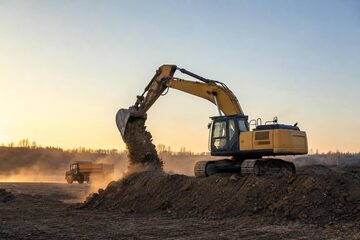
Excavators, bulldozers, and Skid Steers financing represent core collateral for most equipment lenders. These machines hold value well because they transfer across residential, commercial, and infrastructure job sites. A mid-size skid steer from a major manufacturer can retain 60% of its value after five years if maintained properly. Lenders know this, so earthmoving equipment usually qualifies for longer terms and lower down payments than niche assets.
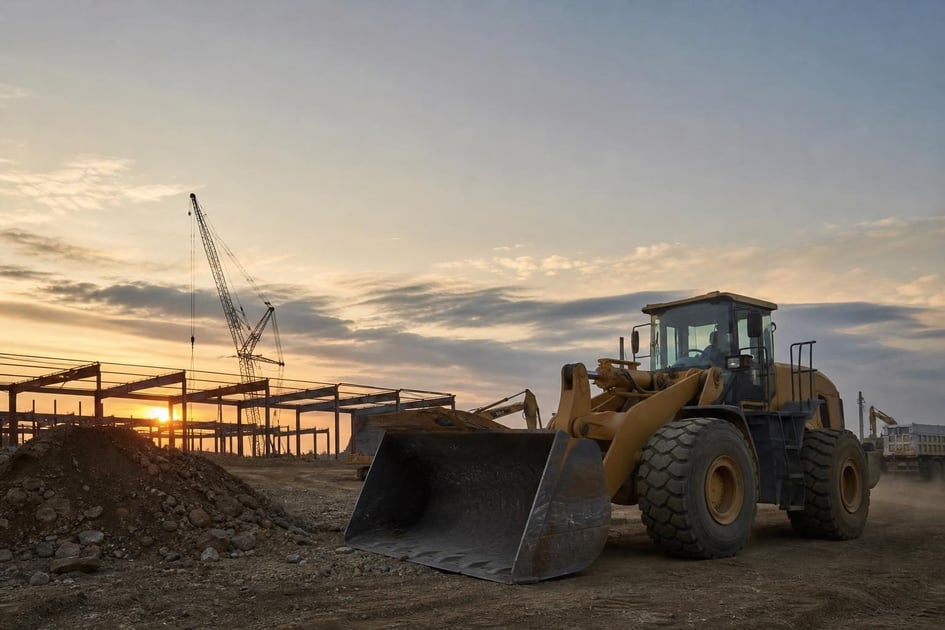
Wheel Loaders financing follows a similar pattern. Loaders between 80 and 150 horsepower are liquid on the secondary market, and lenders can obtain reliable auction data to support their residual estimates. If you are buying a high-hour machine, expect to provide recent service records and possibly a third-party inspection.
Material Handling and Aerial Lifts
Scissor lifts, boom lifts, and telehandlers serve multiple industries, which makes them attractive collateral. However, lifts older than 10 years face stiffer terms because ANSI standards and safety inspections become more expensive. Lenders may require proof of the most recent annual inspection before funding. If the lift has been modified with aftermarket rails or controls, you may need a certification letter from the modifier.
Vocational Trucks and Haulers
Dump Trucks financing sits at the intersection of construction and transportation underwriting. A Class 8 dump truck with a known body manufacturer and upfitter is easier to finance than a custom-built hauler with no comparable sales history. Mileage and engine type matter: diesel trucks with EPA-compliant engines fare better than pre-emission models in states with strict inspection rules. Lenders may also want to see your DOT authority and insurance binders if the truck will be used for hire.
Water trucks, service bodies, and flatbeds built on cab-chassis platforms are usually financed as equipment rather than as vehicles, which means the approval criteria follow asset-based underwriting rather than commercial auto guidelines. That distinction can speed up the decision and reduce the paperwork.
Find the right financing structure
Tell us about the equipment you need and we will show you the options that fit your business.
See Your OptionsQualification Criteria in Detail
Lenders evaluate construction equipment applications on four pillars: credit, cash flow, collateral, and character. Each pillar carries weight, and a strength in one area can offset a weakness in another.
Credit. Most equipment finance companies want a personal credit score above 650 for owner-operators and a business credit profile with no recent judgments or liens. Some programs accept scores in the low 600s with compensating factors, but the rate will reflect the added risk. Bankruptcies discharged less than two years ago are usually disqualifying unless you can show extenuating circumstances and a significant down payment.
Cash flow. Expect to submit three months of business bank statements and the most recent year of tax returns or financial statements. Lenders look for consistent deposits that demonstrate the equipment will generate revenue. Seasonal contractors should explain their cycle: a paving company that does 70% of its revenue between April and October is normal, but the underwriter needs to see that pattern rather than inferring instability from lumpy statements.
Collateral. The equipment itself is the primary collateral. Lenders will verify the serial number, confirm it is not encumbered by another lien, and check auction values. Some deals require a site inspection or photo verification before funding. For transactions above $250,000, an independent appraisal may be required.
Character. Time in business matters. Two years is the standard threshold for the best programs, though some lenders will finance a one-year-old company with a strong personal credit guarantor. If you have industry experience but recently formed a new entity, provide a resume and references from suppliers or general contractors you have worked with.
Pro Tip: Keep your equipment insurance quote ready before you apply. Lenders will not fund without proof of coverage naming them as loss payee, and scrambling for a binder after approval can delay closing by several days. Ask your agent to prepare a certificate of insurance with the lender's standard loss-payee language so you can upload it immediately upon approval.
Common Mistakes That Cost You More
Applying to multiple lenders simultaneously seems smart, but it can backfire. Each hard inquiry drops your score slightly, and a flurry of equipment-finance inquiries in a single month signals desperation. Choose one or two lenders that specialize in Construction equipment financing and submit a complete package the first time.
Another mistake is overestimating the useful life of the equipment. Financing a 12-year-old machine over 60 months means you may still owe money after the asset has retired. Match your term to the expected productive life. If you plan to trade the equipment in three years, do not sign a 72-month loan unless the prepayment terms are favorable.
Ignoring the total cost of ownership also leads to surprises. Maintenance, fuel, insurance, and transport add up. A lower monthly payment on a longer term looks attractive until you realize you are paying finance charges on a machine that sits in the shop. Run the numbers on revenue per hour versus total cost per hour before you decide how much to borrow.
Finally, do not assume that dealer financing is your only option. Captive finance arms sometimes offer promotional rates, but they may also inflate the equipment price to compensate. Compare the all-in cost of the machine plus financing before you sign. An independent lender may offer a slightly higher rate on a lower purchase price, which saves money overall.
What Happens After You Apply
Most equipment finance applications follow a predictable timeline. After you submit your business information, equipment details, and financial documents, the lender runs credit and verifies collateral value. For requests under $150,000, this can yield a same-day decision if the file is complete. Larger transactions or specialized collateral may take 24 to 48 hours while the underwriter obtains an appraisal or inspects the asset.
Upon approval, you receive a term sheet outlining the payment, term, down payment, and any conditions. Read it carefully. Look for prepayment penalties, documentation fees, and insurance requirements. If you accept, the lender prepares the closing documents and coordinates with the seller or dealer. Funds are typically sent directly to the seller via wire transfer or certified check; you rarely take possession of the cash.
After closing, your obligation is to insure the equipment, maintain it, and make payments on time. Some lenders report to business credit bureaus, which means on-time payments strengthen your profile for the next purchase. Others only report defaults, so ask about credit reporting if building your business score is a priority.
Talk to a specialist about your specific machine and get a same-day decision on your equipment.
Put the right equipment to work
From $5,000 to $5 million, new or used, Provide Capital helps businesses nationwide finance the equipment they need.
Apply TodayFrequently Asked Questions
Can I finance construction equipment with a 600 credit score?
Yes, though the terms will reflect the added risk. Borrowers in the low-600 range should expect a larger down payment, a shorter term, or a slightly higher rate. Rates vary by credit profile, equipment age and term, so the best way to know your exact numbers is to apply with a complete file.
How much down payment is required?
Down payments range from 0% to 20% for most transactions. Well-qualified buyers purchasing new equipment from authorized dealers can sometimes secure 100% financing. Used equipment, private-party sales, or borrowers with credit challenges may require 10% to 20% down.
Can I finance equipment from a private seller?
Yes. Private-party transactions are common in construction, especially for used excavators and loaders. The lender will verify the title, check for liens, and may require an inspection. The process adds a day or two to the closing timeline but is otherwise straightforward.
What is the longest term available?
Terms typically range from 24 to 72 months, with some lenders offering 84 months for new, high-dollar collateral. The term is usually capped at the expected useful life of the equipment. A new wheel loader might qualify for 60 months, while a 10-year-old dump truck may be limited to 36 months.
Does the lender need to inspect the equipment before funding?
Inspections are required for some used equipment and for transactions above certain thresholds, often $250,000. The inspection confirms the serial number, condition, and marketability. For new equipment sold by an authorized dealer, an inspection is rarely necessary.
Can I deduct the full purchase price in 2026?
Section 179 and bonus depreciation may allow significant first-year deductions for tax year 2026, but the exact limits depend on IRS guidance and any inflation adjustments. Speak with a CPA before you structure the purchase to confirm how the deduction applies to your entity and income level.
Is a personal guarantee required?
Many lenders require a personal guarantee for owner-operated construction businesses, especially for transactions under $500,000. Strong credit, substantial time in business, and low loan-to-value ratios can sometimes eliminate this requirement. Ask your lender about their guarantee policy before you apply.
Can I finance multiple pieces under one agreement?
Yes. Bundling several machines into a single master lease or loan agreement can reduce documentation fees and simplify your bookkeeping. Lenders often prefer bundled deals because the collateral diversity lowers their concentration risk. If you are buying a skid steer and a trailer together, ask about a bundled structure.
Next Steps
Construction equipment financing rates are not one-size-fits-all. They depend on your credit history, the machine you are buying, and how long you need to pay it off. The good news is that the equipment itself is the collateral, which keeps the process straightforward and the terms competitive for qualified buyers.
Gather your business bank statements, tax returns, equipment quote, and insurance information before you apply. A complete file moves faster and gives the underwriter confidence, which can translate into better terms. Whether you need a $25,000 skid steer or a $500,000 excavator fleet, the process is the same: apply, approve, close, and put the machine to work.
Get a same-day decision on your equipment and move your next job off the waitlist.
Disclaimer: The information provided in this article is for general educational purposes only and is not financial, legal, or tax advice. Funding terms, qualifications, and product availability may vary and are subject to change without notice. Provide Capital does not guarantee approval, rates, or specific outcomes. For personalized information about your business funding options, contact our team directly.