
Cryolipolysis Machine Financing with Bad Credit: The Bottom Line
You can finance a cryolipolysis machine with bad credit. The equipment itself serves as collateral, which means lenders weigh the asset's value alongside your credit profile. Rates and terms vary by credit profile, equipment age and term length. Practices with lower credit scores typically see shorter terms and may need to provide a larger down payment, but approval is possible if the cash flow supports the payment.
If you are reviewing options for a fat-freezing system, you can see what financing you qualify for on that cryolipolysis machine without committing upfront.
Get a fast decision on your equipment
Applying takes just a few minutes, and decisions can come as soon as the same day.
Start Your ApplicationWhat a Cryolipolysis Machine Actually Costs
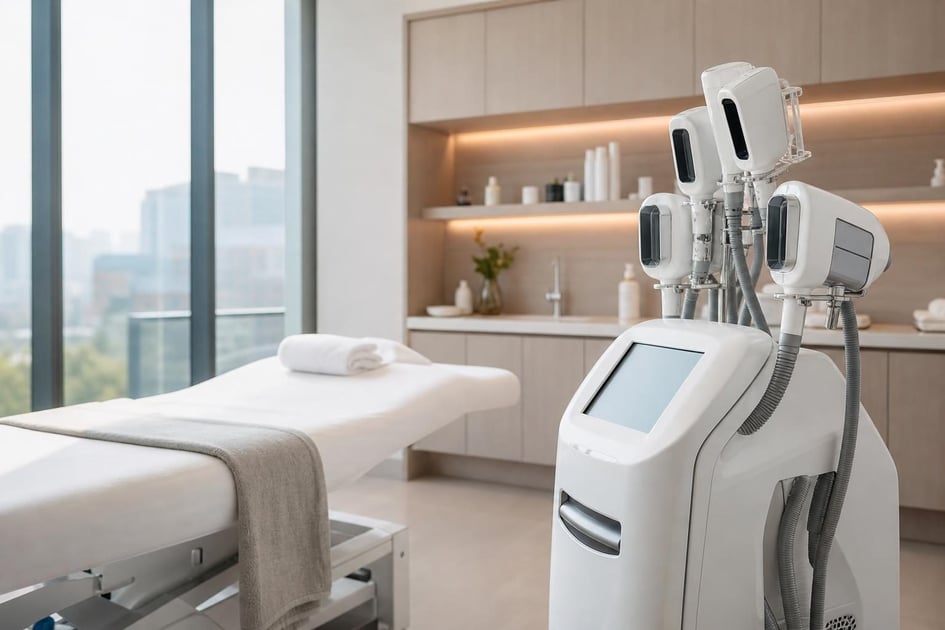
Cryolipolysis platforms—commonly called fat-freezing machines—use controlled cooling to eliminate fat cells without surgery. Prices vary widely based on brand reputation, number of applicator heads, treatment capacity, and whether the unit is new or refurbished.
Entry-level systems suitable for small med spas or single-provider practices often start around $30,000. Mid-tier devices with multiple applicators and faster cycle times usually fall between $60,000 and $100,000. Premium platforms from established manufacturers can exceed $150,000, especially when bundled with training, warranties, and consumables.
Used and refurbished machines offer a lower entry point. A two- to three-year-old unit from a major brand may trade for 40% to 60% below its original price. However, buyers should verify what transfers with the sale. Some manufacturers tie applicator cycles to the original purchaser, which can add ongoing per-treatment fees that affect your margins.
Key Insight: Multi-applicator cryolipolysis systems command higher prices but also allow you to treat multiple body areas in a single session, increasing hourly revenue. A single-applicator machine priced at $35,000 may require four hours to generate the same revenue a $90,000 four-applicator system produces in one hour.
How Bad Credit Affects Equipment Financing
Equipment lenders evaluate more than a credit score, but the score still matters. Most equipment financing programs set a minimum threshold around 600, though borrowers below that may still qualify through specialized bad-credit programs. The key difference is cost and structure.
With a strong credit profile, you may see longer terms—up to 60 or 72 months—and minimal down payment requirements. With challenged credit, lenders offset risk by shortening the term, increasing the down payment, or adding a co-signer. The equipment itself is the collateral, which lowers the lender's exposure and keeps the door open for borrowers who would not qualify for an unsecured loan.
Lenders also look at time in business and revenue consistency. A practice with two years of tax returns showing steady income can offset a lower personal credit score. A brand-new med spa with no revenue history and a 580 credit score faces a steeper climb, but may still secure financing with 20% or more down and a solid business plan. Before applying, SBA guidance on equipment financing recommends reviewing your credit report and organizing financial information so you can explain any issues upfront.
| Credit Profile | Typical Term Range | Down Payment | Notes |
|---|---|---|---|
| Excellent (700+) | 48–84 months | 0–10% | Best rates, longest terms |
| Good (650–699) | 36–60 months | 10–15% | Standard approvals |
| Fair (600–649) | 24–48 months | 15–20% | May require additional documentation |
| Below 600 | 12–36 months | 20%+ | Specialized programs, possible co-signer |
Why Equipment Collateral Matters
Because the cryolipolysis machine secures the financing, the lender's risk is tied to a tangible asset with resale value in the aesthetics market. This is fundamentally different from an unsecured working capital loan. If your practice hits a slow season, the lender can recover the device. That collateral value is why Cryolipolysis Machine financing remains accessible even when credit is imperfect.
If your credit has taken hits but your practice generates consistent revenue, get a decision on your equipment, possibly the same day.
Lease vs. Loan: Which Structure Fits Your Practice?
You can acquire a cryolipolysis machine through an equipment loan or a lease. The right choice depends on how long you plan to keep the device, your accounting preferences, and whether you want to upgrade frequently.
An equipment loan spreads the purchase price over a term—typically 24 to 72 months—and you own the machine outright once the final payment clears. You claim depreciation and may benefit from Section 179 deductions. A loan makes sense if you expect the technology to remain competitive for five or more years.
A lease, particularly an operating lease, treats the machine as a rental. Monthly payments are often lower than loan payments, and at the end of the term you can return the equipment, renew the lease, or buy it at fair market value. Leasing works well when technology cycles quickly and you want to upgrade every few years without owning depreciated hardware.
| Factor | Equipment Loan | Operating Lease |
|---|---|---|
| Ownership | You own the asset | Lender owns the asset |
| Monthly Payment | Higher | Lower |
| Tax Treatment | Depreciation + Section 179 | Deduct lease payments as expense |
| End of Term | Free and clear ownership | Return, renew, or buy |
| Best For | Long-term use, stable technology | Frequent upgrades, preserving cash |
Pro Tip: Some manufacturers offer captive leasing with a $1 buyout clause that functions like a loan but appears as a lease on your balance sheet. Read the paperwork carefully: a $1 buyout capital lease usually carries the same tax benefits as ownership, while a fair-market-value operating lease does not.
Qualification Criteria in Detail
Lenders weigh four factors when reviewing a cryolipolysis machine financing application.
Credit History. Personal credit scores below 600 are not automatic disqualifications, but they narrow the lender pool. Expect to explain derogatory marks. Recent bankruptcies or open tax liens are bigger obstacles than old medical collections.
Time in Business. Practices operating for two or more years qualify for the broadest range of programs. Startups and practices under one year can still obtain financing, but they usually need stronger personal credit, a larger down payment, or prior industry experience.
Revenue and Cash Flow. Lenders want to see that your monthly revenue can absorb the new payment. Many underwriters use a debt-service-coverage ratio benchmark, though the exact target varies by lender. Showing six months of bank statements demonstrating consistent deposits strengthens your file.
Equipment Details. The lender evaluates the make, model, year, and condition of the machine. New equipment from established brands carries higher collateral value than no-name imports. A dealer invoice or purchase agreement helps the underwriter verify the asset's worth. For businesses exploring government-backed options, SBA 7(a) loans can fund equipment purchases up to $5 million, though direct equipment financing often closes faster and requires less paperwork.
Documentation You Will Need
Gather these items before applying: a completed application, last two years of personal and business tax returns (if applicable), three to six months of business bank statements, a copy of your driver's license, and a quote or invoice for the specific cryolipolysis machine. If you are buying used, include photos and maintenance records if available.
See what you qualify for
The equipment itself secures the financing, which keeps rates competitive. Checking your options takes minutes.
Check Your OptionsTax Treatment for 2026
For tax year 2026, the Internal Revenue Code allows businesses to deduct qualifying equipment purchases through Section 179 and bonus depreciation. Section 179 permits a first-year deduction up to an annual limit, with a phase-out that begins once total equipment purchases exceed a threshold. The specific dollar limits for 2026 are adjusted annually for inflation; consult a CPA for the exact figures.
Bonus depreciation allows an additional deduction beyond Section 179, though the percentage has been declining under current law. For 2026, bonus depreciation may still apply at a reduced rate. A qualified accountant can model whether taking Section 179, bonus depreciation, or standard MACRS depreciation produces the best outcome for your practice.
By the Numbers: A med spa purchasing a $75,000 cryolipolysis machine in 2026 and placing it in service before December 31 could potentially deduct a significant portion of the cost in the first year under Section 179, subject to taxable income limits. The remaining basis depreciates over a five-year MACRS schedule. Speak with a CPA to confirm the exact deduction available for your situation.
Industry-Specific Use Cases
Cryolipolysis machines fit into several business models.
Medical Spas. The most common buyer. A med spa adding body contouring to a menu of injectables and laser treatments can cross-sell existing clients. The average cryolipolysis session generates $600 to $1,200 per client, and most patients need two to three sessions per treatment area.
Dermatology Practices. Board-certified dermatologists use cryolipolysis as a non-surgical adjunct to clinical dermatology. The device sits in a medically supervised environment, which supports higher pricing and attracts patients who prefer physician oversight.
Plastic Surgery Centers. Surgeons offer cryolipolysis for patients who want fat reduction without downtime. It also serves as a lead generator: patients who start with non-invasive contouring sometimes later request surgical procedures.
Wellness Studios. Some chiropractic and wellness clinics add cryolipolysis to diversify revenue. The key is having enough foot traffic to keep the machine busy, as these devices generate profit only when utilization stays above a minimum threshold.
Common Mistakes When Financing Aesthetic Equipment
Buying on price alone. A $20,000 imported machine with no local service network can turn into a $40,000 mistake when it breaks and parts are unavailable. Stick to brands with domestic service technicians and FDA clearance.
Ignoring consumable costs. Some platforms charge per-applicator fees that add $100 or more to every treatment. Factor these into your ROI model before signing the financing agreement.
Overstating projected utilization. Lenders see optimistic revenue projections every day. Base your financing request on conservative utilization—perhaps 60% of your ideal schedule—and let upside surprise you.
Not reviewing the UCC filing. Equipment lenders file a UCC-1 lien against the asset. This is standard, but make sure you understand whether the lien extends to other business assets or only the financed machine.
What Happens After You Apply
Provide Capital reviews applications and can issue same-day approvals when the file is complete. The process typically runs like this:
First, you submit an application along with the equipment quote and basic financial documentation. An underwriter verifies the asset value, reviews your credit and cash flow, and issues a term sheet. If you accept, the lender finalizes the UCC filing and sends funds directly to the seller or escrow. You take delivery and begin making monthly payments.
Most loans carry no prepayment penalty, though you should confirm this on your specific term sheet. If you pay off the balance early, you own the machine free and clear. The U.S. Census Bureau tracks establishment data showing that equipment-intensive service businesses continue to expand nationwide, which supports strong resale values for well-maintained aesthetic devices.
Provide Capital finances new and used business equipment from $5,000 to $5 million nationwide. While Forestry Logging equipment financing and Skid Steers financing represent very different industries, the underlying structure is the same: the equipment itself is the collateral, which keeps rates competitive and approvals moving quickly.
Ready to move forward?
More than 10,000 businesses have financed equipment with Provide Capital. See what you qualify for today.
Get StartedFrequently Asked Questions
Can I finance a cryolipolysis machine with a credit score under 600?
Yes, though your options narrow. Expect a larger down payment, a shorter term, and possibly a co-signer. The equipment collateral helps, but lenders still need to see that you can afford the monthly payment.
How much should I expect to put down?
Down payments range from 0% for strong credit profiles to 20% or more for challenged credit. The exact amount depends on your overall file strength and the equipment's collateral value.
Can I finance a used cryolipolysis machine?
Yes. Used equipment financing is common in the aesthetics industry. Lenders will want to verify the machine's condition, age, and remaining useful life. A dealer inspection or service record helps.
Will financing a cryolipolysis machine hurt my credit?
Applying may involve a hard credit inquiry, which can have a minor temporary impact. Making consistent on-time payments can strengthen your business credit profile over time.
How long does approval take?
Same-day approvals are possible when your documentation is complete. More complex files or requests for larger amounts may take 24 to 48 hours.
Can I deduct the full cost of the machine in the first year?
For tax year 2026, Section 179 may allow a first-year deduction up to the annual inflation-adjusted limit, subject to taxable income and total equipment purchase thresholds. Consult a CPA to confirm the exact deduction available to your practice.
What happens if I want to pay off the loan early?
Most equipment loans do not carry prepayment penalties, but you should verify this on your term sheet before signing. Early payoff releases the UCC lien and transfers full ownership to you.
Do I need a medical license to finance a cryolipolysis machine?
Lenders generally do not require a medical license, but your state may regulate who can operate the device. Check local licensing boards and scope-of-practice laws before purchasing.
Ready to Finance Your Cryolipolysis Machine?
Adding body contouring to your practice is a capital decision, but it does not have to drain your cash reserves. Equipment financing lets you put the machine to work immediately while preserving liquidity for payroll, marketing, and inventory. If you have bad credit, focus on demonstrating strong cash flow, offering a reasonable down payment, and choosing a reputable machine with solid resale value.
Start an application in a few minutes and find out what terms are available for the cryolipolysis machine you have in mind.
Disclaimer: The information provided in this article is for general educational purposes only and is not financial, legal, or tax advice. Funding terms, qualifications, and product availability may vary and are subject to change without notice. Provide Capital does not guarantee approval, rates, or specific outcomes. For personalized information about your business funding options, contact our team directly.
