
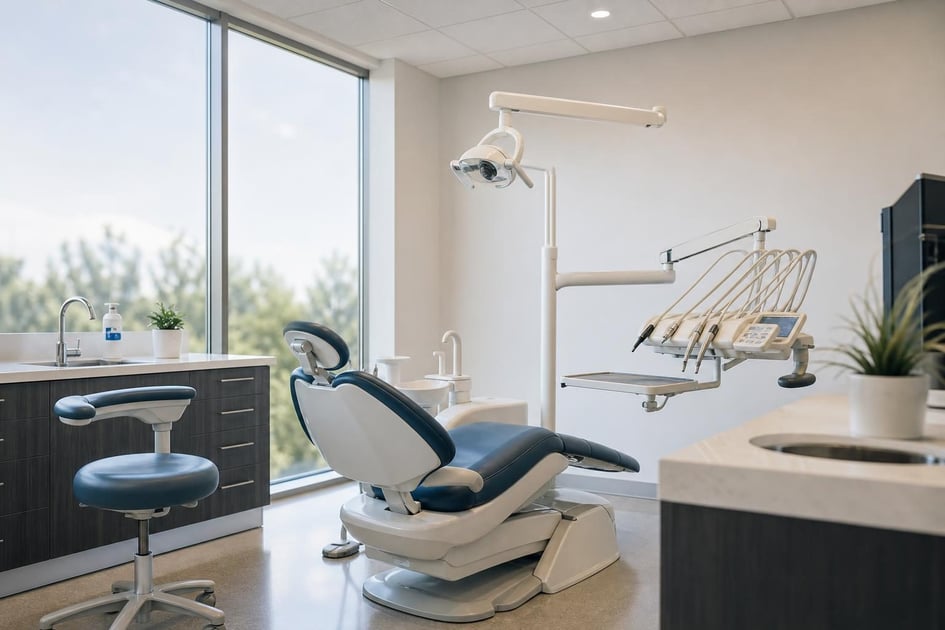
Most dental practice owners do not pay cash for chairs. They finance them. A new dental chair can run from $3,000 for a basic model to well over $15,000 for a fully loaded unit, and most practices need two to eight chairs at once. Financing spreads that cost across manageable monthly payments, preserves cash flow for payroll and supplies, and often delivers tax advantages in the current tax year. If you already have a quote from your supplier, see what financing you qualify for in a few minutes.
At Provide Capital, we treat the equipment itself as collateral. That keeps rates competitive and approvals moving fast. We finance new and used business equipment from $5,000 to $5 million, and same-day approvals are possible when the file is clean. Whether you are replacing a single broken chair or outfitting a new location, understanding how dental chair financing is priced and what lenders look for will help you avoid surprises and close quickly.
What New and Used Dental Chairs Actually Cost
New dental chairs
A quality new dental chair typically ranges from roughly $3,000 for a base model to more than $15,000 for a premium unit with integrated delivery, LED lighting, and ergonomic controls. That price usually covers the chair itself. The delivery system—the hoses, handpiece connections, and suction—often sits on a separate mount or hangs from a ceiling boom, adding another $5,000 to $12,000. A dental light can add $1,000 to $4,000, and cabinetry runs $2,000 to $8,000 per operatory. Put together, a single fully equipped operatory can easily reach $15,000 to $50,000 before installation.
Refurbished and pre-owned options
Used and refurbished dental chairs generally sell for 40 to 60 percent less than comparable new models. A three-year-old chair from a major brand might list for $5,000 to $8,000 instead of $12,000 new. The risk is condition and remaining useful life. Lenders will want to know the manufacture year, hours of use, and service history. Most finance companies cap the age of used equipment at 7 to 10 years at the time of purchase. If the chair is too old, the lender may shorten the term, require a larger down payment, or decline the deal.
Delivery, installation, and hidden costs
Freight for a dental chair runs $200 to $800 depending on distance and lift-gate needs. Professional installation adds $500 to $2,000 per chair, especially if plumbing and electrical must be moved. Some dealers include delivery in the equipment price; others do not. When you request a financing quote, specify whether you want the loan to cover freight and installation. Many lenders allow soft costs—delivery, installation, and even initial training—to be rolled into the equipment loan, usually up to a set percentage of the hard equipment cost.
By the Numbers: A single dental operatory can require $15,000 to $50,000 in total equipment spend when you include the chair, delivery system, light, and cabinetry. Financing the full package under one equipment loan keeps your out-of-pocket start-up cash closer to zero.
Get a fast decision on your equipment
Applying takes just a few minutes, and decisions can come as soon as the same day.
Start Your ApplicationHow Dental Chair Financing Works
Dental equipment financing is a secured transaction. The lender buys the chair from the vendor and retains a security interest in it while you make payments. Once the final payment clears, the lien releases and you own the equipment outright. Because the collateral is built into the deal, rates vary by credit profile, equipment age and term, but they are typically lower than unsecured lines of credit or credit cards. The Small Business Administration outlines funding fundamentals that apply to any practice considering equipment debt.
Equipment loans vs. equipment leases
An equipment loan ends with ownership. You make fixed monthly payments over 24 to 84 months, and at the end the title is yours. An operating lease is closer to a rental: you pay a monthly fee for a set term, then return the equipment, buy it out at fair market value, or upgrade to a newer model. A capital lease, or finance lease, straddles the two: the payments are structured like a loan, and you typically own the equipment at the end for a nominal buyout.
| Feature | Equipment Loan | Operating Lease | Capital Lease |
|---|---|---|---|
| Ownership at end | Yes | No (unless buyout) | Yes (nominal fee) |
| Down payment | Often 0%–20% | Usually first/last month | Often 0%–20% |
| Term options | 24–84 months | 12–60 months | 24–84 months |
| Tax treatment (2026) | Section 179 / depreciation | Deduct lease payments | Depreciation |
| Best for | Long-term use, equity building | Frequent upgrades | Ownership with low monthly |
How lenders size the deal
Lenders look at the equipment value, your credit, time in business, and cash flow. They will rarely finance more than the equipment is worth, and they typically verify the invoice or purchase agreement. For loans under $150,000, many lenders offer streamlined approvals with minimal paperwork. For larger build-outs—say, $500,000 for a full practice—underwriting digs deeper into tax returns and bank statements.
Key Insight: Lenders view dental chairs as strong collateral because they are specialized, durable, and retain value in the resale market. That collateral strength is what keeps rates competitive compared to unsecured borrowing.
If you have your equipment quote ready, get a decision on your equipment, possibly the same day.
Qualifying for Dental Equipment Financing
Credit profile and time in business
Most equipment lenders prefer to see at least two years in business and a credit score in the mid-600s or higher. That said, a strong practice with solid cash flow can sometimes offset a shorter operating history or a blemish on the owner’s personal credit. Lenders also look at your debt-service coverage ratio—essentially whether your monthly revenue can comfortably cover the new payment. A ratio of 1.25 or better is generally viewed favorably. While SBA loan programs can work for dental practices, direct equipment financing usually moves faster because the collateral is already identified.
What the lender looks for in the equipment
The lender wants to know that the collateral is worth the loan amount and that it will last through the term. For dental chairs, that means buying from a recognized manufacturer with available parts and service. Obscure or imported brands with no U.S. support network are harder to finance. The lender may also require a UCC filing against the equipment to secure their interest.
Down payment expectations
Down payments on equipment loans often range from zero to 20 percent. Well-qualified borrowers financing new equipment from established dealers can sometimes secure 100 percent financing. Used equipment, larger loan amounts, or weaker credit may trigger a down payment requirement. Putting money down lowers the monthly payment and reduces the lender’s risk, but it also ties up cash you might need for marketing or payroll.
Pro Tip: Before you sign, confirm whether your financing quote covers soft costs like installation, electrical work, and plumbing. Some lenders cap the soft-cost portion at 10 to 20 percent of the equipment value, while others exclude it entirely.
Tax Treatment for the 2026 Tax Year
For the 2026 tax year, the tax code offers several ways to write off dental chairs. The most popular is Section 179, which allows a first-year deduction for qualifying equipment purchases up to an annual dollar limit. The exact 2026 limit is set by the IRS; consult your CPA to confirm the current cap and whether your practice’s income level qualifies. Section 179 cannot create a net operating loss, so your taxable income must be high enough to absorb the deduction.
Bonus depreciation may also be available for 2026, though the percentage has been stepping down in recent years. Verify the 2026 bonus depreciation rate with your accountant before you count on it. If you choose an operating lease instead of a loan, you generally deduct the lease payments as a business expense over the lease term. With a loan, you take depreciation or Section 179. The best structure depends on your tax bracket, profit forecast, and whether you want to own the asset long term. Always discuss the 2026 rules with a qualified CPA before making a decision.
See what you qualify for
The equipment itself secures the financing, which keeps rates competitive. Checking your options takes minutes.
Check Your OptionsWorked Cost Examples
The best way to understand dental chair financing cost is to walk through realistic scenarios. These examples show principal amounts and terms; the actual monthly payment depends on the rate you qualify for, because rates vary by credit profile, equipment age and term.
Example 1: Single-chair replacement
Dr. Lee needs to replace one aging chair in a three-operatory practice. The new chair costs $8,500, delivery is $400, and installation is $800. Total financed: $9,700. She chooses a 48-month term. The principal amortizes to roughly $202 per month before interest. Over four years, she builds equity in the chair and can claim Section 179 on the full $9,700 for the 2026 tax year if her CPA confirms she qualifies.
Example 2: Three-chair renovation
A growing practice wants to upgrade three operatories simultaneously. Each chair-and-delivery package costs $14,000, for a hard equipment total of $42,000. Soft costs—delivery, installation, and electrical—add another $6,000. Total financed: $48,000. The borrower selects a 60-month term. The principal portion runs about $800 per month before interest. Financing the full $48,000 preserves roughly that amount in working capital for marketing and hiring.
Example 3: Used-chair acquisition
Dr. Patel finds three refurbished chairs, each two years old, for $6,000. Total hard cost: $18,000. Delivery and setup add $2,500. Because the chairs are used, the lender approves a 48-month term with a 10 percent down payment. Dr. Patel puts $2,050 down and finances $18,450. The shorter term reflects the lender’s desire to match the loan life to the remaining useful life of the used equipment.
Common Mistakes When Financing Dental Chairs
Underestimating soft costs
Many borrowers request a loan for the exact invoice price of the chairs, then realize they need another $5,000 for installation and plumbing. Ask your vendor for an all-in quote before you apply.
Choosing the wrong term length
A 24-month term gives you a higher monthly payment but builds equity fast. An 84-month term lowers the payment but stretches interest costs and may outlast the equipment’s warranty. For dental chairs, 48 to 60 months is the sweet spot for most practices.
Overlooking used-equipment inspection
A used chair that looks clean online may have hydraulic leaks or worn upholstery. Hire a dental equipment technician to inspect used chairs before you commit. Lenders appreciate a clean inspection report, and it protects you from buying a money pit.
Pro Tip: If you are buying used, request the service history and remaining warranty. A chair with five years of documented maintenance is easier to finance than one with no records, because the lender knows the asset is likely to outlast the loan term.
Documentation You Will Need
Application paperwork
Expect to provide a one-page application, your last two years of business tax returns, and three to six months of business bank statements. For loans under $100,000, some lenders waive tax returns and rely on bank statements and a credit pull. For loans above $250,000, you may also need to submit personal financial statements and a current profit-and-loss report.
Equipment details
The lender will want the vendor’s quote or invoice, the make and model of each chair, and the serial numbers if the equipment is used. For new equipment, a purchase agreement signed by you and the dealer is usually sufficient. If you are buying from a private seller rather than a dealer, expect extra scrutiny and possibly an independent appraisal.
What Happens After You Apply
Approval timeline
For straightforward deals, approvals can come the same day. The lender reviews your credit, the equipment details, and your bank statements. If everything aligns, you receive a term sheet outlining the monthly payment, term, and any down payment required. For larger or more complex files, expect 24 to 72 hours.
Funding and vendor payment
Once you accept the terms and return the signed documents, the lender issues a check or wires funds directly to the vendor. You never handle the cash, which simplifies accounting and ensures the lender’s security interest attaches cleanly to the equipment. After the vendor confirms delivery, your payments begin according to the schedule. Most lenders report to business credit bureaus, so on-time payments can strengthen your profile for the next purchase.
Ready to move forward?
More than 10,000 businesses have financed equipment with Provide Capital. See what you qualify for today.
Get StartedFrequently Asked Questions
How much does it cost to finance a dental chair?
The amount you finance depends on the chair’s purchase price plus any soft costs. New chairs typically range from $3,000 to over $15,000, and lenders usually require the loan to match or fall below the equipment value. Rates vary by credit profile, equipment age and term.
What is the typical term length for dental chair financing?
Terms usually range from 24 to 84 months. Most dental chairs are financed over 48 to 60 months, which balances a manageable monthly payment with a reasonable total interest cost.
Can I finance used or refurbished dental chairs?
Yes, provided the chairs are from a recognized manufacturer and are not too old. Most lenders cap used equipment age at 7 to 10 years. Used chairs often require a slightly larger down payment or a shorter term.
How long does the approval process take?
Simple deals with clear credit and complete paperwork can receive same-day approval. Larger or more complex files may take 24 to 72 hours.
Will financing cover delivery, installation, and other soft costs?
Many lenders allow soft costs to be included, typically capped at 10 to 20 percent of the hard equipment value. Always confirm with your lender before you assume installation is covered.
What credit profile is needed to qualify?
A credit score in the mid-600s and at least two years in business improves your odds. Strong cash flow and a low debt-to-income ratio can offset weaker credit in some cases.
Is there a penalty for paying off the equipment loan early?
Some equipment loans have a prepayment penalty; others do not. Ask your lender to disclose any prepayment structure before you sign. A standard structure might charge a small percentage of the remaining balance if you pay off in the first year.
Can I bundle other dental equipment into the same financing agreement?
Yes. If you are buying chairs, X-ray units, and sterilization equipment from the same vendor, you can usually finance the entire package under one loan. This simplifies bookkeeping and may improve your approval odds by creating a larger, more secured deal.
Next Steps
Dental chair financing is straightforward when you know the numbers and have your paperwork ready. Start by gathering quotes for the chairs and any installation work. Review your recent tax returns and bank statements. Then start an application in a few minutes to see how much you can finance and on what terms. Provide Capital serves practices nationwide, with financing from $5,000 to $5 million and same-day approvals possible for qualifying deals.
We also provide Hemodialysis Chair Scale financing for medical practices expanding their service lines, and our Dental equipment financing team understands the unique needs of oral health providers. For general business finance planning, review SBA guidance on managing your business alongside your equipment loan options. No matter where you are in the buying process, getting a clear picture of your options now will help you make a confident decision.
Disclaimer: The information provided in this article is for general educational purposes only and is not financial, legal, or tax advice. Funding terms, qualifications, and product availability may vary and are subject to change without notice. Provide Capital does not guarantee approval, rates, or specific outcomes. For personalized information about your business funding options, contact our team directly.
