
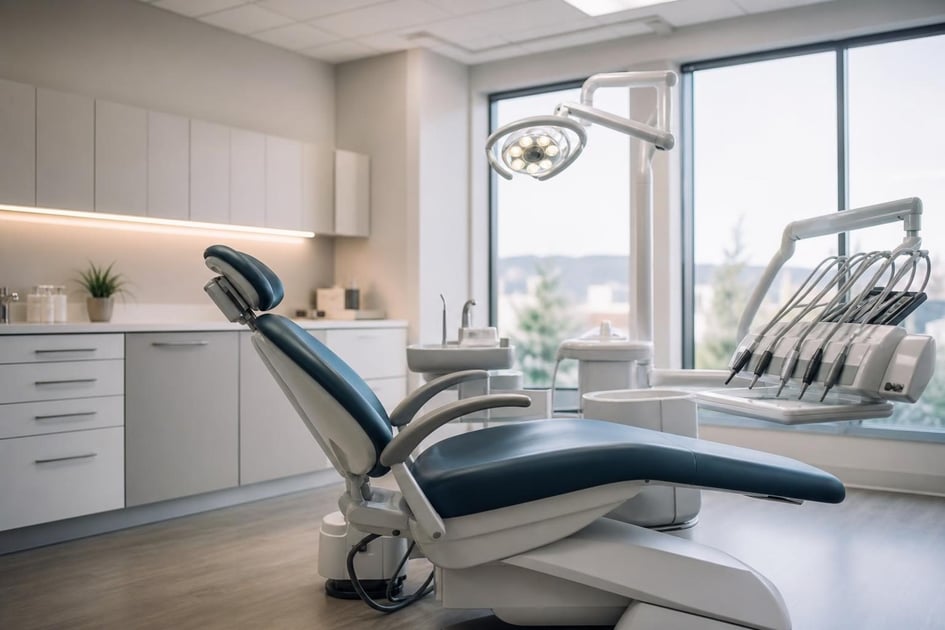
Yes, you can finance a dental chair with no money down. The equipment itself acts as collateral, which means lenders can structure deals that preserve your cash for payroll, supplies, and the other costs of running a practice. At Provide Capital, we finance dental equipment from $5,000 up to $5 million, and same-day approvals are possible when your documentation is in order. What matters is understanding how "no money down" actually works, what lenders look for, and how to structure the deal so it helps rather than strains your cash flow.
Key Insight: "No money down" does not always mean "zero upfront." Some lenders waive the down payment but still require a documentation fee, a UCC filing fee, or your first and last payments in advance. Ask for the total cash required at closing, not just the down payment percentage.
What "No Money Down" Actually Means for Dental Equipment
When a lender advertises no-money-down dental chair financing, they are typically offering 100 percent financing of the equipment cost. The lender pays the vendor directly, and you repay over a term that usually ranges from 24 to 72 months. The equipment serves as collateral, which reduces the lender's risk and keeps rates competitive compared to unsecured borrowing.
However, 100 percent financing applies to the equipment invoice, not necessarily the total project cost. If you need delivery, installation, electrical work, or plumbing modifications to accommodate the chair, those soft costs may not be included. Some lenders will roll them in if the total stays within their loan-to-value guidelines; others will not. Clarify this before you sign, because a $25,000 chair can easily become a $32,000 project once it is operational.
The Difference Between Zero Down and 100 Percent Financing
Zero down means you hand the lender no cash at the start of the term. One hundred percent financing means the lender covers the full purchase price. The two usually overlap, but not always. A lender could require zero down yet only finance 80 percent of the invoice because they exclude taxes or freight. Alternatively, a lender might offer 100 percent financing including soft costs but ask for one or two payments upfront as a security deposit.
Read the term sheet carefully. Look for line items labeled "advance payments," "security deposit," or "administrative fee." These are not necessarily hidden costs, but they are cash out of your pocket before the chair is producing revenue.
Why Dental Chairs Are Treated Differently Than Other Equipment
Dental chairs hold value better than many other medical assets. A well-maintained chair from a reputable manufacturer can retain 40 to 60 percent of its value after five years, depending on usage and condition. That residual value makes lenders more comfortable with higher advance rates and longer terms. It also means used dental chair financing is readily available, which is not true for every type of medical equipment.
Because the chair is the collateral, lenders care about the brand, model year, and service history. A leading manufacturer's mid-range chair from the past three model years will command better terms than a discontinued brand with limited parts availability. If you are buying used, be prepared to show maintenance logs or a recent inspection report.
How Dental Chair Financing Works
The process is straightforward, but preparation determines speed. You submit an application with basic business and personal information, the lender evaluates your credit profile and the equipment specifics, and you receive a term sheet. If you accept, the lender pays the vendor and takes a security interest in the chair via a UCC filing. As the WSJ overview of business equipment loans notes, the equipment itself typically serves as collateral, which can lead to more favorable terms than unsecured borrowing.
Most equipment financing decisions rely on three factors: your personal credit history, the time your practice has been operating, and the age and condition of the equipment. Strong credit and established operations can lead to same-day approval and funding within 24 to 48 hours. Newer practices or lower credit scores may require additional documentation, such as bank statements or tax returns, which extends the timeline by a few days.
The Application Process
You will need to provide the equipment invoice or a detailed quote, your business information, and consent to a credit check. Some lenders also ask for a brief description of how the equipment will be used and what revenue it supports. For a dental chair, this is simple: it enables patient visits, and more chairs mean more capacity.
Lenders specializing in Dental equipment financing understand this revenue model. They know that a general dentist generates production per hour and that a hygienist's chair produces recurring prophylaxis revenue. That industry familiarity means they can evaluate your application based on dental practice economics rather than generic small-business metrics.
Approval Timelines
For established practices with strong credit, approval can come the same day. Funding usually follows within one to two business days once the vendor provides a final invoice and any required documentation. For startups or challenged credit, expect three to five business days while the lender verifies income and equipment value. If the chair is used and the seller is a private party rather than a dealer, the lender may also require an independent appraisal.
See what you qualify for in minutes without affecting your credit score. Our team reviews dental equipment deals daily and can tell you quickly what documentation will move your file fastest.
Qualification Criteria in Detail
Lenders evaluate both the borrower and the equipment. Here is what they typically examine.
Credit Requirements
Personal credit scores in the mid-600s and above generally qualify for competitive equipment financing. Scores below that do not disqualify you, but the structure may change: shorter terms, lower advance rates, or additional collateral. Because the chair itself secures the loan, lenders are more flexible than they would be for an unsecured line of credit. That said, recent bankruptcies, unresolved tax liens, or habitual late payments will raise concerns regardless of the collateral.
Time in Business
Practices operating for two or more years receive the most favorable terms. Lenders like to see a track record of revenue and equipment management. If you have been in business less than two years, you can still qualify, especially if you have strong credit or are buying from a reputable dealer. Some lenders will also consider your experience as an associate dentist before ownership as part of your overall profile.
Equipment Age and Condition
New chairs are the easiest to finance. Used chairs are also financeable, but lenders typically want to see that the equipment is less than ten years old and in good working order. The reason is simple: if the lender ever needs to repossess and resell the asset, a newer chair from a known brand is far easier to liquidate. If you are buying a used chair that is more than seven years old, expect the lender to request a service report or to limit the term to 36 months or less.
By the Numbers: A $40,000 dental chair financed over 60 months with no money down might carry a monthly payment in the low-to-mid hundreds, depending on your credit profile, the equipment age, and the term. Extending the term to 72 months lowers the payment but increases total interest paid. Shortening to 48 months raises the payment but reduces the total cost of borrowing.
New vs. Used Dental Chairs: A Practical Comparison
Both options are financeable, but the terms and total cost of ownership differ. Here is how they stack up.
| Factor | New Dental Chair | Used Dental Chair |
|---|---|---|
| Financing availability | Readily available up to $5 million | Available for chairs up to 7 to 10 years old |
| Typical term | 48 to 72 months | 24 to 48 months |
| Interest structure | Rates vary by credit profile, equipment age and term | Rates vary by credit profile, equipment age and term; may be slightly higher |
| Warranty | Full manufacturer warranty | Limited or expired; third-party service contracts available |
| Down payment | Often $0 with approved credit | Often $0, but advance rate may be lower for private-party sales |
| Total cost | Higher upfront, predictable maintenance | Lower upfront, budget for repairs |
| Collateral value | Strong residual value | Declining value; lender may require shorter amortization |
New chairs offer predictability. You get the latest infection-control features, integrated technology, and a warranty that covers major failures. Used chairs save capital but require diligence. Verify service history, check for obsolete parts, and budget for a service contract if the warranty has expired. In either case, the equipment itself is the collateral, which keeps the approval process focused on the asset value and your ability to repay.
Lease vs. Loan: Which Works Better for Dental Chairs?
You can acquire a dental chair through an equipment loan or a finance lease. The difference matters for ownership, taxes, and your balance sheet.
An equipment loan is a simple installment arrangement. You make monthly payments, and at the end of the term you own the chair outright. The lender files a UCC-1 lien against the equipment until the final payment clears. This is the most common structure for dental practices because ownership aligns with the long useful life of the asset. A quality dental chair can serve a practice for 12 to 15 years with proper maintenance.
A finance lease, sometimes called a $1 buyout lease, functions similarly but the paperwork is structured as a lease with a nominal purchase option at the end. For tax purposes, you may still be able to claim depreciation or Section 179 deductions, but you should confirm the exact structure with your CPA. A true operating lease, where you return the equipment at the end, is rare for dental chairs because practices prefer to keep their equipment long-term.
The decision usually comes down to term and monthly payment. Loans commonly run 48 to 72 months. Leases can stretch to 84 months, lowering the monthly outflow but extending the period before you own the asset free and clear. If you plan to upgrade equipment frequently, a lease might offer flexibility. If you intend to keep the chair for a decade, a loan is usually the cleaner choice. For a deeper comparison of these structures, see Forbes guidance on equipment lease versus loan trade-offs.
Pro Tip: Before signing a lease, ask whether the contract is a capital lease or an operating lease under current accounting standards. The classification affects how the liability appears on your balance sheet and whether you can take the Section 179 deduction in the first year. Your CPA should review the term sheet before you commit.
Tax Treatment for the 2026 Tax Year
Section 179 allows businesses to deduct the full purchase price of qualifying equipment in the year it is placed in service, subject to annual limits. For the 2026 tax year, the maximum Section 179 deduction and the phase-out thresholds are set by inflation-adjusted amounts. Because these figures are revised annually, you should confirm the exact 2026 limits with your CPA before making a purchase decision.
Bonus depreciation is also available for qualifying new and used equipment in 2026, though the percentage has been stepping down from the peak levels of prior years. The exact percentage depends on current IRS guidance for the 2026 tax year. Your CPA can tell you whether bonus depreciation, Section 179, or regular MACRS depreciation delivers the best outcome for your practice's taxable income and entity structure.
The key point is that financing does not eliminate your tax benefits. Whether you pay cash, use a loan, or enter a capital lease, you can generally still claim depreciation or Section 179 on the equipment if you are the owner for tax purposes. The financing structure determines who holds title and therefore who takes the deduction. If you are unsure, have your CPA review the term sheet alongside your projected 2026 tax return.
For authoritative guidance on business equipment financing, refer to SBA resources on business loans and consult your tax professional for the 2026 tax year specifics.
Industry-Specific Considerations for Dental Practices
Not every dental chair serves the same function, and lenders who understand dentistry recognize the difference. A general practice buying a standard operatory chair for hygiene and restorative work is a straightforward deal. An oral surgeon financing a specialized surgical chair with integrated anesthesia delivery may need to provide more detail on the equipment specifications and the revenue model.
Orthodontic and pediatric practices also have specific needs. Pediatric chairs often include smaller profiles and themed upholstery to accommodate young patients. Orthodontic practices may finance multiple chairs at once to expand capacity. Multi-unit deals can qualify for portfolio pricing, where the lender evaluates the total exposure rather than each chair individually. If you are outfitting a new location with three to five chairs, ask whether the lender offers volume terms.
Seasonal cash flow patterns in dentistry are relatively mild compared to industries like construction or agriculture, but they exist. Many practices see higher patient volume in January, when insurance deductibles reset, and slower months in late summer. If your practice has predictable seasonal dips, structure your payments to match. Some lenders offer skip-payment options or seasonal schedules that align with your revenue cycle.
Common Mistakes to Avoid
First, do not assume that no money down means no cash required. Ask for a written estimate of all upfront costs, including documentation fees, filing fees, and any advance payments.
Second, do not finance a chair for longer than its useful life. A 72-month term on a 10-year-old used chair leaves you paying for equipment that may need replacement before the note is retired.
Third, do not neglect the soft costs. Delivery, installation, and electrical modifications are real expenses. If you cannot finance them, make sure your cash reserves cover them without jeopardizing payroll.
Fourth, do not buy from an unknown seller without verifying the chain of title. A private-party chair with a lien from a previous financing arrangement can cloud the lender's ability to take clean collateral. Request a lien search or buy through a dealer who provides clear title.
Documentation You Will Need
Gather these items before you apply to avoid delays:
- Equipment invoice or detailed quote from the vendor
- Business bank statements for the last three to six months
- Personal and business tax returns for the last two years
- Business formation documents and current insurance certificates
- Description of the equipment, including make, model, year, and serial number if used
For practices less than two years old, lenders may also request a business plan or pro forma financials showing how the chair will contribute to revenue. For established practices, a profit-and-loss statement and debt schedule are usually sufficient.
What Happens After Approval
Once you accept the term sheet, the lender issues a purchase order or funds the vendor directly. You schedule delivery and installation. The lender files a UCC lien against the equipment, which is a standard public notice that the lender has a security interest in the chair.
You begin making payments according to the schedule, usually monthly. If you ever want to pay off the note early, ask about prepayment terms. Some lenders offer a discount for early payoff; others charge a nominal fee. There is no universal rule, so the prepayment language should be clear in your contract.
At the end of the term, the lender releases the lien and you own the chair outright. If you financed through a lease with a buyout, you exercise the purchase option, pay the nominal fee, and title transfers to you. Keep records of the lien release for your files in case you sell the practice later.
Frequently Asked Questions
Can I really get a dental chair with no money down?
Yes. Equipment financing commonly offers 100 percent financing for qualified buyers, meaning no down payment is required. You may still pay minor upfront fees, but the equipment cost itself can be fully financed. The chair serves as collateral, which makes this structure possible.
Does financing a dental chair require a personal guarantee?
Most equipment financing for dental practices includes a personal guarantee, especially for single-owner practices or loans under $250,000. The guarantee is secondary to the equipment collateral. In the event of default, the lender repossesses the chair first and pursues the guarantee only if the collateral sale does not satisfy the debt.
How long does approval take?
Same-day approvals are possible for established practices with strong credit and clear documentation. Most files close within 24 to 72 hours. Complex deals, private-party used equipment, or challenged credit may take three to five business days.
Can I finance a used dental chair?
Yes. Used dental chairs are regularly financed, provided they are less than 10 years old and in good working condition. Lenders may require a service report or inspection for chairs older than seven years. Terms are usually shorter than for new equipment.
Will financing affect my ability to get a practice loan later?
An equipment financing note appears on your credit and your balance sheet, but it is usually viewed favorably if you pay on time. It demonstrates that you can manage term debt. The key is keeping your total monthly debt service at a reasonable level relative to practice revenue.
What credit score do I need for dental chair financing?
Scores in the mid-600s and above generally qualify for competitive structures. Lower scores may still be approved, but terms adjust to reflect risk. Because the equipment is collateral, lenders have more flexibility than with unsecured credit.
Can I include delivery and installation in the financing?
Sometimes. Many lenders will finance soft costs up to a percentage of the equipment value, often 10 to 20 percent. Others require soft costs to be paid separately. Ask your lender for their specific policy on freight, installation, and training.
Is there a penalty for paying off the loan early?
Prepayment terms vary by lender and contract. Some offer a discount for early payoff; others apply a nominal fee. Review the prepayment section of your term sheet before signing so you know your options if cash flow improves.
Next Steps
If you are weighing a new chair purchase or upgrading an operatory, the next step is to get a clear picture of what you qualify for. You do not need to commit to a vendor first. A pre-approval or term sheet from a lender lets you shop with confidence and negotiate from a position of certainty.
At Provide Capital, we specialize in Dental Chairs financing for practices nationwide. We understand that a chair is not just furniture; it is a revenue-generating asset that needs to pay for itself through patient production. Our team can review your scenario, explain the numbers, and deliver a decision quickly.
Get a same-day decision on your equipment and keep your cash where it belongs: working in your practice.
Disclaimer: The information provided in this article is for general educational purposes only and is not financial, legal, or tax advice. Funding terms, qualifications, and product availability may vary and are subject to change without notice. Provide Capital does not guarantee approval, rates, or specific outcomes. For personalized information about your business funding options, contact our team directly.