
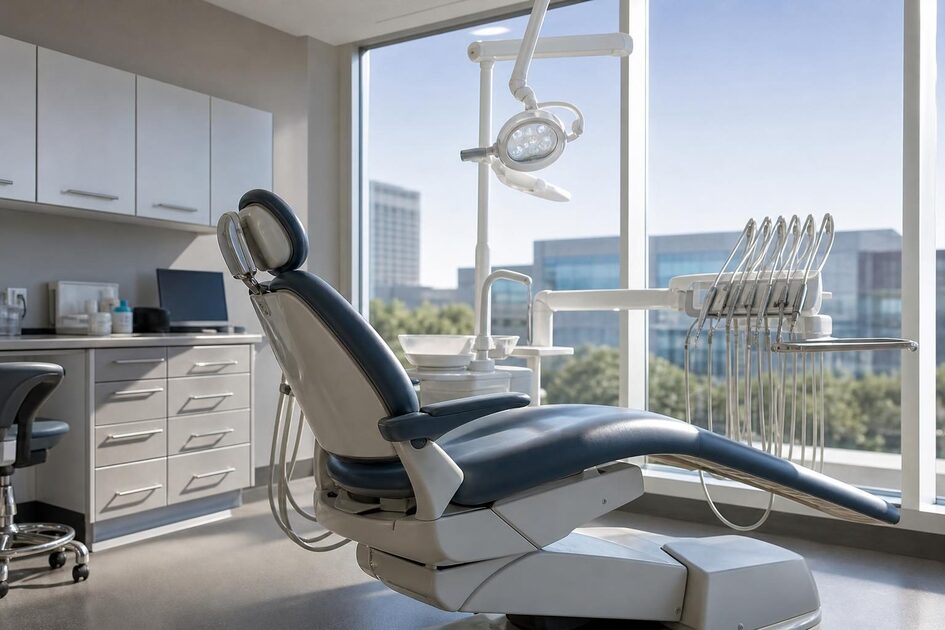
What You Will Actually Pay to Finance a Dental Chair
Expect your dental chair financing rate to fall within a range set by your credit profile, the age of the chair and the length of your term. Provide Capital finances new and used business equipment from $5,000 to $5 million, and the equipment itself serves as collateral. That collateral structure keeps rates competitive compared with unsecured borrowing, because the lender's risk is tied to an asset with clear resale value.
A single new dental chair from a major manufacturer typically runs between $5,000 and $50,000 depending on features, upholstery and integration with digital imaging systems. A full operatory setup with delivery and installation can climb higher. Used chairs cut that upfront cost substantially, but the financing terms may adjust to reflect remaining useful life. If you are actively pricing chairs for your practice, see what financing you qualify for on that unit in just a few minutes.
By the Numbers: Provide Capital writes equipment finance agreements starting at $5,000. A $25,000 dental chair on a 60-month term might carry a monthly payment in the low-to-mid hundreds, depending on credit and down payment. Rates vary by credit profile, equipment age and term.
Already have a machine in mind?
Provide Capital finances new and used equipment from $5,000 to $5 million, with same-day decisions possible.
Apply NowWhat Shapes Your Dental Chair Financing Rate
Lenders do not pull a rate out of thin air. Several concrete factors move the number up or down.
Credit Profile
Both personal and business credit histories matter. A stronger score generally unlocks better terms, but there is no single cutoff. Lenders look at payment patterns, outstanding obligations and any recent derogatory marks. If your personal credit has taken a hit, a larger down payment or shorter term can offset some of that risk.
Equipment Age and Condition
New chairs carry full manufacturer warranties and longer expected lifespans, so lenders often view them as lower risk. Used equipment can still qualify readily, especially if it is a reputable brand with service records, but rates may edge higher to match the shorter collateral life.
Loan Term
Terms commonly range from 24 to 84 months. A longer term drops the monthly payment but increases total interest cost. A shorter term saves money overall but demands stronger cash flow. Choose the term that matches your patient volume and revenue cycle.
Down Payment or Trade-In
Putting 10% to 20% down reduces the financed amount and shows skin in the game. Some borrowers trade in an older chair toward the new purchase, which functions similarly to cash down.
Key Insight: Because the dental chair itself collateralizes the loan, lenders focus heavily on the asset's liquidation value. A chair from a brand with nationwide service support and available parts will almost always command better terms than an off-brand unit with limited resale channels.
New vs. Used Dental Chairs: How Condition Changes the Deal
The new-or-used decision affects more than the sticker price. It changes warranty coverage, maintenance reserves and financing structure. The same underwriting logic applies whether you are financing Dental Chairs financing or Scissor Lifts financing for a construction venture—the asset quality drives the rate.
| Factor | New Dental Chair | Used Dental Chair |
|---|---|---|
| Purchase price | $5,000–$50,000+ | 30%–60% below new retail |
| Manufacturer warranty | Full, typically 1–3 years | Limited or expired |
| Financing term available | Up to 84 months | Up to 60 months, sometimes less |
| Required down payment | Often 0%–10% | Often 10%–20% |
| Rate outlook | Generally most competitive | Rates vary by credit profile, equipment age and term |
| Technology lifespan | 10–15 years with proper maintenance | 5–10 years depending on prior use |
New chairs integrate more easily with modern practice-management software and digital radiography. Used chairs can make sense for a secondary operatory or a practice acquisition where budget is tight. The Small Business Administration publishes resources showing that secured equipment financing generally carries lower rates than unsecured alternatives because the collateral reduces lender risk.
Lease vs. Loan: A Side-by-Side Look
Dentists often assume a lease is automatically cheaper. The math depends on your tax strategy, how long you plan to keep the chair and whether you want to own the asset at the end. Medical and dental practices increasingly favor financing over cash purchases to preserve liquidity for payroll and supplies, according to the Forbes business desk.
| Feature | Equipment Finance Agreement (Loan) | $1 Buyout Lease | Fair Market Value Lease |
|---|---|---|---|
| Ownership at end | You own the chair once paid off | You own it for $1 final payment | Return or purchase at fair market value |
| Monthly payment | Higher than FMV lease, lower than $1 buyout in some cases | Typically highest monthly cost | Lowest monthly cost |
| Tax treatment | Depreciation and interest deductions; potential Section 179 | Treated as purchase for tax purposes | Payments usually expensed as operating costs |
| Best for | Long-term ownership, building equity | Certainty of ownership with spread payments | Short upgrade cycles, preserving capital |
An equipment finance agreement functions like a loan: you borrow to buy the chair, the lender holds a lien, and you own it from day one. A $1 buyout lease is structurally similar but framed as a lease for accounting purposes. A fair-market-value lease works when you expect to upgrade every five years. Match the structure to your expected hold time.
Tax Treatment for Tax Year 2026
For tax year 2026, Section 179 allows qualifying businesses to expense certain equipment purchases in the first year rather than depreciating them over time. The exact dollar cap adjusts annually for inflation, so consult your CPA for the 2026 limit and whether your practice's total equipment purchases fall within the phase-out threshold. Bonus depreciation may also apply to new and used dental chairs, though the percentage has stepped down from prior years. Again, a tax professional can model the precise benefit based on your 2026 taxable income.
The equipment must be placed in service during tax year 2026 to count for this year's return. If you are ordering a chair with a twelve-week lead time, factor that delivery date into your tax planning. Do not assume a December invoice automatically qualifies; the chair must be operational.
Pro Tip: Keep your equipment quote, financing agreement and delivery-acceptance paperwork in one folder. If the IRS asks for proof of when the chair entered service, those three documents together answer every question. Your CPA will thank you.
Find the right financing structure
Tell us about the equipment you need and we will show you the options that fit your business.
See Your OptionsQualifying for Dental Chair Financing: What Lenders Review
Provide Capital serves practices nationwide, from solo practitioners to multi-location groups. Underwriting focuses on a few concrete areas.
Time in Business
Most equipment lenders prefer at least two years of operating history. That track record demonstrates stable patient flow and revenue. Younger practices can still qualify with strong personal credit or a larger down payment, but rates may reflect the shorter history.
Annual Revenue
Lenders want to see that your monthly revenue can cover the new payment. A common rough guideline is that the equipment payment should not consume more than a modest share of gross monthly receipts. Provide Capital looks at the overall picture rather than applying rigid ratios, but cash flow matters.
Credit History
There is no universal minimum score. A borrower with a 650 personal credit score, strong revenue and a clean business record may receive better terms than a borrower with a 720 score but recent delinquencies. Lenders look at the trend, not just the headline number.
The Equipment Itself
Because the chair collateralizes the deal, the lender evaluates the asset. Brand-name chairs with established resale markets and available service technicians carry more weight than obscure imports. Provide Capital finances new and used business equipment, and the equipment itself is the collateral, which keeps rates competitive.
If you are ready to move forward, get a decision on your equipment, possibly the same day, by starting an application with your recent bank statements and the chair quote in hand.
Documentation You Will Need at Application
Gathering paperwork before you apply prevents delays. Most borrowers submit:
- Three most recent months of business bank statements
- Last two years of business tax returns (if available)
- A quote or invoice for the specific dental chair
- Voided business check for ACH setup
- Driver's license and, for some larger requests, a personal financial statement
Same-day approvals are possible when the file is complete and the equipment is clearly identified. Vague quotes or missing pages from bank statements are the most common sources of slowdown.
Industry-Specific Considerations for Dental Practices
Dentistry has unique equipment rhythms. Chairs see constant use—often eight to twelve patients per day—so durability and upholstery quality matter more than in a specialty with lighter patient volume. Integration is another factor. Modern chairs must communicate with imaging sensors, intraoral cameras and CAD/CAM systems. Financing a chair that cannot interface with your existing technology stack creates a hidden replacement cost.
Seasonal cash flow also affects payment timing. Many practices see higher patient volume in January after deductibles reset, then a summer lull. Aligning your first payment date with your revenue cycle—perhaps skipping the heaviest vacation month—can smooth cash flow. Dental equipment financing specialists understand these patterns and can structure payments accordingly. The U.S. Census Bureau tracks the concentration of healthcare establishments by county, which mirrors where dental equipment demand is strongest.
Key Insight: Dental chairs depreciate faster in high-volume practices not because of mechanical failure, but because upholstery, tubing and electrical components wear under constant use. Budgeting for a mid-term reupholstering or pneumatics refresh—roughly every five to seven years—protects the asset's value and keeps patients comfortable.
Common Mistakes When Financing Dental Chairs
Avoid these errors that dentists repeat:
Buying on monthly payment alone. A low monthly cost stretched over seven years can exceed the value of the chair before you pay it off. Calculate total cost of ownership, including estimated maintenance.
Ignoring delivery and installation. A $30,000 chair may need $2,000–$4,000 in rigging, plumbing and electrical work. Finance the total project if possible, or budget cash for the soft costs.
Skipping the warranty transfer on used equipment. Some manufacturer warranties stay with the original purchaser. Verify that a used chair's warranty transfers to you before you commit.
Overlooking upgrade timelines. If you plan to sell your practice in three years, a seven-year loan may complicate the transition. Match your financing term to your likely hold period.
What Happens After You Apply
Once you submit an application, the lender reviews your credit, revenue and equipment details. For requests within Provide Capital's range, same-day approvals are possible on complete files. After approval, the lender issues a term sheet or finance agreement. You review, sign and return it. The lender then pays the vendor directly—usually within one to three business days—and you take delivery.
Payments typically begin thirty days after funding. Many lenders offer autopay discounts. If you sell the practice or want to upgrade early, most equipment finance agreements allow payoff at any time, though you should verify whether there is a prepayment penalty or a sliding interest rebate.
Put the right equipment to work
From $5,000 to $5 million, new or used, Provide Capital helps businesses nationwide finance the equipment they need.
Apply TodayFrequently Asked Questions
Can I finance a dental chair with no money down?
Yes, depending on your credit profile and the equipment. Strong borrowers often qualify for 100% financing on new chairs. Used chairs more commonly require 10% to 20% down because the collateral value is lower.
Does financing a dental chair require a personal guarantee?
Most equipment finance agreements for practice owners include a personal guarantee, especially for borrowing under $250,000. The lender is collateralizing the chair, but the personal guarantee provides additional security. Exceptions exist for large, well-capitalized groups.
How long can I finance a dental chair?
Terms range from 24 to 84 months. New chairs support longer terms; used chairs typically top out at 60 months. A longer term lowers the monthly payment but raises the total interest cost.
Will financing a chair hurt my credit?
The lender will perform a credit inquiry, which may have a minor temporary impact. Making consistent payments on the equipment loan can strengthen your business credit profile over time.
Can I include other operatory equipment in the same financing?
Often yes. If you are also buying delivery systems, lights or imaging equipment from the same vendor, the lender may bundle them into one finance agreement. That simplifies bookkeeping and may improve the rate by increasing the total collateral pool.
What if I want to pay off the loan early?
Most equipment lenders allow early payoff, but the math varies. Some use a simple interest structure where you save the remaining interest. Others apply a prepayment schedule. Read the finance agreement before signing.
Are dental chair financing payments tax-deductible?
For tax year 2026, you may be able to deduct payments through Section 179 expensing, bonus depreciation or standard depreciation, depending on the structure of your agreement and your practice's income. Speak with a CPA about the exact strategy for your 2026 return.
How fast can I get funded?
With a complete application and a clear equipment quote, same-day approvals are possible. Funding usually follows within one to three business days after you sign the final agreement. Delays typically come from incomplete paperwork or vendor invoice issues.
Next Steps
Dental chair financing rates are not mysterious. They reflect your credit history, the chair's age and condition, the term you choose and the strength of your practice's cash flow. Start by gathering your bank statements and the quote for the specific chair you want. Then start an application in a few minutes and find out what terms are available for your situation. Whether you are opening a new operatory or replacing a worn unit, matching the right financing structure to your equipment plan keeps your practice moving.
Disclaimer: The information provided in this article is for general educational purposes only and is not financial, legal, or tax advice. Funding terms, qualifications, and product availability may vary and are subject to change without notice. Provide Capital does not guarantee approval, rates, or specific outcomes. For personalized information about your business funding options, contact our team directly.
