How to Get Dental Equipment Financing
Dental equipment financing lets you buy chairs, imaging systems, sterilization equipment and technology using the equipment itself as collateral. Because the lender secures the loan with the asset, rates vary by credit profile, equipment age and term length, and same-day approvals are possible for well-documented applications. Whether you are opening a new location or replacing a failing pano, you can borrow from $5,000 to $5 million depending on the asset and your practice's financials. According to U.S. Census Bureau data, business investment in equipment remains a significant driver of practice expansion, and dental practices are no exception.
Most loans are structured so you own the equipment outright once the term ends. Payments are fixed monthly, and terms typically range from 24 to 84 months. The process is straightforward: you choose the equipment, submit a short application with basic practice financials, and the lender evaluates the collateral value alongside your credit history. Approval can come the same day, with funding directed to the vendor so you can schedule installation quickly.
Key Insight: Because the equipment acts as collateral, lenders weight the asset's resale value almost as heavily as your personal credit score. A $40,000 digital x-ray system from a recognized manufacturer often secures better terms than an unbranded import at the same price, because the lender knows they can recover more in a resale scenario.
Already have a machine in mind?
Provide Capital finances new and used equipment from $5,000 to $5 million, with same-day decisions possible.
Apply NowWhat Qualifies as Dental Equipment
Almost every tangible asset in a practice can be financed. Treatment room furniture, diagnostic imaging, sterilization centers, handpieces, IT networks and even software bundled into a hardware purchase are all eligible. Lenders generally require the equipment to be essential to the practice and have a measurable resale value.
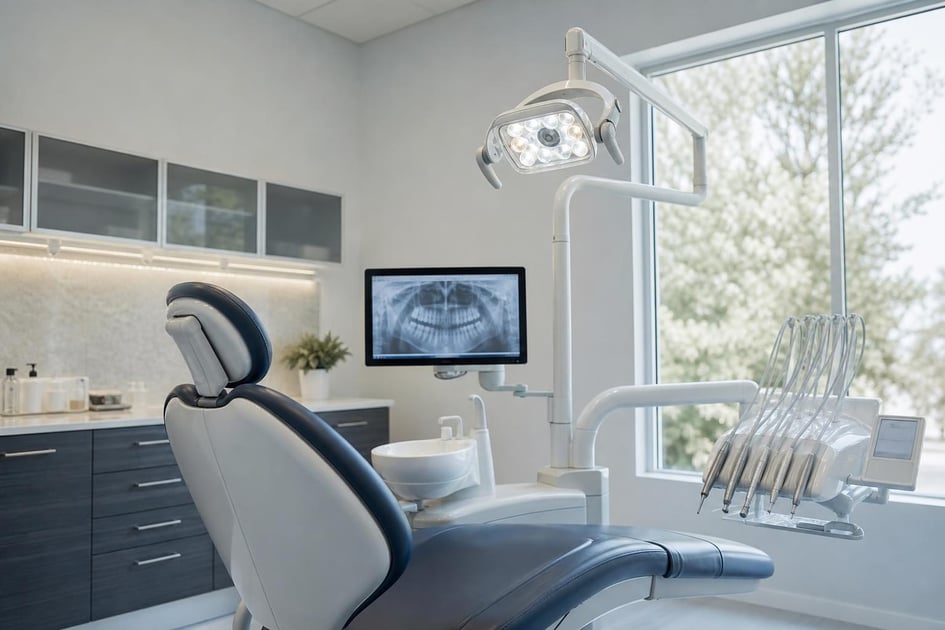
Dental Chairs financing is one of the most common requests, especially for practices expanding from four operatories to six or eight. New patient chairs with programmable positions and integrated delivery systems typically run from $8,000 to $15,000 per unit, while refurbished models from major brands can cut that figure by 30% to 50%. Beyond chairs, practices routinely finance panoramic and cephalometric x-ray units, intraoral scanners, CAD/CAM milling systems, autoclaves, ultrasonic cleaners and vacuum pump systems.
Technology upgrades are increasingly financed as a single bundle. A practice might roll four intraoral sensors, a practice-management server and chairside monitors into one loan. As long as the vendor invoice breaks out the hardware costs, lenders can secure the entire package. Software-only deals are harder to collateralize, so most lenders require the software to be bundled with physical equipment.
New vs. Used Equipment: What to Know
New equipment carries full manufacturer warranties, the latest infection-control certifications and longer expected useful lives. Lenders like new assets because the collateral value is predictable. That predictability often translates into longer available terms and lower down-payment requirements. If you are buying new, expect to finance 100% of the invoice, including freight and installation, in many cases.
Used equipment can save a practice 30% to 60% off the replacement cost, but the lender will scrutinize the age, hours and service history more closely. Most lenders cap the age of used equipment at 5 to 10 years at the end of the term. That means if you want a 60-month loan, the machine should be no older than 3 to 5 years now. Refurbished equipment from dealer-certified programs usually clears this hurdle easily; auction purchases with incomplete service records do not.
Pro Tip: Before you sign a purchase agreement for used equipment, ask the seller for a signed appraisal or a certified refurbishment checklist. Lenders frequently request this documentation for assets older than three years, and having it ready can shave days off your approval timeline.
Loan vs. Lease: Which Fits Your Practice
The decision between an equipment loan and a lease comes down to ownership intent, cash-flow timing and tax strategy. A loan puts the asset on your balance sheet, builds equity and typically leaves you with a $1 buyout at the end. A lease is closer to renting: you pay for use, and at term end you either return the equipment, renew the lease or buy it at fair market value.
Loans work best when the equipment has a long useful life and you want to capture depreciation or Section 179 expensing. Leases can make sense for technology that obsoletes quickly, such as intraoral scanners, where you may want to upgrade every three to four years without carrying residual risk. Leases also often require no down payment, which preserves cash for marketing or payroll during an expansion.
| Feature | Equipment Loan | Equipment Lease |
|---|---|---|
| Ownership | You own the asset from day one | Lessor owns the asset during term |
| Down payment | 0% to 20% depending on credit and collateral | Often $0 |
| Term length | 24 to 84 months | 12 to 60 months |
| Monthly payment | Higher than a lease for the same asset | Lower monthly cost |
| End-of-term | Equipment is yours, no further payments | Return, renew or buy at fair market value |
| Tax treatment | Depreciation or Section 179 expensing | Payments often fully deductible as operating expense |
| Best for | Long-life assets like chairs, x-ray units, compressors | Rapidly evolving tech like scanners and CAD/CAM |
One detail many borrowers miss: a $1 buyout lease is legally a loan for tax purposes. If your lease contract includes a nominal purchase option, the IRS treats it as a installment sale, meaning you take depreciation just like a loan but your payments are not deductible as rent. Read the lease language carefully or have your CPA review it before signing.
By the Numbers: A $100,000 equipment loan over 60 months with no down payment might carry a monthly payment in the low four figures, while a fair-market-value lease on the same asset could drop that payment by 20% to 35%. The trade-off is that you own nothing at lease end unless you exercise the purchase option. Run both scenarios with your accountant before deciding.
Qualification Criteria
Lenders evaluate three factors: the borrower, the business and the collateral. On the personal side, most equipment-finance companies look for a credit score starting around 600 to 650, though programs exist for lower profiles with additional stipulations such as a larger down payment or a shorter term. Bankruptcies less than two years old or current tax liens usually require explanation and may reduce approval odds.
For the practice itself, time in business matters. Established practices with two or more years of tax returns and bank statements qualify most easily. If your practice has been operating for at least six months and can show revenue, some specialized programs may still be available, though terms will be more conservative.
Revenue requirements vary by deal size. A $15,000 chair purchase might only require proof of monthly deposits, while a $400,000 full-practice build-out will trigger a full financial review including profit-and-loss statements, tax returns and a debt-service coverage analysis. The equipment must also clear the lender's collateral standards: recognized brands, verifiable serial numbers and, for used assets, a clean service history.
See what you qualify for by submitting a short application with your equipment quote and the last three months of practice bank statements. Same-day decisions are possible when the file is complete.
Tax Treatment for the 2026 Tax Year
For the 2026 tax year, dental practices can still take advantage of Section 179 immediate expensing and bonus depreciation on qualifying equipment, though the exact limits and phase-out thresholds are set by the IRS and adjusted annually. Rather than memorizing a figure that may change with final regulations, speak with your CPA about how much you can deduct in 2026 based on your taxable income and the placed-in-service date.
Section 179 generally applies to new and used equipment purchased and put into service during the tax year. Bonus depreciation, revived under recent legislation, may allow additional first-year write-offs. The interplay between these two incentives is complex: if you finance a $120,000 CAD/CAM system in December but cannot install it until January, the deduction shifts to the 2027 tax year. Timing matters as much as the dollar amount.
Forbes reporting on bonus depreciation notes that the revived 100% expensing applies to assets acquired and placed in service after January 19, 2025, which affects 2026 purchases. Always confirm current-year guidance with a tax professional before making a purchase decision based on tax benefits.
Pro Tip: If you are nearing year-end, do not assume you can close a financing deal on December 30 and claim the full deduction for 2026. The equipment must be delivered and placed in service before December 31. Vendors often need two to four weeks for freight and installation on large imaging systems, so start the financing process no later than early November if the deduction is part of your strategy.
See what you qualify for
The equipment itself secures the financing, which keeps rates competitive. Checking your options takes minutes.
Check Your OptionsReal-World Cost Examples
Understanding what equipment actually costs helps you size your financing request correctly and avoid borrowing too little or too much. The examples below reflect typical price ranges for new equipment before freight and installation; used or refurbished assets will fall lower.
- A single operatory package with a patient chair, delivery system and light: $12,000 to $25,000
- Panoramic digital x-ray unit: $25,000 to $55,000
- Intraoral scanner: $18,000 to $45,000
- CAD/CAM milling unit: $65,000 to $130,000
- Autoclave sterilizer: $3,000 to $8,000
- Central vacuum and compressor system: $8,000 to $20,000
Remember that soft costs such as installation, electrical work and training can add 10% to 20% to the invoice. Some lenders allow these costs to be wrapped into the financing; others finance only the hard equipment. Ask your financing specialist what is included before you sign the vendor agreement.
Common Mistakes to Avoid
The most expensive error is buying equipment personally and trying to refinance it into the practice later. Personal credit cards may seem convenient, but they leave you with non-deductible interest if the IRS challenges the business use, and they do not build business credit. Always purchase through the practice entity and finance under the business name when possible.
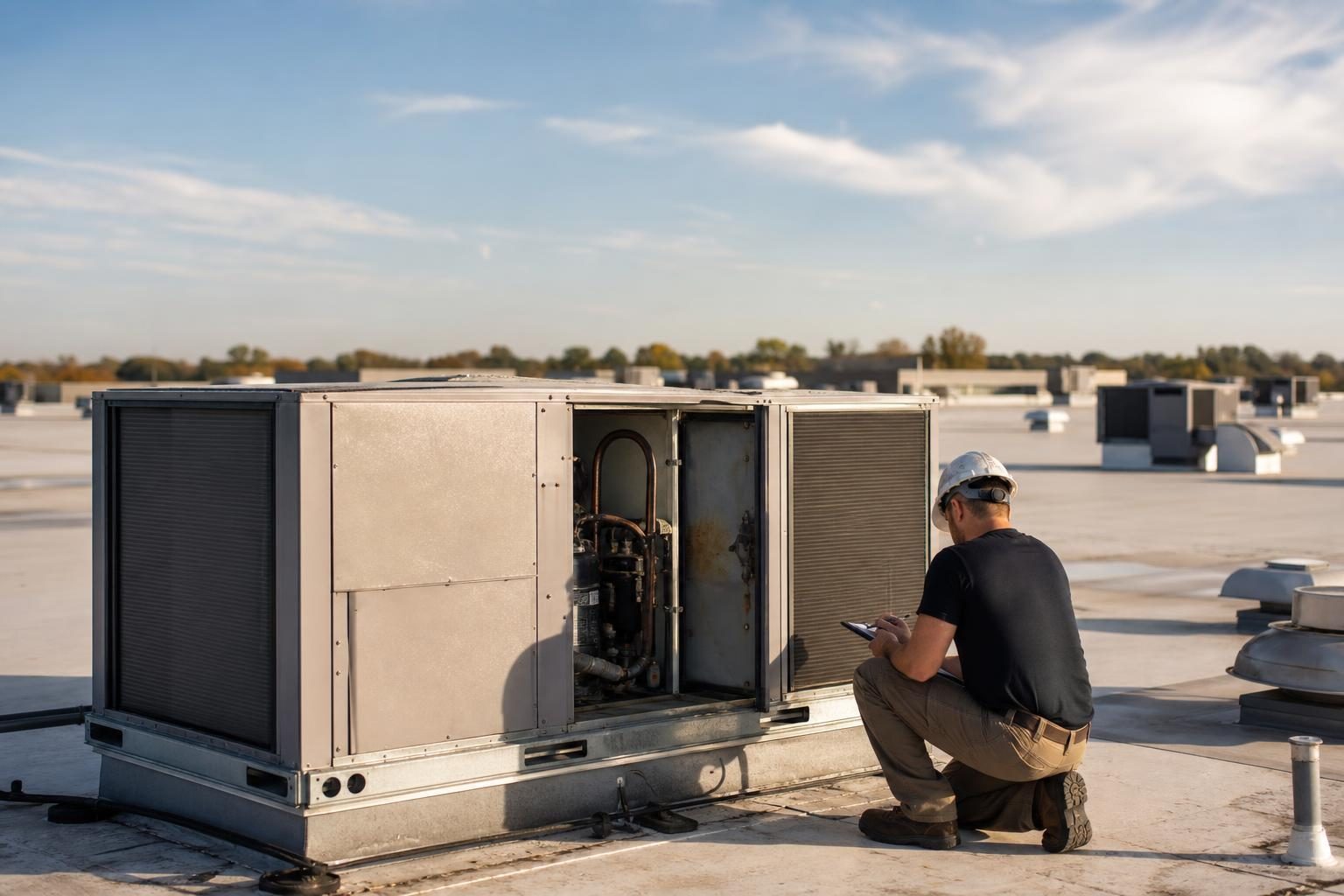
Another frequent mistake is choosing a term that outlasts the equipment's useful life. Stretching a $15,000 chair loan over 84 months might lower the monthly payment, but you could still owe money when the chair needs replacement. Align the term with the asset's expected lifespan: 36 to 60 months for chairs and lights, 60 to 84 months for building infrastructure like compressors and x-ray rooms.
Finally, do not forget to budget for service contracts. A financed x-ray unit still needs annual calibration and tube replacement. If your loan payment is $800 a month but your service contract is another $300, your true monthly equipment cost is $1,100. Build that into your cash-flow projections before you apply.
Documentation You Will Need
A clean application moves fast. Gather these items before you apply:
- Equipment quote or invoice from the vendor, including serial numbers and delivery timeline
- Last three months of business bank statements
- Most recent two years of business tax returns
- Current profit-and-loss statement
- Personal financial statement or personal tax return for the guarantor
- Proof of business entity status, such as articles of incorporation or LLC operating agreement
For loans under $50,000, the requirements are often lighter: a vendor quote and three bank statements may be enough. For transactions over $250,000, expect a full financial package and possibly an equipment appraisal. Dental equipment financing specialists understand that practice owners are busy, so many will pull credit and review preliminary documents without a full submission.
What Happens After Approval
Once approved, you receive a term sheet outlining the monthly payment, term length, any down payment required and the collateral description. Review it carefully. If the terms match your expectations, you sign and return the documents. The lender then verifies the equipment with the vendor and issues payment, usually via wire or ACH.
Most vendors will not ship until they have payment or a guarantee of payment in hand. With direct-to-vendor financing, the lender pays the seller directly, which removes the float risk and often speeds delivery. You take delivery, install the equipment and begin using it. Your first payment is typically due 30 to 45 days after funding. Some lenders offer a 90-day deferred payment option for qualified borrowers, which can help if you are remodeling and cannot generate revenue from the new equipment immediately.
Throughout the term, the lender holds a UCC filing on the equipment. Once the final payment clears, the lender releases the lien and sends you a termination statement. At that point, you own the asset free and clear. If you sell the practice before the loan matures, the remaining balance is typically paid off at closing through the practice sale proceeds.
By the Numbers: Provide Capital finances new and used business equipment from $5,000 to $5 million nationwide. Same-day approvals are possible on complete applications, and the equipment itself serves as collateral, which keeps rates competitive across credit profiles.
Ready to move forward?
More than 10,000 businesses have financed equipment with Provide Capital. See what you qualify for today.
Get StartedFrequently Asked Questions
Can I finance dental equipment with bad credit?
It depends on how the lender defines "bad." Credit scores below 600 make approval harder but not impossible. Expect to put down 10% to 20%, accept a shorter term and show stronger practice revenue to offset the risk. The equipment's collateral value still matters; a strong asset from a recognized brand can rescue a borderline credit file.
How long does the approval process take?
For small transactions under $50,000 with clean credit, approval can come the same day. Larger deals or files with complex ownership structures may take 24 to 72 hours. The single biggest delay is missing documentation, not the credit decision itself.
Do I need a down payment?
Not always. Well-qualified borrowers can finance 100% of the equipment, including soft costs. If your credit is thin or the equipment is used and older, the lender may require 10% to 20% down to reduce their exposure.
Can I finance used or refurbished dental equipment?
Yes, as long as the equipment meets the lender's age and condition standards. Most lenders want used equipment to be no older than 5 to 10 years at the end of the loan term. A dealer refurbishment certificate or recent service record improves your odds significantly.
Is the interest tax deductible?
Generally, yes. Interest on business equipment loans is a deductible business expense. In addition, you may be able to deduct the principal through Section 179 or bonus depreciation in the year the equipment is placed in service, depending on the 2026 IRS limits. Confirm the exact deduction with your CPA.
Can I pay off the loan early?
Most equipment loans allow early payoff, but some carry a prepayment penalty or a minimum interest clause. Read the loan agreement before signing. If prepayment flexibility matters to you, ask your financing specialist to structure the deal without a penalty.
What happens if I sell my practice before the loan is paid off?
The equipment loan is usually paid out of the practice sale proceeds at closing. The buyer may assume the loan in some cases, but more commonly the seller clears the debt and the buyer arranges their own financing for the acquired assets. Tell your lender about a pending sale early so they can provide a current payoff statement.
Does financing equipment build business credit?
Yes, if the lender reports to business credit bureaus. Timely payments on an equipment loan strengthen your business credit profile, which makes future borrowing easier and often less expensive. Ask whether the lender reports before you sign.
Next Steps
If you have a vendor quote in hand, the next step is to compare financing terms. Look at the total cost over the life of the agreement, not just the monthly payment. Ask whether soft costs are included, whether prepayment is penalized and whether the lender reports to business credit bureaus. A few questions upfront prevent expensive surprises later.
Unlike SBA loan programs that can take weeks to close, equipment financing decisions often come same-day because the collateral is tangible and the loan purpose is specific. Get a same-day decision on your equipment by applying with your practice details and vendor quote. Provide Capital serves dental practices nationwide, from solo practitioners to multi-location groups, with financing structured around the equipment itself. Commercial Hvac System financing and other practice infrastructure assets are also available as part of a comprehensive equipment package.
Disclaimer: The information provided in this article is for general educational purposes only and is not financial, legal, or tax advice. Funding terms, qualifications, and product availability may vary and are subject to change without notice. Provide Capital does not guarantee approval, rates, or specific outcomes. For personalized information about your business funding options, contact our team directly.