Yes. You can finance chairs, CBCT units, scanners, and compressors with no down payment, using the equipment itself as collateral. For a practice generating revenue, that means a $75,000 imaging purchase does not require a $15,000 cash outlay. The lender secures the transaction with the machine, which keeps the structure competitive and leaves your cash reserve intact for payroll, lab bills, and marketing.
Provide Capital finances new and used dental equipment from $5,000 to $5 million nationwide. Same-day approvals are possible when the application and equipment quote are complete. Rates vary by credit profile, equipment age and term.
What Zero-Down Financing Actually Means
"No money down" is not a marketing gimmick. It is a collateral-based structure. In a conventional unsecured loan, a bank relies entirely on your balance sheet and cash flow. To offset that risk, banks typically require a down payment of 10% to 30%. In equipment financing, the lender places a security interest—usually a UCC-1 filing—in the specific asset you are buying. If you are financing a panoramic X-ray, the lender has a lien on that X-ray. Because the collateral is tangible, titled, and has a known resale value in the dental secondary market, the lender can advance 100% of the equipment cost without a cash deposit.
This difference matters for your working capital. A three-operatory renovation costing $280,000 would tie up $28,000 to $56,000 if you paid 10% to 20% down. Under a zero-down equipment loan, that capital stays in your checking account. You can use it to hire a hygienist, run a direct-mail campaign to fill new chair time, or simply maintain a stronger cushion against insurance reimbursement delays.
The equipment age and term directly affect the structure. A new chair with a seven-year useful life can support a longer amortization than a ten-year-old autoclave. Lenders look at the useful life versus the repayment window. If the term outlasts the equipment's reliable service life, the collateral no longer adequately secures the loan, which is why older equipment sometimes requires a shorter term or a different structure.
Key Insight: Lenders value dental collateral higher than general office equipment because of liquid resale markets. A 2024 panoramic unit with maintenance records often retains 60% to 70% of its value in the secondary dental market, which directly improves your odds of approval without a down payment.
Equipment That Qualifies for Zero-Down Financing
Dental practices run on specialized equipment, and nearly all of it can be financed with no money down if the deal structure is right.
Treatment Room Technology
Treatment room technology is the largest category. This includes electric patient chairs, LED operatory lights, rear- or side-delivery units, and electric handpieces. Many dentists bundle these into a per-room cost of $35,000 to $55,000. If you are looking at Dental Chairs financing, you can wrap the chair, light, and delivery into a single schedule with one monthly payment.
Diagnostic Imaging
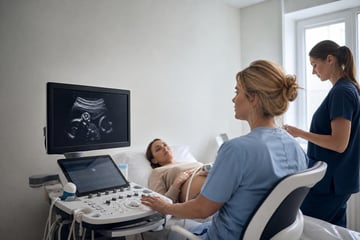
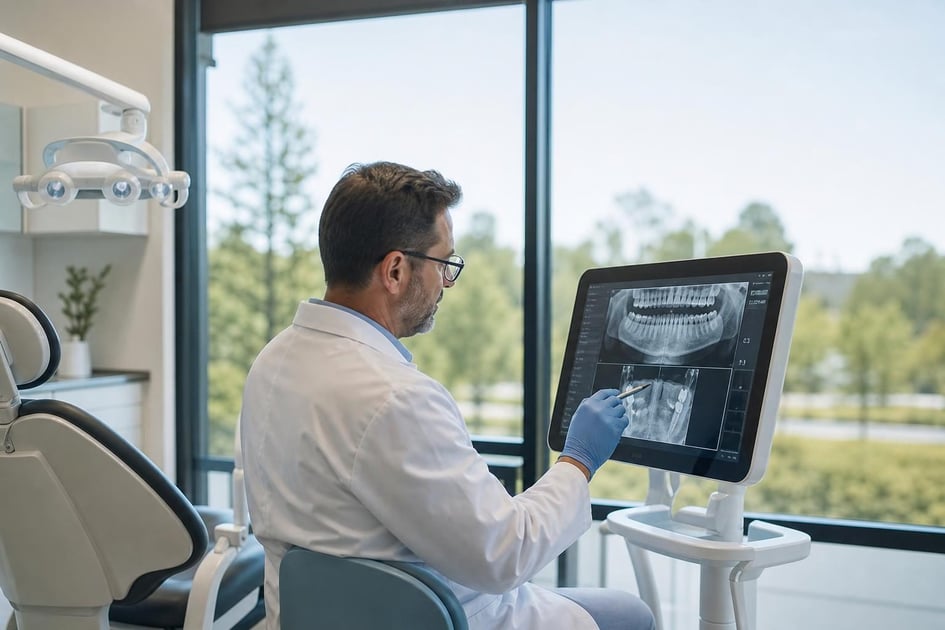
Diagnostic imaging represents the next largest outlay. Intraoral sensors run $3,000 to $8,000 per room. Panoramic units land between $20,000 and $45,000 depending on whether you need cephalometric functionality. Cone beam computed tomography (CBCT) systems range from $50,000 to $150,000. These machines hold value well and are highly desirable collateral because the secondary market includes retiring dentists, startup specialists, and overseas buyers.
Mechanical Infrastructure
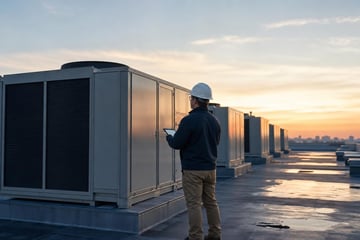
Mechanical infrastructure often gets overlooked until the contractor's bill arrives. Dental offices need medical-grade air compressors, central vacuum systems, and amalgam separators. Your HVAC system must handle higher air-change rates than standard commercial space. If you are upgrading climate control alongside your equipment, Commercial Hvac System financing can be bundled or run on a parallel schedule.
Sterilization and Lab Equipment
Sterilization and lab equipment round out the list. Autoclaves, washer-disinfectors, ultrasonic baths, model trimmers, and even in-office millers or 3D printers for same-day crowns all qualify. As long as the item is necessary for the production of dental services and has a verifiable serial number and invoice, it can usually be collateralized.
Pro Tip: Used equipment from 2022–2025 model years often finances more aggressively than brand-new units because the depreciation curve has already steepened. A two-year-old intraoral scanner at 60% of MSRP frequently qualifies for the same zero-down structure as new, with lower monthly payments.
New vs. Used: A Side-by-Side Comparison
| Factor | New Equipment | Used / Certified Pre-Owned |
|---|---|---|
| Down payment required | Often $0 with strong credit | Often $0; collateral value supports it |
| Typical financing term | 3–7 years | 2–5 years (older units) |
| Rate drivers | Credit profile, term length | Credit profile, equipment age and term |
| Warranty coverage | Manufacturer full term | Remaining factory or third-party |
| Best for | Start of career, full tech refresh | Mid-practice cash conservation |
Lease vs. Loan: What Works for a Dental Practice
Dental practices must decide whether to take out a loan or enter a lease. The distinction matters for ownership, tax treatment, and end-of-term flexibility.
With a loan—often called a capital lease or $1 buyout lease in some contexts—you own the equipment from day one in practice, though the lender holds a lien until the final payment. At the end of the term, the lien releases and you hold clear title. This path is ideal for equipment with a long useful life, such as chairs, compressors, and vacuum pumps. Because you are the owner, you may be eligible for Section 179 and bonus depreciation on your 2026 tax return, though you should confirm the exact benefits with your CPA.
A true lease, or fair market value (FMV) lease, is essentially a rental. The lessor owns the equipment. You make monthly payments and at the end of the term you can return the equipment, renew the lease, or purchase it at fair market value. This works well for technology that evolves rapidly, such as intraoral scanners or CAD/CAM units, where you may want to upgrade every three to four years.
From a cash-flow perspective, both structures can be written with no money down. Loans often carry slightly higher monthly payments because you are amortizing the full cost, but you are building equity. Leases may show lower payments but leave you with no asset at the end unless you exercise the purchase option.
| Feature | Equipment Loan ($1 Buyout) | Fair Market Value Lease |
|---|---|---|
| Ownership | You own it after final payment | Option to purchase at FMV |
| Tax treatment (2026) | Section 179 or bonus depreciation possible; consult CPA | Payments typically expensed; consult CPA |
| Down payment | None required on qualifying deals | None required; first/last payments common |
| Collateral | Equipment secures the loan | Lessor retains title |
| End of term | No more payments, full equity | Return, renew, or buy |
| Best for | Long-term equipment (chairs, imaging) | Rapidly evolving tech (scanners, CAD/CAM) |
Qualifying for No-Money-Down Approval
Zero-down approval is not automatic. Underwriters look at three pillars: the borrower, the business, and the collateral. Dental equipment financing specialists understand that a practice's revenue mix and patient base matter as much as the credit score.
Credit and Business History
Your personal credit matters even if the practice is incorporated. Most equipment lenders require a personal guarantee. A FICO score in the high 600s or better opens the door to the most aggressive structures. That said, credit is not the only factor. A practice with ten years of stable revenue and strong bank balances can sometimes offset a lower personal score, while a recent dental school graduate with a 750 FICO but only six months of self-employment may face more scrutiny.
Time in business is a key variable. Lenders like to see two years of filed tax returns. The returns prove that the practice can service new debt. Underwriters calculate debt-service coverage ratio (DSCR)—typically looking for at least 1.25x—meaning your net operating income covers your total debt payments by that margin. If you are adding a $2,000 monthly equipment payment, your practice needs to show enough leftover cash flow to absorb it comfortably.
Equipment Age and Condition
Equipment age and condition affect the deal. New equipment from major manufacturers is the easiest to collateralize. Used equipment from model years 2020–2025 also clears quickly because parts and service networks remain robust. Equipment older than ten years or from defunct manufacturers may still finance, but the term will likely shorten to match remaining useful life.
Documentation You'll Need
Documentation required usually includes: a driver's license, a completed credit application, the last two years of business tax returns, three months of business bank statements, and a detailed equipment invoice or quote from the vendor. For requests over $500,000, you may also need to provide a current year-to-date profit and loss statement and a balance sheet. The cleaner your documentation, the faster the approval. Same-day approvals are possible when the file is complete and the collateral is standard.
By the Numbers: A $125,000 operatory package—two chairs, lights, delivery systems, and digital sensors—financed with no money down typically structures across 60 months. Because rates vary by credit profile, equipment age and term, a practice with five-plus years of tax returns and a 700+ credit profile may see payments in a lower range than a younger practice with thinner file strength.
Real Cost Scenarios
Because rates vary by credit profile, equipment age and term, the best way to evaluate a zero-down deal is to look at realistic payment ranges.
Scenario A: $18,000 Sterilization Upgrade
You are replacing two aging autoclaves and adding a washer-disinfector. Financed over 48 months with no money down, the monthly payment might fall between $360 and $490. The stronger your credit and the newer the equipment, the lower the figure. This keeps nearly $20,000 in your operating account while your monthly production covers the payment.
Scenario B: $95,000 Imaging and Chair Package
You purchase a 2025 panoramic unit and a new patient chair. Financed over 60 months with no down payment, monthly payments could range from $1,650 to $2,250. If you structure this as a loan rather than a lease, you build equity in both assets and may claim tax deductions for the 2026 tax year. Discuss the exact deduction strategy with your CPA.
Scenario C: $275,000 Three-Operatory Build-Out
This includes three chairs, lights, delivery systems, digital sensors, a compressor upgrade, and HVAC modifications. Because the exposure is larger, the lender may spread the loan over 72 months. Monthly payments might land between $4,200 and $5,600. Even at the higher end, the payment per operatory is under $1,900, and if each new room generates $12,000 to $15,000 in monthly production, the math is straightforward. For the mechanical portion, you can explore Commercial Hvac System financing options.
If these scenarios match your project, see what you qualify for and get a same-day decision on your equipment.
2026 Tax Treatment and Your Deduction Strategy
How you finance affects how you deduct.
For the 2026 tax year, Section 179 allows dental practices to deduct the full purchase price of qualifying equipment, subject to an annual limit that adjusts for inflation each year. There is also a total-equipment-purchase phase-out threshold; once you buy more than that amount in a given year, the deduction shrinks. Because the exact 2026 limits depend on inflation adjustments announced by the IRS, you should confirm the current caps with your CPA before you decide whether to accelerate a Q4 purchase.
Bonus depreciation may also be available in 2026 for both new and used equipment, but the applicable percentage and any transitional rules depend on federal guidance for this tax year. Some practices will benefit most from bonus depreciation, while others will do better with Section 179 or standard MACRS depreciation spread over five or seven years. Your CPA can model the outcome based on your 2026 taxable income, existing equipment bases, and projected revenue.
If you choose a true lease, you generally expense the monthly payments as they occur rather than depreciating the asset. If you choose a loan, you typically deduct interest and depreciation. Neither path is universally superior; the right choice depends on whether your practice needs a larger upfront deduction in 2026 or prefers to smooth deductions across multiple years.
Pro Tip: Order your equipment so it is placed in service before December 31, 2026, if you want the deduction on this year's return. Delivery lead times for imported chairs and imaging sensors are running 8–12 weeks in late summer. Financing approval in September does not count; the IRS cares about in-service date.
Common Mistakes Dentists Make
One frequent error is paying cash for rapidly depreciating technology. A CAD/CAM unit loses a significant portion of its value the moment it is installed. Financing it preserves liquidity and transfers obsolescence risk to the lender's collateral position.
Another mistake is forgetting soft costs. Delivery, installation, electrical work, and training can add 10% to 20% to the project. If you do not include them in the financing request, you end up paying cash for those items, which defeats the purpose of a zero-down structure. Ask your financing specialist whether the lender will finance freight and installation if they are itemized on the vendor invoice.
Buying from a private party without proper documentation is a third pitfall. Lenders need a clear bill of sale, serial numbers, and often an independent appraisal for private-party transactions. If the seller cannot produce a detailed invoice, the deal stalls.
Extending the term too long is also risky. A seven-year loan on a piece of technology with a four-year useful life means you will still be paying for the equipment after you have replaced it. Match the term to the asset's productive life.
Finally, do not let the vendor's captive finance program be your only quote. Vendor financing can be convenient, but it is not always the most flexible. An independent lender can often beat the structure or approve deals the captive desk declines.
The Application Process and Timeline
The process is built around speed and specificity.
Start with an application and a detailed equipment quote. The quote should include the manufacturer, model number, serial number if the unit is used, and the seller's contact information. Unlike general working capital loans, equipment financing is purpose-built: the lender knows exactly what the money buys.
Once submitted, underwriting reviews credit, business financials, and collateral value. For deals under $250,000 with standard equipment, same-day approvals are possible. For larger or more specialized requests, the review may take 24 to 48 hours while the lender verifies the equipment's market value.
After approval, the lender issues a term sheet or finance agreement. You review and sign. The lender then pays the vendor directly via wire or certified funds. You take delivery, the vendor installs the equipment, and you begin using it to generate revenue. Your first payment is typically due 30 to 45 days later.
Ready to preserve your working capital? Talk to a specialist about your specific machine and find out if a zero-down structure fits your practice.
Industry Context
Dental practices are capital-intensive businesses. According to U.S. Census Bureau construction spending reports, healthcare facility investment continues to expand, which means competition for patients is increasingly tied to technology and comfort. The Small Business Administration notes that healthcare practices often carry higher equipment loads than other service businesses because regulatory standards and patient expectations constantly evolve. Forbes analysis of dental technology trends shows that digital workflows—CBCT-guided implants, same-day crowns, and 3D-printed surgical guides—are becoming standard rather than premium offerings.
Financing is the bridge between that technological standard and your current cash position. You do not need to drain reserves to compete.
Frequently Asked Questions
Can I really finance dental equipment with no money down?
Yes. Because the equipment itself serves as collateral, qualified borrowers can secure 100% financing. Provide Capital structures loans and leases from $5,000 to $5 million with no down payment required for approved applicants.
Will a zero-down deal hurt my cash flow?
Not if the new equipment generates revenue that exceeds the monthly payment. A new operatory producing $10,000 monthly can easily cover a $1,500 equipment payment while still adding to net income.
Can I include used equipment in a zero-down loan?
Yes. Used and certified pre-owned equipment is eligible. Rates vary by credit profile, equipment age and term, but a 2022-model chair often qualifies on the same structure as new.
What credit score do I need?
There is no hard cutoff, but 680 and above typically unlocks the best zero-down structures. Strong practice financials and a low debt load can compensate for a lower personal score.
How quickly can I get funded?
Same-day approvals are possible on complete applications. Once approved, funding usually occurs within 24 to 48 hours after you sign and the vendor is ready to deliver.
Can I finance installation, shipping, and sales tax?
Often yes. Many lenders allow you to roll soft costs into the loan if they appear on the vendor's invoice. This keeps your out-of-pocket expense at zero.
Should I choose a loan or a lease for my CBCT?
If you plan to keep the CBCT for seven to ten years, a loan builds equity. If you expect to upgrade to a newer model in three years, an FMV lease offers more flexibility.
What are the 2026 tax implications?
For the 2026 tax year, you may be able to deduct equipment purchases under Section 179 or bonus depreciation, depending on current federal limits. Interest on the loan is generally deductible as a business expense. Consult your CPA to confirm the exact strategy for your return.
Move Forward Without Draining Your Reserves
Zero-down dental equipment financing lets you match your payment schedule to your revenue schedule. You preserve cash, upgrade technology, and maintain a competitive practice without writing a large check upfront. Whether you need a single chair or a full digital workflow, the structure is available if the collateral and your financials align.
Get a same-day decision on your equipment and move your practice forward without touching your reserves.
Disclaimer: The information provided in this article is for general educational purposes only and is not financial, legal, or tax advice. Funding terms, qualifications, and product availability may vary and are subject to change without notice. Provide Capital does not guarantee approval, rates, or specific outcomes. For personalized information about your business funding options, contact our team directly.