
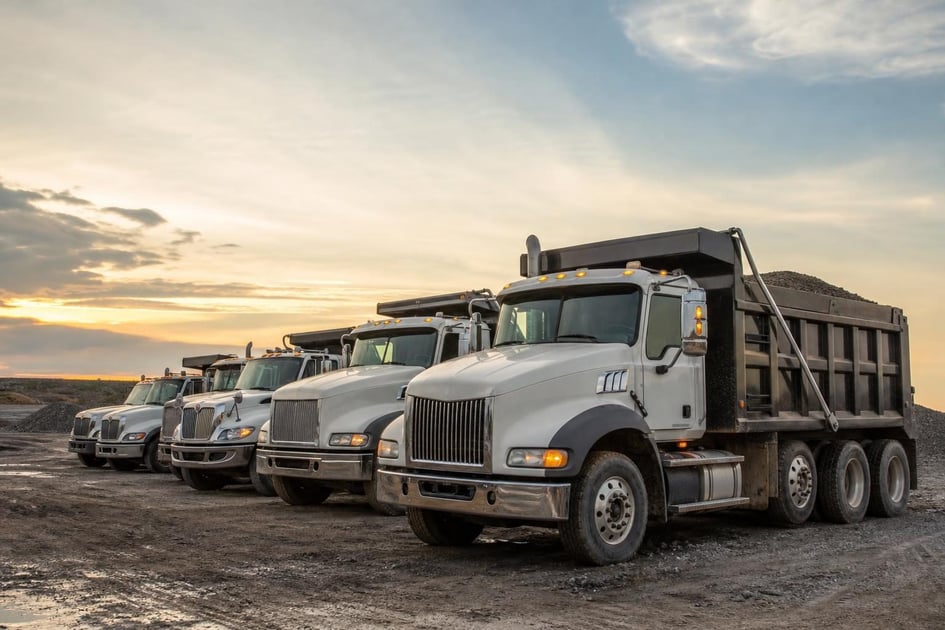
What Dump Truck Financing Requirements Look Like in Practice
If you are buying a dump truck and need financing, the requirements are straightforward. Lenders want to see that your business generates enough revenue to cover the payment, that you have a track record, and that the truck itself holds enough value to serve as collateral. Provide Capital finances new and used dump trucks from $5,000 to $5 million, with the equipment acting as the collateral. That collateral structure is what keeps rates competitive compared with unsecured borrowing. Same-day approvals are possible once the documentation is complete, though the speed depends on how quickly you can gather the required paperwork.
If you already have a truck picked out, you can see what financing you qualify for on that dump truck in just a few minutes.
Get a fast decision on your equipment
Applying takes just a few minutes, and decisions can come as soon as the same day.
Start Your ApplicationHow Lenders Evaluate a Dump Truck Application
Every lender looks at three pillars: the borrower, the business, and the equipment. Dump trucks are expensive, heavy-use assets, so underwriters spend extra time verifying that the collateral matches the loan or lease balance. They also want to see that the truck will generate revenue long enough to outlast the financing term.
Time in Business and Revenue Minimums
Most equipment lenders prefer at least two years in operation, though some will work with younger businesses if the owner has relevant industry experience and the cash flow is strong. There is no universal revenue floor, but the business needs to show enough incoming cash to handle the new payment alongside existing obligations. A construction company billing $300,000 annually and clearing reasonable profit after payroll and materials is in a different position than a newer entity with only projected revenue. Seasonal swings matter too. A hauler that does most of its volume between March and November may still qualify if the bank statements show consistent deposits during the active months and sufficient reserves during the off-season.
Credit Profile Expectations
Credit scores matter, but they are not the only factor. A score in the mid-600s or higher generally opens access to more competitive structures, while lower scores may still qualify with a larger down payment or a shorter term. Rates vary by credit profile, equipment age and term. Lenders also look at recent derogatory marks, tax liens, and existing debt obligations. A bankruptcy discharged three years ago is viewed differently than a current collections account. If your credit has blemishes, expect to explain them and show how the new equipment will improve revenue enough to cover the obligation.
The Equipment as Collateral
Because the dump truck secures the financing, lenders care deeply about what they are collateralizing. New trucks and late-model used units with documented maintenance histories are easier to approve than high-mileage trucks sold through private-party listings with unclear titles. The lender will verify the serial number, title status, and seller legitimacy before releasing funds. For Dump Trucks financing, the make, model, bed type, and prior use all feed into the residual value estimate that drives the approval.
Key Insight: Lenders often value dump trucks differently depending on the bed type. A steel-bodied truck used for demolition and hauling sharp aggregate wears faster than an aluminum-bodied highway truck, and that perceived residual value can shift the required down payment by several percentage points even when the purchase prices are identical.
New vs. Used Dump Trucks: What Changes on the Application
The age and source of the truck change the paperwork, the down payment, and sometimes the rate. New trucks are simpler because the valuation is just the invoice price. Used trucks introduce variables like remaining useful life, hidden mechanical issues, and title complications.
Age and Hour Limits
New dump trucks are straightforward: the invoice from the dealer serves as the primary valuation. Used trucks require more scrutiny. Many lenders cap acceptable age at ten years from the model year at the time of financing, and some impose hour or mileage limits on the engine. A 2018 model with 4,000 hours and a clean maintenance log is generally easier to finance than a 2015 model with 8,000 hours and gaps in service records. The transmission, differential, and hydraulic hoist condition also matter. A lender may require a mechanical inspection for any used truck older than five years or with more than 5,000 hours to confirm the engine is not due for an overhaul that would sideline the asset.
How Seller Type Affects Paperwork
Buying from a franchised dealer usually means a clean title, a bill of sale, and sometimes a warranty, all of which lenders like. Buying from a private seller or at auction can save money upfront, but it introduces title-verification risk. Lenders may require a third-party inspection or title abstract before approving a private-party transaction. If the seller still owes money on the truck, the lender will need to coordinate lien payoff and title release, which adds days to the closing. Auction purchases sometimes move quickly, so having your financing pre-arranged prevents you from missing a bid deadline while waiting for an approval.
| Factor | New Dump Truck | Used Dump Truck |
|---|---|---|
| Primary valuation | Dealer invoice | Market guide plus inspection |
| Typical age limit | Current model year | Up to 10 years old |
| Down payment expectation | Often 0% to 10% | Often 10% to 20% |
| Title risk | Low (dealer) | Higher (private or auction) |
| Rate structure | More competitive | Rates vary by credit profile, equipment age and term |
Pro Tip: If you are comparing a new truck at $185,000 against a five-year-old unit at $95,000, ask your accountant to model the depreciation difference under the 2026 Section 179 rules. The newer truck may carry a higher monthly payment, but the first-year write-off can change the after-tax cost dramatically. Always confirm tax strategy with a CPA before deciding.
Lease or Loan: Matching the Structure to the Job
Dump trucks can be financed through a loan, a capital lease, or sometimes an operating lease depending on the lender and the equipment. A loan or capital lease usually makes sense if you intend to keep the truck for its full useful life and want to claim depreciation. An operating lease may offer lower monthly outlays but typically does not transfer ownership at the end without a residual buyout. For Construction equipment financing, the choice between lease and loan often comes down to whether the truck will be run into the ground on a single job site or rotated out while it still has resale value.
The right structure depends on how many months the truck will work and whether you want to own an asset with a residual parts value at the end. Heavy-haul trucks in demolition often face shorter productive lives than highway dirt haulers, which can affect whether a lease or loan is more economical. A finance lease with a $1 buyout lets you treat the truck as an owned asset for tax purposes while spreading the cost, whereas a fair-market-value lease functions more like a rental with a return option. If you anticipate putting 30,000 miles per year on the truck in abrasive conditions, owning it may make more sense than returning it to a lessor with excess wear penalties.
By the Numbers: On a $150,000 dump truck financed over 60 months, a borrower with strong credit might see a monthly payment in the low-to-mid $3,000 range, while a shorter 36-month term could push the same credit profile into the mid-$4,000s. Extending to 72 months lowers the monthly obligation but increases total interest cost. Rates vary by credit profile, equipment age and term, so the only way to know your exact numbers is to run the specific deal.
Find the right financing structure
Tell us about the equipment you need and we will show you the options that fit your business.
See Your OptionsSection 179 and 2026 Tax Treatment
For the 2026 tax year, the Section 179 deduction allows businesses to expense qualifying equipment purchases immediately rather than depreciating them over time. Dump trucks generally qualify because they are used more than 50% for business purposes. However, the specific dollar limits for 2026 are set by the IRS and adjusted for inflation. Do not rely on a prior-year limit when estimating your deduction. Talk to your CPA about how the 2026 Section 179 cap applies to your purchase and whether bonus depreciation is still available at a useful percentage for your tax bracket. The rules change, and what worked in 2024 or 2025 may not be identical for 2026.
According to U.S. Census Bureau construction spending data, infrastructure and residential construction activity directly influences dump truck demand, which in turn affects resale values and lender confidence in the collateral. Strong construction trends can make financing easier because the underlying asset class is in demand. Meanwhile, SBA guidance on small-business funding emphasizes that equipment-backed loans often carry fewer covenants than unsecured credit because the collateral reduces lender risk. That is why the equipment itself is central to both approval and pricing.
Documentation You'll Need to Close
Gathering paperwork before you apply shortens the timeline and signals to the underwriter that you are organized. Lenders do not like surprises at the eleventh hour, and missing documents are the most common reason a same-day approval turns into a three-day wait.
Business Paperwork
Expect to provide your business tax returns for the last two years, a current year-to-date profit and loss statement, and a recent bank statement showing operating cash flow. If your business is structured as an LLC or corporation, include the articles of organization or incorporation and an ownership cap table. Sole proprietors may need to provide a Schedule C. Some lenders also request a business debt schedule showing existing payments so they can calculate your debt-service coverage ratio. If you have contracts in hand that will use the new truck, a copy of the award letter or purchase order can strengthen the file.
Equipment-Specific Documents
For new trucks, the dealer invoice and spec sheet are usually enough. For used trucks, you will need the title, a bill of sale, and often a recent inspection report. If the truck has a prior lien, provide the lender's payoff letter. Lenders also require proof of insurance naming them as loss payee before they will fund. That insurance typically needs to cover physical damage, liability, and sometimes inland marine coverage depending on how the truck is used. For Tow Truck financing, the insurance requirements are similarly strict because the collateral is mobile and exposed to road risk.
Once you have your paperwork together, get a decision on your dump truck, possibly the same day, by submitting a complete application.
Common Mistakes Owners Make When Financing Dump Trucks
One mistake is shopping for the truck before knowing what payment range the business can support. Without a pre-approval, you may fall in love with a $200,000 spec that requires a down payment you do not have, or you may negotiate poorly because the seller knows you need to arrange funding. Another is failing to check the title for prior liens or salvage history. A truck with a rebuilt title may still work for your operation, but many lenders will reject it outright. A third is accepting a seller's verbal maintenance history instead of requesting service records. Oil change intervals, transmission service, and hydraulic system repairs tell a story that words cannot. According to Forbes business analysis, matching the financing term to the equipment's useful life is one of the most reliable ways to avoid negative equity on heavy trucks. Finally, some owners choose the longest possible term to minimize monthly payments, not realizing that financing a truck for 72 months when it will be worn out in 48 leaves them owing money on a machine that no longer earns. Matching the term to the realistic life of the truck prevents an upside-down payoff when it is time to replace the unit.
What Happens After You Apply
Once you submit an application, an underwriter reviews your business financials, credit profile, and equipment details. If everything checks out, you may receive a decision the same day, though complex deals or private-party sales can take longer. After approval, you sign the closing documents, the lender verifies insurance, and funds are sent directly to the seller or to escrow for lien payoff. You take delivery once the title is clear. The entire process from application to funding typically spans one to three business days for straightforward deals, but title issues or incomplete paperwork can stretch that to a week. Keeping your seller informed of the timeline reduces friction and prevents the truck from being sold out from under you while documents are in transit.
Ready to move forward?
More than 10,000 businesses have financed equipment with Provide Capital. See what you qualify for today.
Get StartedFrequently Asked Questions
Can I finance a dump truck if I have only been in business for one year?
Yes, though terms may be more favorable with two or more years of tax returns. Some lenders will consider one-year operations if revenue is strong and the owner has industry experience. Expect to provide a larger down payment or accept a shorter term if your time in business is limited.
Is a down payment always required?
Not always. Well-qualified buyers purchasing new or late-model used trucks may secure 100% financing. Used trucks from private sellers or buyers with credit challenges more often require 10% to 20% down. The down payment requirement is a function of credit strength, equipment age, and the lender's residual value estimate.
Can I finance a dump truck from a private seller?
Yes, but expect additional verification steps. The lender will confirm title status, require an inspection, and may need to handle lien payoff directly. Private-party deals can close successfully, but they rarely move as fast as dealer transactions because of the extra title diligence.
Does the lender need to approve the specific truck before I buy it?
Most lenders issue an approval contingent on the equipment meeting age, condition, and valuation standards. It is wise to have a financing approval in hand before committing to a purchase. That way you know the truck fits the lender's collateral policy and you can negotiate as a cash-equivalent buyer.
What credit score do I need for dump truck financing?
There is no fixed minimum. Mid-600s and above generally access better structures, while lower scores may still qualify with compensating factors such as larger down payments or shorter terms. The overall credit picture, including recent payment history and existing debt, matters more than the score alone.
Can I finance multiple dump trucks at once?
Yes. Provide Capital finances transactions up to $5 million, so fleet purchases are possible provided the business cash flow supports the aggregate payments. Fleet deals may receive preferential pricing if the trucks are uniform in age and sourced from a single dealer.
How long does the process take from application to funding?
Simple deals with clear documentation can close in one to three business days. Complex deals, title issues, or lien payoffs may extend the timeline. You can speed things up by having your tax returns, bank statements, and equipment details ready before you apply.
Are lease payments tax-deductible?
Lease payments are typically treated as operating expenses and may be deductible, but the exact treatment depends on whether the lease is classified as an operating lease or capital lease for tax purposes. Consult your CPA for the 2026 tax year to determine which structure gives you the better after-tax outcome.
Ready to Move Forward?
If you have identified the dump truck your operation needs, the next step is to line up the financing before you negotiate the final purchase price. Sellers take buyers more seriously when funding is already arranged, and you will know exactly what payment fits your cash flow. You can also use the pre-approval to compare dealers and private sellers on equal footing.
Start an application for your dump truck in just a few minutes and see how quickly you can get to work.
Disclaimer: The information provided in this article is for general educational purposes only and is not financial, legal, or tax advice. Funding terms, qualifications, and product availability may vary and are subject to change without notice. Provide Capital does not guarantee approval, rates, or specific outcomes. For personalized information about your business funding options, contact our team directly.
