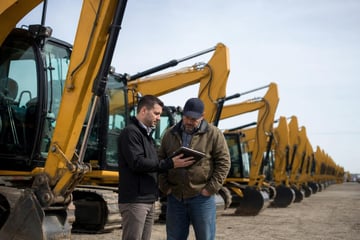
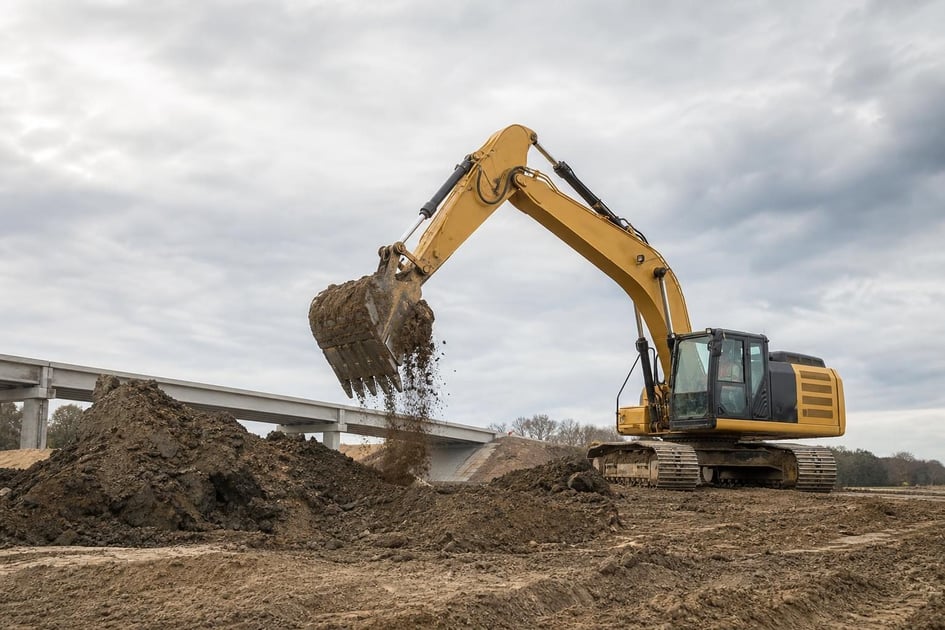
Equipment financing in Louisiana works like a term loan secured by the machine itself. If you run a construction crew near Lake Charles, a sugar-cane outfit around Lafayette, or a dental practice in Baton Rouge, you can borrow against the equipment you are buying, keep your cash reserves intact, and structure payments around the revenue that equipment produces. Rates vary by credit profile, equipment age and term length, and same-day approvals are possible once your documentation is in order.
How Equipment Financing Works in Louisiana
A lender buys the equipment on your behalf or secures a lien against it. You make fixed monthly payments over a term that usually runs from 24 to 72 months, depending on the asset's useful life and your preference for keeping payments low versus paying the balance off quickly. Because the equipment serves as collateral, the lender can offer more competitive terms than an unsecured line of credit, and you do not have to pledge your real estate or drain your operating account.
At Provide Capital, we finance new and used business equipment from $5,000 to $5 million. That range covers everything from a single commercial oven for a New Orleans cafe to a fleet of dump trucks for an earthmoving contractor in Shreveport. The equipment itself is the collateral, which keeps rates competitive, and we serve construction, healthcare, dental, restaurant and food service, manufacturing, transportation, agriculture, HVAC and forestry nationwide.
Already have a machine in mind?
Provide Capital finances new and used equipment from $5,000 to $5 million, with same-day decisions possible.
Apply NowWhat Louisiana Business Owners Actually Finance
Louisiana's economy is not uniform. The equipment needs of a logger in Winn Parish look nothing like those of a compressor technician in the Gulf energy corridor. Financing works best when it is mapped to the actual cash-flow cycles of the industry. According to U.S. Census Bureau data on Louisiana, the state has more than 108,000 employer establishments and nearly 1.7 million employees, spread across energy, agriculture, healthcare, and logistics hubs. Recent industrial investment, including a major solar manufacturing facility planned for Iberia Parish, continues to drive demand for specialized machinery and transportation equipment.
Construction and Forestry
North and central Louisiana have dense timber markets, while the I-10 and I-20 corridors are perpetually under construction or repair. Contractors here finance Skid Steers financing for site prep, Dump Trucks financing for haul-off, and bucket trucks for utility work. Because wet ground can idle machines for weeks during the rainy season, many owners structure financing with seasonal skips or larger payments during dry months when the machines are earning.
Forestry operators in particular face long harvest-to-mill cycles. If you are buying a feller buncher or loader for a tract in Bienville Parish, you may want a longer term so that your note stays manageable while you wait for stumpage payments. Forestry Logging equipment financing is built around those extended cash cycles.
Healthcare, Dental and Food Service
Baton Rouge, New Orleans, and the corridor between them have growing clinical and dental practices. These operators often finance imaging machines, chairs, sterilization equipment, and practice-management software bundles. In the food-service sector, Louisiana's tourism economy drives steady demand for Commercial Ovens financing along with reach-in coolers, prep lines, and point-of-sale systems. A seafood processor in Houma may need ice-making and blast-freezing equipment, while a Lafayette po'boy shop might only need a griddle and fryer bank. Both fit within the program as long as the equipment is essential to the business.
Agriculture and Transportation
Louisiana row-crop and sugar-cane operations run on tight seasonal calendars. Planters often buy tractors, tillage equipment, and harvesters in December through February so the machines are ready for spring ground work. Transportation firms serving the Port of South Louisiana or the Port of New Orleans need flatbeds, reefers, and chassis. Because port activity can spike during certain commodity-export windows, those owners sometimes choose terms that front-load interest or allow early payoff without penalty.
Key Insight: Louisiana's sugar-cane harvest runs roughly September through December, and many growers finance harvest equipment in late summer so payments begin after the crop is sold. Aligning your first payment with your revenue spike is one of the most effective ways to protect cash flow.
New vs. Used Equipment: What Changes in Financing
You can finance both new and used equipment through Provide Capital. The choice affects your rate, term, and down payment. New equipment usually commands a longer term and lower rate because the collateral value is predictable and warranty coverage reduces the lender's risk. Used equipment can be financed just as readily, but the age, hours, and condition of the machine will shape the term. A five-year-old excavator with 4,000 hours will likely get a shorter term than a new one off the lot.
Used equipment often makes sense in Louisiana's specialty trades. A second-line caterer buying a used convection oven, or a logging contractor picking up a pre-owned skidder at auction, can keep the monthly obligation low while still deducting the financed asset under the 2026 tax rules. The key is making sure the used machine has a clear title, a verifiable maintenance history, and enough remaining life to outlast the loan.
| Factor | New Equipment | Used Equipment |
|---|---|---|
| Typical term range | 36–72 months | 24–60 months |
| Down payment | Often 0–10% | Often 10–20% |
| Rate driver | Credit profile and term length | Credit profile, age, hours, and condition |
| Best for | High-utilization fleets, warranty coverage | Single-machine buyers, auction purchases |
| Tax treatment (2026) | Section 179 and bonus depreciation may apply; confirm with your CPA | Section 179 and bonus depreciation may apply; confirm with your CPA |
Lease vs. Loan: Which Fits Your Operation
An equipment loan means you own the asset and build equity with every payment. At the end of the term, you hold title free and clear. A lease, by contrast, is essentially a long-term rental. You make payments for the right to use the equipment, and at the end you either return it, buy it out at fair market value, or extend the lease. The SBA guidance on buying versus leasing business equipment notes that leasing can require less cash upfront, while buying lets you claim depreciation and count the asset on your balance sheet.
Loans suit owners who plan to keep the machine for its full useful life, who want the depreciation and Section 179 deductions on their 2026 return, and who do not want mileage or hour restrictions. Leases can make sense if you need lower monthly payments, expect to upgrade every few years, or want to avoid the residual risk of an aging machine. In Louisiana's salt-air environments along the coast, some operators prefer leasing trucks or HVAC units because corrosion accelerates depreciation and they want a defined exit.
If you are unsure which structure fits your tax position, ask your CPA to model both scenarios against your projected 2026 income.
Pro Tip: If you are buying used equipment at a Louisiana auction or from an individual seller, get the serial number and an equipment-condition report before you apply. Lenders can move faster when they do not have to chase down asset verification after the fact, and same-day approvals are more realistic when the file is complete on the first pass.
Find the right financing structure
Tell us about the equipment you need and we will show you the options that fit your business.
See Your OptionsQualifying for Equipment Financing
Qualification is straightforward, but it is not automatic. Lenders look at three things: your credit history, your business track record, and the equipment itself.
Credit Profile
Your personal and business credit scores are the starting point. A stronger profile opens longer terms and lower rates, but you do not need perfect credit to qualify. What matters is the story: a few late payments two years ago weigh less than a recent bankruptcy or a pattern of collections. If your score is thin because you are a cash-based business, be ready to show twelve months of bank statements so the underwriter can see the actual revenue.
Time in Business and Revenue
Most lenders prefer at least one to two years of operating history because it proves you can survive a slow season. Revenue requirements vary by transaction size. A $15,000 trailer for a landscaping crew requires far less documentation than a $400,000 harvester for a sugar-cane farm. If your business is younger, a larger down payment or a co-signer can offset the lack of history.
Equipment as Collateral
The equipment itself secures the loan. That means the lender will verify the serial number, condition, and market value. If you default, the lender repossesses and resells the asset. Because the collateral exists, lenders can be more flexible on credit than they would be for an unsecured loan. This is why equipment financing is often the most accessible capital for owner-operators who have been turned away from traditional bank term loans.
If you have been in business for at least a year, have verifiable revenue, and are buying essential equipment with a clear title, you are likely in the qualifying range. See what you qualify for without affecting your credit score during the initial review.
2026 Tax Treatment for Financed Equipment
The Internal Revenue Code allows businesses to deduct the cost of qualifying equipment in the year it is placed in service, subject to annual limits and phase-out thresholds. For the 2026 tax year, Section 179 and bonus depreciation rules continue to offer significant front-loaded deductions, but the exact dollar limits and phase-out thresholds are adjusted annually for inflation. You should consult a CPA to confirm the 2026 limits and how they interact with your taxable income.
Because the equipment is financed, you still get the deduction even though you did not pay the full purchase price in cash. The key is placing the equipment in service before December 31, 2026. If you close the loan on December 15 but the machine does not arrive until January, the deduction moves to the 2027 tax year. Do not cut it close during holiday shipping seasons.
Lease payments, by contrast, are typically deductible as operating expenses rather than capital expenses, but the rules differ depending on whether the lease is classified as a true lease or a finance lease under current accounting standards. Again, your CPA is the right source for the structure of your specific deal.
By the Numbers: Provide Capital finances equipment from $5,000 to $5 million. A typical mid-market construction transaction in Louisiana falls between $75,000 and $250,000, while dental and restaurant deals often range from $20,000 to $100,000. Those are not ceilings or floors—just the rough band where most owner-operators operate.
Documentation You'll Need
Having your paperwork ready is the difference between a same-day approval and a week of back-and-forth. Most lenders will ask for:
- A completed application with basic business and personal information
- One to two years of business tax returns
- Three to six months of business bank statements
- A quote, invoice, or equipment listing showing the serial number, year, make, model, and seller
- Proof of insurance naming the lender as loss payee
- For larger transactions, a current profit-and-loss statement and balance sheet
If you are buying from a private party rather than a dealer, you may also need a bill of sale and a title search to confirm no outstanding liens. Louisiana titles for heavy equipment are not always as standardized as auto titles, so start that verification early.
Common Mistakes Louisiana Buyers Make
The most expensive errors are usually avoidable.
Buying too late in the season. A sugar-cane grower who waits until August to finance a harvester risks missing the window. Lenders can approve quickly, but shipping, rigging, and operator training take time.
Ignoring flood and corrosion history. Louisiana's climate and hurricane exposure mean that a "clean" used machine from another state may have hidden water damage. Inspect undercarriages, electrical harnesses, and hydraulic reservoirs for corrosion or silt.
Overlooking insurance requirements. Lenders require comprehensive coverage. If you are adding a financed machine to a policy, get the certificate of insurance to the lender before funding. Do not assume your general liability policy covers the new asset.
Stretching the term too far. A 72-month term on a machine you plan to replace in 48 months leaves you upside-down when trade-in time arrives. Match the term to your realistic holding period.
What Happens After You Apply
Once you submit a complete file, the underwriter reviews your credit, verifies the equipment value, and issues a decision. Same-day approvals are possible when the file is clean and the equipment is standard collateral. After approval, you sign the loan documents, the lender pays the seller or wires funds to your escrow, and you take delivery. The first payment is usually due 30 to 45 days later.
Throughout the term, you make fixed payments. Most loans have no prepayment penalty, but you should confirm that detail in your specific agreement. If you sell the business or the equipment, the loan must be satisfied or assumed by the buyer with lender consent.
If you are ready to move, get a same-day decision on your equipment by starting the application now.
Put the right equipment to work
From $5,000 to $5 million, new or used, Provide Capital helps businesses nationwide finance the equipment they need.
Apply TodayFrequently Asked Questions
Can I finance used equipment in Louisiana?
Yes. Provide Capital finances both new and used equipment from $5,000 to $5 million. Used equipment is evaluated based on age, hours, condition, and remaining useful life. A clear title and verifiable maintenance history will help you secure better terms.
How long does approval take?
Same-day approvals are possible when your documentation is complete and the equipment is standard collateral. More complex transactions, or deals involving private-party sellers with lien issues, may take a few business days.
Do I need perfect credit?
No. The equipment serves as collateral, which gives lenders flexibility that unsecured products do not offer. A stronger credit profile improves your rate and term, but owner-operators with blemished credit can still qualify, especially with a reasonable down payment or strong revenue history.
What equipment can be financed?
Any business-essential equipment qualifies, including construction machines, commercial vehicles, medical and dental equipment, restaurant equipment, manufacturing tools, agricultural machinery, HVAC systems, and forestry equipment. The equipment must have a verifiable value and a clear title.
Can I deduct financed equipment on my 2026 taxes?
Yes, in most cases. Under Section 179 and bonus depreciation, businesses may be able to deduct the full cost of qualifying equipment in the year it is placed in service, subject to 2026 limits and income thresholds. Because these figures are adjusted annually for inflation, consult a CPA to confirm the exact 2026 limits.
Is a down payment required?
It depends on the transaction size, equipment age, and credit profile. New equipment may qualify for zero or low down payment. Used equipment and lower credit profiles typically require 10% to 20% down. The exact structure varies by deal.
Can I pay off the loan early?
Many equipment loans have no prepayment penalty, but you must verify this in your specific loan agreement. If early payoff matters to you, raise it before you sign.
Do you finance startups or new businesses?
Provide Capital focuses on established businesses. Most applicants have at least one to two years of operating history and verifiable revenue. If your business is newer, a larger down payment or additional collateral may improve your chances, but approval is not guaranteed.
Closing Next Step
Equipment financing in Louisiana is a tool for preserving cash, capturing 2026 tax deductions, and acquiring the machines your business needs before your competitors do. Whether you are upgrading a skid steer for a Shreveport site, adding an oven line for a Baton Rouge catering company, or financing a harvester before cane season, the process starts with a clear equipment quote and a complete application. Gather your paperwork, confirm the machine's condition and title, and move before the seasonal rush. Talk to a specialist about your specific machine and get a decision that lets you keep working.
Disclaimer: The information provided in this article is for general educational purposes only and is not financial, legal, or tax advice. Funding terms, qualifications, and product availability may vary and are subject to change without notice. Provide Capital does not guarantee approval, rates, or specific outcomes. For personalized information about your business funding options, contact our team directly.