
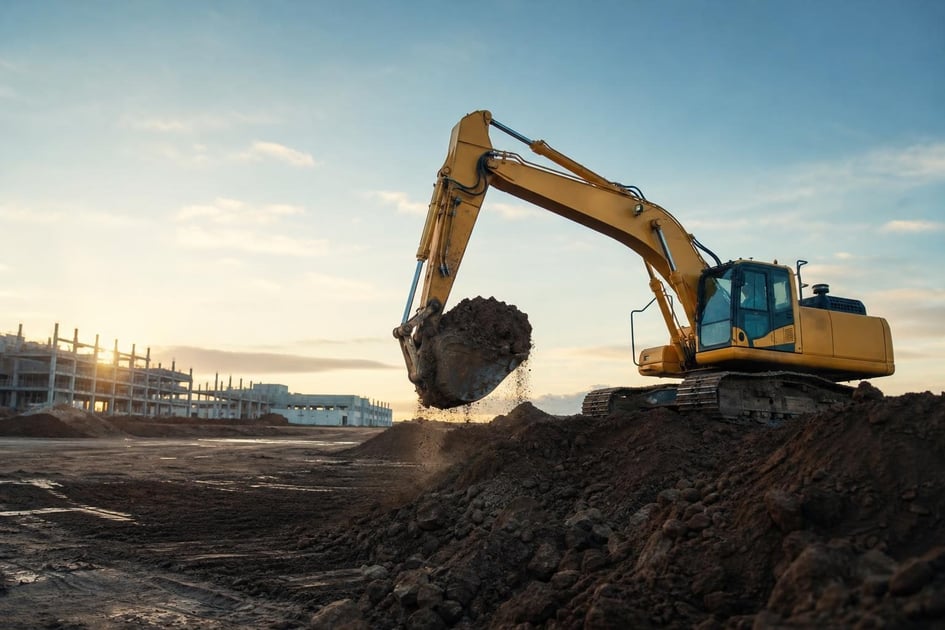
Excavators Financing: How to Get Approved
Financing an excavator works differently from an unsecured bank loan. The equipment itself serves as collateral, which means the lender cares as much about the machine's value and remaining useful life as it does about your credit score. Provide Capital finances new and used business equipment from $5,000 to $5 million. Because the collateral is built into the deal, rates can stay competitive even if your credit profile is not perfect. Same-day approvals are possible once you submit complete documentation, though timing depends on the complexity of the deal and how quickly you provide the required paperwork.
If you already have a machine and seller in mind, you can see what financing you qualify for on that excavator without committing to a hard pull first.
Key Insight: Lenders often value excavators based on auction sale prices from the past 90 days, not the asking price on the listing. If you are buying from a private party at retail, the lender may advance only 70 to 90 percent of the machine's wholesale value, which can leave a gap you need to cover with cash or a trade-in.
Already have a machine in mind?
Provide Capital finances new and used equipment from $5,000 to $5 million, with same-day decisions possible.
Apply NowWhat Types of Excavators Can Be Financed
Nearly every class of excavator can be financed, provided it is being used for business purposes. Standard crawler excavators in the 20,000- to 80,000-pound range are the most common requests, but financing is also available for mini excavators under 10,000 pounds, long-reach models for dredging, wheeled excavators for roadwork, and demolition rigs with specialized attachments. The key requirement is that the equipment has a verifiable serial number and a established resale market so the lender can assess collateral value.
Excavators financing covers machines from major manufacturers like Caterpillar, John Deere, Komatsu, Volvo, and Kubota, as well as quality Tier-2 brands if parts availability is documented. If your job site calls for a smaller footprint, Mini Excavator financing follows the same collateral structure but often requires a shorter term because the machine's useful life is priced differently.
New vs. Used Excavator Financing
The age of the machine changes almost every term of the deal. New excavators typically qualify for longer terms and lower down payments because the lender can predict residual value with confidence. Used machines can still be financed aggressively, especially if they are less than five model years old and have under 5,000 hours, but older or high-hour machines may need a larger down payment or a shorter amortization to protect the lender's collateral position.
| Factor | New Excavator | Used Excavator (Under 5 Years) |
|---|---|---|
| Typical down payment | 0% to 10% | 10% to 20% |
| Common term length | 36 to 84 months | 24 to 60 months |
| Rate drivers | Credit profile and term | Credit profile, equipment age, and hours |
| Best for | Long-term fleet additions | Short-term contracts or first-time buyers |
By the Numbers: A $75,000 used excavator financed over 48 months with a 15 percent down payment keeps the monthly obligation below $1,600 for many borrowers, while a $180,000 new machine on a 72-month term with 5 percent down often lands between $2,400 and $2,900 depending on credit and other factors.
Lease vs. Loan: Which Structure Fits Your Job
Equipment loans and equipment leases both let you put an excavator to work without paying the full cash price upfront, but the ownership path and tax treatment diverge. With an equipment loan, you own the excavator from day one and the lender holds a lien until you make the final payment. With a $1 buyout lease, you make payments and own the machine at the end; with a fair-market-value lease, you return it or buy it out at the then-current value.
Loans generally make sense if you plan to keep the machine for its full useful life and want to build equity. Leases can preserve cash flow for contractors who expect to upgrade every three to four years or who want to avoid the risk of resale value. Forbes regularly reports that the lease-versus-buy decision hinges on how long you intend to keep the asset and your current tax strategy. Rates vary by credit profile, equipment age, and term for both products, so the cheapest option on paper depends on your specific deal.
Before you sign, get a decision on your equipment, possibly the same day, so you can compare the total outlay against your job margins.
What Lenders Actually Evaluate
Understanding the underwriting criteria helps you prepare a file that moves quickly. The Small Business Administration notes that collateral-based equipment loans are a staple of small-business capital access. Lenders look at four main pillars: your credit history, business revenue and time in operation, the equipment itself, and the size of your down payment.
Credit Profile
You do not need a perfect score to finance an excavator. Many approvals happen with personal credit scores in the low-600s, especially when the equipment is newer and the down payment is 10 percent or more. That said, a stronger credit profile unlocks longer terms and can improve the rate range. Recent bankruptcies, tax liens, or judgments will slow the process and may require additional collateral or a larger down payment.
Business History and Cash Flow
Most equipment lenders want to see at least six months of operating history, though two or more years opens the door to larger approvals and more competitive structures. Underwriters will look at three to six months of business bank statements to confirm that your revenue can cover the new payment along with existing obligations. Seasonal contractors should be ready to explain cyclical dips and show how the new machine fits the revenue model.
Equipment Age, Hours, and Condition
The machine is the collateral, so its condition directly affects the deal. Lenders prefer excavators under 10 model years old with documented maintenance histories. Machines with over 10,000 hours may still qualify, but they often need a 20 to 30 percent down payment or a shorter term. If you are buying at auction, expect the lender to order an independent appraisal or to limit the advance to a percentage of auction-comp value.
Down Payment and Collateral Strength
Down payments typically range from 0 to 20 percent of the equipment cost. The exact requirement depends on your credit profile, the equipment age, and the term length. Borrowers with stronger files and newer machines can sometimes secure 100 percent financing, while first-time buyers or challenged credit may need to put 15 to 20 percent down to align the loan-to-value ratio with the lender's risk tolerance.
Pro Tip: If you are buying a used excavator from a dealer, ask the dealer to certify the hour meter and provide a recent fluid analysis report. Lenders view documented maintenance as a proxy for residual value, and a clean report can shave points off your down payment requirement or extend the allowable term by 12 months.
Tax Treatment for 2026
For tax year 2026, Section 179 allows qualifying businesses to deduct the cost of qualifying equipment in the year it is placed in service, subject to an annual dollar limit that is adjusted for inflation. The exact cap for 2026 should be confirmed with your CPA because it changes yearly and your business income level may phase out part of the benefit. Bonus depreciation may also be available for 2026, though the percentage and eligibility rules have shifted in recent years, so a tax professional should model the specific outcome for your purchase.
If you lease instead of buy, you generally deduct lease payments as a business expense over the lease term, which smooths the deduction but does not front-load it. Either way, do not file based on a blog post. Speak with a CPA who knows your books before you count on a specific tax outcome.
See what you qualify for
The equipment itself secures the financing, which keeps rates competitive. Checking your options takes minutes.
Check Your OptionsWorked Cost Examples
These examples illustrate how the pieces fit together. They are not quotes. Rates vary by credit profile, equipment age, and term, so treat the numbers as directional only.
Scenario A: You are buying a three-year-old, 12,000-pound mini excavator for $55,000. With a 10 percent down payment and a 48-month term, your monthly payment might land between $1,100 and $1,300.
Scenario B: You are financing a new 36,000-pound crawler excavator with a purchase price of $195,000. Putting 5 percent down and stretching the term to 72 months could produce a monthly payment in the $2,700 to $3,200 range.
Scenario C: You are a startup contractor with six months in business and a 650 credit score. The lender approves an $85,000 used excavator but requires 20 percent down and a 36-month term to manage risk. The monthly obligation likely falls between $1,900 and $2,200.
Where Excavator Financing Shows Up on the Job Site
Different industries use excavators on different schedules, and that rhythm affects what financing structure makes sense. In Construction equipment financing, excavators are core fleet assets that run year-round on commercial and residential sites. U.S. Census Bureau data on construction spending shows that demand for earthmoving equipment tracks closely with both private residential and public infrastructure budgets. Contractors in this space often favor longer loan terms because the machine generates revenue across all four seasons.
Landscaping and forestry companies tend to use mini excavators seasonally, so a shorter term or a lease with a winter storage plan can prevent a payment from eating cash flow during dormant months. Utility contractors and municipal subcontractors may need long-reach or vacuum excavators for specific contracts, making a lease-to-own structure attractive if the contract length matches the term. Agriculture operators who dig irrigation trenches or clear drainage ditches often buy used machines and run them for 15 to 20 years, which makes a simple loan with a 60-month payoff appealing.
Common Mistakes to Avoid
First-time equipment buyers often shop for the machine before they understand the financing constraints. If you commit to a private-party purchase at above-market price, the lender may not cover the full amount, and you will need to bring cash to closing at the last minute. Always get a financing pre-approval or firm approval contingent on the specific machine before you hand over a non-refundable deposit.
Another error is choosing the longest possible term to minimize the monthly payment. A 72- or 84-month term on a used excavator can leave you upside-down if the machine needs major repairs in year four while you still owe 30 months of payments. Match the term to the equipment's remaining useful life, not just your monthly comfort zone.
Finally, do not forget to budget for insurance, freight, and any attachment costs. These are rarely rolled into the equipment note unless you negotiate them upfront, and they can add $3,000 to $8,000 to the total cash required at closing.
Documentation You Will Need
Having your paperwork ready is the difference between a same-day approval and a week of back-and-forth. Most lenders will ask for:
- A completed application with business and personal details
- Three to six months of business bank statements
- A current year-to-date profit-and-loss statement, or tax returns for the prior two years if available
- An invoice or purchase agreement for the specific excavator, including serial number, year, make, model, and hours
- Proof of insurance naming the lender as loss payee
- A copy of your driver's license or other government-issued ID
If you are buying from a dealer, the dealer can usually provide the invoice and a spec sheet. Private-party sales require more scrutiny, so be ready to provide photos and, in some cases, an independent appraisal.
What Happens After Approval
Once the lender issues an approval, you will receive a term sheet outlining the financed amount, term, payment, and any conditions. Review it carefully. If the structure matches your expectations, you sign the closing documents and the lender pays the seller directly. Most deals fund within 24 to 48 hours of signed docs, though same-day funding is possible when the seller is a verified dealer and all insurance is in place.
After funding, your first payment is typically due 30 to 45 days later. The lender files a UCC-1 lien against the excavator, which is released once you make the final payment. Until then, keep the machine insured and maintained per the loan agreement so you do not trigger a default for something avoidable.
Ready to move dirt? Start an application in a few minutes and get back to bidding on jobs while we handle the paperwork.
Put the right equipment to work
From $5,000 to $5 million, new or used, Provide Capital helps businesses nationwide finance the equipment they need.
Apply TodayFrequently Asked Questions
Can I finance an excavator with bad credit?
Yes, though the structure changes. Credit scores in the low-600s can still secure approval if the equipment is solid and you can put 10 to 20 percent down. Rates vary by credit profile, equipment age, and term, so expect to pay more than a prime borrower, but the collateral helps the lender say yes.
How long can I finance an excavator?
Terms for new excavators typically run 36 to 84 months. Used machines usually top out at 60 months, and high-hour or older units may be limited to 36 or 48 months. The lender sets the maximum term based on the equipment's expected remaining useful life.
Do I need a down payment?
Not always. Strong credit and newer equipment can qualify for 0 to 5 percent down. Challenged credit, older machines, or first-time buyers may need 15 to 20 percent. The down payment protects the lender's collateral position and reduces your monthly obligation.
Can I finance a private-party sale?
Yes, but the process involves extra verification. The lender will confirm clear title, validate the serial number, and may require an independent appraisal. You should also verify that the seller actually owns the machine free and clear before you hand over any cash.
Is the interest tax-deductible?
For a loan, the interest portion of your payments is generally deductible as a business expense. For tax year 2026, you may also be able to take Section 179 or bonus depreciation on the principal if you own the equipment. Always confirm the exact deduction with your CPA before filing.
What interest rate will I get?
Rates vary by credit profile, equipment age, and term. No reputable lender can quote a specific APR without reviewing your file and the machine. The range depends on your credit score, time in business, down payment, and the collateral quality.
Can I pay the loan off early?
Most equipment loans allow early payoff, but some include a prepayment penalty for the first 12 to 24 months. Ask your lender to disclose this before you sign. If you expect a large seasonal influx of cash, a loan with no prepayment penalty can save you significant interest.
Does the lender need to inspect the machine?
For dealer purchases of new or late-model used equipment, inspection is usually not required. For private-party sales, auctions, or machines over 10 years old, the lender may require an independent inspection or appraisal to confirm value and condition.
If you are ready to add an excavator to your fleet, start your application and see what terms are available for that machine, and keep your projects on schedule.
Disclaimer: The information provided in this article is for general educational purposes only and is not financial, legal, or tax advice. Funding terms, qualifications, and product availability may vary and are subject to change without notice. Provide Capital does not guarantee approval, rates, or specific outcomes. For personalized information about your business funding options, contact our team directly.
