
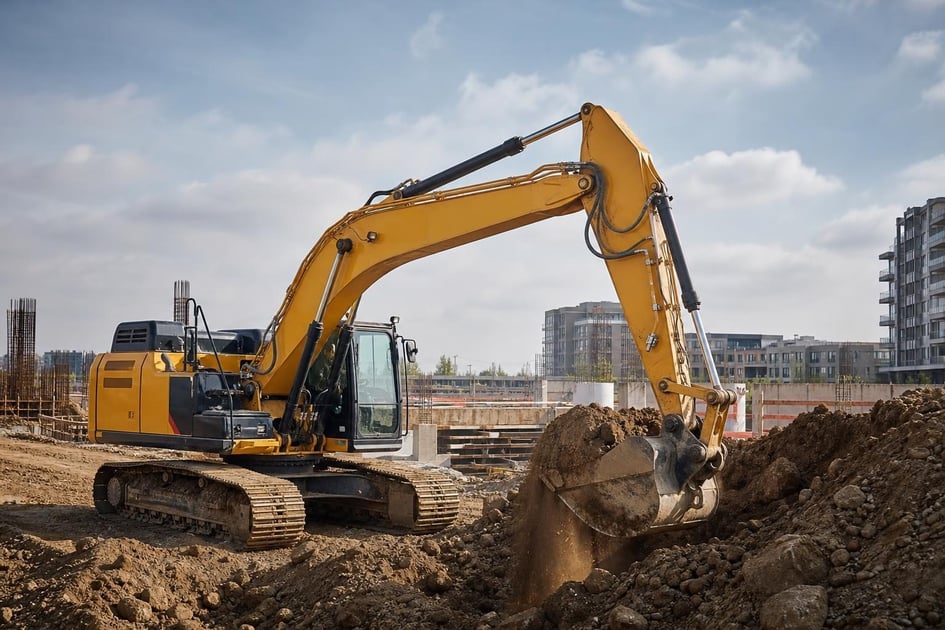
If you are shopping for an excavator and need to finance it, the requirements are straightforward: lenders want to see that your business generates enough revenue to cover the payment, that you have a track record of handling debt, and that the machine you are buying holds enough value to secure the loan. At Provide Capital, we finance excavators from $5,000 up to $5 million, using the equipment itself as collateral, which helps keep rates competitive. You can see what you qualify for in a few minutes and, in many cases, receive a decision the same day.
Excavators are high-ticket, long-life assets. Whether you are adding a 3-ton mini excavator for residential work or a 30-ton tracked machine for commercial sitework, the financing process follows the same basic logic. The lender underwrites the borrower and the collateral together. Below is a detailed breakdown of what to expect, how to prepare, and how to structure the deal so the machine starts earning before the first payment is due.
What Lenders Look For
According to SBA guidance on small business financing, equipment loans are a standard tool for owners who need to acquire revenue-generating assets without draining cash reserves. Because the excavator secures the transaction, lenders place more weight on the asset's value and your ability to generate revenue with it than on a pristine credit profile. That said, there are standard thresholds you should know about before you apply.
Credit Profile
Most equipment lenders want to see a personal credit score in the mid-600s or higher for the business owner or primary guarantor. If your score is below that, you are not automatically disqualified, but you may need to provide a larger down payment or accept a shorter term. Rates vary by credit profile, equipment age and term, so a borrower with strong credit financing a new machine over 36 months will see different pricing than a borrower with challenged credit financing a 10-year-old excavator over 24 months. If your credit has recent blemishes, be prepared to explain them and show how the new equipment will improve cash flow.
Time in Business
Two years in operation is the typical benchmark, but it is not a hard wall. Startups are difficult to finance under most equipment programs, yet a contractor with one year of revenue and signed contracts for upcoming work can still get approved. The key is documentation. Lenders want evidence that the excavator will be put to work immediately and that the work is already contracted or recurring. Bank statements showing deposits from construction, landscaping, or utility clients go a long way toward proving the machine will not sit idle.
Revenue Requirements
Lenders generally look for monthly revenue that is at least equal to the equipment payment, and often prefer to see 1.25x or higher. For example, if the monthly payment on your financed excavator will be $1,500, the underwriter wants to see at least $1,875 to $2,000 in monthly business deposits. This ratio helps ensure that one slow month does not trigger a default. Seasonal businesses, such as those in northern climates where winter shuts down digging, should be ready to show year-end totals and explain how they manage off-season cash flow.
Down Payment and Collateral
Down payments for excavator financing typically range from zero to 20 percent, depending on your credit profile and the age of the machine. New excavators often qualify for 100 percent financing, while used machines, especially those over five years old, may require 10 to 20 percent down. The equipment itself serves as the primary collateral. If your business has existing equipment debt, the lender may ask for a second position on those assets or a limited personal guarantee. Because the excavator is the collateral, rates stay lower than unsecured alternatives, but the lender will file a UCC-1 lien on the machine until the obligation is satisfied.
Key Insight: A lender evaluating a used excavator will almost always require an independent appraisal or a certified inspection report for machines priced above $75,000. If the seller cannot provide maintenance records, obtain them yourself before applying. Gaps in service history can delay approval by days or trigger a larger down-payment requirement.
Get a fast decision on your equipment
Applying takes just a few minutes, and decisions can come as soon as the same day.
Start Your ApplicationNew vs. Used Excavator Financing
The age, hours, and condition of the excavator affect not only your monthly payment but also whether you get approved at all. Lenders treat new and used equipment differently because depreciation curves and resale values change the risk profile of the collateral.
| Factor | New Excavator | Used Excavator |
|---|---|---|
| Financing available | Up to 100% of cost | 80% to 100% depending on age |
| Typical term range | 36 to 84 months | 24 to 60 months |
| Rate structure | Rates vary by credit profile, equipment age and term | Rates vary by credit profile, equipment age and term; older units carry slightly higher rates |
| Collateral risk to lender | Lower; warranty protects value | Higher; depends on maintenance history and hours |
| Best for | High utilization, long-term ownership | Lower monthly cost, shorter payback |
New excavators come with manufacturer warranties, predictable maintenance schedules, and longer useful lives. That stability makes them easier to finance over six or seven years. However, the initial depreciation hit is steep. A new $350,000 excavator can lose 20 to 30 percent of its value in the first two years. If you plan to trade or sell within three years, that depreciation comes out of your equity.
Used excavators offer lower acquisition costs and smaller monthly payments, but the financing terms tighten as the machine ages. Most lenders cap the term at the remaining expected life of the equipment. A 2018 excavator with 4,000 hours might qualify for a four-year term, while a 2012 machine with 8,000 hours may be limited to two years. The interest rate may also edge higher to compensate for the increased collateral risk. Before you commit to a used purchase, verify that the lender will finance the specific make, model, and year you are considering. Some lenders maintain a restricted list for older brands or imported machines with limited parts availability.
By the Numbers: Provide Capital finances business equipment from $5,000 to $5 million. A contractor buying a $60,000 mini excavator with a 10% down payment might see a monthly payment in the low four figures over five years, while a $400,000 full-size excavator on a seven-year term could run mid-four figures monthly. The exact figure depends on your credit profile, the equipment age, and the term length.
Lease vs. Loan: Which Structure Fits Your Job?
Financing an excavator does not always mean taking out a loan. Equipment leases are common in the construction and excavation world, especially for contractors who want to preserve capital or upgrade frequently. Understanding the difference between a loan and a lease will help you pick the structure that matches how you actually use the machine.
A loan, often structured as an equipment finance agreement or capital lease, results in you owning the excavator at the end of the term. You claim depreciation and, if applicable, the Section 179 deduction. The lender files a lien, but the asset is yours. A true lease, or operating lease, is essentially a rental agreement with a purchase option. You make lower monthly payments, but you do not build equity unless you exercise the buyout at the end. For tax purposes, lease payments are generally deductible as a business expense, though you should confirm the exact treatment with your CPA.
As Forbes analysis of equipment financing explains, the decision between leasing and buying often comes down to whether you want to preserve capital or build equity on the balance sheet. Choose a loan if you plan to keep the excavator for its full useful life, run high hours, and want to build equity. Choose a lease if you prefer lower payments, want to return the machine before major rebuild costs hit, or need to preserve lines of credit for other business expenses. Some contractors use a lease-to-own structure for mini excavators that they plan to trade up every three to four years, while they take loans on large tracked units that form the backbone of their fleet for a decade.
One practical note: leases often include stricter return conditions. If the excavator comes back with excess wear, cracked glass, or hydraulic leaks, you could face fees. Loans do not have return conditions because you own the asset. Factor in your maintenance discipline and job-site conditions when deciding.
Tax Treatment for Tax Year 2026
For the 2026 tax year, Section 179 allows businesses to deduct the full purchase price of qualifying equipment, subject to annual limits set by the IRS. The specific dollar cap for 2026 adjusts for inflation, so you should consult your CPA for the exact figure that applies to your return. Bonus depreciation may also be available, though the percentage has been phasing down in recent years. Again, verify the current rate with a tax professional before you rely on it for cash-flow planning.
If you finance the excavator with a loan, you can still take Section 179 or bonus depreciation in the year you place the machine in service, even though you have not paid the full purchase price in cash. This is one of the most powerful aspects of equipment financing: you deduct the full qualifying amount while paying the cost over time. If you lease, you generally deduct the lease payments as they are made, which spreads the benefit across the term rather than front-loading it. Neither approach is universally better; the right choice depends on your 2026 taxable income, other deductions, and whether you need to reduce your tax liability this year or next.
Pro Tip: Place the excavator in service before December 31, 2026, to claim the deduction on your 2026 return. If you sign the financing documents on December 30 but the machine is still on the dealer's lot on January 2, you have missed the 2026 window. Coordinate delivery and acceptance with your dealer and your CPA to avoid an expensive timing mistake.
See what you qualify for
The equipment itself secures the financing, which keeps rates competitive. Checking your options takes minutes.
Check Your OptionsDocumentation You'll Need
Having your paperwork ready before you apply can shave days off the process. While requirements vary by transaction size, most excavator finance applications require the following:
- A completed application with business and personal details
- Three to six months of business bank statements
- The most recent two years of business tax returns
- A personal financial statement or personal tax return for the guarantor
- A quote or purchase agreement from the seller, including the serial number, year, make, model, and hours
- Proof of insurance covering the equipment with the lender listed as loss payee
For transactions over $250,000, expect to provide additional documentation, such as interim financial statements, a business debt schedule, and a brief description of how the excavator will be used. If you are buying from a private party rather than a dealer, the lender may also require a title search or lien release to ensure the seller has clear ownership. Private-party transactions are not prohibited, but they add a verification step that dealer purchases avoid.
What Happens After You Apply
Once you submit your application and supporting documents, the underwriting process begins. For smaller transactions, especially those under $150,000 with strong credit, approval can come the same day. Larger deals or more complex credit profiles may take two to five business days. The underwriter reviews your credit, verifies revenue through bank statements or tax returns, and evaluates the collateral.
If the excavator is new, the lender relies on the manufacturer's invoice and MSRP. If it is used, the lender may order a third-party appraisal or request that you provide a certified inspection. The appraisal compares the machine against recent sales of similar units and adjusts for hours, condition, and geography. A $120,000 used excavator in Texas might appraise differently than the same model in Maine because of regional demand and shipping costs.
After approval, you receive a term sheet detailing the monthly payment, term length, any down payment required, and the documentation needed to close. Review it carefully. If the payment does not fit your cash-flow projections, ask about adjusting the term or down payment before you sign. Once you accept, the lender pays the seller directly or wires funds to your business account if you have already purchased the machine and are seeking reimbursement-style financing. The entire process, from application to funding, typically ranges from 24 hours to two weeks.
After funding, your first payment is usually due 30 to 45 days later. Set up automatic payments to avoid late fees, and keep your insurance current. If you sell the excavator before the loan is paid off, you must satisfy the lien first. The lender will provide a payoff letter and release the lien once the balance is cleared.
Common Mistakes to Avoid
Even experienced contractors make errors when financing equipment. Avoiding these pitfalls can save you money and frustration.
Buying the wrong size for the work. A mini excavator is tempting because of its lower price and payment, but if 80 percent of your jobs require a 20-ton machine, you will lose bids or wear out the smaller unit prematurely. Match the equipment to your contracted work, not to the payment you can afford today.
Ignoring total cost of ownership. Financing gets you the machine, but fuel, maintenance, tracks, hydraulic attachments, and insurance add up. A $2,000 monthly payment is only part of the picture. Before you apply, estimate your hourly operating cost so you know what to charge clients.
Skipping the inspection on used equipment. A low-hour excavator with a clean paint job can hide cracked booms, worn pins, or contaminated hydraulic fluid. Always hire a certified mechanic to inspect the machine, and require the seller to provide maintenance records. If the seller refuses, walk away.
Overlooking the prepayment penalty. Some finance agreements include penalties for early payoff or restrictions on refinancing within the first year. Read the term sheet carefully. If you plan to pay the loan off early with a seasonal influx of cash, make sure the contract allows it without a fee.
Waiting too long to apply. If you find the perfect machine at auction, you may need to close within days. Having your financial documents organized and a pre-approval relationship with a lender lets you bid with confidence. Starting an application now, before you find the machine, can put you in a stronger negotiating position when the right excavator shows up.
Industry-Specific Use Cases
Excavators serve multiple industries, and the financing approach often shifts depending on the work type and revenue pattern.
General construction. Excavators are the backbone of site preparation, foundation digging, and utility trenching. Contractors in this space typically finance larger tracked units on longer terms because the machines run year-round and accumulate high hours. Steady infrastructure and housing demand, documented in U.S. Census Bureau construction data, keeps excavators working in most markets. Construction equipment financing is structured around job-cycle timing, with payments aligned to draw schedules or completion milestones.
Landscaping and hardscaping. These operators often choose Mini Excavator financing for compact models that fit in residential yards. Financing terms tend to be shorter, three to five years, because the equipment runs fewer hours and retains value well. The lower price point also means faster underwriting and less documentation.
Forestry and land clearing. Excavators fitted with grapples or mulchers work in harsh conditions. Lenders know these machines take a beating, so they may require larger down payments or shorter terms to offset the accelerated wear. Maintenance records matter even more here than in general construction.
Utilities and municipal work. Contractors serving water, sewer, or electrical utilities often need specialized excavators with custom booms or zero-swing housings. Because these machines have narrower resale markets, lenders may cap the loan-to-value ratio or require additional collateral. Having a multi-year service contract with a municipality strengthens your application significantly.
Key Insight: Seasonal demand affects both your revenue pattern and your lender's risk assessment. Contractors in the northern United States who store equipment for winter should show lenders how they manage cash flow during off months. Some lenders offer skip-payment structures for seasonal businesses, allowing you to make larger payments during peak season and smaller ones in winter. Ask about this before you sign standard terms.
Put the right equipment to work
From $5,000 to $5 million, new or used, Provide Capital helps businesses nationwide finance the equipment they need.
Apply TodayFAQ
What credit score do I need to finance an excavator?
Most equipment lenders prefer a personal credit score in the mid-600s or higher. Lower scores are not automatically rejected, but they may require a larger down payment or a shorter term. Rates vary by credit profile, equipment age and term, so improving your score before applying can lower your monthly cost.
Can I finance a used excavator?
Yes. Used excavators are financed regularly, though terms are typically shorter than for new machines. Lenders may require an inspection or appraisal for used equipment, and down payment requirements can be higher for machines over five years old. Excavators financing covers both new and used units.
How long does approval take?
Smaller transactions with strong credit can be approved the same day. Larger deals or more complex credit profiles may take two to five business days. Having your bank statements, tax returns, and equipment quote ready before you apply speeds the process considerably.
Is the excavator the collateral?
Yes. In most equipment financing agreements, the excavator itself serves as the collateral. The lender files a UCC-1 lien on the machine until the loan is paid off. Because the loan is secured by the asset, rates are generally more competitive than unsecured borrowing.
Can I deduct the cost of a financed excavator on my taxes?
For the 2026 tax year, you may be able to deduct all or part of the cost under Section 179 or bonus depreciation, even if you finance the purchase. The exact limits and percentages change with inflation and legislation, so consult your CPA before making tax decisions based on equipment financing.
What is the difference between an equipment loan and a lease?
A loan results in ownership. You build equity, claim depreciation, and the lender releases the lien at payoff. A true lease is closer to a rental; you make payments and may have a purchase option at the end, but you do not own the machine unless you exercise that option. Lease payments are generally deductible as business expenses. The right choice depends on your cash flow, tax situation, and how long you plan to keep the excavator.
Do I need a down payment?
Down payments range from zero to 20 percent. New excavators and strong credit profiles often qualify for 100 percent financing. Used machines, especially older ones, more commonly require 10 to 20 percent down. The exact requirement depends on your credit, the equipment's age and value, and the lender's current guidelines.
What documents do I need to apply?
Typically, you will need a completed application, three to six months of business bank statements, the last two years of business tax returns, a personal financial statement or tax return, a purchase quote or invoice, and proof of insurance. Transactions over $250,000 may require additional financial statements or a business debt schedule.
Closing: Getting the Machine to Work
Financing an excavator is not about borrowing money for a trophy asset. It is about putting a revenue-generating machine to work while preserving your operating capital. The requirements are reasonable because the equipment itself secures the deal. If your business generates consistent revenue, you have a manageable credit history, and you have chosen a machine that matches your work, the financing process should move quickly.
Prepare your documents, know the difference between a loan and a lease, and understand how the 2026 tax rules may benefit you. Inspect used equipment carefully, size the machine to your actual jobs, and read the term sheet before you sign. The goal is to have the excavator earning on Monday and the payment feeling manageable by Friday.
When you are ready to move, get a decision on your equipment, possibly the same day, and start the process of adding the right excavator to your fleet.
Disclaimer: The information provided in this article is for general educational purposes only and is not financial, legal, or tax advice. Funding terms, qualifications, and product availability may vary and are subject to change without notice. Provide Capital does not guarantee approval, rates, or specific outcomes. For personalized information about your business funding options, contact our team directly.
