Yes, You Can Finance an Excavator With No Down Payment
If you are staring at a $75,000 mini-excavator or a $300,000 full-size tracked machine and do not want to drain your operating account, 100 percent equipment financing is available. The lender secures the loan with the excavator itself, which means you can preserve working capital for payroll, fuel, and the next job. Whether you run a site-development crew in Texas, a utility contractor in Ohio, or a landscaping business in Florida, no-down-payment excavator financing works the same way: the equipment is the collateral, and rates vary by credit profile, equipment age, and term.
At Provide Capital, we finance new and used business equipment from $5,000 to $5 million nationwide. Same-day approvals are possible once the application and equipment details are complete. This guide explains how excavator financing with no down payment actually works, who qualifies, what it costs, and how to avoid the mistakes that delay funding.
Key Insight: A no-down-payment excavator loan does not mean the lender ignores your credit or financials. It means the machine itself serves as the primary collateral, which reduces the lender's risk and allows them to finance the full purchase price for well-qualified buyers.
Get a fast decision on your equipment
Applying takes just a few minutes, and decisions can come as soon as the same day.
Start Your ApplicationWhat "No Down Payment" Actually Means
"No down payment" and "100 percent financing" are often used interchangeably in equipment lending, but they are not identical. One hundred percent financing means the lender covers the negotiated purchase price of the excavator. It does not automatically cover freight, attachments, warranties, or sales tax. Those items are called soft costs, and whether they roll into the loan depends on the lender's policy and your credit profile.
100% Financing vs. Soft Costs
If you are buying a $125,000 excavator and the seller charges $3,500 for delivery plus another $8,000 for a hydraulic thumb and bucket package, your total out-the-door cost is $136,500. A lender offering 100 percent of equipment cost may fund the $125,000 machine price but ask you to pay the $11,500 in soft costs upfront. Other lenders will advance up to 110 percent of equipment cost to absorb those extras, provided your financials support the higher advance. When you request a quote, ask specifically whether freight, attachments, and tax can be included in the financed amount.
Who Qualifies
No-down-payment programs are designed for established businesses with documented revenue and a track record of managing debt. Most lenders want to see at least two years in operation, a personal credit score in the mid-600s or higher, and monthly bank deposits that comfortably cover the proposed payment. Startups and businesses with recent bankruptcies or tax liens generally need to put money down or seek alternative structures. If your credit is strong and the excavator is less than five years old, your chances of approval without a down payment improve significantly.
How Excavator Financing Works
Equipment financing is a self-secured transaction. The lender files a UCC-1 lien against the excavator, holds the title until the final payment, and releases the lien once the loan is satisfied. Because the collateral is built into the deal, the approval process focuses on the equipment's value and your ability to repay rather than on real estate or outside guarantors.
Equipment Loans vs. Equipment Leases
You have two main structures for acquiring an excavator with little or no money down: a capital lease (or finance lease) and a traditional equipment loan. Both can be structured with $0 down, but the tax treatment, end-of-term options, and balance-sheet impact differ.
| Feature | Equipment Loan | Capital Lease (Finance Lease) |
|---|---|---|
| Ownership | You own the excavator; lender holds title until payoff | You own the excavator at term end for a nominal buyout |
| Down Payment | Often $0 for qualified borrowers | Typically $0 to one payment in advance |
| Monthly Payment | Principal plus interest | Rental payment that covers full equipment cost plus fees |
| Tax Treatment | Interest deducted; depreciation claimed by borrower | Lease payments may be fully deductible as operating expenses |
| End of Term | Title released automatically | $1 or 10% purchase option to finalize ownership |
| Best For | Borrowers who want depreciation and Section 179 | Borrowers who want lower payments and simple expensing |
Neither structure is universally better. If your accountant tells you to front-load deductions, a loan usually wins because you can claim depreciation and the interest expense. If you need the lowest possible monthly outlay and prefer to expense the payments evenly over the term, a lease may fit better. Forbes guidance on equipment financing emphasizes matching the structure to your cash-flow pattern and growth plans. Talk to a CPA before you sign; the wrong structure can cost you thousands in lost deductions.
New vs. Used Excavators
New machines qualify for the longest terms and the lowest rates because the collateral value is predictable. A 2025 or 2026 excavator with fewer than 500 hours can often be financed for 60 to 72 months with no down payment for strong credits. Used equipment is still financeable, but the age and hours matter. Most lenders cap terms at 36 to 48 months for machines older than seven years, and some require 10 to 15 percent down on high-hour units. If you are buying used, have the serial number, hour meter reading, and inspection report ready when you apply. The lender will verify auction and wholesale values before they fund.
Pro Tip: If you are comparing a used excavator at $85,000 to a new one at $140,000, do not just look at the monthly payment. Factor in warranty coverage, expected maintenance, and resale value at the end of your loan. A newer machine often carries a lower total cost of ownership even though the payment is higher.
Qualification Criteria in Detail
Lenders evaluate three buckets of risk: the borrower, the equipment, and the transaction size. Understanding how each bucket is weighed will help you present a stronger file and avoid surprises.
Credit and Financial History
Most equipment lenders pull both business and personal credit. A personal FICO score of 680 or higher puts you in the top tier for rates and down-payment waivers. Scores between 620 and 679 are still approvable, but the lender may shorten the term, add a nominal down payment, or ask for a co-signer. If your score is below 620, no-down-payment options become scarce, though they are not impossible if your business cash flow is exceptionally strong. Recent bankruptcies, open tax liens, or judgments within the last 24 months are usually automatic disqualifiers for 100 percent financing.
Time in Business and Revenue
Two years in business is the standard threshold for no-down-payment excavator financing. Lenders verify time in business through your Secretary of State filing, tax returns, or bank statements. Revenue requirements vary by transaction size. For a $100,000 excavator, many lenders want to see at least $25,000 in monthly gross deposits. For a $400,000 machine, they may look for $75,000 or more. The key metric is debt-service coverage ratio: your net operating income should cover the new equipment payment by a factor of at least 1.25 to 1.5.
The Equipment Itself
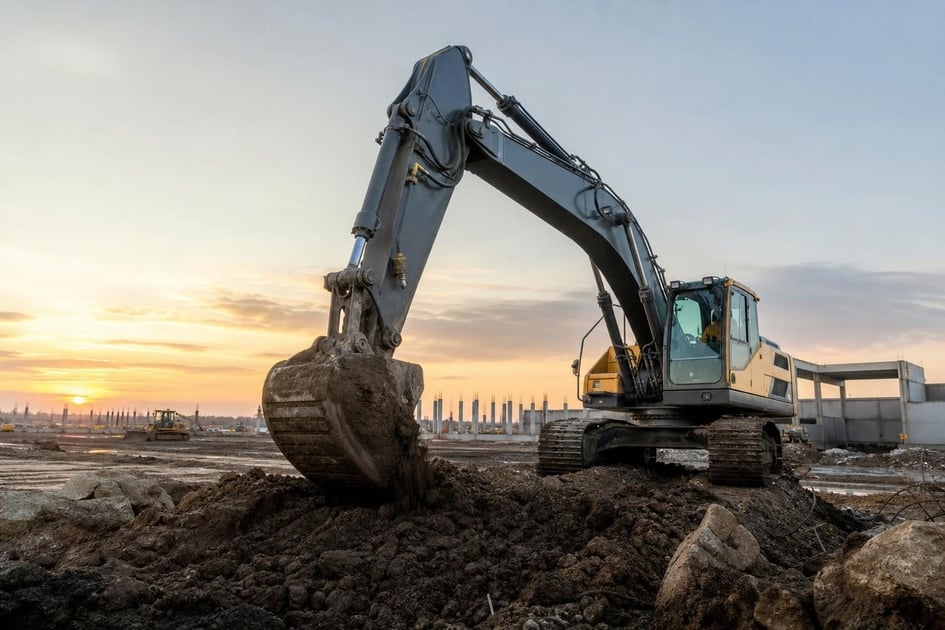
The excavator is the collateral, so the lender cares deeply about what they are securing. They want a clean title, no salvage or rebuilt branding, and a fair market value that supports the loan amount. For private-party purchases, the lender will require an independent appraisal or will limit the advance to wholesale value. For dealer purchases, the invoice price usually suffices. If you are financing a Mini Excavator under 12,000 pounds, the underwriting is often more flexible because the dollar exposure is lower and the resale market is liquid.
By the Numbers: A $150,000 excavator financed over 60 months with no down payment will typically carry a monthly payment in the low-to-mid four-figure range for a well-qualified borrower. Stretch the same balance to 72 months and the payment drops roughly 15 to 20 percent, but total interest paid increases. A borrower with challenged credit might see the same machine quoted on a 36-month term to limit the lender's risk.
What No-Down-Payment Financing Costs
Without stating a specific APR—which would be misleading because rates vary by credit profile, equipment age, and term—we can look at how the numbers behave in real scenarios. Equipment loans are usually fixed-rate, so your payment does not change over the life of the contract.
Worked Examples
Example one: A plumbing and excavation contractor in Colorado buys a $95,000 mini-excavator with a thumb and grapple. The lender approves 100 percent of the equipment cost at a five-year term. The contractor's monthly payment lands around $1,850 to $2,100, depending on credit tier and whether sales tax is wrapped into the loan.
Example two: A site-prep company in Georgia purchases a $280,000 35-ton excavator with 200 hours. Because the machine is nearly new and the borrower has seven years in business with strong cash flow, the lender funds the full invoice price over 72 months. The monthly payment ranges from approximately $4,400 to $5,000. The borrower budgets $250 per hour for machine time and clears the note with 20 to 25 billable hours per month.
Example three: A forestry mulching contractor in the Pacific Northwest buys a $60,000 used trackhoe that is eight years old. The lender caps the term at 36 months because of age, and the payment runs roughly $1,900 to $2,200 per month. The shorter term means the machine is paid off before major rebuild costs hit.
What Drives the Monthly Payment
Four factors control your payment: the amount financed, the term length, the rate assigned to your risk profile, and whether you finance soft costs. A $0 down payment keeps your initial cash outlay at zero, but it maximizes the financed balance and therefore the monthly obligation. If cash flow is seasonal—common in Construction equipment financing—ask about skip-payment structures or seasonal schedules that match your collections cycle.
See what you qualify for
The equipment itself secures the financing, which keeps rates competitive. Checking your options takes minutes.
Check Your OptionsTax Treatment for the 2026 Tax Year
The tax benefits of acquiring an excavator can be substantial, but the rules change, and you should verify every strategy with a CPA who knows your filing situation. For the 2026 tax year, Section 179 allows businesses to deduct the full purchase price of qualifying equipment up to an annual limit, subject to a phase-out threshold once total equipment purchases exceed a set dollar amount. Bonus depreciation is also available in 2026, though the percentage has stepped down from prior years. The exact 2026 Section 179 limit and bonus depreciation rate should be confirmed with your accountant, because Congress occasionally adjusts these figures late in the year.
If you choose a loan, you generally claim depreciation or Section 179 on the equipment and deduct the interest portion of your payments. If you choose a true operating lease, you typically deduct the lease payments as rent expense. A capital lease is treated more like a loan for tax purposes. Do not guess at the structure; a mistake here can trigger an IRS adjustment or cause you to miss deductions worth tens of thousands of dollars. Speak with a CPA before you commit to a lease or loan structure.
Key Insight: If you take delivery of the excavator in December 2026, you may still claim a full year of Section 179 or bonus depreciation for the 2026 tax year, even though you only made one or two monthly payments. The deduction is based on the date the equipment is placed in service, not how long you owned it.
Industry-Specific Use Cases
Excavators are not limited to general construction. Lenders see financing requests from dozens of verticals, and each has its own buying pattern and risk profile.
Construction and Utilities
General contractors, underground utility installers, and pipeline crews buy the largest share of financed excavators. They run machines hard, often 150 to 200 hours per month, and they need reliability more than lowest price. A no-down-payment loan lets them acquire Tier-4-compliant machines that meet emissions regulations without tying up the bond capacity or credit lines they need for project bidding. According to U.S. Census Bureau construction spending data, nonresidential construction activity continues to drive demand for earth-moving equipment across all regions. Excavators financing in this segment often involves machines between $150,000 and $400,000 with 48- to 60-month terms.
Landscaping and Forestry
Land clearing, stump grinding, and invasive-species removal companies use compact and mid-size excavators with mulching heads. Their revenue is seasonal in northern states, peaking between April and October. Lenders who understand the seasonality can structure 12-month seasonal payments—higher in summer, lower or skipped in winter—which aligns debt service with cash flow. These operators often start with Mini Excavator financing in the $50,000 to $90,000 range and trade up as they win municipal contracts.
Common Mistakes to Avoid
The fastest way to turn a same-day approval into a two-week headache is to submit an incomplete file. Here are the errors we see most often:
- Shopping without a specific machine. Lenders need a make, model, year, and serial number to verify collateral value. Walking in with "I need about $200,000 for an excavator" slows the process because the underwriter cannot price the risk.
- Ignoring soft costs. If your loan only covers the machine and you forgot to budget $5,000 for delivery and attachments, you will scramble for cash at closing.
- Overlooking prepayment penalties. Some equipment loans carry prepayment penalties during the first 12 to 24 months. If you plan to pay the note off early with a big job check, confirm whether a penalty applies.
- Buying from a private seller without a title search. Excavators have titles in most states. An unreleased lien from the seller's prior lender will block your new lender from perfecting their security interest.
- Waiting until you are desperate. The worst time to arrange financing is the day before the auction ends or the day the machine leaves the lot. Rates and terms improve when you are not under time pressure, and you have leverage to negotiate with the seller.
What Documentation You Need
A complete application package speeds approval and reduces back-and-forth. Most lenders ask for:
- One-page application with business and personal details
- Last three months of business bank statements
- Previous year business tax return
- Equipment invoice or purchase agreement with serial number and description
- Proof of insurance naming the lender as loss payee
For transactions above $250,000 or for borrowers with complex ownership structures, add two years of tax returns, a current profit-and-loss statement, and a personal financial statement. If you are buying at auction, provide the auction listing and expected hammer price. If the seller is a private party, include a bill of sale and a copy of the current title.
Once you have the documents together, see what you qualify for and get a decision before you commit to the purchase.
What Happens After Approval
When the lender issues a term sheet, review it carefully. Check the financed amount, payment, term, collateral description, and any personal-guarantee language. If everything looks correct, sign the documents and provide proof of insurance. The lender then pays the seller directly—either the dealer or the private party—usually within 24 to 48 hours of receiving signed docs and insurance evidence.
After funding, your first payment is typically due 30 to 45 days later. Set up automatic ACH from your business account to avoid missed payments, which can trigger default rates and harm your credit. Keep the excavator insured with physical damage and liability coverage at all times. If you sell or trade the machine before the loan matures, you must pay off the remaining balance to clear the lender's lien and transfer a clean title.
Ready to move forward?
More than 10,000 businesses have financed equipment with Provide Capital. See what you qualify for today.
Get StartedFrequently Asked Questions
Can I really get an excavator with $0 down?
Yes, if your credit and cash flow meet the lender's standards. The equipment itself secures the loan, which reduces the lender's risk and allows them to advance 100 percent of the purchase price for qualified borrowers. Applicants with lower credit scores or shorter time in business may be asked for a down payment.
Does no down payment mean no money out of pocket?
Not necessarily. Even with 100 percent equipment financing, you may still need to cover freight, tax, attachments, or the first month's payment upfront. Ask your lender whether soft costs can be included in the financed amount.
What credit score do I need for excavator financing with no down payment?
Most lenders want a personal credit score in the mid-600s or higher for zero-down programs. Scores above 680 generally receive the best terms. If your score is below 620, you may still be approved, but a down payment or shorter term is more likely. Unlike SBA-backed bank loans, which can take weeks and require extensive paperwork, direct equipment lenders often issue decisions within hours because the collateral is the asset being financed.
Can I finance a used excavator with no down payment?
Yes, used equipment is eligible, but the age, hours, and condition affect the term and advance rate. Machines less than five years old with low hours are the easiest to finance at 100 percent. Older, high-hour units may require 10 to 15 percent down.
How long are the terms for excavator loans?
Terms typically range from 36 to 72 months. New excavators can often be financed for 60 to 72 months. Used machines, especially those over seven years old, usually max out at 36 to 48 months.
Will the lender check my business credit or only personal credit?
Most equipment lenders check both. Established businesses with strong commercial credit profiles may qualify for better rates, but personal credit still matters because owners almost always provide a personal guarantee.
Can I deduct the full cost of the excavator on my 2026 taxes?
You may be able to deduct a significant portion—or even the full cost—under Section 179 or bonus depreciation for the 2026 tax year, subject to annual limits and phase-out thresholds. The exact figures depend on your total equipment purchases and taxable income. Talk to a CPA before you rely on any specific deduction amount.
What happens if I want to pay off the loan early?
Some equipment loans allow early payoff without penalty; others charge a prepayment fee during the first 12 to 24 months. Read the term sheet carefully and ask your funding manager to confirm the policy before you sign.
Ready to Finance Your Next Excavator?
No-down-payment excavator financing is a practical way to add production capacity without draining your cash reserves. The key is to know your numbers, choose the right structure—loan or lease—and present a complete file so the underwriter can move fast. Rates vary by credit profile, equipment age, and term, so the best way to find your actual payment is to apply with real equipment details in hand.
If you have a machine picked out or just want to know your budget before you shop, get a same-day decision on your equipment and talk to a specialist about your specific machine.
Disclaimer: The information provided in this article is for general educational purposes only and is not financial, legal, or tax advice. Funding terms, qualifications, and product availability may vary and are subject to change without notice. Provide Capital does not guarantee approval, rates, or specific outcomes. For personalized information about your business funding options, contact our team directly.