
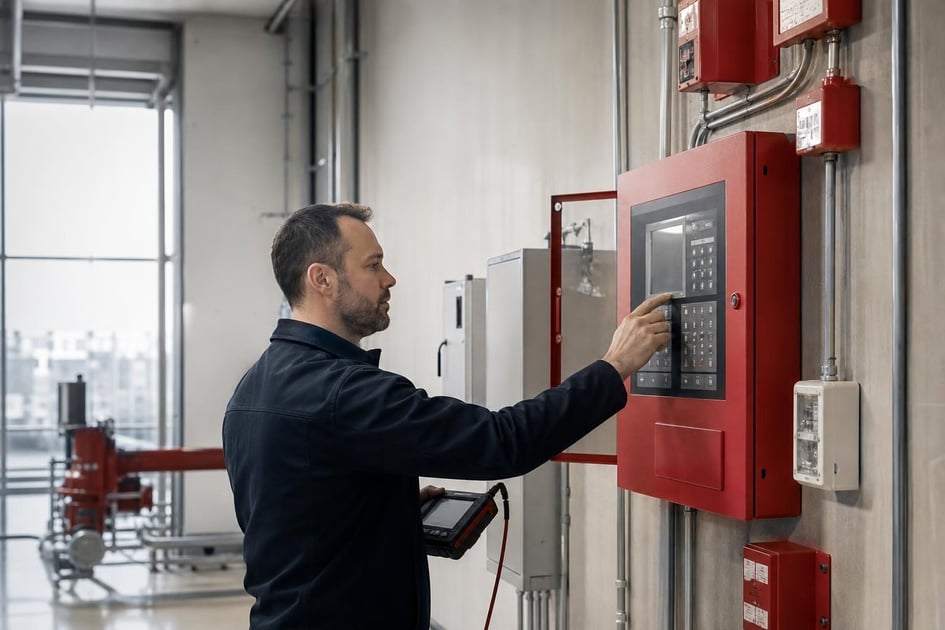
Fire Alarm System Financing No Money Down: What to Expect
If you are weighing whether to pay cash or finance a new fire alarm installation, the practical answer is usually to preserve your working capital. Equipment financing lets you spread the cost across months or years while the system itself serves as collateral, which typically keeps rates more competitive than unsecured borrowing. At Provide Capital, we finance fire alarm systems starting at $5,000 with terms structured around your cash flow, and same-day approvals are possible once the application and supporting documents are in hand. If you are preparing to replace an aging panel or install a full addressable system across multiple buildings, see what financing you qualify for on that fire alarm system without a large upfront outlay.
Already have a machine in mind?
Provide Capital finances new and used equipment from $5,000 to $5 million, with same-day decisions possible.
Apply NowHow No-Money-Down Equipment Financing Works
No-money-down equipment financing means the lender covers the full cost of the equipment and you repay through fixed monthly payments over a set term. The equipment itself—control panels, notification appliances, detectors, and wiring—acts as collateral. Because the lender has a secured interest in tangible assets, the approval process weighs the equipment value and your business credit profile more heavily than your available cash reserves.
Rates vary by credit profile, equipment age and term. A business with strong credit history financing a new addressable panel over 36 months will see different terms than a buyer with challenged credit financing used devices over 60 months. The structure is straightforward: you select the equipment, the lender pays the vendor or reimburses you, and you take possession immediately while paying down the balance.
Fire alarm systems fall into the safety and life-safety equipment category, which lenders view favorably because the equipment is code-mandated and rarely discretionary. Buildings need functioning alarms to pass inspections, obtain certificates of occupancy, and satisfy insurance requirements. That necessity reduces lender risk and often smooths the path to approval compared to more speculative equipment purchases. The equipment finance market has expanded steadily; Census Bureau business data tracks capital expenditure trends across commercial construction and safety equipment categories.
Key Insight: Many fire alarm vendors offer installation and monitoring contracts bundled with the hardware. If your quote includes multiyear monitoring, ask the vendor to separate hardware from services. Lenders finance equipment, not ongoing service contracts, and a bundled quote can complicate the funding structure.
What Fire Alarm Systems Cost
Costs range widely based on building size, system type, and whether you are retrofitting or installing new. A small retail location with a conventional four-zone panel and a handful of smoke detectors might fall near the $5,000 floor. A multi-story hotel or manufacturing facility with an addressable system, voice evacuation, and integration to suppression systems can climb well into six figures.
Conventional systems, which group detectors into zones rather than identifying individual device locations, cost less upfront but offer limited diagnostic detail. Addressable systems assign each device a unique identifier, allowing the panel to report exactly which detector triggered. They cost more per device but reduce service calls and downtime in larger buildings.
Notification appliances—strobes, horns, and horn-strobes—add material cost, especially in buildings required to meet ADA visibility and audibility standards. Add network interface cards, auxiliary power supplies, and emergency voice communication capabilities, and the total grows quickly. For most owner-operators, spreading these costs over 36 to 60 months preserves liquidity for payroll, insurance, and other fixed obligations.
New vs. Used Fire Alarm Equipment
New equipment carries full manufacturer warranties, complies with the latest NFPA codes, and typically qualifies for longer financing terms. If you are installing in a new construction project or replacing a system that has reached end-of-life, new hardware is the standard choice. Lenders generally prefer new equipment because the residual value is predictable and warranty coverage reduces the risk of early failure.
Used or refurbished fire alarm panels and devices can make sense in specific scenarios. If you are expanding an existing system and the manufacturer still supports the protocol, used components may integrate seamlessly at lower cost. However, fire alarm equipment is life-safety gear, and code compliance is non-negotiable. Used devices must carry UL listings, meet current NFPA 72 standards, and be installed by licensed technicians. Financing terms on used equipment may be slightly shorter, and the lender may require a professional appraisal or inspection report.
Pro Tip: Before accepting a used panel, verify that the manufacturer still produces replacement parts and that local AHJs (Authorities Having Jurisdiction) will approve the model. A discontinued panel with no available replacement modules can turn a bargain into a code violation when the next inspection rolls around.
Lease vs. Loan: A Side-by-Side Comparison
Business owners often wonder whether a equipment lease or a equipment loan fits their situation better. A loan leaves you owning the equipment outright once the final payment clears. A lease may offer lower monthly payments and a purchase option at the end, but the total cost structure differs. The right choice depends on your tax strategy, how long you plan to keep the building, and whether you expect the technology to evolve rapidly.
| Factor | Equipment Loan | Equipment Lease |
|---|---|---|
| Ownership | You own the system from day one; lender holds a lien | Lessor owns the equipment; you may have a buyout option |
| Monthly payment | Higher than a lease in most cases | Typically lower monthly outlay |
| Tax treatment | Interest deductible; depreciation via Section 179 or bonus | Payments often fully deductible as operating expense |
| End of term | No residual obligation; equipment is yours | Return, renew, or purchase at fair market value |
| Ideal for | Long-term facilities, tax depreciation strategies | Short-term locations, preserving capital |
| Upgrade path | You manage replacements and upgrades | Easier to refresh technology at lease end |
For a fire alarm system in a facility you own and plan to operate for the next decade, a loan usually makes more sense. You build equity in the equipment, benefit from depreciation, and avoid any end-of-term negotiation. If you are leasing the building itself and may relocate within three to five years, a lease with a fair-market-value buyout can reduce your capital commitment.
Tax Treatment for Fire Alarm Systems in 2026
Fire alarm systems qualify as business equipment under the tax code, which means you can generally deduct or depreciate the cost. For tax year 2026, Section 179 allows businesses to expense qualifying equipment purchases up to a limit set by the IRS for that year. The exact dollar limit and phase-out threshold for 2026 should be confirmed with your CPA, as Congress periodically adjusts these figures. Bonus depreciation may also apply, though the percentage has been stepping down from prior years. Rather than quote a specific 2026 limit here that could change with late legislation, speak with a tax professional about how much you can accelerate for this tax year.
Beyond Section 179, you can depreciate fire alarm equipment under the Modified Accelerated Cost Recovery System, typically over a seven-year schedule if it does not qualify for shorter treatment. The interest you pay on an equipment loan is also generally deductible as a business expense. Lease payments, conversely, are usually treated as operating expenses and deducted in the year paid. Your CPA can model which approach yields the better outcome for your effective tax rate in 2026.
If you are replacing a system that still has book value, ask your accountant about abandonment loss or partial disposition rules. Disposing of an old panel before it is fully depreciated can sometimes generate a deductible loss that offsets the new equipment cost in the same year.
By the Numbers: A $75,000 addressable fire alarm system financed over 60 months at competitive equipment-loan rates typically produces a monthly payment in the low four figures. Over the full term, the interest portion is usually a modest single-digit percentage of the equipment cost—substantially less than the carrying cost of merchant cash advance products often marketed to small businesses.
Qualification Criteria
Equipment financing approval hinges on three factors: time in business, credit profile, and equipment value. Most lenders prefer at least two years of operating history, though some programs accommodate younger businesses with strong collateral or a personal guarantor from a principal with established credit. Your business credit score, bank balances, and existing debt obligations all factor into the decision.
For fire alarm systems specifically, the lender will verify that the equipment is commercially necessary and appropriately priced. An invoice from a licensed fire alarm contractor carries more weight than a quote from an unlicensed reseller. If the system includes proprietary software licenses or monitoring agreements, the lender may strip those out and finance only the tangible hardware.
Cash flow matters, but because the equipment secures the loan, a strong receivables position or seasonal revenue pattern is less of a barrier than it would be for an unsecured line of credit. If your business generates steady revenue but you carry a thin cash cushion, equipment financing is often the most accessible capital source because the collateral mitigates the lender's risk. For context on how lenders evaluate small business requests, SBA guidance on equipment loans outlines standard documentation and risk assessment practices used across the industry.
See what you qualify for
The equipment itself secures the financing, which keeps rates competitive. Checking your options takes minutes.
Check Your OptionsIndustry-Specific Considerations
Fire alarm requirements vary sharply by industry, and those differences affect both system design and financing structure. A restaurant or food-service business faces grease-laden environments that demand specialized heat detectors and more frequent inspection intervals. A healthcare facility must coordinate with patient life-safety protocols and may need integration with nurse-call or access-control systems. Manufacturing plants often require explosion-proof devices and signal pathways rated for high-RF environments.
Construction companies outfitting job-site trailers or temporary structures need portable or easily relocated panels, which can complicate collateral valuation. Transportation and logistics firms with multiple terminals may finance several smaller systems rather than one large installation, spreading the obligation across locations. Agricultural operations with grain-handling or cold-storage buildings must meet unique codes for dust and moisture exposure.
Regardless of industry, the common thread is that the financed equipment must be permanent and necessary to the business operation. Lenders rarely finance consumer-grade smoke alarms or residential panels for commercial use. If you are outfitting a mixed-use property, be prepared to specify which portions are commercial and which are residential, as financing programs typically target business-use equipment only.
If your operation includes heavy machinery or vehicles alongside building systems, you may also want to explore Fire Suppression System financing as a companion to your alarm installation. Many lenders, including Provide Capital, can structure multiple equipment schedules under a single master agreement, simplifying paperwork and potentially improving terms.
Key Insight: In healthcare and dental practices, fire alarm upgrades often coincide with renovation or expansion projects. If you are bundling the alarm with dental chairs, imaging equipment, or HVAC work, consider financing each category separately. A single blended loan obscures the true cost of each asset and can complicate depreciation tracking when you file your 2026 return.
Common Mistakes to Avoid
One frequent error is accepting the vendor's in-house financing without comparing terms. Vendor programs sometimes embed a markup in the equipment price to subsidize a below-market rate, which means you may pay more overall than you would with an independent lender. Always ask for a cash price and a financed price, then compare the total cost of ownership. Independent financing also avoids the markup trap; Forbes coverage of small business finance has documented cases where vendor-provided equipment loans carried embedded costs that exceeded third-party alternatives by a wide margin.
Another mistake is underestimating the total project cost. The panel and detectors are only part of the picture. Pulling wire through existing conduit, patching drywall, upgrading electrical service to the panel location, and reprogramming after inspection all add labor and material costs. If your financing covers only the equipment invoice, you may face thousands in unplanned cash outlays for installation.
Businesses also sometimes stretch terms too far to chase a low monthly payment. A 72-month loan on equipment with a ten-year useful life is reasonable. A 72-month loan on devices that will be obsolete in five years leaves you paying for equipment you no longer want. Match the term to the expected useful life of the technology, not just to the lowest available payment.
Finally, do not assume that every fire alarm contractor can work with third-party financing. Some vendors refuse to accept payment from lenders, or they demand full payment before shipping. Confirm the vendor's policy early, and choose a lender that pays vendors directly or reimburses you promptly after proof of installation.
Documentation You'll Need
A complete application package moves faster. At minimum, expect to provide the last three months of business bank statements, a current year-to-date profit-and-loss statement, and a copy of the equipment quote or invoice. If your business is incorporated, the lender will also want articles of incorporation and a resolution authorizing the borrowing.
For larger requests—approaching or exceeding $500,000—two years of business tax returns and an interim balance sheet are standard. The lender may also request a personal financial statement and guaranty from any owner holding twenty percent or more of the business. If the equipment is used, be ready to provide photos, serial numbers, and an independent appraisal or inspection certificate.
Fire alarm systems trigger one additional document check: code compliance. Your lender may ask for a letter from the installing contractor confirming that the proposed system meets local fire code and NFPA 72. This protects both you and the lender from funding a system that the Authority Having Jurisdiction rejects at final inspection.
If you are ready to move forward, get a decision on your equipment, possibly the same day, by submitting your application along with the quote from your fire alarm contractor.
What Happens After Approval
Once approved, the lender issues a term sheet or finance agreement spelling out the payment amount, term, and any prepayment provisions. Review it carefully for hidden fees, late-payment penalties, and personal guaranty language. If the terms match your expectations, you execute the documents and the lender coordinates payment.
Payment typically flows in one of two ways. The lender may pay the vendor directly upon delivery and acceptance, or they may reimburse you if you have already paid the deposit. Direct vendor payment is preferable because it reduces your cash exposure and creates a clear paper trail. After funding, your first payment is usually due thirty days later, with fixed monthly amounts thereafter.
During the repayment period, keep your insurance current and name the lender as loss payee on the equipment. If the building suffers fire or water damage, the insurance settlement protects the lender's collateral interest and your equity in the system. Most lenders require proof of insurance before releasing funds, so arrange coverage before the installation date.
After roughly half the term has passed, you may receive offers to refinance or upgrade. Evaluate these against your original amortization schedule. In many cases, staying the course and owning the equipment outright at term end is the better financial move than rolling into a new obligation early.
Put the right equipment to work
From $5,000 to $5 million, new or used, Provide Capital helps businesses nationwide finance the equipment they need.
Apply TodayFrequently Asked Questions
Can I really finance a fire alarm system with no money down?
Yes. Equipment financing programs are designed to cover the full equipment cost so you can preserve working capital. The equipment itself serves as collateral, which reduces the lender's risk and makes no-money-down structures common. Your specific terms will depend on credit profile, equipment age, and time in business.
Does financing a fire alarm system require a personal guaranty?
Many equipment finance agreements include a personal guaranty from the business owner, especially for closely held businesses or requests where the business credit file is thin. The guaranty gives the lender recourse beyond the collateral if the business defaults. Some programs waive the personal guaranty for well-established businesses with strong financials, but you should expect to be asked.
How long does approval take?
For requests under $250,000 with complete documentation, same-day approvals are possible. Larger requests or those requiring additional verification may take a few business days. You can speed the process by submitting clean bank statements, a detailed equipment quote, and prompt responses to any follow-up questions.
Can I include installation and wiring in the financing?
It depends on the lender and how the quote is structured. Some lenders allow soft costs like installation to be rolled into the equipment financing up to a capped percentage of the hardware cost. Others finance only the tangible equipment. Ask your lender upfront, and request that your vendor separate hardware from labor on the invoice if needed.
What credit score do I need?
There is no universal minimum. Lenders look at the full credit profile, including business history, existing debt, cash flow, and the quality of the collateral. Businesses with credit challenges may still qualify, though rates and terms will reflect the increased risk. The best way to know is to apply and review the offer.
Can I pay off the loan early?
Most equipment loans allow early payoff, but the prepayment terms vary. Some lenders charge a prepayment penalty or keep a portion of the remaining interest. Others offer a declining penalty that disappears after a certain point. Read the prepayment language before signing, and calculate whether paying early actually saves money after penalties.
Is a financed fire alarm system eligible for the 2026 Section 179 deduction?
Generally yes, provided the system is placed in service during the 2026 tax year and your business usage qualifies. The exact dollar limits for 2026 should be confirmed with your CPA, as they are subject to annual adjustment. Your accountant can also advise whether bonus depreciation or MACRS yields a better result for your specific tax situation.
What happens if I sell the building before the loan is paid off?
You remain responsible for the loan balance even if you sell the property. In some cases, the buyer may agree to assume the financing, but that requires lender consent and underwriting of the new obligor. More commonly, you pay off the loan from sale proceeds or continue making payments while the new owner operates the building. Plan for this contingency before you commit to a term length.
Next Steps
Financing a fire alarm system with no money down is a practical way to bring your building up to code without draining the cash reserves you need for payroll, inventory, and emergencies. The process rewards preparation: gather your financial documents, obtain a detailed quote from a licensed contractor, and understand whether a loan or lease aligns better with your tax strategy for 2026.
Start by reviewing the specifics of Fire Alarm System financing to see how the equipment collateral structure and term options fit your project. If you operate in a specialized industry—whether forestry, manufacturing, or food service—explore how equipment financing works across asset categories, including programs like Forestry Logging equipment financing, which follows the same collateral-based structure applied to a different equipment class.
When you are ready, start an application in a few minutes with the equipment quote in hand. A quick review of your business financials and the equipment details can produce a decision and funding timeline that keeps your project on schedule without the stress of a large upfront cash outlay.
Disclaimer: The information provided in this article is for general educational purposes only and is not financial, legal, or tax advice. Funding terms, qualifications, and product availability may vary and are subject to change without notice. Provide Capital does not guarantee approval, rates, or specific outcomes. For personalized information about your business funding options, contact our team directly.
