What Forklift Financing Looks Like for a Small Business
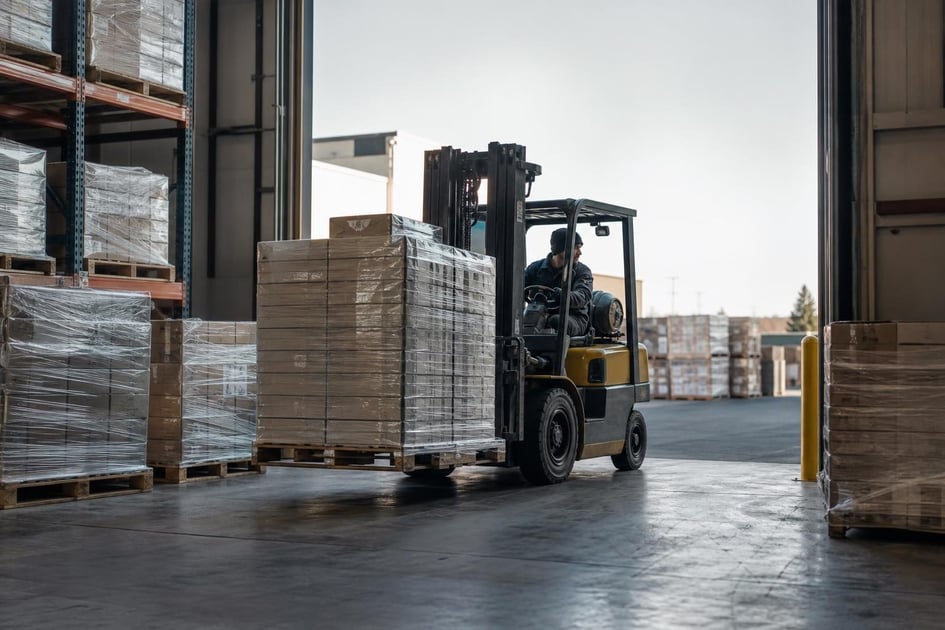
If you need a forklift and cannot pay cash, equipment financing spreads the cost over one to five years while the machine generates revenue immediately. Most small-business owners can finance both new and used forklifts, with loan amounts typically starting around $5,000 and running up to $5 million depending on the fleet size and collateral value. Because the forklift itself secures the financing, rates vary by credit profile, equipment age and term rather than requiring additional real estate or personal assets as collateral.
Same-day approvals are possible when your documentation is complete, though most decisions arrive within one to three business days. The process focuses on your business bank statements, credit history, and the equipment being purchased rather than on extensive business plans or projections.
By the Numbers: A single new warehouse forklift with a 5,000-pound capacity typically costs between $25,000 and $45,000. Used models with similar specs often range from $10,000 to $25,000 depending on hours, age, and brand. Rough-terrain forklifts and heavy-capacity models can run from $50,000 to over $150,000.
Already have a machine in mind?
Provide Capital finances new and used equipment from $5,000 to $5 million, with same-day decisions possible.
Apply NowHow Much Forklift You Can Actually Finance
Forklifts are not a single category. The type you need drives the price, which in turn drives the financing structure.
Standard Warehouse Forklifts
Electric cushion-tire and pneumatic-tire models for indoor or smooth-pavement use represent the majority of small-business purchases. New electric forklifts in the 3,000- to 5,000-pound capacity range usually fall between $20,000 and $45,000. Used electric forklifts from major brands generally cost $8,000 to $25,000. These are straightforward to finance because the collateral is standard and resale value is predictable.
Rough-Terrain and Outdoor Models
Construction yards, lumber operations, and agricultural businesses often need rough-terrain forklifts with four-wheel drive and high ground clearance. New units start around $35,000 and can exceed $100,000 for high-capacity telehandlers. Used rough-terrain forklifts typically range from $20,000 to $65,000. Lenders treat these as specialized collateral, so they may require slightly stronger credit or a larger down payment than warehouse models.
Attachments and Accessories
Forklifts rarely operate with just forks. Attachments such as side shifters, fork positioners, rotators, and clamp systems add $1,000 to $10,000 per machine. Battery chargers for electric fleets run $2,000 to $8,000 depending on voltage and fast-charge capability. If you are financing a fleet, roll these extras into the same equipment finance agreement rather than paying cash for peripherals while financing the base machine.
Forklift Battery Charger financing can be bundled with your lift truck or handled as a separate equipment line. Either way, the charger itself serves as collateral just like the forklift.
Lease vs. Loan: What the Difference Costs You
Small-business owners usually choose between an equipment loan and a fair-market-value lease. The right structure depends on how long you plan to keep the forklift, how many hours you expect to run it annually, and whether you want to own the asset at the end. Forbes business coverage regularly notes that the decision between leasing and borrowing should rest on total cost of ownership rather than monthly payment alone.
| Feature | Equipment Loan | Fair Market Value Lease |
|---|---|---|
| Ownership | You own the forklift after the final payment | You return it or purchase at fair market value |
| Down payment | Often zero to 10 percent | Typically first and last payment upfront |
| Monthly payment | Higher than lease; builds equity | Lower; pays for use, not full value |
| Term length | 2 to 5 years common | 2 to 5 years common |
| End-of-term | No balloon; title transfers | Return, renew, or buy out |
| Maintenance responsibility | Your business | Your business unless a full-service lease |
If you run a forklift 2,000 hours per year and plan to keep it for seven to ten years, a loan usually wins because you spread the full cost over the financing term, then operate payment-free for the remaining useful life. If you replace equipment every three years to avoid maintenance risk or to stay current with emission standards, leasing preserves capital and simplifies fleet turnover.
Key Insight: A $35,000 forklift financed over 48 months on a loan might carry a monthly payment roughly double that of a 48-month fair-market-value lease, but the loan builds equity in an asset you will own for years five through ten. Run the math on total cost of ownership, not just the monthly outlay.
Who Qualifies and What Lenders Review
Equipment financing for forklifts is secured lending, which means the lender's risk is lower than with an unsecured business loan. That does not mean everyone qualifies automatically, but it does mean the approval criteria are more flexible than many borrowers assume. SBA guidance on equipment financing emphasizes that using the equipment itself as collateral reduces the need for additional security.
Credit Profile
Lenders review personal and business credit. A personal FICO score in the mid-600s or higher opens competitive terms, though some programs accept scores below that with compensating factors such as strong revenue or a larger down payment. Recent bankruptcies, unresolved tax liens, or active judgments will complicate approval. If your credit has blemishes, be prepared to explain the circumstances and show that the business cash flow supports the payment.
Time in Business
Many lenders prefer two years in operation, but equipment finance companies regularly work with businesses that have been open six to twelve months. Startups and new businesses face tighter scrutiny, and many equipment lenders decline deals for businesses with less than six months of operating history. If you have been in business less than two years, expect to provide a larger down payment or show higher monthly revenue.
Revenue and Bank Statements
Most lenders want to see three to six months of business bank statements. They look for consistent deposits, positive ending balances, and no frequent overdrafts. A common rule of thumb is that your average monthly revenue should be at least double the proposed equipment payment, though this varies by lender and program. If your business deposits $30,000 per month, a lender will generally be comfortable with a forklift payment up to $1,500, assuming other obligations are reasonable.
The Equipment as Collateral
The forklift itself is the primary collateral. The lender files a UCC-1 lien on the equipment but typically does not take a blanket lien on all business assets. Because the collateral is movable, lenders verify the serial number and condition before funding. If you default, the lender repossesses the forklift, so the resale market matters. Standard brands with strong dealer networks are easier to finance than obscure or gray-market machines.
Pro Tip: Buying from a licensed dealer rather than a private seller speeds approval by one to two days. Dealers provide clean title history, inspection reports, and serial-number documentation that lenders trust. Private-party sales often require additional verification steps that delay funding.
Tax Treatment in 2026
The tax year 2026 offers several avenues to deduct forklift purchases, but the exact limits and phase-outs depend on your business taxable income, the total equipment placed in service during the year, and whether you elect Section 179 expensing or bonus depreciation. Because these rules change and interact in complex ways, consult a CPA before you structure the purchase.
Section 179 allows businesses to expense qualifying equipment in the year it is placed in service, subject to an annual limit and a total equipment purchase threshold. For tax year 2026, the specific dollar limits have been adjusted for inflation. If your total equipment purchases exceed the phase-out threshold, the allowable deduction begins to decrease. A CPA can calculate whether you fall under the 2026 limit.
Bonus depreciation may allow you to deduct a large percentage of the forklift cost in the first year for 2026, though the applicable percentage depends on legislative adjustments scheduled for this tax year. Lease payments, by contrast, are generally deductible as operating expenses over the lease term, which can simplify record-keeping for businesses that do not want to track depreciation schedules.
The key point: do not assume last year's Section 179 limit applies to 2026. Verify the current-year figures with your accountant before you sign financing documents.
See what you qualify for
The equipment itself secures the financing, which keeps rates competitive. Checking your options takes minutes.
Check Your OptionsIndustries That Rely Most Heavily on Forklift Financing
Forklifts cross many industries, and the financing structure often reflects how the equipment is used. U.S. Census Bureau data consistently shows that manufacturing, warehousing, and construction remain among the largest employers of material handling equipment operators nationwide.
Manufacturing and Warehousing
Manufacturers use forklifts to move raw materials to production lines and finished goods to shipping bays. Warehousing and third-party logistics operations run multiple shifts and often finance fleets of three to ten units simultaneously. Fleet deals can reach several hundred thousand dollars, well within the $5 million maximum, and lenders may structure master equipment lease lines so the business can add forklifts throughout the year without reapplying.
Construction and Contracting
Construction sites need rough-terrain forklifts and telehandlers to lift palletized materials to upper levels and move loads across uneven ground. These machines take more abuse than warehouse units, so contractors often favor shorter-term leases or loans with aggressive payoff schedules to avoid owning high-hour machines. Construction equipment financing programs account for seasonal cash flow, with more flexible payment structures during winter months.
Agriculture and Food Processing
Farms and food processors use forklifts for everything from moving seed and fertilizer to loading packaged goods. Seasonal businesses sometimes structure payments to align with harvest cycles, paying more in peak months and less in the off-season. Lenders experienced in agricultural equipment understand these rhythms.
Transportation and Freight
Freight terminals and distribution centers use forklifts to cross-dock shipments. Because these machines run nearly around the clock, uptime is critical. Financing that includes maintenance reserves or allows rapid replacement preserves operational continuity. Transportation equipment financing often bundles material handling equipment with trailer or vehicle purchases under a single facility.
Common Mistakes Buyers Make
Avoiding these errors saves money and prevents operational headaches.
Buying Too Little Capacity
A 3,000-pound-capacity forklift costs less upfront than a 6,000-pound model, but if your average load is 4,500 pounds, you are overworking the machine and shortening its life. The savings evaporate in maintenance and early replacement. Finance the right spec, not the lowest sticker price.
Ignoring Operating Costs
Electric forklifts cost more upfront than propane or diesel equivalents but save on fuel and maintenance over a five-year span. If you finance an internal-combustion unit because the monthly payment is lower, you may pay more in total ownership costs. Factor in energy, maintenance, and tire replacement when you compare financing proposals.
Neglecting Attachment Financing
Borrowers sometimes finance the forklift and pay cash for attachments to keep the loan amount down. This is backwards. Attachments are part of the productive asset. Roll them into the financing so you preserve working capital for labor, inventory, and emergencies.
Overlooking Documentation
Delays in approval usually stem from incomplete paperwork, not from credit problems. Have your bank statements, business tax returns, equipment quote or invoice, and proof of insurance ready before you apply. If the seller is a private party, confirm they have a clear title and a bill of sale ready.
The Application Process and What Comes After
Once you have selected a forklift and received a quote, the financing process moves quickly.
Submit an application with basic business information, the equipment details, and your requested loan amount. The lender reviews your credit, verifies the equipment value, and issues a term sheet. Review the term sheet for the monthly payment, term length, any prepayment penalties, and the buyout structure. If you accept, the lender may require proof of insurance naming them as loss payee.
After you sign the final documents, the lender pays the seller directly. You take delivery and put the forklift to work. The first payment is usually due 30 to 45 days after funding. Throughout the term, you maintain the equipment and keep insurance current. If you need to add another forklift in six months, many lenders offer streamlined approvals for repeat customers.
Get a same-day decision on your equipment by submitting your quote and recent bank statements. Most small-business owners know within hours whether they qualify.
Put the right equipment to work
From $5,000 to $5 million, new or used, Provide Capital helps businesses nationwide finance the equipment they need.
Apply TodayFrequently Asked Questions
Can I finance a used forklift?
Yes. Used forklifts are commonly financed, often with the same terms as new units. Lenders care more about the machine's condition, hours, and resale value than about age alone. Most programs accept forklifts up to ten to fifteen years old at the time of financing.
How long can I finance a forklift?
Terms typically range from 24 to 60 months. A $15,000 used forklift might be financed over three years, while a $75,000 telehandler often justifies a five-year term. The goal is to match the loan term to the equipment's useful life so you are not making payments on a machine you have already retired.
Do I need a down payment?
Not always. Many equipment finance programs offer zero-down options for well-qualified borrowers. If your credit or time in business is marginal, a 10 to 20 percent down payment improves approval odds and may lower the rate.
What credit score do I need to finance a forklift?
There is no universal minimum. Strong credit in the 700s unlocks the best terms, but approvals are common in the mid-600s. Below that, lenders look at revenue consistency, down payment size, and equipment value. Each application is evaluated individually.
Can I finance multiple forklifts at once?
Yes. Fleet financing is standard for businesses buying two or more units. You can finance the entire fleet under a single master agreement, which reduces paperwork and may improve pricing compared with separate transactions.
Does the lender put a lien on my house?
Generally no. Equipment financing uses the forklift as collateral. The lender files a UCC lien against the equipment, not against your personal residence or other business assets, though a personal guarantee may still be required.
What happens if I want to pay off the loan early?
Most equipment loans allow early payoff, but some charge a prepayment penalty or require you to pay all remaining interest. Read the term sheet carefully before you sign. If early payoff is important to you, ask your financing specialist to structure the deal without a prepayment clause.
Should I buy or lease a forklift?
Buy if you plan to keep the forklift beyond the financing term and want to build equity. Lease if you prefer lower payments, regular fleet turnover, or the flexibility to upgrade as technology changes. Your accountant can model the after-tax cost of each option for your specific situation.
Moving Forward With Your Forklift Purchase
Forklift financing gives small businesses access to material handling equipment without draining cash reserves. Whether you need a single electric pallet jack or a fleet of rough-terrain lifts, the right financing structure aligns payments with revenue, preserves working capital, and keeps your operation moving.
Start by selecting the equipment that matches your loads, terrain, and hours of operation. Gather your bank statements and equipment quote. Then see what you qualify for and get a decision that lets you take delivery and get back to work.
For businesses that also need elevated work platforms, Scissor Lifts financing follows a similar process and can often be bundled under the same credit facility.
Disclaimer: The information provided in this article is for general educational purposes only and is not financial, legal, or tax advice. Funding terms, qualifications, and product availability may vary and are subject to change without notice. Provide Capital does not guarantee approval, rates, or specific outcomes. For personalized information about your business funding options, contact our team directly.