If your business loses power, you lose revenue. A generator set keeps the lights on, the refrigerators running, and the job site active. Financing lets you acquire that protection without draining the operating account. The SBA recommends including backup power in any emergency preparedness plan, because the random outage is typically what forces a closure, not the headline disaster. At Provide Capital, we finance generator sets from $5,000 up to $5 million, using the equipment itself as collateral so your rates stay competitive. Same-day approvals are possible, and we serve owner-operators nationwide in construction, healthcare, dental, restaurants, manufacturing, transportation, agriculture, HVAC, and forestry. If you know the kilowatts you need and have a quote in hand, the process moves quickly.
Key Insight: The collateral is the machine itself. Because the lender can secure the genset, you typically do not need to pledge real estate or other business assets to close the deal. That structure keeps paperwork lighter and preserves your borrowing capacity for other needs.
What Generator Set Financing Actually Covers
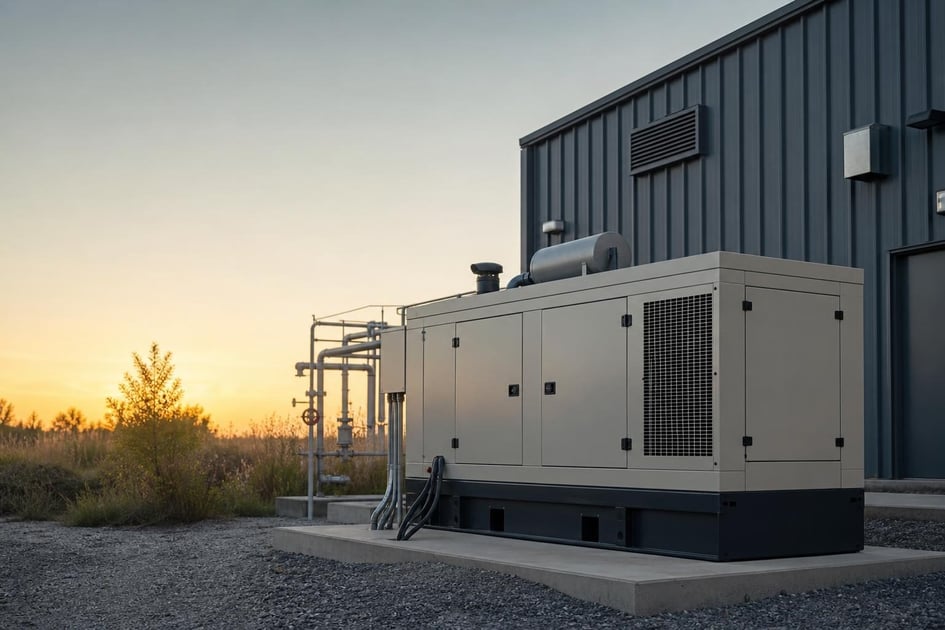
Commercial Generator financing covers the acquisition cost of the unit, and often the transfer switch, delivery, and initial installation if those costs are bundled into the vendor invoice. We finance both diesel and natural gas units, from small 20 kW standby models up to 2,500 kW industrial prime-power sets. The key is that the equipment must be used for business purposes. Residential backup units do not qualify.
Most small businesses fall into the 100 kW to 500 kW range. A 150 kW diesel standby unit can power a mid-sized restaurant or a small medical clinic. A 400 kW unit can run a construction trailer, small manufacturing line, and critical HVAC loads simultaneously. When you apply, the lender reviews the equipment specifications sheet to confirm the asset matches the quoted price and has a recognized service network in the United States.
Standby vs. Prime Power
Standby generators are designed for emergency use during grid outages. They run a few hundred hours per year and cost less upfront. Prime power generators are built to run continuously or for extended duty cycles. They have heavier-duty engines, larger cooling systems, and higher price tags. Financing terms for prime power units may stretch longer because the equipment retains value well and generates revenue directly.
Fuel Type and EPA Compliance
Diesel remains the dominant fuel for commercial gensets above 75 kW, but natural gas and propane units are common in healthcare and food service where emissions or fuel storage restrictions apply. If you are buying a used diesel generator manufactured after 2015, verify that it meets Tier 4 Final EPA standards. Non-compliant units may face operating restrictions in certain air-quality districts, which can affect resale value and insurance. Lenders factor this into the advance rate.
Already have a machine in mind?
Provide Capital finances new and used equipment from $5,000 to $5 million, with same-day decisions possible.
Apply NowNew vs. Used: How Equipment Age Affects Your Deal
New generator sets come with manufacturer warranties, lower maintenance costs in the first three years, and the latest emissions compliance. They also carry the highest purchase price. Used units can cut the acquisition cost by 30 to 50 percent, but the financing terms tighten as the equipment ages.
For a new genset, terms typically range from 24 to 84 months, depending on the total cost and your credit profile. For used equipment older than five years, the term may cap at 48 or 60 months, and the down payment requirement often rises. Lenders look at run hours more than calendar age. A 10-year-old generator with 500 hours can finance more easily than a four-year-old unit with 8,000 hours. Always request the hour meter reading and maintenance log before you commit to a used purchase.
When you finance used equipment, the lender may require an independent appraisal or a dealer inspection report. This protects both parties by confirming the generator is in operable condition and that the serial number matches the title. If the unit was previously deployed in a rental fleet, expect closer scrutiny of the service intervals.
By the Numbers: A new 200 kW commercial diesel generator typically runs between $45,000 and $65,000 before installation. A comparable five-year-old unit with under 2,000 hours often trades between $28,000 and $38,000. Installation, transfer switch, and fuel connections commonly add $8,000 to $20,000 depending on site complexity and local permitting.
Lease vs. Loan: Choosing the Right Structure
The best financing structure depends on how long you plan to keep the asset, your tax objectives, and whether you want to own it outright at the end. Below is a straightforward comparison of the two most common structures for generator set acquisitions.
| Feature | Equipment Loan | $1 Buyout Lease |
|---|---|---|
| Monthly cost | Lower over long term | Slightly higher |
| Ownership | You own from day one | You own after final payment |
| Tax treatment | Interest deduction + depreciation | Full payment deduction in many cases |
| Down payment | Usually 0-20% | Often first and last payment |
| Early payoff | Yes, with clear terms | Possible, may carry fees |
| Best for | Long-term ownership | Short-term cash flow relief |
An equipment loan puts the title in your name immediately. You deduct the interest and take depreciation under MACRS or Section 179. A $1 buyout lease, technically a capital lease, spreads the cost evenly and may allow you to write off the full payment stream depending on your tax structure. A fair-market-value lease, where you return the equipment at the end, is less common for generator sets because most businesses keep them for 10 to 15 years.
Talk to your CPA before you sign. The optimal choice depends on your 2026 tax position, your current depreciation schedule, and whether you have passive activity limitations.
Who Qualifies and What Lenders Review
We work with established businesses across the credit spectrum. The minimum requirements usually include two years in operation, a business bank account, and the ability to show consistent revenue. We do not require a specific minimum credit score, but your credit profile influences the rate and term. Rates vary by credit profile, equipment age, and term length.
Beyond credit history, lenders evaluate the equipment itself. They want to know the manufacturer, model year, run hours, and intended use. A Caterpillar, Cummins, or Generac unit from an authorized dealer finances more cleanly than an obscure brand with no domestic parts network. The equipment's remaining useful life should exceed the loan term by a comfortable margin.
Cash flow matters too. Your monthly payment should fit within your existing debt-service coverage. If your business generates $40,000 in monthly gross revenue, a $1,200 generator payment is a reasonable add. If your gross revenue is $8,000 per month, the lender may ask for a larger down payment or a shorter term to keep the payment in line with cash flow.
If you have a quote in hand and two years in business, see what you qualify for today. Same-day decisions are possible, and we can often fund within 24 to 48 hours of approval.
2026 Tax Treatment and Section 179
The tax advantages of financing a generator set can be substantial, but the rules change, and 2026 is no exception. Under Section 179, you may be able to deduct the full purchase price of qualifying equipment in the year you place it into service, up to a limit set by Congress for the 2026 tax year. Bonus depreciation is also available, though it has been phasing down and may be subject to further adjustments in 2026. The exact limits and phase-out thresholds for tax year 2026 should be verified with a CPA before you make a purchase decision.
If you structure the acquisition as a loan, you generally claim both the Section 179 deduction and the interest expense. If you use a lease, the deductibility depends on whether the IRS classifies it as a true lease or a capital lease. A generator set used for business more than 50 percent of the time qualifies, but if you also use it to power a personal residence, you must allocate the deduction accordingly.
State tax treatment varies. Some states conform to federal Section 179 limits; others cap the deduction at a lower amount or disallow bonus depreciation entirely. If you operate in multiple states, ask your accountant to model the total tax impact before you choose between a loan and a lease.
See what you qualify for
The equipment itself secures the financing, which keeps rates competitive. Checking your options takes minutes.
Check Your OptionsIndustry-Specific Use Cases
High-profile grid failures, including the 2021 Texas winter storm analyzed by CNBC, have made backup power a priority for businesses that cannot afford downtime. Different industries size, fuel, and deploy generator sets in distinct ways. Understanding these patterns helps you specify the right machine and anticipate what a lender will ask.
Construction
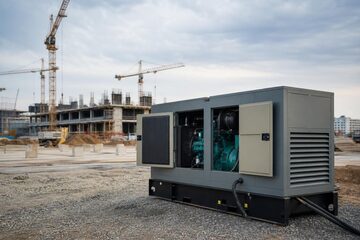
Construction crews need mobile or skid-mounted units that can survive dusty environments and temperature swings. A 300 kW to 500 kW diesel generator typically powers tower cranes, batch plants, and site trailers on commercial builds. Because work stops when power stops, contractors often treat the genset as a job-site prerequisite rather than an optional backup. Construction is one of the largest small-business sectors by receipts, according to Census Bureau data. Construction equipment financing from Provide Capital covers these units with terms that align to project duration or the equipment's depreciation schedule.
Healthcare and Dental
Medical practices cannot afford downtime. A dental office may need only a 50 kW standby unit to keep chairs, compressors, and sterilizers running during an outage. A surgery center or urgent-care clinic may require 400 kW or more with an automatic transfer switch that engages in under 10 seconds. Natural gas is often preferred because fuel storage is unlimited via utility pipeline, and emissions are lower in enclosed campus settings. Generator Set financing can bundle the generator, switchgear, and installation into a single monthly payment.
Restaurants and Food Service
A single hour without refrigeration can cost a restaurant thousands of dollars in spoiled inventory. A 100 kW to 150 kW standby unit covers walk-in coolers, freezers, exhaust hoods, and point-of-sale systems. In hurricane-prone regions, restaurants that stay open during outages often see revenue spikes because competitors are dark. The payback period on a financed genset can be measured in avoided spoilage events rather than years.
Agriculture and Forestry
Farms and logging operations are often miles from reliable grid infrastructure. A prime-power diesel generator runs irrigation pumps, grain dryers, sawmills, and camp facilities. Because these units accumulate high run hours, lenders look closely at service intervals and the availability of local technicians. A used generator with a complete maintenance history can be a smart buy in this sector, provided the engine has a rebuild interval that matches your seasonal cash flow.
Pro Tip: If you are buying a used generator, ask the seller for the factory service report and load-bank test results within the last 12 months. Lenders increasingly require this documentation for units over five years old. A $400 load-bank test can prevent a $40,000 mistake and keeps your financing application moving without delays.
Common Mistakes When Financing a Generator Set
The most expensive error is undersizing. Business owners often calculate the load for their largest single piece of equipment but forget inrush current. A motor starting under load can draw five to seven times its running amperage. If your generator cannot handle that spike, the breaker trips and the outage continues. Always have a licensed electrician perform a load analysis before you request a quote.
Another mistake is ignoring the total installed cost. The generator price is only part of the budget. You may need a concrete pad, a fuel tank, electrical trenching, permitting, and a transfer switch. If you finance only the generator and pay cash for the rest, you deplete the very liquidity the generator was meant to protect. Ask your dealer for a turnkey quote and finance the full project if possible.
Some buyers chase the lowest monthly payment without checking the prepayment terms. An 84-month term on a depreciating asset can leave you underwater if you need to sell or trade the unit in year four. Match the term to the equipment's useful life and your business growth plan.
What Documentation You'll Need
Prepare these items before you apply to keep the process moving quickly:
- A detailed equipment quote or purchase invoice showing the manufacturer, model, serial number, and total cost.
- Three months of business bank statements to verify cash flow.
- Your most recent business tax return or year-end financial statements.
- A copy of your driver's license and a voided business check.
- For used equipment, the maintenance log and any recent inspection report.
If the equipment is being purchased from a private party rather than a dealer, you may also need a bill of sale and a title search to confirm there are no prior liens. Provide Capital handles the UCC filing for you once the deal is approved.
What to Expect After You Apply
Once you submit your application and documentation, the review process typically takes a few hours. For straightforward deals under $150,000 with clean credit and dealer invoices, same-day approval is possible. Larger transactions or private-party sales may take 24 to 48 hours while the lender verifies equipment value and clears any title issues.
After approval, you receive a term sheet showing the monthly payment, term length, and any down payment required. Review it carefully. If you accept, the lender wires funds directly to the seller or issues a check payable to both you and the seller, depending on the structure. You take delivery, and the first payment is usually due 30 to 45 days later.
Most lenders do not require ongoing financial reporting for equipment loans under $500,000. You simply make the monthly payment. If you sell the business or the equipment before the loan matures, you can pay off the balance with no penalty on most standard loan products.
Ready to protect your revenue? Get a same-day decision on your equipment and keep your operation running no matter what the grid does.
Put the right equipment to work
From $5,000 to $5 million, new or used, Provide Capital helps businesses nationwide finance the equipment they need.
Apply TodayFrequently Asked Questions
Can I finance a generator set with challenged credit?
Yes, though the structure changes. Applicants with credit challenges may see shorter maximum terms, a down payment requirement of 10 to 20 percent, or a slightly higher rate. Rates vary by credit profile, equipment age, and term. The equipment's resale value often compensates for credit risk, so a strong asset can offset a weaker credit file.
Is installation included in the financing?
It can be, provided the installation is invoiced by the equipment dealer or a licensed contractor on the same invoice as the generator. Most lenders prefer a single bundled quote because it simplifies collateral verification. If you install the unit yourself, the labor portion generally cannot be financed.
How long does the process take?
For deals under $150,000 with complete documentation, same-day approval is possible. Funding usually occurs within 24 to 48 hours. Larger transactions or complex site installations may take three to five business days while the lender coordinates appraisals and vendor verifications.
Can I finance a used generator from a private seller?
Yes, but expect additional steps. The lender will verify the serial number, run hours, and maintenance history. An independent inspection may be required. The seller must also provide clear title, and the funds are typically disbursed as a two-party check or direct wire to ensure the lien is properly perfected.
What happens if the generator needs repairs during the loan term?
You are responsible for maintenance and repairs, just as with a vehicle loan. Some borrowers purchase a separate service contract or extended warranty at closing, and that cost can often be rolled into the financing. Keeping the unit serviced protects your collateral value and prevents downtime.
Can I deduct the payments on my taxes?
If you use a traditional equipment loan, you deduct the interest portion and claim depreciation via Section 179 or MACRS. With a lease, the deductibility depends on the lease structure. Because the 2026 tax rules have specific thresholds and phase-outs, consult a CPA before you file. Do not rely on general articles for your final tax position.
Do you finance generators for home-based businesses?
Yes, if the generator is used primarily for business purposes and is installed at the business location. Residential standby units that also serve a personal residence may still qualify, but the financed amount and tax treatment are prorated based on business use percentage. The unit must be collateralized separately from your home.
What fuel types do you finance?
We finance diesel, natural gas, propane, and bi-fuel generator sets. The fuel type does not change the financing structure, but it may affect the equipment's resale value and the lenders advance rate. Diesel units above 75 kW with Tier 4 Final compliance generally command the strongest advance rates.
Next Steps
A generator set is not a luxury for most small businesses; it is a form of insurance against revenue loss. Whether you need a 50 kW standby unit for a dental practice or a 500 kW prime-power set for a construction site, financing spreads the cost into manageable monthly payments and preserves your cash reserves.
Start by gathering your equipment quote and the last three months of bank statements. Know the kilowatt load you need to cover and whether you want new or used equipment. Then talk to a specialist about your specific machine. We can review your scenario, run the numbers, and give you a decision the same day in most cases. The grid is unpredictable. Your power supply does not have to be.
Disclaimer: The information provided in this article is for general educational purposes only and is not financial, legal, or tax advice. Funding terms, qualifications, and product availability may vary and are subject to change without notice. Provide Capital does not guarantee approval, rates, or specific outcomes. For personalized information about your business funding options, contact our team directly.