
What a Healthcare Equipment Financing Calculator Actually Tells You
A healthcare equipment financing calculator is not a magic number machine. It is a quick way to stress-test whether a monthly payment fits your practice's cash flow before you sign a quote for that C-arm, ultrasound system or patient-monitoring fleet. The output changes the moment any input changes, so the real value is seeing how sensitive your payment is to term length, down payment and the age of the asset.
Most calculators ask for the equipment cost, an estimated rate range, the term in months and sometimes a residual or buyout. What they cannot capture is your specific credit profile, the exact vintage of the machine or whether the lender will require a down payment. That is why the number on the screen is a starting point, not a commitment. With healthcare inflation reporting showing medical care costs rising and continued pressure on practice margins, preserving cash through financing is a strategic priority. Recent reporting on workplace healthcare costs confirms that employers and practice owners alike are facing higher outlays. We specialize in Healthcare equipment financing for established practices nationwide, from single-provider clinics to multi-location groups. If you already have a quote in hand, see what financing you qualify for on that equipment in a few minutes.
Get a fast decision on your equipment
Applying takes just a few minutes, and decisions can come as soon as the same day.
Start Your ApplicationThe Five Inputs That Move Your Payment
Every calculator rests on the same five variables. Understanding them helps you interpret the result and negotiate from a stronger position.
Equipment Cost and Age
The financed amount is usually the invoice price plus soft costs such as delivery, installation and training. New equipment commands better terms than used because the collateral retains value longer. A new digital X-ray system will typically finance more generously than a ten-year-old fluoroscopy unit. Rates vary by credit profile, equipment age and term.
Credit Profile and Time in Business
Lenders look at personal and business credit, time in operation and monthly revenue. A practice with three or more years of tax returns and stable collections will see more favorable structures than a newer clinic with limited financial history. We do not offer programs for startups; our financing is designed for established practices with documented revenue.
Term Length
Medical equipment loans commonly run from 24 to 84 months. Stretching the term lowers the monthly payment but increases total interest cost. A 60-month term on a $200,000 loan might keep the payment manageable while preserving working capital for payroll and supplies.
Structure: Loan vs. Lease
A loan leaves you with title once the balance is paid. A lease may offer a lower monthly outlay and a purchase option at the end. The tax treatment differs, which matters for a practice looking to maximize deductions in the current tax year.
Down Payment
Zero-down options exist for strong borrowers, but putting 10% to 20% down reduces the financed amount and can improve the rate tier. It also signals to the lender that you have skin in the game.
Key Insight: Many practices assume the sticker price is the financed amount, but installation, calibration and initial service contracts can add 8% to 15% to the total. A good calculator input uses the “all-in” number, not just the line item on the equipment quote.
New vs. Used Medical Equipment: A Financing Comparison
New equipment carries full warranties, the latest software and longer useful life. Used equipment costs less upfront and may fit a practice that needs backup capacity or serves a niche patient population. The financing mechanics differ in ways that affect your calculator inputs.
| Factor | New Equipment | Used Equipment |
|---|---|---|
| Financing term | Up to 84 months | Typically 24 to 60 months |
| Rate tier | More favorable | Rates vary by credit profile, equipment age and term |
| Collateral value | Higher residual | Depreciated; lender may cap advance |
| Down payment | Often 0% to 10% | Often 10% to 20% |
| Tax treatment | Full Section 179 or bonus depreciation for 2026 | Depreciated over modified schedule; confirm with CPA |
| Warranty coverage | Manufacturer warranty standard | May require third-party service contract |
The equipment itself is the collateral, which keeps rates competitive whether you choose new or used. A used ultrasound in good condition can still secure attractive terms if the practice's financials are solid.
Tax Treatment for Healthcare Practices in 2026
Tax strategy is where a financing decision turns from a monthly math problem into a year-end planning issue. For the 2026 tax year, Section 179 allows practices to deduct the full purchase price of qualifying equipment in the year it is placed in service, subject to annual limits set by Congress. Bonus depreciation may also be available, though the percentage and phase-down rules for 2026 should be verified with a CPA before you structure the transaction.
If you lease instead of buy, you generally deduct the monthly lease payment as an operating expense. The exact deduction depends on whether the lease is classified as a true tax lease or a non-tax lease under IRS guidelines. Because healthcare practices often run on tight margins and need predictable deductions, the lease-versus-buy tax question is worth a dedicated conversation with your accountant.
Pro Tip: If you plan to take Section 179 for 2026, the equipment must be placed in service by December 31, 2026. Waiting until November to order a back-ordered imaging system can cost you the deduction for the current tax year. Order lead times for imported modalities can run 12 to 16 weeks.
Equipment Categories and Real-World Cost Ranges
Medical equipment spans a wide price spectrum. Here is how common categories break down and what they mean for your financing estimate.
Diagnostic Imaging
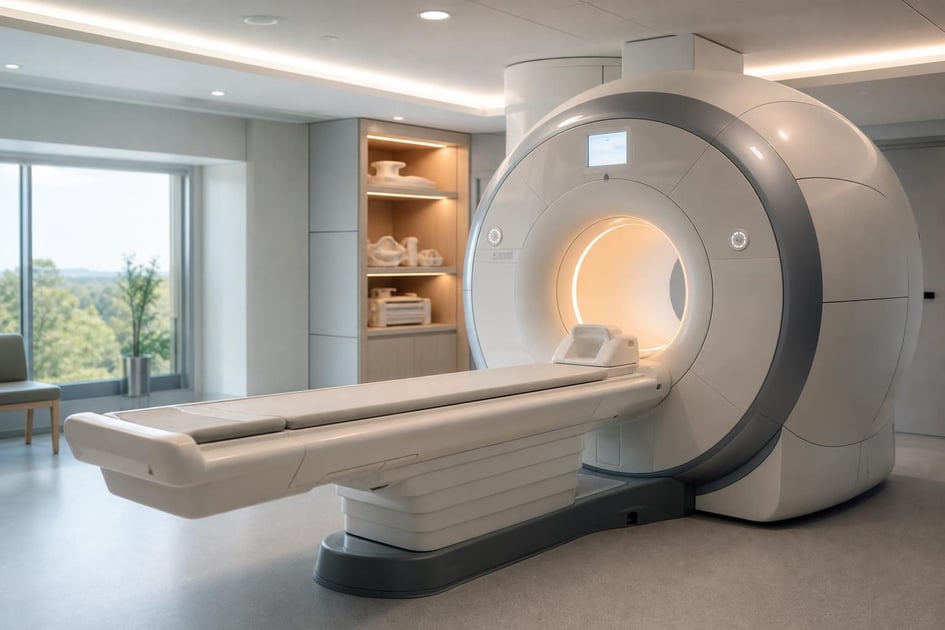
X-ray systems typically range from $30,000 to $150,000 depending on digital capability and portable versus fixed installation. CT scanners run from $300,000 to $1.5 million. Ultrasound units are more accessible, usually between $25,000 and $100,000. MRI machines represent the high end, often from $400,000 to $3 million. Each of these can be financed within our $5,000 to $5 million range, with the equipment itself serving as collateral.
Patient Care and Monitoring
Patient monitors, EKG machines and infusion pumps fall in the $5,000 to $50,000 range. These are often financed in bundles when a practice opens a new location or upgrades an existing floor. Because the per-unit cost is lower, lenders may group them into a single schedule.
Office and IT Infrastructure
Practice-management software, servers and networking gear often qualify as equipment financing if bundled with hardware. EHR workstations, tablets and telehealth setups typically cost $10,000 to $75,000 for a multi-provider practice. Medical facilities also need climate-controlled environments for both patient comfort and sensitive electronics, and the same collateral-based structure covers building systems like Commercial Hvac System financing. Hospitals and large practices with on-site food service can finance kitchen assets such as Commercial Ovens financing under the same terms. While these do not generate billable procedures directly, they are essential to keeping a practice operational.
By the Numbers: Medical care costs rose 4.2% on an annualized basis recently, and large employers are projecting a 9% increase in overall health coverage spending for 2026, according to healthcare inflation reporting. Independent practices feel the same cost pressure, which makes preserving cash through equipment financing a strategic priority.
See what you qualify for
The equipment itself secures the financing, which keeps rates competitive. Checking your options takes minutes.
Check Your OptionsLease vs. Loan: Which Structure Fits Your Practice?
The calculator output looks different depending on whether you select a loan or a lease. A loan amortizes the full cost plus interest over the term. You own the asset at the end, and the equipment appears on your balance sheet. A lease may show a lower monthly number, especially if there is a residual buyout at the end. The SBA 504 loan program requires a minimum useful remaining life of 10 years for equipment, which is well suited to long-lived medical assets but may not fit every practice's timeline.
Loans work well for equipment with a long useful life that you intend to keep for seven to ten years. Think of a digital radiography room or a surgical C-arm. Leases can make sense for technology that obsoletes quickly, such as certain laser systems or software-dependent diagnostic tools, because the lease term can match the useful life and you are not stuck with outdated collateral.
From a cash-flow perspective, a loan with a 60-month term and a 10% down payment might run slightly higher per month than a 48-month lease with a $1 buyout, but the total cost of ownership often favors the loan. Run both scenarios in your calculator and compare the totals, not just the monthly line item.
If your practice is weighing a major upgrade, start an application in a few minutes and get a decision on your equipment, possibly the same day.
Common Mistakes When Practices Estimate Payments
Even experienced office managers miscalculate equipment financing. Here are the errors we see most often.
- Ignoring soft costs. Delivery, installation, electrical upgrades and training can add thousands to the project. If your calculator uses only the equipment invoice, you will be underfunded.
- Using the wrong term. A 24-month term on a $300,000 CT scanner creates a massive monthly obligation. Most practices need 60 to 84 months to keep the payment aligned with revenue.
- Forgetting the down payment. If your lender requires 15% down and you have not reserved the cash, the deal stalls at closing.
- Assuming used equals cheap. Older equipment may need a larger down payment or a shorter term, which can push the monthly payment close to the new-equipment number.
- Not locking the rate. Equipment quotes are valid for 30 days. If rates vary by credit profile, equipment age and term, waiting three months to apply can change the payment.
Key Insight: Practices that finance multiple pieces in a single schedule often get better overall terms than those financing one item at a time. Bundling a $40,000 ultrasound with $20,000 in monitoring equipment creates a larger, more attractive loan for the lender without increasing your marginal paperwork.
What Documentation You Need Ready
Having paperwork organized before you apply speeds the process and improves your chances of same-day approval. Most healthcare practice applications include:
- Last two to three years of business tax returns
- Year-to-date profit and loss statement
- Current balance sheet
- Business bank statements for the last three to four months
- Equipment quote or invoice from the vendor
- Proof of business ownership and relevant licenses
For larger requests, the lender may also request accounts-receivable aging and a brief narrative on how the equipment will increase revenue or reduce costs. The more clearly you can show that the new asset pays for itself through additional procedures or improved efficiency, the stronger your file looks.
What Happens After You Apply
Once the application and supporting documents are submitted, underwriting reviews credit, cash flow and collateral value. Because the equipment itself secures the loan, the lender focuses heavily on the asset's resale market and the practice's ability to service the debt. Same-day approvals are possible when the file is complete and the equipment is standard collateral.
If approved, you receive a term sheet outlining the monthly payment, term, any down payment required and prepayment terms. After you accept, the lender pays the vendor directly or issues a check to you and the vendor jointly, depending on the structure. You take delivery, put the equipment in service and begin billing for the new procedures it enables.
The entire process, from application to funding, can take as little as 24 to 48 hours for deals under $500,000 and slightly longer for complex multi-asset schedules approaching $1 million or more.
Ready to move forward?
More than 10,000 businesses have financed equipment with Provide Capital. See what you qualify for today.
Get StartedFrequently Asked Questions
Can I finance used medical equipment?
Yes. Used diagnostic and patient-care equipment is financeable as long as it has remaining useful life and a recognized resale market. Terms may be slightly shorter than new, and rates vary by credit profile, equipment age and term.
What credit score do I need?
There is no hard cutoff, but stronger credit profiles receive better terms. Most established practices with scores in the mid-600s and above qualify for standard programs. We evaluate the full financial picture, not just the score.
How fast can I get funded?
Same-day approvals are possible for complete applications with standard collateral. Funding usually follows within 24 to 48 hours after acceptance of the term sheet.
Does the equipment have to be from a dealer?
No. Private-party sales and auction purchases are financeable as long as the seller can provide clear title and an inspection or appraisal confirms condition. The lender will verify the serial number and may require a physical inspection.
Can I include installation and training in the loan?
Yes. Soft costs such as delivery, installation, calibration and initial training can often be rolled into the financed amount up to a capped percentage of the equipment cost. Ask your representative for the exact limit on your transaction.
Is a down payment always required?
No. Well-qualified borrowers can sometimes secure 100% financing. However, a down payment of 10% to 20% reduces the monthly obligation and may improve the rate tier.
What happens if I want to pay off the loan early?
Prepayment terms vary by program. Some loans allow full prepayment with no penalty; others charge a small fee or require you to pay a portion of the remaining interest. Review the term sheet carefully before accepting.
Can I finance equipment for a new location?
Yes, provided the practice itself is established and the new location is an expansion of an existing operation. We do not finance equipment for startup practices without an operating history.
Closing Next Step
A healthcare equipment financing calculator gives you a useful range, but the real number comes from a qualified application. Whether you are adding a digital X-ray room, replacing an aging ultrasound or outfitting a new satellite clinic, the equipment itself is the collateral, which keeps rates competitive and preserves your working capital for payroll, inventory and unexpected expenses. Get a decision on your healthcare equipment and keep your cash reserves intact.
Disclaimer: The information provided in this article is for general educational purposes only and is not financial, legal, or tax advice. Funding terms, qualifications, and product availability may vary and are subject to change without notice. Provide Capital does not guarantee approval, rates, or specific outcomes. For personalized information about your business funding options, contact our team directly.
