
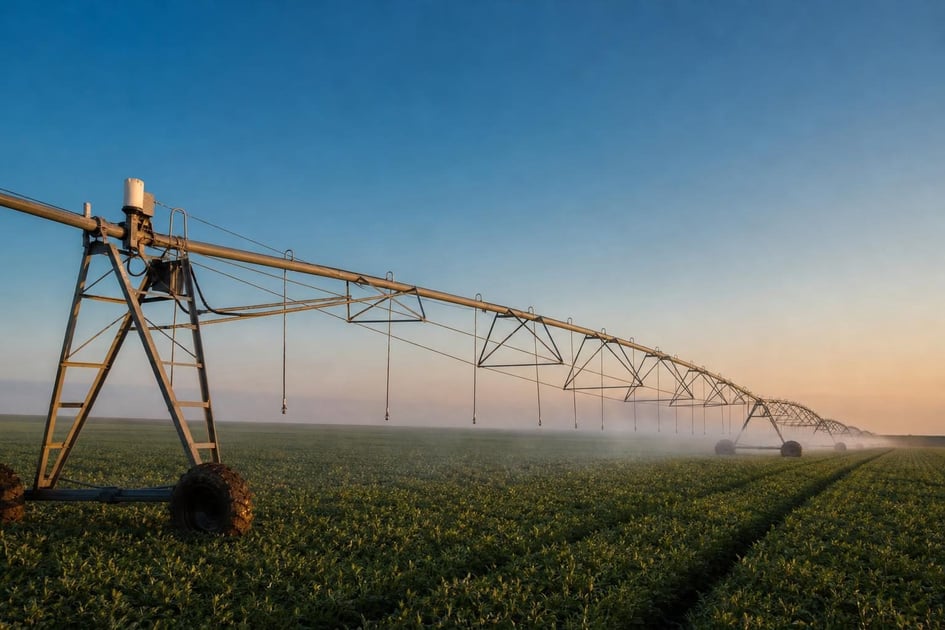
Bad credit does not automatically disqualify you from financing an irrigation system. Because the equipment itself serves as collateral, lenders can approve deals that unsecured lenders would decline. At Provide Capital, we finance new and used business equipment from $5,000 to $5 million, including center pivots, drip systems, traveling guns and linear move rigs. Rates vary by credit profile, equipment age and term, and same-day approvals are possible once your documentation is complete. If you are reviewing quotes from a dealer or private seller, you can start an application in a few minutes and see where you stand without committing to a hard credit pull upfront.
Irrigation systems are a high-priority purchase for many operations. A reliable water delivery setup can mean the difference between a profitable harvest and crop loss. Yet many owner-operators worry that a past bankruptcy, tax lien or low personal credit score will block them. In equipment financing, the underwriting story is broader than a single number. Lenders look at cash flow, time in business, the equipment's resale value and the equity you put into the deal. Understanding how these pieces fit together lets you walk into the buying process prepared.
We serve construction, healthcare, dental, restaurant and food service, manufacturing, transportation, agriculture, HVAC and forestry nationwide. That breadth matters because an irrigation contractor who also runs a small trucking fleet or a heating business can leverage cross-collateral relationships or simply work with a lender who already understands mixed-industry operations.
How Equipment Financing Works for Irrigation Systems
Equipment financing is a secured transaction. The lender buys the asset or places a lien on it, and you make fixed payments over a term that usually matches the useful life of the equipment. If you default, the lender repossesses the system and sells it to recover the balance. That security interest is why borrowers with challenged credit still receive offers, albeit with adjusted terms. As Forbes guidance on equipment financing notes, using the equipment as collateral lowers the lender's risk and expands access for businesses that might not qualify for unsecured credit.
We treat Irrigation Systems financing as a distinct asset class because the collateral behaves differently than a vehicle or machine tool. A center pivot in a major row-crop region holds resale value season after season. Drip tape and filtration units depreciate faster but still carry worth in the specialty crop market. Underwriters weigh the asset's liquidity, the vendor's reputation and your ability to generate revenue with the system.
Unlike unsecured working capital, the approval decision hinges on the whole picture. A 620 credit score with two years of profitable tax returns and a 10% down payment often clears when a 680 score with six months of operation and no deposit does not. The collateral mitigates risk, but it does not erase it. Lenders still want evidence that you can cover the payment through drought, commodity dips or unexpected repairs.
Because the equipment itself is the collateral, rates stay competitive relative to unsecured products. Your rate will reflect the strength of your overall file, but the presence of a hard asset with a liquid resale market gives the lender a backstop that unsecured lenders lack. That backstop is the reason a borrower with a 600 score can walk away with a funded deal on a $75,000 pivot when the same borrower might be declined for a $20,000 signature loan.
Key Insight: Most irrigation lenders file a UCC-1 lien on the equipment and may also take a purchase-money security interest in the water pump and filtration skid if they are packaged on the same invoice. Separating those components across multiple vendors can complicate lien perfection and delay funding by several days.
Already have a machine in mind?
Provide Capital finances new and used equipment from $5,000 to $5 million, with same-day decisions possible.
Apply NowWhat "Bad Credit" Actually Means in Equipment Financing
In the equipment finance industry, "bad credit" is not a universal label. It usually means a personal FICO score below 640, recent delinquencies, a prior bankruptcy within seven years, or a high utilization ratio that signals cash-flow stress. Some lenders draw the line at 600; others look at the underlying story before deciding.
Time in business acts as a counterweight. An operation with five years of filed tax returns and steady gross deposits can offset a score in the low 600s. Revenue consistency matters more than top-line size. A borrower who deposits $15,000 every month for two years looks safer than one who deposits $40,000 in seasonal lumps with three months of near-zero activity.
The equipment's age also shifts the risk scale. New systems with multi-year warranties reassure underwriters because the asset is less likely to fail and leave you with a payment and no productivity. Used systems can still qualify, but a borrower with bad credit may need to put down 15% to 20% instead of 5% to 10% to reach the lender's risk threshold.
New vs. Used Irrigation Equipment
New center pivots, drip systems and linear moves carry manufacturer warranties, dealer support and the latest water-efficiency controls. Used equipment costs less upfront and often delivers the same acreage coverage, but maintenance timing is less predictable. Your credit profile influences which route is practical. According to Reuters reporting on farm equipment inventory, dealer lots have accumulated excess machinery in some regions, which can create negotiating room for buyers willing to purchase slightly used systems.
| Factor | New Irrigation System | Used Irrigation System |
|---|---|---|
| Down payment (bad credit) | 5% to 15% | 15% to 25% |
| Term range | 3 to 7 years | 2 to 5 years |
| Rate structure | More competitive because collateral value is higher | Higher to reflect depreciation and repair risk |
| Warranty coverage | Full manufacturer warranty | Limited or none; inspection advised |
| Resale value at term end | Stronger; newer technology retains demand | Lower; may be near salvage after second term |
If your operation is expanding acreage and you need reliability above all, new equipment may justify the higher capital outlay. If you are replacing a broken lateral on a tight budget, a well-maintained used system financed over three years can preserve working capital for seed and chemicals.
Pro Tip: Before financing a used pivot, ask the seller for the serial number and contact the manufacturer for a service history. Many dealers can tell you whether the gearbox, alignment and spans match the hours on the meter. Underwriters appreciate a documented inspection because it reduces their collateral risk.
Lease vs. Loan for Irrigation Equipment
An equipment lease lets you use the system for a fixed period while the lessor retains title. At the end, you may return the equipment, buy it at fair market value, or exercise a nominal purchase option depending on the lease structure. A loan puts title in your name immediately, with the lender holding a lien until the final payment.
Leasing works well when you expect technology to change quickly or when you only need the system for a specific contract. Loans work better when you plan to run the equipment for a decade and want to build equity. For tax year 2026, lease payments are typically deductible as a business expense, while a loan may let you depreciate the asset under Section 179 or bonus depreciation rules. Because the 2026 limits and phase-outs are subject to IRS adjustment, confirm the exact benefit with your CPA before you sign.
With challenged credit, loans are more common than leases. Lessors usually demand stronger credit because they take residual risk at the end of term. If you do find a lease offer, expect a shorter term and a higher monthly payment than a borrower with prime credit would receive. If you are unsure which structure fits your cash flow, see what financing you qualify for on that pivot or drip system and compare the term sheets side by side.
Qualifying When Your Credit Is Challenged
Underwriters compensate for credit weakness in four ways: larger equity, shorter terms, stronger collateral or additional guarantors. You do not need all four, but combining two usually gets the deal done.
Down Payment Expectations
Expect to put 10% to 20% down if your credit score is below 640. The exact percentage depends on the equipment's age and whether you are buying from a dealer or a private party. Dealer sales often carry manufacturer volume discounts that improve the loan-to-value ratio, which means you might put down 10% on a new pivot instead of 20% on a comparable used unit from an individual.
Documenting Revenue
Lenders want three to six months of business bank statements and the most recent two years of tax returns. If you are a sole proprietor, they may also review your personal returns. The goal is to show that your monthly net cash flow can absorb the payment after normal operating expenses. For a $2,500 monthly irrigation payment, underwriters like to see at least $7,500 in monthly gross revenue with steady deposits.
Trade-Ins and Cosigners
A trade-in with clear title reduces the financed amount and improves your loan-to-value ratio. Some borrowers cosign with a spouse or business partner whose credit is stronger. Either tactic can move an application from a decline to an approval with conditions.
By the Numbers: A used center pivot covering 125 acres typically costs $35,000 to $55,000 installed. With 15% down and a 48-month term, the monthly payment often falls between $850 and $1,100 depending on the rate and fees. Spreading that cost over a full season means the system pays for itself if yields improve by roughly 15 bushels per acre on corn.
See what you qualify for
The equipment itself secures the financing, which keeps rates competitive. Checking your options takes minutes.
Check Your OptionsTax Treatment for 2026
For tax year 2026, the IRS allows businesses to deduct qualifying equipment purchases through Section 179 and bonus depreciation, subject to annual limits and phase-outs. The exact dollar ceilings and phase-out thresholds are adjusted yearly, so you should consult your CPA for the 2026 figures before you rely on them in your budget. Irrigation systems generally qualify as tangible personal property used in business, which places them in the same category as machinery and off-road vehicles.
If you finance the purchase with a loan, you may still claim the deduction even though you have not paid the full cash price upfront. The key is that you place the equipment in service during the 2026 tax year and meet any active-business-income requirements. Lease payments, by contrast, are usually written off as operating expenses month by month rather than front-loaded in year one.
MACRS depreciation schedules also apply if you do not elect Section 179 or bonus depreciation. Most irrigation equipment falls under the seven-year recovery period, but components like pumps and electrical panels may have different class lives. Your CPA or tax attorney can map the exact schedule to your purchase invoice.
Industry-Specific Use Cases
Irrigation is not one-size-fits-all. The type of system you finance should match your crop, soil and water source.
Row Crops and Center Pivots
Corn, soybean and cotton operations in the Great Plains rely on center pivots and linear moves. These systems cover large acreage with minimal labor. A 160-acre pivot can require an initial investment of $50,000 to $90,000 depending on span length, drops and control panels. Financing spreads that cost across multiple growing seasons so you are not tying up cash that could buy seed or fertilizer.
Orchards and Drip Irrigation
Tree nuts, grapes and vegetables often use drip tape or micro-sprinklers to deliver water directly to the root zone. The upfront cost per acre is lower than a pivot, but filtration and pressure regulation add complexity. A turnkey drip system for 40 acres might run $20,000 to $35,000. Because these crops command higher per-acre revenue, lenders view them favorably even when credit is bruised.
Landscaping and Turf Management
Commercial landscapers and sports-field managers need traveling guns, turf drips and portable pumps. These jobs are smaller in scale but higher in frequency. A $12,000 traveling gun setup might be all you need to take on municipal contracts that were previously out of reach. Agriculture equipment financing is not limited to traditional farms; any business using the equipment productively can qualify.
Common Mistakes to Avoid
Borrowers with bad credit sometimes make decisions that worsen their position. Avoid these pitfalls.
Overextending on Technology You Do Not Need
A variable-rate irrigation package with GPS telemetry and soil-moisture probes is attractive, but every added sensor increases the financed amount. If your operation is not large enough to justify the data overhead, you are paying interest on convenience rather than productivity. Start with a base system and upgrade after you have proven the cash flow.
Ignoring Seasonal Cash Flow
Farm revenue is not monthly. A lender may structure payments to skip the dormant season or to start low and step up after harvest. If you accept a standard twelve-equal-payment schedule on a crop that only generates revenue from June to October, you risk missing January and February payments. Match the payment schedule to your deposit history.
Pro Tip: Some irrigation dealers offer "zero down" promotions through captive finance companies, but those programs usually reserve their best terms for borrowers with top-tier credit. If your credit is below 660, ask the dealer for the standard rate sheet before you negotiate. You may find that an independent lender offers a lower total cost once the promotional period expires.
What Documentation You Need
Having paperwork ready before you apply shortens the approval cycle from days to hours. While SBA loan programs can be an option for some businesses, direct equipment financing usually moves faster because the collateral is already defined. Lenders typically request:
- A completed application listing business ownership, time in operation and requested equipment.
- The last three to six months of business bank statements.
- The most recent two years of business tax returns, or personal returns if you are a sole proprietor.
- A quote or invoice from the equipment vendor showing make, model, year, serial number and purchase price.
- Proof of insurance naming the lender as loss payee.
If you are buying used equipment from a private party, add a bill of sale and a current equipment inspection. The lender may also require a site visit or appraisal for systems above $100,000 to confirm the asset exists and is in working order. If your records are organized, you can get a decision on your equipment, possibly the same day, because the underwriter does not have to chase missing pages.
What Happens After Approval
Once approved, you receive a term sheet outlining the monthly payment, term, buyout structure and any collateral requirements. Review it carefully. If the payment does not match your cash-flow projection, ask whether seasonal skips or a longer term are available. Rates vary by credit profile, equipment age and term, so every deal sheet is unique.
After you accept, the lender funds the vendor or seller directly. You take delivery and begin using the system immediately. The lender files a UCC-1 lien to perfect its security interest. You make payments according to the schedule, and once the final payment clears, the lender releases the lien and sends you a title or payoff letter. Whether you need Irrigation Systems financing or Boiler System financing for a heated greenhouse, the process is the same: secure the asset, prove the cash flow, and close.
Put the right equipment to work
From $5,000 to $5 million, new or used, Provide Capital helps businesses nationwide finance the equipment they need.
Apply TodayFrequently Asked Questions
Can I finance an irrigation system with a credit score under 600?
It is possible, but the terms will be tighter. Expect a larger down payment, a shorter term and possibly a cosigner or additional collateral. The key is showing consistent revenue and choosing equipment with strong resale value.
Does the lender check my business credit or personal credit?
For most owner-operated farms and small contractors, underwriters review both. Personal credit carries more weight when the business file is thin. If your business credit is strong but your personal score is low, highlight the business's payment history and trade references.
How long does approval take?
With complete documentation, same-day approvals are possible. More complex files or requests for systems above $250,000 may take 24 to 48 hours while the lender verifies vendor information and collateral value.
Can I finance a system from a private seller instead of a dealer?
Yes, but private-party transactions require extra paperwork. You will need a bill of sale, a clear title search and often an independent inspection. The lender may also verify that the seller has the legal right to transfer ownership.
Will financing an irrigation system help rebuild my credit?
Timely payments on an equipment loan are reported to business and sometimes personal credit bureaus. A consistent payment history over two to five years can improve your profile, provided you do not miss payments or default.
What happens if I need to upgrade mid-term?
Some lenders allow an equipment substitution or a trade-and-refinance transaction. You pay off the old balance with the proceeds from the new loan, rolling any equity or shortfall into the new deal. Ask your lender about their policy before you sign if you anticipate rapid growth.
Are there tax benefits for financed irrigation equipment in 2026?
For tax year 2026, you may be able to deduct the purchase under Section 179 or bonus depreciation if you use the equipment for business and meet IRS requirements. Lease payments are generally deductible as operating expenses. Because the specific 2026 limits change annually, speak with your CPA before you count on a particular deduction.
Can I include installation and delivery in the financing amount?
Often, yes. Soft costs like delivery, installation and initial training can be rolled into the loan if they appear on the vendor invoice and do not exceed a set percentage of the equipment cost. Ask your lender for their cap on soft-cost financing.
Next Steps
Gather your bank statements, tax returns and vendor quote. Review your credit report for errors that you can correct before applying. Choose whether new or used equipment fits your operation, and decide how much you can comfortably put down. Then submit your application with the equipment details attached. The sooner you start, the sooner you can lock in terms and get water moving across your fields.
Disclaimer: The information provided in this article is for general educational purposes only and is not financial, legal, or tax advice. Funding terms, qualifications, and product availability may vary and are subject to change without notice. Provide Capital does not guarantee approval, rates, or specific outcomes. For personalized information about your business funding options, contact our team directly.
