Manufacturing equipment financing requirements vary by lender, but most deals hinge on four factors: how long you have been in business, your credit profile, the age of the equipment, and the size of your down payment. At Provide Capital, we finance new and used business equipment from $5,000 to $5 million, using the equipment itself as collateral to keep rates competitive. Same-day approvals are possible when your documentation is complete. Whether you are buying a CNC lathe, a press brake, or an overhead crane, understanding what lenders evaluate before you apply will save time and strengthen your position. This guide covers qualification standards, new versus used considerations, lease versus loan trade-offs, 2026 tax treatment, and the documentation you need to move from quote to funding without delays.
What Lenders Look For in Manufacturing Equipment Financing
Time in Business
Most equipment lenders prefer at least two years of operating history. That track record demonstrates you can generate revenue and service debt. If you have been in business for less than two years, you may still qualify, but the lender will likely ask for a larger down payment or additional collateral. Banks often require three or more years, while specialized equipment finance companies can be more flexible with younger shops. If you are acquiring equipment to expand an existing line, be prepared to show historical financials that prove the new capacity will be utilized. Revenue growth over the past four quarters, a stable customer base, and contracts in hand all help offset a shorter operating history.
Credit Profile
Your personal and business credit scores both matter. A strong personal credit history above 700 will open the door to better terms, though many programs accept scores in the mid-600s. Lenders also look at your business credit report for late payments, tax liens, or judgments. Recent bankruptcies or open collections will complicate approval. Rates vary by credit profile, equipment age and term, so a borrower with excellent credit financing new equipment over 36 months will see different numbers than a borrower with challenged credit financing a 10-year-old machine over 60 months. If your credit has blemishes, be prepared to explain them. A single late payment two years ago is different from a pattern of missed obligations.
Equipment Age and Condition
The collateral itself is central to the deal. New equipment carries less risk, so lenders offer longer terms and lower down payments. Used equipment can be financed, but expect stricter scrutiny on remaining useful life, maintenance records, and resale value. A 15-year-old manual mill with no service history is harder to collateralize than a 5-year-old CNC with documented upkeep. Some lenders refuse to finance equipment older than a certain threshold, while others will go deeper into the secondary market if the machine is essential to your operation. When buying used, get a qualified technician to inspect the machine and estimate remaining useful life. Share that report with your lender; it builds confidence in the collateral.
Down Payment Expectations
Down payments typically range from zero to 20 percent of the equipment cost. New equipment often qualifies for 100 percent financing, especially for established borrowers. Used equipment or borrowers with shorter time in business may need to put 10 to 20 percent down. The down payment serves two purposes: it reduces the lender's risk and demonstrates your commitment to the asset. If you can comfortably put 15 percent down on a $200,000 machining center, you improve your chances of approval and may secure more favorable terms. Keep some cash in reserve, though. A large down payment that wipes out your operating cushion can leave you vulnerable when the first maintenance issue arises.
By the Numbers: A manufacturer purchasing a $250,000 5-axis CNC machine with 15 percent down would finance $212,500. On a 60-month term, that keeps monthly obligations manageable while the machine generates parts revenue immediately.
Get a fast decision on your equipment
Applying takes just a few minutes, and decisions can come as soon as the same day.
Start Your ApplicationNew vs. Used Manufacturing Equipment
New equipment arrives with warranties, the latest technology, and lower maintenance costs, but it depreciates the moment it is installed. Used equipment costs less upfront and may have already taken the steepest depreciation hit, yet it can carry higher maintenance expenses and shorter financing terms. When deciding between new and used, consider your production volume, the precision requirements of your jobs, and your shop's ability to handle downtime. According to U.S. Census Bureau data, manufacturing accounts for a significant share of private-sector capital investment, which means lenders are generally comfortable collateralizing industrial machinery.
| Factor | New Equipment | Used Equipment |
|---|---|---|
| Initial Cost | Higher | Lower |
| Financing Term | Up to 84 months | Typically 36–60 months |
| Down Payment | Often 0–10% | Usually 10–20% |
| Maintenance | Lower, under warranty | Higher, service history dependent |
| Technology | Latest | May lag by a generation |
| Depreciation | Steepest in years 1–3 | Slower |
If your shop runs tight tolerances for aerospace or medical clients, new equipment may be worth the premium. If you need a backup bandsaw or a rough-duty material handler, a well-maintained used machine can be the smarter financial move.
Lease vs. Loan for Manufacturing Equipment
An equipment loan ends with you owning the asset outright. A lease gives you use of the machine for a set period, after which you may return it, buy it out, or upgrade. Loans work best for equipment with a long useful life that you intend to keep. Leases can preserve cash flow and are useful when technology changes rapidly and you expect to upgrade every few years.
| Feature | Equipment Loan | Equipment Lease |
|---|---|---|
| Ownership | You own it after final payment | You may own it only after buyout |
| Monthly Payment | Usually lower total cost | Often lower monthly cost |
| Tax Treatment | Interest deductible, depreciation available | Payments often fully deductible |
| End of Term | Free and clear asset | Return, renew, or purchase |
| Ideal For | Long-life assets like presses, cranes | Rapidly evolving tech like 3D printers |
If you plan to run that vertical machining center for 15 years, a loan builds equity. If you need a 3D printing system that may be obsolete in three years, a lease keeps your options open.
Pro Tip: Before choosing between a lease and a loan, ask your CPA to model the after-tax cost of both options for your 2026 tax situation. The difference in net cost can exceed 10 percent depending on your bracket and the equipment's depreciable life.
Tax Treatment for Manufacturing Equipment in 2026
Section 179 allows manufacturers to deduct the full purchase price of qualifying equipment in the year it is placed in service, subject to annual limits. For tax year 2026, consult your CPA for the exact deduction ceiling and phase-out threshold, as these figures adjust with inflation. Bonus depreciation may also apply to new and used equipment, though the percentage has been stepping down in recent years. Again, verify the 2026 bonus depreciation rate with a tax professional before you rely on it for cash-flow planning.
Interest paid on equipment loans is generally deductible as a business expense. Lease payments are typically deductible in full as an operating expense. The best structure depends on your taxable income, existing depreciation schedules, and whether you need to show assets on your balance sheet. Never make a financing decision based solely on tax benefits; the equipment must first earn its keep through production.
If you are ready to see how financing fits your 2026 equipment plans, see what you qualify for with a same-day decision.
Find the right financing structure
Tell us about the equipment you need and we will show you the options that fit your business.
See Your OptionsIndustry-Specific Use Cases
CNC Machining
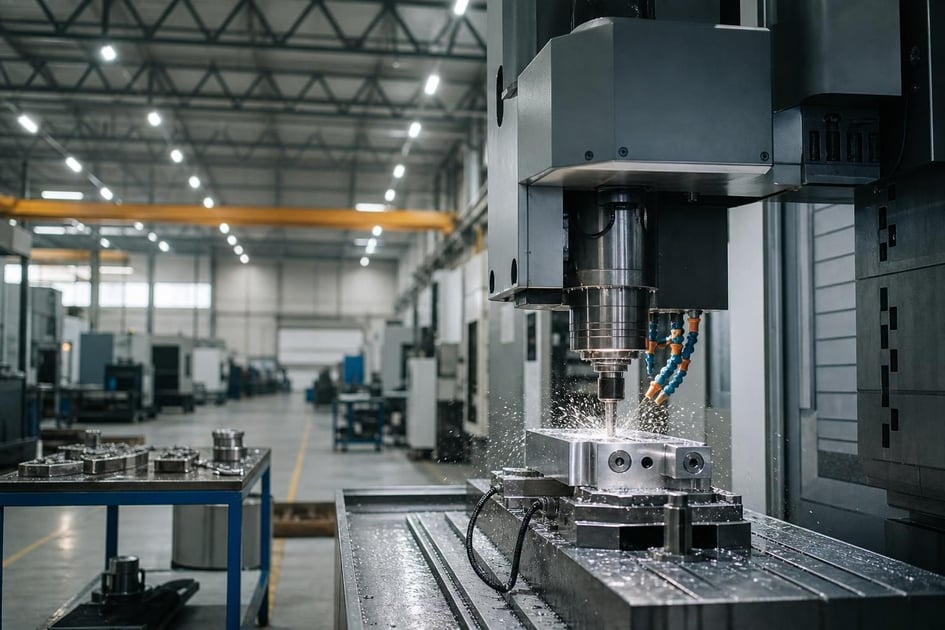
Computer numerical control machines are the backbone of modern job shops. A 3-axis VMC might cost $75,000 to $150,000, while a 5-axis horizontal machining center can run $300,000 or more. Lenders understand these assets hold value, so well-maintained CNC equipment often qualifies for strong terms. Be prepared to show the lender how the machine's spindle hours will translate into billable work. The Small Business Administration notes that equipment loans are a primary tool for manufacturers seeking to expand capacity without diluting ownership.
Fabrication and Welding
Press brakes, shears, plasma tables, and robotic welding cells represent significant capital outlays. A robotic welding system can cost $150,000 to $400,000 depending on reach, payload, and software. Because these systems are specialized, lenders want to see that your backlog justifies the capacity. If you are moving from manual to automated fabrication, have a clear ROI projection ready. Demonstrate how the cycle time reduction or labor savings will cover the monthly obligation.
Material Handling
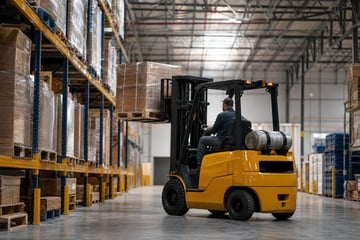
Overhead cranes, forklifts, and conveyors keep material moving and labor costs down. While these assets are less glamorous than machining centers, they are essential. A 10-ton overhead crane can exceed $100,000 installed. Wheel Loaders financing and Skid Steers financing are also common for shops that handle raw stock outdoors or maintain their own yards. Even indoor facilities often need forklifts and pallet systems that benefit from financing.
Key Insight: Lenders view manufacturing equipment more favorably when it is general-purpose and has a broad resale market. A standard CNC lathe is easier to collateralize than a highly customized automated assembly line built for a single part number.
Common Mistakes When Financing Manufacturing Equipment
The most expensive error is financing equipment before you have verified the machine's condition. Always inspect used machinery in person or through a trusted third party. Request maintenance logs and run-off samples if possible. Another mistake is overextending on monthly payments. Your equipment payment should fit comfortably within your existing cash flow, even during slower quarters. As Reuters has reported, changes in industrial demand can strain shops that carry excessive fixed obligations.
Some borrowers fail to compare total cost of ownership. A lower monthly payment stretched over 84 months can cost more in interest than a higher payment over 48 months. Others forget to budget for installation, rigging, power drops, and training. A $200,000 press brake can easily become a $240,000 project once delivered and commissioned. Build those soft costs into your financing request from the start.
Documentation You'll Need
Lenders typically request three months of business bank statements, two years of tax returns or financial statements, a current equipment quote or invoice, and a brief description of how the equipment will be used. For larger requests, they may ask for a personal financial statement and a business debt schedule. Having these documents organized before you apply will speed up underwriting. If you are a pass-through entity, your personal tax returns may also be required to verify income. Some lenders also want to see a current accounts payable aging report to confirm you are current with vendors. Any outstanding tax liens or unpaid supplier bills will surface during underwriting, so address them before you apply.
For transactions involving Manufacturing equipment financing over $500,000, expect more detailed due diligence. The lender may request an appraisal of the equipment, a site visit, or a review of your accounts receivable aging. The stronger your documentation, the faster you move through approval. Keep digital copies of everything; most underwriters now accept PDFs via secure portal rather than paper.
What Happens After Approval
Once approved, you will receive a term sheet detailing the financed amount, monthly payment, term length, and any prepayment provisions. Review these carefully. Some lenders charge prepayment penalties; others do not. After you sign and return the documents, the lender pays the equipment vendor directly or reimburses you if you have already purchased the machine. If the vendor requires a deposit to begin building the machine, ask your lender whether they can issue a progress payment. This is common with long-lead-time items such as large horizontal boring mills or custom fabrication equipment.
Funded deals typically close within 24 to 72 hours of signed documents. The lender files a UCC-1 lien on the equipment to secure their interest. You take delivery, put the machine to work, and begin making payments. Most lenders do not blanket lien your entire business, only the specific equipment being financed, which keeps your other assets unencumbered.
Pro Tip: Ask your lender whether they file a purchase-money security interest (PMSI) instead of a general UCC filing. A properly perfected PMSI can give the lender priority over earlier creditors on the specific equipment you are buying, which sometimes improves approval odds.
Put the right equipment to work
From $5,000 to $5 million, new or used, Provide Capital helps businesses nationwide finance the equipment they need.
Apply TodayFrequently Asked Questions
Can I finance used manufacturing equipment?
Yes. Many lenders finance quality used equipment, though terms may be shorter and down payment requirements higher than for new machines. Expect to provide maintenance records and proof of remaining useful life. A well-documented used machine can be easier to approve than a new machine from an unproven vendor.
What credit score do I need for manufacturing equipment financing?
There is no universal minimum. Strong credit above 700 will secure the best terms, but many programs work with scores in the 600s. Rates vary by credit profile, equipment age and term. If your score is below 650, you may need to offer a larger down payment or accept a shorter term.
How long can I finance a manufacturing machine?
New equipment often qualifies for terms up to 84 months. Used equipment is typically financed over 36 to 60 months, depending on age and condition. The goal is to match the term to the equipment's remaining useful life so you are not paying for a machine after it has retired.
Can I include soft costs like installation and training?
Many lenders allow you to finance delivery, rigging, installation, and initial training as part of the equipment package. Ask upfront so you can structure the quote accordingly. Including soft costs preserves your operating cash for materials and payroll.
Will the lender put a lien on my entire business?
Most equipment-specific lenders file a UCC lien only on the financed equipment, not a blanket lien on all business assets. Confirm this with your lender before signing. This distinction matters if you plan to seek additional credit lines for inventory or working capital.
How fast can I get approved?
With complete documentation, same-day approvals are possible. More complex transactions or larger requests may take 24 to 48 hours. Having your financials, equipment quote, and business formation documents ready before you apply will keep the process moving.
Should I lease or loan manufacturing equipment?
Choose a loan if you plan to keep the asset for its full useful life and want to build equity. Choose a lease if you need lower monthly payments, expect rapid technology changes, or want flexibility to upgrade. Match the financing structure to the asset's role in your operation.
What tax benefits apply to manufacturing equipment in 2026?
Section 179 and bonus depreciation may allow significant first-year deductions for qualifying equipment. Because limits and percentages change, consult your CPA for the 2026 figures before making a purchase decision. Interest on loans and lease payments are generally deductible, but the optimal strategy depends on your overall tax position.
To get a same-day decision on your equipment, talk to a specialist about your specific machine and receive a quote tailored to your shop.
Moving From Quote to Production
Understanding manufacturing equipment financing requirements before you shop puts you in a stronger negotiating position with both vendors and lenders. Know your credit standing, gather your financial documents, decide between new and used, and run the lease-versus-loan math with your CPA. The right financing structure turns a capital expenditure into a manageable monthly obligation that matches the revenue the equipment generates.
At Provide Capital, we work with manufacturers nationwide to structure deals that fit real-world cash flow. We serve construction, healthcare, dental, restaurant and food service, manufacturing, transportation, agriculture, HVAC and forestry. From CNC machines to material handling systems, we use the equipment itself as collateral to keep rates competitive. Ready to move forward? Get a same-day decision on your equipment and put your next machine to work.
Disclaimer: The information provided in this article is for general educational purposes only and is not financial, legal, or tax advice. Funding terms, qualifications, and product availability may vary and are subject to change without notice. Provide Capital does not guarantee approval, rates, or specific outcomes. For personalized information about your business funding options, contact our team directly.