
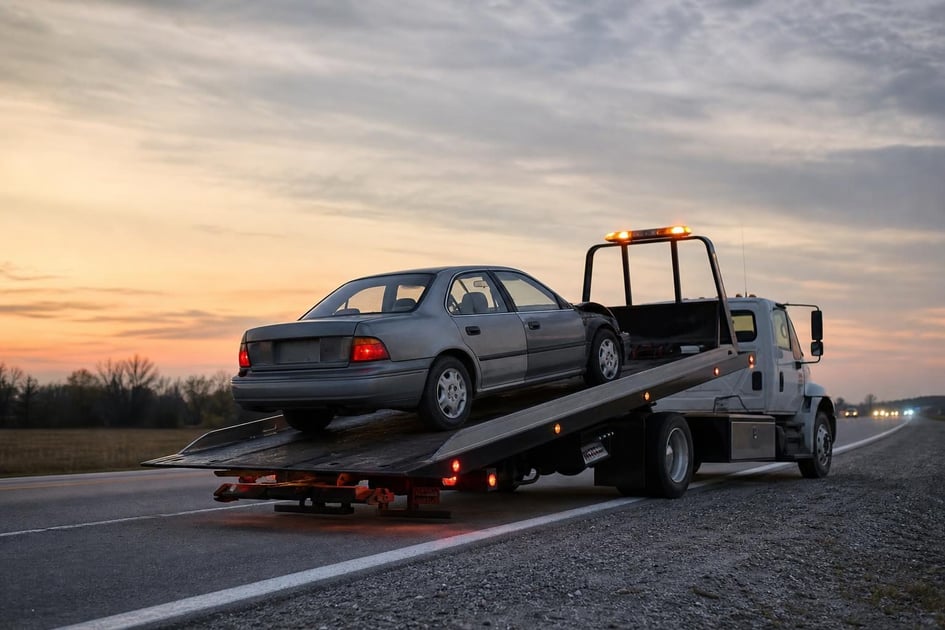
Can You Finance a Rollback Tow Truck with Bad Credit?
Yes. A low personal or business credit score does not automatically disqualify you from financing a rollback tow truck. Equipment lenders like Provide Capital finance new and used business equipment from $5,000 to $5 million using the equipment itself as collateral. Because the truck secures the deal, lenders can offer terms even when credit is bruised. If you have a specific rollback in mind, see what financing you qualify for on that truck.
The key difference for borrowers with bad credit is the structure of the deal, not the existence of one. You should expect a larger down payment, a shorter term, or both. Rates vary by credit profile, equipment age and term. Same-day approvals are possible when your documentation is complete. The equipment itself is the collateral, which keeps rates competitive compared with unsecured products.
Already have a machine in mind?
Provide Capital finances new and used equipment from $5,000 to $5 million, with same-day decisions possible.
Apply NowHow Credit Score Affects Your Terms
Most equipment financing companies use a risk-based pricing model. Your credit score is one input, but the collateral quality and your business cash flow matter significantly. A borrower with a 720 score might unlock 0% down and a 60-month term on a new unit. A 580 score on the same truck might require 15% down and a 48-month term. The monthly payment difference can be several hundred dollars, but the deal still funds.
Down Payment Expectations
Borrowers with scores below 620 often put down 10% to 20% of the truck's cost. On a $75,000 used rollback, that means $7,500 to $15,000 out of pocket. Borrowers with scores above 680 may qualify for 0% to 5% down. The equipment acts as security, so the lender's exposure is limited even with a lower score.
Rate Ranges and Term Lengths
Rates vary by credit profile, equipment age and term. A borrower with a 550 score financing a 10-year-old truck might see a higher cost of capital than a borrower with a 720 score buying a two-year-old unit. The exact figure depends on the lender's cost of funds, the truck's expected residual value, and your time in business.
Terms for rollback tow trucks generally run 36 to 60 months. Bad-credit deals often land on the shorter end. A 36-month term means higher monthly payments but less total interest paid. A 60-month term lowers the monthly burden but extends the obligation. Neither option is inherently better; the right choice depends on how many miles you plan to put on the truck and how quickly you want to own it free and clear.
Key Insight: Lenders care more about the loan-to-value ratio than the credit score in isolation. A $50,000 rollback with a $10,000 down payment and strong monthly revenue is often easier to approve than a $120,000 rollback with no money down and thin cash flow, even if the second borrower has a higher credit score.
What Lenders Evaluate Beyond Credit
Equipment lenders underwrite the total picture, not just a FICO number. They want to know whether the new payment fits inside your existing cash flow and whether the collateral will hold value if they need to recover it.
Time in Business
Most programs prefer two years in operation. That said, some lenders will work with owner-operators who have been in business for as little as six months if they can show prior industry experience or a consistent revenue stream. If you are newly independent after years of driving for another company, document that history. Pay stubs, tax records, or a letter from your former employer can substitute for a long business credit file.
Revenue and Cash Flow
Lenders want to see that the new payment fits inside your monthly budget. They typically look for a debt-service coverage ratio above 1.25. That means your net operating income needs to cover the new payment by at least 25%. Bank statements for the last three to six months are standard. If your revenue is seasonal, be ready to explain how you manage slow months. A winter downturn is normal in northern markets; lenders just want evidence that you planned for it.
Equipment Collateral Value
The rollback itself secures the financing. Lenders order an inspection or appraisal for units older than a certain age or for private-party sales. A truck with a clean title, documented maintenance, and a reputable brand name holds value better and improves your approval odds. Mileage matters. A five-year-old rollback with 80,000 miles is viewed more favorably than a three-year-old unit with 250,000 miles. The engine, transmission, and hydraulic bed condition all factor into the collateral assessment.
Pro Tip: Bring your own recent appraisal or inspection report to the table. It speeds up underwriting and signals that you are serious. If you are buying from a dealer, ask whether they already have a third-party inspection on file that the lender can accept.
How to Strengthen Your Application
Bad credit is a starting point, not a permanent label. There are concrete steps you can take before submitting an application to improve your position.
Increase Your Down Payment
Putting 20% down instead of 10% can move your application from a marginal approval to a clean one. It reduces the lender's risk and shows you have skin in the game. On a $60,000 rollback, the difference between a $6,000 down payment and a $12,000 down payment can unlock a longer term or a lower cost of capital.
Add a Creditworthy Co-Signer
Some lenders allow a business partner or spouse with stronger credit to guarantee the debt. This is more common for owner-operators with a short business history but a strong personal support network. Be aware that the co-signer is equally responsible for repayment, so this is a decision to discuss carefully.
Organize Your Equipment Documentation
Bring maintenance logs, the original build sheet, and any warranty transfer paperwork. The more you can prove the truck's value, the more comfortable the underwriter becomes. A well-documented used truck often underwrites faster than a new truck with missing paperwork.
New vs. Used Rollback Tow Trucks
The age and condition of the rollback directly affect your financing terms. Newer equipment usually qualifies for longer terms and lower down payments. Older equipment can still be financed, but the structure tightens.
| Factor | New Rollback | Used Rollback (3–7 Years) | Used Rollback (8+ Years) |
|---|---|---|---|
| Down Payment | 0%–10% | 10%–15% | 15%–20% |
| Term Available | Up to 60 months | 36–60 months | 24–48 months |
| Rate Impact | Most favorable | Moderate | Higher cost of capital |
| Collateral Value | Highest | Depreciated | Significantly depreciated |
| Maintenance Risk | Warranty coverage | Moderate | Higher out-of-pocket risk |
A new rollback from a major manufacturer might cost $120,000 to $180,000. A five-year-old unit could run $60,000 to $90,000. An older unit with high miles might cost $30,000 to $50,000. The lower acquisition price on a used truck reduces your total financed amount, which can offset the higher rate. For a single-truck operator doing light-duty towing and recovery, a used unit in the $50,000 to $70,000 range often represents the best balance of capability and affordability.
By the Numbers: Financing a $70,000 used rollback at a shorter term with 15% down means you borrow $59,500. Over 48 months, that keeps the monthly payment manageable for many single-truck operators while building equity in an income-producing asset.
Lease vs. Loan for Rollback Tow Trucks
You have two main structures for acquiring a rollback: an equipment loan or a finance lease. The right structure depends on how long you plan to keep the truck and how you want to handle taxes and balance-sheet reporting.
When a Loan Makes Sense
A loan puts the title in your name. You own the truck, you claim the depreciation, and you can sell it whenever you want. For owner-operators who plan to keep the rollback for its full useful life, a loan is usually the better fit. At the end of the term, you have an unencumbered asset generating revenue. Loans also typically have fewer restrictions on mileage, wear, and customization.
When a Lease Works Better
A finance lease often requires less upfront cash and may offer lower monthly payments. At the end of the lease, you typically have a nominal buyout option. If you expect to upgrade equipment every few years or you need to preserve cash for fuel, insurance, and payroll, a lease can make sense. Be aware that some leases have mileage or condition clauses that loans do not. If you plan to put heavy miles on the truck quickly, read the lease contract carefully.
If you are weighing these options, get a decision on your tow truck, possibly the same day, and compare the structures side by side.
Worked Cost Example
Consider a borrower with a 600 credit score buying a $65,000 used rollback that is four years old. The lender approves a 48-month term with 15% down. The borrower puts $9,750 down and finances $55,250. At a cost of capital appropriate for the risk profile, the monthly payment lands in a range that still leaves room for fuel, insurance, and maintenance. After 48 months, the borrower owns a $65,000 asset outright for a total outlay that includes interest and the initial down payment. That truck, if it generates $4,000 to $6,000 in monthly revenue, pays for itself well within the first year of service.
This example illustrates why collateral-backed financing works for borrowers with imperfect credit. The lender looks at the revenue the equipment produces, not just the borrower's past payment history. If the math works, the deal can move forward.
See what you qualify for
The equipment itself secures the financing, which keeps rates competitive. Checking your options takes minutes.
Check Your OptionsTax Treatment and Section 179 for 2026
For the 2026 tax year, the Section 179 deduction allows businesses to expense qualifying equipment purchases up to a specific limit set by the IRS. The exact dollar cap for 2026 is published in annual IRS guidance. You should consult a CPA to confirm the current-year limit and whether your rollback qualifies. In general, most heavy-duty trucks used more than 50% for business are eligible.
Bonus depreciation rules for 2026 may also apply, though the percentage has been phasing down in recent years. Again, a qualified accountant can model the after-tax cost of buying versus leasing based on your specific bracket and business structure. If you finance the truck with a loan, you may also deduct the interest portion of your payments. Lease payments are generally fully deductible as a business expense, but you do not own the depreciation. A CPA can walk you through which structure minimizes your 2026 tax liability.
Documentation You'll Need
Having your paperwork ready separates same-day approvals from multi-day delays. Lenders move faster when they do not have to chase documents.
Standard Paperwork
Most lenders request a completed application, the last three to six months of business bank statements, a copy of the equipment quote or purchase agreement, proof of insurance, a voided business check, and a driver's license. For some larger transactions, two years of personal tax returns may also be required.
Proof of Revenue
Bank statements should show consistent deposits. Lenders look for seasonality. If your winter months are slower, explain how you manage cash flow during those periods. A simple written explanation, supported by prior-year statements, can satisfy an underwriter.
Insurance Requirements
You will need a certificate of insurance naming the lender as loss payee. Coverage amounts vary by truck value, but most lenders require comprehensive and collision during the financing term. If you are upgrading from a lighter truck, call your agent early. A rollback may require higher liability limits than your current policy provides.
If you are buying from a private seller, the lender may also need the title history and a physical inspection report. Dealer purchases are usually simpler because the dealer has already organized the paperwork.
Industry-Specific Considerations
Rollback tow trucks serve the broader transportation and recovery market. Demand for towing services tends to be recession-resistant because accidents, breakdowns, and repossessions occur in all economic cycles. The U.S. Census Bureau tracks small business patterns across the transportation sector, and the data show that most towing companies remain small, localized operations with fewer than five trucks.
Seasonal patterns matter. In northern states, winter weather increases call volume and can justify the acquisition of an additional rollback before the snow season begins. In southern states, summer heat drives more roadside breakdowns. Aligning your financing timeline with your busiest quarter can help you handle the initial payments from stronger cash flow. The Small Business Administration publishes resources on managing seasonal cash flow that apply directly to towing and recovery operators.
As Associated Press coverage of small business trends has noted, service-based operators who invest in reliable equipment during downturns often capture market share when demand rebounds. A rollback that is ready to work every morning is a marketing tool as much as it is a piece of equipment.
Common Mistakes to Avoid
Buying too much truck is the most frequent error. A 35-ton rollback with all the options looks impressive, but if your typical load is light-duty passenger vehicles, you are overpaying for capacity you do not use. Match the truck to your actual book of business. If 90% of your calls are passenger cars and small SUVs, a light-duty or medium-duty rollback is the smarter buy.
Overlooking Total Cost of Ownership
The purchase price is only part of the equation. Fuel consumption on a gas rollback versus a diesel unit can differ by 30% or more. Maintenance intervals, tire costs, and hydraulic system upkeep add up. Run a five-year ownership model before you sign. Include fuel, insurance, scheduled maintenance, and one major unscheduled repair per year. If the total monthly cost exceeds your expected revenue per truck, downsize or look for a newer unit with lower maintenance risk.
Financing Through the Dealer Blindly
Dealer financing is convenient, but it is not always the only option. Shopping the deal to an independent equipment lender can uncover better terms, especially if your credit is already bruised. Dealers sometimes mark up the rate or steer you toward a captive finance program that pays them a referral fee. Getting a second opinion costs nothing and can save thousands over the life of the contract.
Neglecting Maintenance Records
A truck with a patchy service history spooks underwriters because it signals higher residual risk. Gather oil change records, transmission service receipts, and any major repair documentation before you apply. If you are selling a truck to buy a new one, organize the outgoing unit's records too. A clean history on your trade-in can increase its value and reduce the amount you need to finance.
Finally, do not hide past credit issues. Lenders see the report anyway. Explaining a prior bankruptcy, lien, or late payment in context—a medical event, a divorce, a temporary contract loss—often defuses the issue faster than letting them discover it cold.
What Happens After Approval
Once approved, the lender issues a funding letter or purchase order to the seller. You review and sign the closing documents. Funds are typically sent directly to the seller within 24 to 48 hours. You take possession, activate your insurance, and put the truck to work. The entire process from application to funding can take as little as two business days for straightforward deals.
Most lenders report your payment history to business credit bureaus. Making on-time payments on your Rollback Tow Truck financing can strengthen your business credit profile, making the next equipment purchase easier and less expensive. After 12 to 18 months of solid payment history, you may qualify for better terms on a second truck or an upgrade.
Put the right equipment to work
From $5,000 to $5 million, new or used, Provide Capital helps businesses nationwide finance the equipment they need.
Apply TodayFrequently Asked Questions
Can I finance a rollback with a credit score under 600?
Yes. Many equipment lenders specialize in near-prime and subprime transactions. Expect a larger down payment and a shorter term. Rates vary by credit profile, equipment age and term. The key is showing that the truck generates enough revenue to cover the payment and your other operating costs.
How long does approval take?
Same-day approvals are possible when your file is complete. More complex deals or private-party purchases may take 24 to 48 hours while the lender verifies collateral value. Having your bank statements, equipment quote, and insurance quote ready before you apply is the single best way to speed things up.
What is the minimum down payment?
Down payments range from 0% to 20% depending on credit, equipment age, and time in business. Borrowers with stronger profiles and newer equipment typically qualify for the lowest out-of-pocket requirements. If your credit is below 600, plan on at least 10% to 15% down.
Can I buy from a private seller?
Yes, though the lender may require a title search, lien verification, and an independent inspection. Dealer purchases are usually faster because the documentation is standardized. If you do buy privately, ask the seller for maintenance records and a clean title before you apply.
Does the lender need to inspect the truck?
Most lenders require an inspection for units older than seven to ten years or for private sales. Newer dealer purchases may skip this step. The inspection typically covers the engine, transmission, frame, and hydraulic bed. It costs a few hundred dollars and is usually paid by the buyer.
Will this help my business credit?
Most equipment financing companies report to business credit bureaus. Consistent, on-time payments build your business credit profile over the life of the contract. After 12 to 24 months of on-time payments, you may see your business credit score improve enough to qualify for better terms on future equipment.
Should I lease or loan?
If you want to own the asset long-term and claim depreciation, choose a loan. If you need lower monthly payments and plan to upgrade frequently, consider a finance lease. A CPA can help you model the tax impact for the 2026 tax year. There is no universal right answer; it depends on your mileage, revenue stability, and growth plans.
What industries do you serve?
Provide Capital serves construction, healthcare, dental, restaurant and food service, manufacturing, transportation, agriculture, HVAC and forestry nationwide. For operators in the towing and recovery space, our Transportation equipment financing programs cover rollbacks, wreckers, and related heavy-duty trucks.
Ready to Move Forward?
Bad credit does not have to park your growth. A rollback tow truck is collateral-backed equipment, which opens doors that unsecured credit products close. Gather your bank statements, pick a truck that matches your revenue, and start an application in a few minutes to lock in terms on the rollback you need. If you need broader heavy-duty coverage, we also offer Tow Truck financing for wreckers, rotators, and carriers of all sizes.
Disclaimer: The information provided in this article is for general educational purposes only and is not financial, legal, or tax advice. Funding terms, qualifications, and product availability may vary and are subject to change without notice. Provide Capital does not guarantee approval, rates, or specific outcomes. For personalized information about your business funding options, contact our team directly.
