
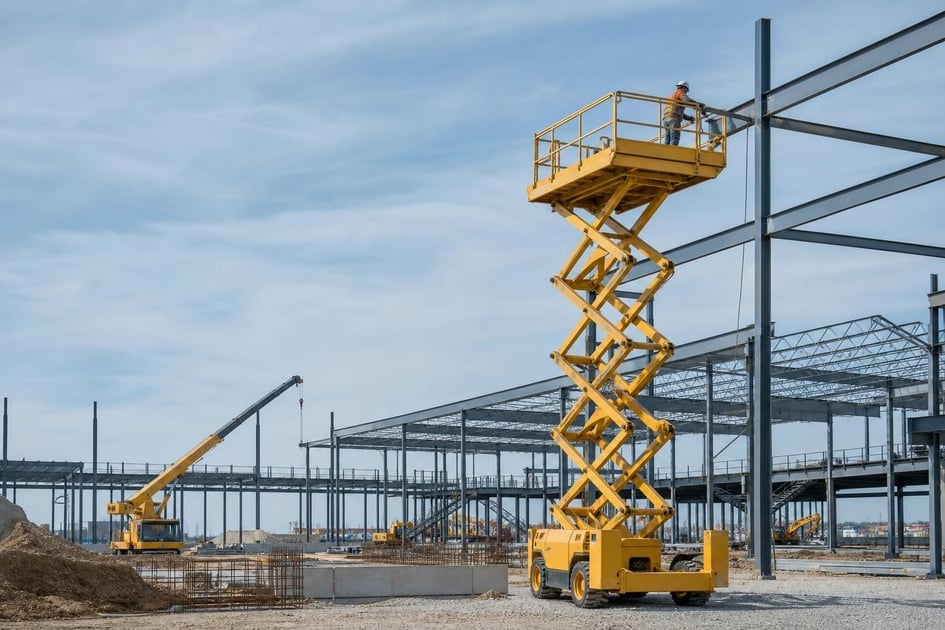
How Scissor Lift Financing Works
Scissor lift financing spreads the cost of an aerial work platform over a term of two to seven years, using the lift itself as collateral. That structure keeps monthly payments predictable and often makes approval faster than an unsecured business loan. Provide Capital finances new and used Scissor Lifts financing from $5,000 to $5 million, and same-day approvals are possible when the application and equipment details are complete.
If you already have a quote from a dealer, you can see what financing you qualify for on that scissor lift in minutes.
Get a fast decision on your equipment
Applying takes just a few minutes, and decisions can come as soon as the same day.
Start Your ApplicationWhat Scissor Lifts Cost and Why Financing Makes Sense
New vs. Used Price Ranges
A new 19 ft electric slab scissor lift typically runs between $14,000 and $25,000. Step up to a 26 ft electric model and the range is roughly $23,000 to $32,000. For a 32 ft electric unit, expect $27,000 to $45,000. Rough-terrain diesel lifts with four-wheel drive start around $35,000 and can exceed $85,000 for larger platforms. These figures come from dealer MSRPs; fleet buyers sometimes negotiate discounts of 5 to 12 percent.
Used lifts cost significantly less. Older 19 ft electric units often sell for $4,000 to $8,000, while late-model used 19 ft lifts with low hours land in the $8,500 to $14,500 range. A used 26 ft electric lift typically trades between $11,000 and $17,500. The exact price depends on hours, maintenance records, brand, and whether the unit carries a current ANSI inspection. Genie, JLG, and Skyjack generally command a small premium because parts availability is stronger in North America.
The Break-Even Math Against Renting
Renting a scissor lift costs roughly $100 to $350 per day, $320 to $1,260 per week, or $850 to $3,325 per month, depending on platform height and region. For a contractor using a lift steadily, those invoices add up fast. A used 19 ft electric lift purchased for $8,000 breaks even against a $1,200 monthly rental in about seven months of regular use. A new $22,000 unit breaks even in roughly 18 months. After that point, ownership saves the monthly rental fee minus ownership costs.
Annual ownership costs include insurance at roughly $500 to $1,500, maintenance at $800 to $2,000, inspection and certification at $200 to $500, and storage if you do not have yard space. Batteries for electric models need replacement every three to five years at $1,500 to $3,000. Even with these costs, owning usually beats renting once utilization climbs above 30 to 40 percent of the year.
By the Numbers: A contractor renting a 26 ft electric scissor lift for $1,800 per month spends $21,600 over one year. Financing a late-model used unit with a 36-month term can yield a monthly payment well below that rental figure, and the business owns the asset at the end. Rates vary by credit profile, equipment age and term.
Loan vs. Lease: What to Choose
Most scissor lift buyers choose between an equipment loan and an equipment lease. The right structure depends on how long you plan to keep the lift, your tax goals, and your cash-flow priorities. Forbes Advisor analysis of equipment financing notes that the equipment itself typically serves as collateral, which lowers lender risk and can improve access for a range of credit profiles.
| Feature | Equipment Loan | Equipment Lease |
|---|---|---|
| Ownership | You own the lift from day one | Lessor owns; you may have a buyout option |
| Down payment | Often 0% to 20% | Usually little or none |
| Monthly payment | Higher than a lease | Lower than a loan |
| End of term | Free and clear ownership | Return, renew, or purchase at fair market value |
| Tax treatment | Depreciation and interest deduction | Lease payments are operating expenses |
| Best for | Long-term use and equity building | Short-term projects or frequent upgrades |
Equipment Loans
With an equipment loan, the lender pays the dealer or seller and you repay the balance over 24 to 84 months. The lift serves as collateral, which means you do not need to pledge unrelated real estate or inventory. Because the asset secures the financing, lenders can often move quickly. Provide Capital offers same-day decisions on many applications. You claim depreciation on the lift and deduct the interest portion of your payments.
Equipment Leases
A lease lets you use the lift for a set period, usually 24 to 60 months, with lower monthly payments than a loan. At the end, you can return the equipment, extend the lease, or buy it at fair market value. An operating lease keeps the liability off your balance sheet and treats payments as deductible operating expenses. A capital lease, or $1 buyout lease, functions more like a loan for tax purposes and usually ends with ownership. If you expect to replace the lift every few years to stay under warranty, a lease can make sense.
Key Insight: A lease with a $1 buyout is structured like a loan for accounting and tax purposes, while a true operating lease is treated as a rental. Many owners assume all leases work the same way, but the difference affects your balance sheet, your debt covenants, and your 2026 tax return. Ask your lender to specify the lease type in writing before you sign.
Qualification Criteria and What Lenders Review
Credit Profile and Time in Business
Lenders look at both personal and business credit. A stronger credit profile unlocks better terms, but equipment financing can accommodate a range of profiles because the lift itself secures the deal. Most lenders prefer at least one year in business, though some will work with younger companies if the owner has solid personal credit and the equipment generates clear revenue. Annual revenue requirements vary, but many equipment lenders look for $100,000 or more in gross revenue. If you are exploring government-backed options, SBA-backed loan programs may offer additional flexibility for qualifying small businesses.
Documentation You Will Need
Applications under $150,000 often require only an equipment quote and basic business information. Larger requests may add recent bank statements, tax returns, and a profit-and-loss statement. For used equipment, you should also provide the serial number, year, make, model, hour meter reading, and any inspection records. If you are buying at auction, disclose the auction fees, removal deadline, and payment terms early, because funding must align with the seller's timeline.
Pro Tip: Before you submit an application, confirm that the lender accepts the seller or auction house you plan to use. Not every finance company wires funds to private sellers or out-of-state auction yards. A two-minute phone call can prevent a last-minute scramble when the auction clock is ticking.
You can get a decision on your equipment, possibly the same day, by starting an application with your quote in hand.
Find the right financing structure
Tell us about the equipment you need and we will show you the options that fit your business.
See Your OptionsTax Treatment for 2026
For tax year 2026, businesses that purchase a scissor lift may be able to deduct part or all of the cost in the first year under Section 179, subject to annual inflation-adjusted limits and taxable income restrictions. The equipment must be used more than 50 percent for business, and it must be placed in service during the 2026 tax year. Alternatively, you can depreciate the lift over its useful life, typically five to seven years under the Modified Accelerated Cost Recovery System, and deduct the interest on any loan. Lease payments are generally deductible as operating expenses. Because tax rules change and every business structure is different, speak with a CPA before counting on a specific deduction.
Industry-Specific Use Cases
Scissor lifts show up across dozens of industries. In construction, crews use them for framing, drywall, electrical work, and finishing. A general contractor who wins a multi-phase build might finance one 26 ft electric lift for interior work and a rough-terrain diesel unit for exterior phases. Facilities managers in warehousing and manufacturing use 19 ft and 26 ft electric lifts for conveyor maintenance, lighting replacement, and HVAC filter changes. HVAC technicians need narrow slab lifts to navigate tight mechanical rooms. In agriculture, lifts help maintain grain bins and barn lighting.
Construction equipment financing often includes scissor lifts alongside excavators and skid steers. If your work requires access in tighter spaces, Spider Lifts financing may be worth exploring as a complement to a standard scissor lift. Strong demand for construction and power equipment has been widely reported, with Reuters reporting on construction equipment demand continuing to drive fleet investment across the country.
Common Mistakes Buyers Make
Buying a lift without checking hour meters and maintenance logs is the fastest way to turn a bargain into a repair bill. A used scissor lift with 1,800 hours and no recent service history is a very different asset than the same model with 400 hours and documented annual inspections. Another mistake is failing to account for transport. A 19 ft electric lift weighs roughly 2,700 to 3,000 pounds and requires a trailer rated for the load, plus a truck that can pull it. Delivery from a dealer often costs $200 to $600 regionally and $1,400 to $2,400 cross-country.
Some buyers also underestimate the power requirements. Electric slab lifts need a 110V or 220V charger on site. Diesel rough-terrain models need DEF fluid and regular oil changes. Finally, do not forget operator training. OSHA requires employers to provide training for aerial lift operators, and untrained operators create liability exposure that no financing structure can fix.
What Happens After Approval
Once approved, you will receive a term sheet showing the payment, term, and any upfront costs. Review it against your cash-flow projections. After you sign, the lender typically wires funds directly to the seller or pays the auction house. You arrange delivery, insure the lift, and put it into service. Most lenders require proof of insurance listing them as loss payee. Your first payment is usually due 30 to 45 days after funding. If you financed a used lift, schedule an ANSI inspection immediately if one is not already current.
Throughout the repayment period, keep the lift maintained according to the manufacturer schedule. Documented service history protects your warranty, keeps the machine safe, and preserves resale value if you decide to upgrade later. When the loan is paid off, you own the asset free and clear and can redirect that monthly payment toward the next piece of equipment.
Put the right equipment to work
From $5,000 to $5 million, new or used, Provide Capital helps businesses nationwide finance the equipment they need.
Apply TodayFrequently Asked Questions
What credit score do I need to finance a scissor lift?
There is no fixed minimum. Lenders review your full profile, including credit history, revenue, and time in business. Because the lift serves as collateral, equipment financing can be more accessible than unsecured credit. Rates vary by credit profile, equipment age and term.
Can I finance a used scissor lift from a private seller?
Yes, many lenders finance private-party sales. You will need the serial number, photos, hour meter reading, and a bill of sale. Confirm with your lender that they will fund the specific seller before you commit.
How long does the financing process take?
Some lenders issue same-day approvals on applications under $150,000 when all documents are in order. Larger requests or complex transactions may take a few business days. You can speed the process by having your equipment quote and financial records ready.
Is a down payment required?
Not always. Many equipment loans cover 100 percent of the purchase price, especially for strong-credit borrowers. Newer businesses or challenged credit profiles may be asked for 10 to 20 percent down.
Can I deduct a financed scissor lift on my 2026 taxes?
If you purchase and place the lift in service during the 2026 tax year, you may be eligible for Section 179 expensing or bonus depreciation within current-year limits. Alternatively, you can deduct depreciation and loan interest over time. Consult a CPA for advice on your specific situation.
What is the difference between a scissor lift and a boom lift?
A scissor lift moves straight up and down on a collapsing cross-brace mechanism, making it ideal for vertical access over a small footprint. A boom lift articulates or telescopes outward, giving you horizontal reach. For straight-up work over a fixed spot, a scissor lift is usually more stable and costs less to rent or own.
Should I buy new or used?
New lifts come with full warranties, the latest safety features, and no unknown history. Used lifts cost 40 to 60 percent less and can be a smart buy if hours are low and maintenance records are clean. If you use the lift daily, new may be worth the premium. For intermittent use, a late-model used unit often delivers the best value.
Do I need insurance before I take delivery?
Yes. Lenders require physical damage insurance naming them as loss payee. Some dealers will not release the machine without proof of coverage. Annual premiums for a single scissor lift typically run $500 to $1,500 depending on coverage limits and your claims history.
Ready to Finance Your Next Lift?
A scissor lift is one of the most versatile pieces of access equipment you can own. Whether you need a 19 ft electric unit for warehouse maintenance or a rough-terrain diesel lift for outdoor construction, financing lets you put the machine to work now while preserving cash for payroll, materials, and growth. Start an application in a few minutes and find out what terms are available for the lift you have picked out.
Disclaimer: The information provided in this article is for general educational purposes only and is not financial, legal, or tax advice. Funding terms, qualifications, and product availability may vary and are subject to change without notice. Provide Capital does not guarantee approval, rates, or specific outcomes. For personalized information about your business funding options, contact our team directly.
