
Scissor Lift Financing for Illinois Contractors and Facility Managers
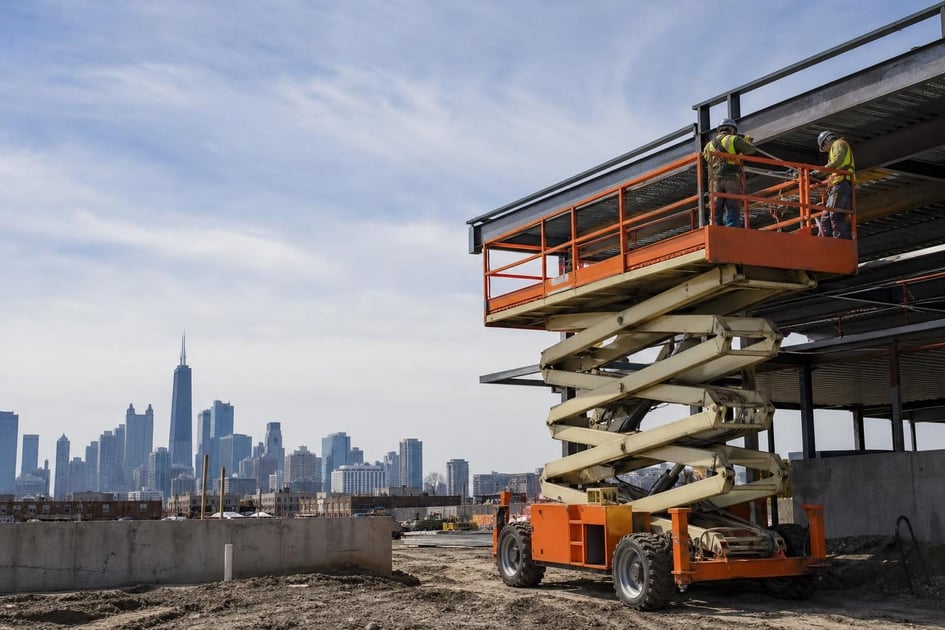
If you are bidding a job in Joliet, maintaining a manufacturing plant in Rockford, or upgrading a hospital facility in Peoria, a scissor lift is likely on your equipment list. Scissor Lifts financing through Provide Capital covers new and used units from $5,000 up to $5 million, with the equipment itself serving as collateral. Rates vary by credit profile, equipment age and term, and same-day approvals are possible once your documentation is in order. Whether you need a slab scissor lift for indoor maintenance or a rough-terrain diesel unit for a Chicago-area construction site, financing lets you preserve working capital while putting the machine to work immediately. You can see what financing you qualify for on your next lift without committing to a cash purchase upfront.
Get a fast decision on your equipment
Applying takes just a few minutes, and decisions can come as soon as the same day.
Start Your ApplicationThe Illinois Equipment Landscape
Illinois sits at the intersection of heavy construction, advanced manufacturing, and large-scale agriculture. According to Census Bureau construction spending data, the state consistently ranks among the top in the Midwest for nonresidential construction activity. That activity demands aerial work platforms for everything from warehouse fit-outs in DuPage County to bridge maintenance along the Mississippi.
Seasonal patterns here are real. Contractors in Cook and Lake counties often accelerate equipment purchases in late winter to beat spring bidding season. Fleet managers in central Illinois, where manufacturing and food processing dominate, tend to replace lifts during Q3 to avoid year-end downtime. Understanding these rhythms matters because equipment availability tightens in March and September, and financing timelines can stretch if demand surges while you are still gathering paperwork.
Illinois also has a significant healthcare and dental market, with major hospital systems in Chicago, Springfield, and downstate communities. Facility managers in these buildings use electric scissor lifts for ceiling work, HVAC installation, and patient-area renovations where exhaust fumes are prohibited. The need crosses industries, but the financing structure should match how each business uses the equipment. Equipment dealership consolidation has strengthened service networks across the Midwest, with AP News coverage of Illinois equipment dealers detailing recent acquisitions that expanded parts and service availability for aerial work platforms in the region.
Key Insight: Illinois contractors who finance scissor lifts in February or August—ahead of peak season—often secure better equipment selection and faster turnaround, because dealers have more inventory and underwriting queues are shorter.
New vs. Used Scissor Lift Financing
One of the first decisions an Illinois buyer faces is whether to finance a new scissor lift or a used one. New units carry full manufacturer warranties, the latest safety features, and longer useful life, but they also require a larger monthly payment and depreciate faster in the first two years. Used lifts cost less upfront and can still qualify for favorable terms, though lenders may cap the age at ten to twelve years at the end of the term.
Provide Capital finances both. The key is matching the equipment’s remaining useful life to the finance term. A five-year-old electric scissor lift with low hours may qualify for a 36-month term at a competitive rate, while a new rough-terrain unit might be financed over 60 or 72 months. Rates vary by credit profile, equipment age and term, so the exact structure depends on your business financials and the specific machine.
| Factor | New Scissor Lift | Used Scissor Lift |
|---|---|---|
| Typical finance term | 36–72 months | 24–60 months |
| Warranty coverage | Full manufacturer warranty | Limited or expired; aftermarket available |
| Monthly payment | Higher | Lower |
| Down payment requirement | Often zero for qualified buyers | May require 5%–15% depending on age |
| Best for | High-hour, daily-use fleets | Seasonal or supplemental needs |
For businesses along the I-55 corridor that run multiple crews daily, new equipment often makes sense because downtime is more expensive than the payment difference. For a landscaping contractor in McHenry County who needs a lift for three months of facility maintenance, a used unit financed over 24 months may be the smarter play. If you also need specialized access equipment, Spider Lifts financing is available for tight-access job sites where traditional scissor lifts cannot maneuver.
Lease vs. Loan: What Works Better in Illinois?
Financing a scissor lift does not always mean a traditional equipment loan. Depending on your accounting preferences, tax strategy, and how long you plan to keep the machine, a lease may be more efficient. An equipment loan builds equity; you own the lift at the end of the term and can claim depreciation and Section 179 deductions for the 2026 tax year. A lease typically offers lower monthly payments and may include a buyout option, but the tax treatment differs and you should confirm the structure with your CPA.
Illinois businesses with strong seasonal cash flow—such as road builders or agricultural service contractors—sometimes prefer leases with skip-payment structures that align with their revenue cycles. Others, like hospitals and manufacturers with steady year-round income, usually prefer loans because the deduction potential and ownership match their balance sheet strategy. There is no universally correct answer, only the one that fits your cash flow and tax position.
| Factor | Equipment Loan | Equipment Lease |
|---|---|---|
| Ownership | You own the lift after final payment | Ownership transfers only if you exercise a buyout |
| Monthly payment | Higher than a lease in most cases | Lower monthly outlay |
| Tax treatment | Depreciation and Section 179 for 2026; confirm with your CPA | Payments may be deductible as operating expense; confirm with your CPA |
| End-of-term | No balloon; title is yours | Fair market value buyout, $1 buyout, or return |
| Best for | Businesses planning to keep equipment 7+ years | Fleet rotation or seasonal equipment needs |
If you are unsure which structure fits your situation, get a decision on your equipment, possibly the same day, and compare loan and lease options side by side before you commit.
By the Numbers: A $35,000 used scissor lift financed over 48 months might carry a monthly payment in the mid-$800 range for a well-qualified buyer, while a $65,000 new rough-terrain unit over 60 months could land in the low-$1,300 range. Rates vary by credit profile, equipment age and term, and these examples are illustrative only.
What It Takes to Qualify
Credit and Financial Profile
Provide Capital works with owner-operators across Illinois with a wide range of credit histories. A strong credit profile—typically with scores in the mid-700s and above—will unlock the most competitive rates and the longest terms. That said, businesses with scores in the 600s can still qualify, especially if they have two or more years in operation, consistent revenue, and a clean equipment title. Because the scissor lift itself serves as collateral, the underwriting focus is on your ability to make payments, not just your credit score alone.
Startups and businesses less than two years old are not a fit for this program. Lenders want to see tax returns or bank statements that demonstrate stable cash flow. If your business has recent bankruptcies, unresolved tax liens, or judgments, it is better to resolve those before applying, as they will likely stall approval.
Documentation You Will Need
Gathering paperwork before you apply will shorten the timeline significantly. For a scissor lift finance request under $150,000, most Illinois applicants will need the following:
- Last two years of business tax returns
- Last three to six months of business bank statements
- A current personal financial statement for each guarantor
- The equipment quote or invoice, including year, make, model, and serial number
- Proof of insurance naming the lender as loss payee
For requests above $150,000, underwriters may also request interim financials, accounts receivable aging, and a brief description of how the lift will generate revenue. The more complete your file, the faster the decision. Same-day approvals are possible when the package is clean and the equipment is straightforward collateral.
See what you qualify for
The equipment itself secures the financing, which keeps rates competitive. Checking your options takes minutes.
Check Your OptionsTax Treatment for the 2026 Tax Year
For the 2026 tax year, businesses that purchase or finance scissor lifts may be eligible for Section 179 expensing, which allows a deduction for the full cost of qualifying equipment in the year it is placed in service, subject to an annual dollar limit and a phase-out threshold. The exact 2026 limits are set by the IRS; because they adjust for inflation and legislative changes, you should confirm the current-year figures with your CPA before making a purchase decision.
Bonus depreciation may also apply to new and used equipment in 2026, though the percentage has been stepping down in recent years. Your CPA can tell you whether bonus depreciation, Section 179, or standard MACRS depreciation delivers the best outcome for your specific tax bracket and liability. Never make an equipment purchase solely for the tax deduction, but do time the closing so the lift is delivered and placed in service before December 31 if you want the benefit for the 2026 tax year.
The SBA notes that equipment financing is one of the most common uses of its SBA 7(a) loan program, though Provide Capital’s equipment financing is a direct product and does not require SBA processing. The reference is useful because it confirms that equipment-backed lending is a standard, well-understood structure for small businesses nationwide.
Pro Tip: Illinois businesses operating as S-corps or partnerships should coordinate the equipment closing date with their accountant. If the lift is delivered on December 30 but your fiscal year ends December 31, you may compress the deduction into a single tax year that your cash flow did not anticipate.
Industries That Depend on Scissor Lifts Across Illinois
Illinois is not a monolith. The equipment needs of a commercial roofer in Aurora differ from those of a food-processing plant in Decatur or a hospital network in Evanston. Understanding how your industry uses scissor lifts will help you choose the right specification and finance term.
Construction and Contracting
Construction remains the largest end-user of scissor lifts in Illinois. Construction equipment financing covers everything from slab electric units for interior drywall work to rough-terrain diesel lifts for masonry and exterior framing. Chicago’s ongoing commercial and mixed-use development, combined with infrastructure work along the Illinois and Mississippi Rivers, keeps demand high. Contractors in this space usually finance over 48 to 60 months because the equipment sees daily use and the revenue stream is consistent.
Manufacturing and Warehousing
Illinois manufacturing plants—from automotive suppliers in Belvidere to food packagers in Champaign—use scissor lifts for line maintenance, overhead lighting, and facility upkeep. Unlike construction, these lifts often stay indoors on smooth slab, which means electric slab scissor lifts with non-marking tires are preferred. Financing terms here often stretch to 60 or 72 months because the usage is moderate and the equipment lasts longer in a climate-controlled environment.
Healthcare and Dental
Hospitals, outpatient clinics, and dental practices across Illinois use narrow electric scissor lifts to access HVAC, electrical, and plumbing above patient areas. Because these facilities cannot tolerate diesel exhaust or loud engines, battery-electric units with low noise profiles are standard. The finance amounts tend to be smaller—often in the $12,000 to $35,000 range—but the need is consistent. If your facility also needs patient handling equipment, Patient Lift financing is available through the same application process.
Agriculture and HVAC
Agricultural operations in central and southern Illinois use scissor lifts for grain bin maintenance, barn roofing, and equipment servicing. HVAC contractors, especially those serving the Chicago metro and collar counties, need compact lifts that fit through standard doorways for residential and light commercial work. Both industries benefit from used equipment financing because the lifts see intense but seasonal use.
Common Mistakes When Financing Aerial Work Platforms
Even experienced buyers make errors that cost time or money. One frequent mistake is requesting a finance term that outlasts the equipment’s useful life. A ten-year-old scissor lift financed over 72 months may require expensive maintenance before the final payment, leaving you underwater. Match the term to the expected service life.
Another mistake is failing to verify the dealer’s reputation. Illinois has reputable aerial equipment dealers in Chicago, Rockford, and Peoria, but private-party sales carry more risk. Lenders prefer invoices from established dealers because the title history and equipment condition are easier to verify. If you buy from a private seller, expect extra scrutiny and possibly a shorter term.
Buyers also sometimes forget to budget for delivery, insurance, and inspection. A scissor lift purchased in Indiana or Wisconsin and delivered to Illinois may carry a freight charge of several hundred dollars. Your lender will require proof of insurance before funding, and some municipalities require annual aerial lift inspections. Build these costs into your total project budget, not just the machine price.
What Happens After You Apply
Once you submit an application through Provide Capital, the underwriting team reviews your business financials, credit profile, and equipment details. For requests under $150,000, automated decisioning and manual review can produce an approval the same day if documentation is complete. Larger requests or specialized collateral may take 24 to 72 hours as the lender verifies equipment value and title status.
After approval, you will receive a term sheet outlining the monthly payment, term length, and any conditions. Review it carefully with your CPA or attorney. Once you accept, the lender pays the dealer or private seller directly, and you take delivery. Your first payment is typically due 30 to 45 days after funding, giving you a short window to put the lift to work before the payment cycle begins.
Throughout the term, the lender holds a security interest in the scissor lift. You maintain, insure, and operate it as your own. At the end of a loan term, the lender releases the lien and you hold clear title. At the end of a lease, you either return the equipment, exercise a buyout, or roll into new equipment, depending on the structure you selected.
Put the right equipment to work
From $5,000 to $5 million, new or used, Provide Capital helps businesses nationwide finance the equipment they need.
Apply TodayFrequently Asked Questions
Can I finance a scissor lift with a 650 credit score?
Yes, though the rate and term will reflect the increased risk. Businesses with scores in the 650 range often qualify when they have two or more years in operation, stable revenue, and a clean equipment title. Rates vary by credit profile, equipment age and term.
How long can I finance a used scissor lift?
Most lenders cap the finance term so that the equipment age plus the term does not exceed 12 to 15 years. A five-year-old lift might qualify for 48 to 60 months, while a ten-year-old unit may be limited to 24 or 36 months.
Do I need a down payment?
Not always. Well-qualified buyers financing new or late-model used scissor lifts can often secure 100% financing. Older equipment or lower credit profiles may require 5% to 15% down to align the loan-to-value ratio with underwriting guidelines.
Can I buy from a private party instead of a dealer?
Yes, but expect additional documentation. The lender will need to verify title history, condition, and value. Dealer purchases are faster because the invoice and title transfer are standardized.
Is the interest tax-deductible?
For the 2026 tax year, interest on business equipment loans is generally deductible as a business expense. In addition, you may qualify for Section 179 expensing or bonus depreciation on the equipment itself. Confirm the exact treatment with your CPA before closing.
How fast can I get funded?
Same-day approvals are possible for clean files under $150,000. Larger requests or complex collateral typically take 24 to 72 hours. Funding occurs within one to three business days after you accept the term sheet.
What happens if I want to pay off the loan early?
Most equipment loans allow early payoff, though some include a prepayment schedule for the first 12 to 24 months. Review your specific term sheet before signing, and ask your financing manager about any prepayment provisions.
Can I finance attachments or safety accessories with the lift?
Often, yes. If the accessories are part of the same invoice and are essential to the equipment’s operation—such as extension decks, pipe racks, or guardrail kits—they can usually be rolled into the finance amount. Standalone tool purchases are generally financed separately.
Ready to Add a Scissor Lift to Your Fleet?
Illinois contractors, manufacturers, and facility managers have enough to manage without tying up cash in equipment depreciation. Financing lets you match the cost of a scissor lift to the revenue it generates, preserving liquidity for payroll, materials, and unexpected expenses. Whether you need an electric slab lift for a warehouse in Naperville or a rough-terrain diesel unit for a job site in Springfield, the right structure is available. Start an application in a few minutes and see what rate and term you qualify for on your next aerial work platform.
Disclaimer: The information provided in this article is for general educational purposes only and is not financial, legal, or tax advice. Funding terms, qualifications, and product availability may vary and are subject to change without notice. Provide Capital does not guarantee approval, rates, or specific outcomes. For personalized information about your business funding options, contact our team directly.
