
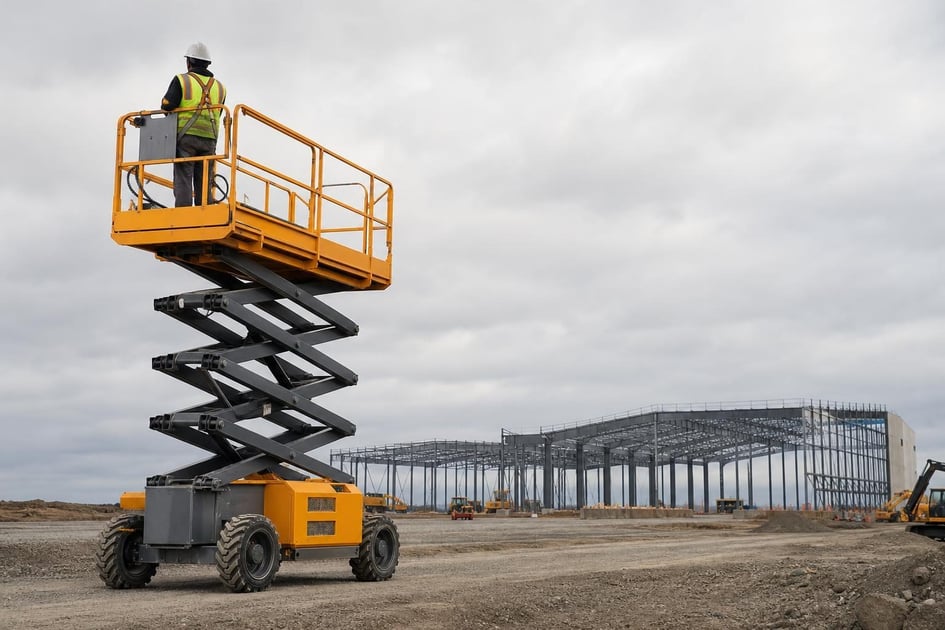
Ohio contractors, facility managers, and manufacturing supervisors looking to add vertical reach without draining cash reserves can finance scissor lifts through Provide Capital, a lender that uses the machine itself as collateral. We finance new and used business equipment from $5,000 to $5 million, so whether you need a 19-foot electric slab lift for warehouse maintenance or a 50-foot rough-terrain diesel unit for outdoor construction sites, financing spreads the cost across manageable monthly payments while the equipment starts generating revenue immediately. If you are weighing a purchase for the upcoming season, start an application in a few minutes to see what terms are available on the model you have quoted.
Key Insight: Ohio's freeze-thaw cycle means construction and exterior maintenance seasons compress into roughly April through November. Contractors who wait until March to arrange financing often find dealers sold out of popular models. Starting the process in January or February locks in availability before the spring rush.
Why Ohio's Climate and Economy Drive Scissor Lift Demand
Ohio sits at the intersection of heavy manufacturing, logistics warehousing, and commercial construction. According to Census Bureau data on Ohio, the state maintains one of the largest manufacturing workforces in the country. The state's contractors face a shortened outdoor work window thanks to hard winters and wet spring thaws. That pressure makes efficiency critical. A scissor lift lets a two-person crew complete in one day what might take a week with ladders and scaffolding.
Indoor work is equally demanding. Ohio ranks among the top states for manufacturing employment, with automotive parts suppliers, food processors, and steel fabricators operating massive facilities that need regular ceiling, HVAC, and lighting maintenance. Electric scissor lifts with zero emissions and narrow widths fit these aisles without shutting down production lines. For outdoor infrastructure and new construction, rough-terrain lifts with four-wheel drive and oscillating axles handle mud and graded slopes common on Ohio job sites.
Seasonal buying patterns are pronounced. Dealers across Ohio's major metros see inventory move fastest between February and May as contractors prepare for the construction season. Waiting until June often leaves buyers choosing from leftover stock or paying freight to bring units in from out of state. Financing early not only secures the specific model and height you need, but also gives you time to schedule operator training before the first major project.
Get a fast decision on your equipment
Applying takes just a few minutes, and decisions can come as soon as the same day.
Start Your ApplicationTypes of Scissor Lifts and What They Cost to Finance
Scissor lifts fall into two broad categories: electric slab lifts for smooth, level surfaces, and rough-terrain lifts for uneven ground. Within those categories, working heights typically range from 15 feet to 50 feet, and platform capacities range from 500 pounds to over 1,000 pounds. Narrow-width models measure less than 32 inches across and fit through standard doorways, while wide-deck models offer more workspace for multiple technicians and tools.
Electric units generally cost less to purchase and maintain, but they require flat concrete or asphalt. Rough-terrain lifts carry higher price tags and fuel costs, yet they are essential for earthwork, masonry, and exterior building envelopes. Pneumatic and diesel options exist for sites where emissions or spark risks matter. The right choice depends on your dominant work type, not just the tallest height you might ever need. If most of your work is inside Ohio's manufacturing plants, an electric narrow model is the better investment even if you occasionally wish for more outdoor capability.
By the Numbers: Financing for scissor lifts starts around $5,000 for used, lower-reaching models and runs well into six figures for multiple new large-platform units. Terms typically stretch from 24 to 72 months, with longer terms lowering the monthly payment but increasing total interest cost.
New vs. Used Scissor Lifts: Financing Considerations
New Equipment
New lifts carry full manufacturer warranties, the latest safety features, and longer useful lives. Lenders often offer slightly better rates on new equipment because the collateral value is predictable and depreciation is slower in the first few years. For Ohio buyers planning to keep a lift for seven to ten years, new equipment minimizes downtime and repair bills during the busy season. However, new lifts require larger monthly payments and may demand a down payment of 10 to 20 percent for businesses with shorter operating histories.
Used and Refurbished Units
The used market moves fast in Ohio, especially in the state's major equipment markets where dealers trade fleet units annually. A three- to five-year-old electric scissor lift with documented maintenance can cost 40 to 60 percent less than new, yet still deliver years of service. Financing used equipment is straightforward, though lenders may cap the term at the remaining useful life of the machine. Expect to provide the serial number, year, make, model, and hour count. Rates vary by credit profile, equipment age and term, so a newer used unit with low hours often qualifies for terms nearly as good as new.
Lease vs. Loan: Which Structure Fits Your Ohio Operation?
The decision between leasing and financing with a loan or equipment finance agreement depends on how long you plan to keep the lift, how many hours you put on it annually, and your tax priorities. A true lease typically offers lower monthly payments and may include maintenance, but you do not build equity unless you exercise a purchase option at the end. A loan or finance agreement puts the title in your name once paid off, and you claim depreciation and interest deductions.
| Factor | Equipment Loan / Finance Agreement | True Lease / Operating Lease |
|---|---|---|
| Ownership | You own the lift after the final payment | Lessor owns the lift; you may have a purchase option |
| Monthly Payment | Higher than a lease for the same equipment | Lower monthly cost |
| Tax Treatment | Depreciation and interest deduction | Lease payments deducted as operating expense |
| End of Term | No return condition or balloon | Return, renew, or buy at fair market value |
| Best For | High utilization, long-term ownership | Short projects, fleet flexibility, frequent upgrades |
Ohio businesses with steady, year-round maintenance work usually benefit from owning the asset. Seasonal contractors who need different lift sizes from job to job may prefer the flexibility of leasing. Either way, rates vary by credit profile, equipment age and term, so comparing both structures with real quotes is the only way to know which costs less over time. For additional perspective on how small businesses approach equipment acquisition, the SBA guidance on loan programs outlines general financing principles that complement specialized equipment lending.
Pro Tip: Some Ohio dealers offer lease-to-own programs that look like leases but convert to loans after a set period. Read the contract carefully. If the agreement transfers ownership automatically for a nominal fee, the IRS may treat it as a loan from day one, changing your deduction strategy. Review the structure with your CPA before signing.
Qualification Criteria for Scissor Lift Financing
Equipment lenders evaluate three main factors: credit history, time in business, and cash flow. A FICO score above 650 opens the door to the best rates, but approvals are possible below that because the equipment collateral reduces lender risk. Most lenders prefer two or more years in business, though operations with shorter histories and strong bank deposits can still qualify. You do not need spotless credit or decades of history, but you do need to demonstrate the ability to cover the monthly payment from operating revenue.
For larger transactions approaching $500,000 or more, lenders may review business tax returns, debt-service coverage ratios, and the specific make and model being financed. Smaller transactions under $100,000 often rely on bank statements and a simple one-page application. Businesses with less than two years of operating history face tighter requirements, which is why equipment lenders typically focus on established operations with documented revenue. The equipment itself is the collateral, which keeps rates competitive, but the lender still wants evidence that your cash flow can service the debt.
See what you qualify for
The equipment itself secures the financing, which keeps rates competitive. Checking your options takes minutes.
Check Your OptionsTax Treatment for Tax Year 2026
The tax benefits of financing scissor lifts for tax year 2026 can be substantial, but the exact deduction limits depend on IRS guidance issued for the current year. Section 179 allows qualifying businesses to deduct the full purchase price of eligible equipment in the year it is placed in service, subject to an annual cap that adjusts for inflation. For 2026, consult your CPA for the precise Section 179 limit and phase-out threshold.
Bonus depreciation may also apply to new and used scissor lifts placed in service during 2026, though the percentage has been stepping down in recent years. Again, the specific rate for tax year 2026 should be confirmed with a tax professional before you file. If you finance the lift with a loan, you generally deduct both the depreciation and the interest portion of your payments. With a true lease, you deduct the lease payments as an operating expense. Either strategy lowers taxable income, but the timing differs. Work with a CPA to model which approach saves more for your specific bracket and entity type.
Industry-Specific Use Cases Across Ohio
Construction and Exterior Trades
Ohio's commercial construction sector sees peak demand from late spring through early fall. General contractors, masonry crews, and exterior remodelers use rough-terrain scissor lifts to reach facades, install windows, and set roofing materials. Because the ground on Ohio job sites can stay soft well into May, lifts with four-wheel drive and high ground clearance prevent ruts and stuck equipment. Construction equipment financing covers not just the lift but also attachments and delivery fees when bundled into one agreement.
Manufacturing and Warehousing
Ohio manufacturing employment remains a backbone of the state's economy. Automotive suppliers, food processors, and steel fabricators across the state all run facilities with 30-foot ceilings and overhead conveyor systems. Electric scissor lifts let maintenance teams reach lighting, fire suppression, and HVAC components without building scaffolding that blocks production aisles. A single hour of downtime on a production line can cost thousands, so owning a reliable indoor lift pays for itself quickly.
HVAC and Mechanical Contractors
HVAC contractors in Ohio face intense seasonal swings. Summer cooling and winter heating calls keep technicians busy year-round, but the equipment is often mounted on rooftops or in cramped mechanical rooms. Compact electric lifts fit into parking garages and interior courtyards, while rough-terrain models handle gravel rooftops on warehouses and big-box retail locations. Financing lets an HVAC owner add a second or third lift before hiring additional technicians, scaling the fleet to match service contracts.
Facilities Maintenance and Property Management
Property management companies overseeing Ohio's aging commercial stock need regular access to ceilings for inspections, repairs, and tenant improvements. A narrow electric scissor lift stores in a standard maintenance bay and rolls through doorways into lobbies, hallways, and retail spaces. Instead of renting a lift every time a light ballast fails, owning one eliminates rental minimums, transport delays, and availability gaps.
Common Mistakes Ohio Buyers Make
First, underbuying platform capacity. A lift rated for 500 pounds sounds adequate until you add two technicians, a toolbox, and heavy ductwork. Always size for the maximum load you expect, not the average. Second, ignoring total cost of ownership. The monthly payment is only part of the equation. Insurance, maintenance, batteries, hydraulic fluid, and winter storage all add up. Ask the dealer for hour-based maintenance schedules before you sign.
Third, failing to check the seller's reputation. A used lift with unclear title or missing maintenance records can turn into a lien nightmare. Verify the serial number is clean and the dealer has a physical address you can visit. Fourth, financing only the machine and forgetting delivery. A 5,000-pound scissor lift requires a flatbed and often a rollback for the final mile. Some lenders let you fold freight into the financing agreement; others require it paid upfront. Clarify before you commit.
Documentation You Will Need
The paperwork required depends on transaction size and business history. For deals under $150,000, most lenders ask for a driver's license, a signed equipment quote, and the last three months of business bank statements. For larger deals or newer businesses, add two years of personal and business tax returns, a current profit-and-loss statement, and a debt schedule.
If you are buying from a private party rather than a dealer, you may need a bill of sale, equipment inspection report, and proof of insurance naming the lender as loss payee. Having these documents ready before you apply can move the decision from days to hours. When you are ready to gather quotes, get a decision on your equipment, possibly the same day, by submitting an application with your quote attached.
What Happens After Approval
Same-day approvals are possible when the application, credit profile, and equipment details are complete. Once approved, the lender issues a funding letter or purchase agreement. The dealer or seller is paid directly, and you schedule pickup or delivery. Most lenders do not place a blanket lien on your business; they file a UCC-1 only against the specific scissor lift being financed.
After funding, your first payment is typically due 30 to 45 days later. Many lenders offer autopay discounts that reduce the rate slightly, which adds up over a 60-month term. If you sell or trade the lift before the loan matures, you must pay off the remaining balance or obtain the lender's consent to transfer title. Keeping accurate maintenance records helps preserve resale value and makes refinancing or trade-ins easier down the road.
Key Insight: Ohio buyers purchasing from out-of-state dealers should verify that the seller will accept payment directly from a third-party lender. Some auction houses and private sellers require wire transfer before release, which complicates escrow. Confirm the dealer's funding process before you apply so there are no delays at pickup.
Put the right equipment to work
From $5,000 to $5 million, new or used, Provide Capital helps businesses nationwide finance the equipment they need.
Apply TodayFrequently Asked Questions
Can I finance a scissor lift with bad credit?
Yes, though rates vary by credit profile, equipment age and term. Because the lift serves as collateral, equipment lenders can approve borrowers with credit challenges that would disqualify them from unsecured bank loans. Strong revenue and a solid down payment help offset a lower credit score.
How long does approval take?
Many applications receive a decision within a few hours, and same-day approvals are possible when documentation is complete. Larger transactions or complex ownership structures may take 24 to 48 hours.
Do I need a down payment?
Not always. Established businesses with strong cash flow can sometimes finance the full equipment cost. Newer businesses or lower credit profiles may need 10 to 20 percent down. The exact amount depends on your time in business, credit history, and the age of the lift.
Can I finance a used scissor lift from a private seller?
Yes, but the lender will require a clear title, equipment inspection, and proof of value. Private-party deals take slightly longer than dealer transactions because the lender must verify there are no existing liens on the serial number.
What interest rate will I pay?
Rates vary by credit profile, equipment age and term. No lender can quote a specific APR without reviewing your application, credit, and the equipment details. The best way to know your rate is to apply and receive a formal offer.
Is leasing better than buying for seasonal work?
Leasing can make sense if you only need the lift for three to four months per year and want to avoid storage and maintenance during the off-season. If you use the equipment more than six months annually, owning it through a loan or finance agreement usually costs less over time.
Can I deduct the payments on my 2026 taxes?
Depending on your structure, you may deduct depreciation and interest on a loan, or the full lease payments as an operating expense. Section 179 and bonus depreciation may also apply for tax year 2026, but you should confirm the current limits with a CPA before filing.
What happens if I want to pay off the loan early?
Most equipment finance agreements allow early payoff, though some include a prepayment penalty or minimum interest charge. Read the term sheet carefully and ask your funding manager to explain the payoff calculation before you sign.
Ready to Add a Scissor Lift to Your Ohio Fleet?
Whether you are replacing an aging lift, expanding into commercial work, or moving from rental to ownership, financing keeps cash available for payroll, materials, and unexpected job costs. Ohio's seasonal pressure rewards contractors who act early: securing financing before the spring rush means better equipment selection and faster project starts. For broader context on business conditions affecting capital investment decisions, Reuters business coverage tracks industrial and economic trends relevant to equipment buyers.
Explore your options for Scissor Lifts financing, review how Material Lift financing compares for lighter vertical needs, and then see what financing you qualify for on that next lift to keep your crew productive year-round.
Disclaimer: The information provided in this article is for general educational purposes only and is not financial, legal, or tax advice. Funding terms, qualifications, and product availability may vary and are subject to change without notice. Provide Capital does not guarantee approval, rates, or specific outcomes. For personalized information about your business funding options, contact our team directly.
