
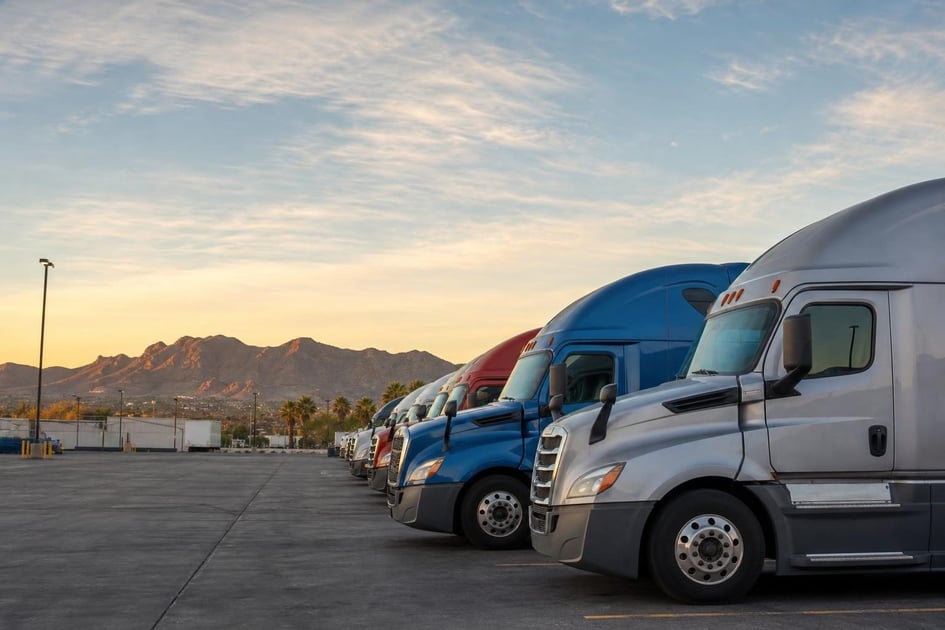
Financing a semi truck in Arizona means matching the right equipment to the state's unusual freight calendar. Most of the country's winter lettuce moves through Yuma and Nogales from November through March, while Phoenix-area distribution centers keep dry van and flatbed demand steady year-round. With over 9,600 active interstate carriers based in the state and more than half running a single truck, Arizona's market is built around owner-operators who need reliable equipment without tying up all their cash. Equipment financing from $5,000 to $5 million uses the truck itself as collateral, which keeps rates competitive and lets borrowers preserve working capital for fuel, insurance, and compliance costs. You can start an application in a few minutes to see what you qualify for on that truck.
Why Arizona's Trucking Market Is Different
Arizona is not a generic southwestern freight state. According to U.S. Census Bureau County Business Patterns data, the state hosts thousands of trucking establishments, with Maricopa County alone holding the majority of the state's trucking jobs. The Bureau of Labor Statistics puts median annual pay for heavy truck drivers in Arizona at roughly $58,080 as of mid-2025, but that figure covers employed drivers. Owner-operators who control their own equipment and lanes can earn more, provided they survive the seasonal cash-flow swings.
The Nogales port of entry handled more than 400,000 inbound trucks from Mexico in 2025, most carrying fresh produce. That creates a winter surge in reefer demand that tightens capacity and raises rates from November through March. Yuma adds to the pressure, supplying roughly 90 percent of the nation's winter leafy greens. By contrast, summer brings extreme heat to the low desert, thinning outbound freight and putting extra strain on engines, tires, and reefer units. An owner-operator who buys a truck in July without planning for the winter produce rush, or who buys a reefer in January without budgeting for summer maintenance, is making a harder job harder still.
Phoenix remains the state's economic anchor. I-10 west to California is the busiest freight lane, while I-17 connects the metro to Flagstaff and the I-40 corridor. Tucson serves as the gateway for Nogales produce heading north. For financing purposes, this geography matters because lenders look at where the truck will operate and what freight it will haul. A long-haul reefer running Nogales to Chicago is a different risk profile than a regional flatbed moving building materials around Maricopa County.
Key Insight: Arizona's produce season flips the national freight calendar. While much of the country slows in winter, Arizona's reefer market peaks from November through March. Owner-operators who finance a truck in late summer can be positioned for the winter surge, but only if the equipment has a continuous-run reefer unit rated for desert summer heat.
Already have a machine in mind?
Provide Capital finances new and used equipment from $5,000 to $5 million, with same-day decisions possible.
Apply NowHow Semi Truck Financing Works
Semi Trucks financing through Provide Capital is structured as an equipment loan or lease. The truck serves as collateral, which means the lender secures its interest with the asset itself rather than relying solely on real estate or personal guarantees. That structure is why rates vary by credit profile, equipment age, and term length rather than following a single posted APR.
Loan amounts range from $5,000 to $5 million, covering everything from a single used day cab to a small fleet of sleeper tractors. Same-day approvals are possible when the application is complete and the equipment details are clear. The process typically starts with a soft credit inquiry and a review of business bank statements, then moves to equipment valuation and final documentation.
For Arizona buyers, the equipment's intended use affects terms. A dry van tractor running dedicated lanes for a Phoenix distribution center may qualify differently than an owner-operator leasing onto a reefer fleet for seasonal produce hauls. Lenders want to see that the truck's revenue potential aligns with the payment schedule.
New vs. Used Semi Trucks: What to Finance
The decision between new and used equipment depends on mileage tolerance, maintenance capability, and how quickly the truck needs to start generating revenue.
| Factor | New Semi Truck | Used Semi Truck (3–7 Years) |
|---|---|---|
| Purchase price | $150,000–$200,000+ | $40,000–$120,000 |
| Warranty coverage | Full manufacturer warranty | Limited or expired; aftermarket plans available |
| Financing term | Up to 84 months | Typically 36–60 months |
| Down payment | Often 10–20% | May require 15–25% depending on age and mileage |
| Ideal buyer | High-mileage operator with shop support | First-time owner or seasonal produce hauler |
| Resale value | Higher, but steeper first-year depreciation | Depreciation curve flattens |
New trucks offer warranty protection and better fuel efficiency, which matters when diesel spending has climbed nationwide. Used trucks reduce the monthly payment but require a maintenance reserve, especially in Arizona's summer heat. If you have a truck picked out, get a decision on your equipment, possibly the same day.
Loan vs. Lease: Which Fits an Arizona Operation
Equipment Loans
An equipment loan builds equity. You own the truck at the end of the term, and you can claim depreciation and Section 179 deductions on the business tax return. Loans work best for owner-operators who plan to keep the truck for its full useful life or who want the asset on their balance sheet. Monthly payments are fixed, which helps with budgeting through Arizona's seasonal freight cycles.
Equipment Leases
A lease typically carries a lower monthly payment and may include maintenance provisions. At the end of the lease, you return the truck, buy it out at fair market value, or upgrade to newer equipment. Leasing makes sense for operators who want to preserve capital, who run high-mileage lanes that wear equipment quickly, or who want to refresh their fleet every few years to avoid the maintenance burden of an aging reefer unit in desert heat.
Which Makes Sense for Arizona Operators
Operators running the Nogales produce corridor often prefer loans because reefer trailers hold their value well and the winter revenue surge can cover accelerated payments. Regional flatbed contractors around Phoenix sometimes lease because construction demand fluctuates with interest rates and housing starts. There is no universally correct choice; the right structure depends on cash flow, tax position, and how long you plan to keep the equipment.
Pro Tip: If you are financing a used reefer truck for Arizona's produce season, verify the refrigeration unit's hours and service history separately from the tractor. A low-mileage tractor with a high-hour Carrier or Thermo King unit is a common trap. Lenders may require a separate appraisal on the reefer unit if it is over five years old.
Qualification Criteria in Detail
Lenders evaluate semi truck applications on four main factors: credit history, time in business, down payment, and equipment condition.
Credit profile. A FICO score in the mid-600s or higher generally opens more competitive terms, but financing is available across a broader range. What matters more than the score itself is the story behind it. Recent bankruptcies, open tax liens, or multiple equipment repossessions are harder to overcome than a low score caused by a single medical collection or a slow season two years ago.
Time in business. Two years of operating history is the traditional benchmark, but first-time owner-operators can still qualify with a strong down payment, a signed lease agreement with a motor carrier, or prior experience as a company driver. The SBA guide to starting a trucking business notes that new entrants often start with subcontracted drivers to reduce initial capital needs, but owner-operators buying their own equipment need to show a viable revenue plan.
Down payment. Expect 10 to 20 percent for new trucks and 15 to 25 percent for used equipment, though these ranges shift with credit strength and the truck's age. The equipment itself is the collateral, so the lender's loan-to-value ratio depends heavily on the collateral's resale market. A three-year-old Freightliner Cascadia with reasonable miles is easier to finance at 85 percent LTV than a 12-year-old day cab with 800,000 miles.
Equipment age and mileage. Most lenders cap financed trucks at 10 model years or 750,000 miles, whichever comes first. Exemptions exist for specialty equipment or borrowers with strong existing relationships, but crossing those thresholds usually means a larger down payment or a shorter term.
Find the right financing structure
Tell us about the equipment you need and we will show you the options that fit your business.
See Your OptionsDocumentation You Will Need
Applications move faster when the paperwork is organized before submission. At minimum, gather the following:
- Driver's license and Social Security card
- Commercial driver's license (CDL) with appropriate endorsements
- DOT number and MC authority, if operating under your own authority
- Three months of business bank statements
- Equipment quote or purchase agreement with VIN, year, make, model, and mileage
- Proof of insurance quote or binder showing physical damage and liability coverage
- Signed lease agreement or letters of intent from shippers, if applicable
Owner-operators leasing onto a carrier have an easier path because the carrier provides liability insurance and freight. Those operating under their own authority need to show active filings, including BOC-3, UCR registration, and IRP apportioned plates if running interstate. Arizona's IRP fees vary by fleet size and miles, so factor that into your first-year operating budget.
Tax Treatment for the 2026 Tax Year
The tax treatment of a financed semi truck can materially affect first-year cash flow. For the 2026 tax year, the Section 179 expense deduction allows businesses to deduct up to $2,560,000 of qualifying equipment placed in service, with that limit reduced dollar-for-dollar once total equipment purchases exceed $4,090,000. Most single-truck or small-fleet operators in Arizona fall well below the phase-out threshold, meaning the full cost of a qualifying truck may be deductible in the year it enters service.
Bonus depreciation remains available at 100 percent for certain qualified property acquired after January 19, 2025, though the exact interaction with Section 179 depends on your tax entity and income. Heavy trucks with a gross vehicle weight rating above 6,000 pounds generally qualify for both, but SUVs capped under Section 179 face a $32,000 limit in 2026. A semi truck used more than 50 percent for business is not subject to that SUV cap.
Do not attempt to optimize this without a CPA. Arizona owner-operators also face state income tax, and the interplay between federal depreciation, state adjustments, and self-employment tax is not DIY territory. Any tax figure cited here is for the 2026 tax year; confirm current limits with your accountant before filing.
By the Numbers: A $90,000 used sleeper tractor financed in 2026 and placed in service before December 31 could potentially generate a first-year Section 179 deduction that exceeds the annual payments, creating a net tax benefit in year one. The actual savings depend on your marginal tax bracket, business income, and whether you elect Section 179, bonus depreciation, or standard MACRS. Discuss the calculation with a CPA before you sign.
Arizona-Specific Use Cases
Long-Haul Dry Van
Phoenix and Tucson serve as distribution hubs for retail and e-commerce freight moving between California and Texas. Dry van tractors run hard on I-10 and I-40, often logging 120,000 miles or more per year. Financing terms for high-mileage operators usually favor newer equipment with warranty coverage to minimize downtime.
Reefer and Produce Hauling
Reefer Truck financing is a distinct specialty in Arizona because of the Yuma and Nogales corridors. Reefer units add $20,000 to $40,000 to the equipment cost and require separate maintenance budgets. Lenders may treat the tractor and trailer as separate collateral, especially if the reefer unit is older. Seasonal produce haulers should model their cash flow around the November-through-March peak, not the summer lull.
Flatbed and Construction Materials
Arizona's construction growth, particularly in the Phoenix metro, creates consistent flatbed demand for steel, lumber, and heavy machinery. Flatbed operators often run regional lanes, which reduces fuel costs compared to long-haul but requires equipment that can handle tarping and securing in high winds and dust. Transportation equipment financing covers flatbed tractors and specialized trailers when the revenue plan is clear.
Common Mistakes Arizona Buyers Make
First-time buyers in Arizona often underestimate the total cost of ownership. The purchase price is only the beginning. Insurance for a new authority can exceed $15,000 in the first year, and IRP plate costs for an interstate tractor run into the thousands. Summer heat degrades tires faster than in cooler climates, and a reefer unit running continuous in July burns extra fuel and adds engine hours.
Another common error is buying a truck without a committed revenue source. The Arizona freight market rewards preparation. Owner-operators who secure a carrier lease or dedicated contract before purchasing equipment have a clearer path to approval and a lower risk of default during slow months.
Finally, do not ignore the equipment's resale geography. A day cab popular in Phoenix may be harder to sell in a northern state where sleeper tractors dominate. If you finance the truck with a plan to upgrade in three years, choose a make and model with broad national demand.
What Happens After Approval
Once approved, the lender issues a funding authorization contingent on proof of insurance and a satisfactory equipment inspection. The title is transferred with the lender listed as lienholder, and the borrower receives a copy for IRP and registration purposes. Funding typically occurs within one to three business days after all conditions are met, though same-day funding is possible when the file is clean.
After funding, the lender files a UCC-1 financing statement to perfect its security interest in the collateral. The borrower makes monthly payments according to the schedule, and once the balance is paid, the lender releases the lien and the title is transferred free and clear. Missing payments can trigger repossession, so it is critical to maintain a maintenance reserve and insurance coverage throughout the term.
Pro Tip: Arizona requires commercial vehicles to pass emissions testing in Phoenix and Tucson metro areas depending on weight and model year. A financed truck that fails ADOT emissions cannot be registered, which means it cannot haul freight and the loan payments still come due. Verify emissions compliance before you close, not after.
Ready to move forward?
More than 10,000 businesses have financed equipment with Provide Capital. See what you qualify for today.
Get StartedFrequently Asked Questions
What credit score do I need to finance a semi truck in Arizona?
There is no fixed minimum. Scores in the mid-600s and above generally qualify for more competitive structures, but financing is available for borrowers across a wider range if the down payment and equipment quality are strong. Lenders look at the full credit picture, not just the number.
Can I finance a semi truck with no money down?
Zero-down programs are rare for first-time buyers. Most applicants should expect to contribute 10 to 25 percent depending on credit and equipment age. The down payment protects both the lender and the borrower by ensuring equity in the collateral from day one.
How long are semi truck loan terms?
Terms typically range from 36 to 84 months. New trucks can stretch to seven years, while used equipment usually tops out at five. Longer terms lower the monthly payment but increase total interest cost.
Can I finance a used truck that is more than 10 years old?
It is difficult but not impossible. Lenders generally prefer trucks under 10 model years with fewer than 750,000 miles. Older trucks may require a larger down payment, a shorter term, or additional collateral. The equipment's condition and resale value matter more than the calendar year alone.
Does financing cover the trailer and reefer unit?
Yes, equipment financing can include tractors, dry van trailers, flatbeds, and reefer trucks. The lender may require separate valuations for the tractor and the reefer unit, and terms may differ if the refrigeration equipment is significantly older than the power unit.
How fast can I get funded?
Same-day approvals are possible when the application and equipment details are complete. Funding usually follows within one to three business days after insurance and title conditions are satisfied. Delays typically come from incomplete paperwork or title issues, not from the lender's review.
What documents do I need to apply?
At minimum, a CDL, DOT and MC numbers if applicable, three months of business bank statements, an equipment quote with VIN, and proof of insurance. Leased-on operators should also provide their carrier agreement. Self-dispatch operators need active authority and registration documents.
Can I deduct the full purchase price of a truck in 2026?
For the 2026 tax year, Section 179 allows a deduction up to $2,560,000 for qualifying equipment, with a phase-out beginning at $4,090,000 in total purchases. Most single-truck buyers will fall below the phase-out. However, the deduction cannot exceed your business taxable income, and bonus depreciation interacts with Section 179 in ways that require professional tax advice. Consult a CPA before making the election.
Moving Forward
Arizona's trucking market rewards operators who understand its seasonal rhythm. The winter produce surge, the summer heat lull, and the constant flow of freight between Phoenix, California, and Texas create opportunities for owner-operators with the right equipment and financing structure. Whether you are buying your first day cab or adding a reefer for the Nogales season, the key is to match the loan or lease terms to your actual revenue cycle. To move forward, see what financing you qualify for on the semi truck you need.
Disclaimer: The information provided in this article is for general educational purposes only and is not financial, legal, or tax advice. Funding terms, qualifications, and product availability may vary and are subject to change without notice. Provide Capital does not guarantee approval, rates, or specific outcomes. For personalized information about your business funding options, contact our team directly.
