
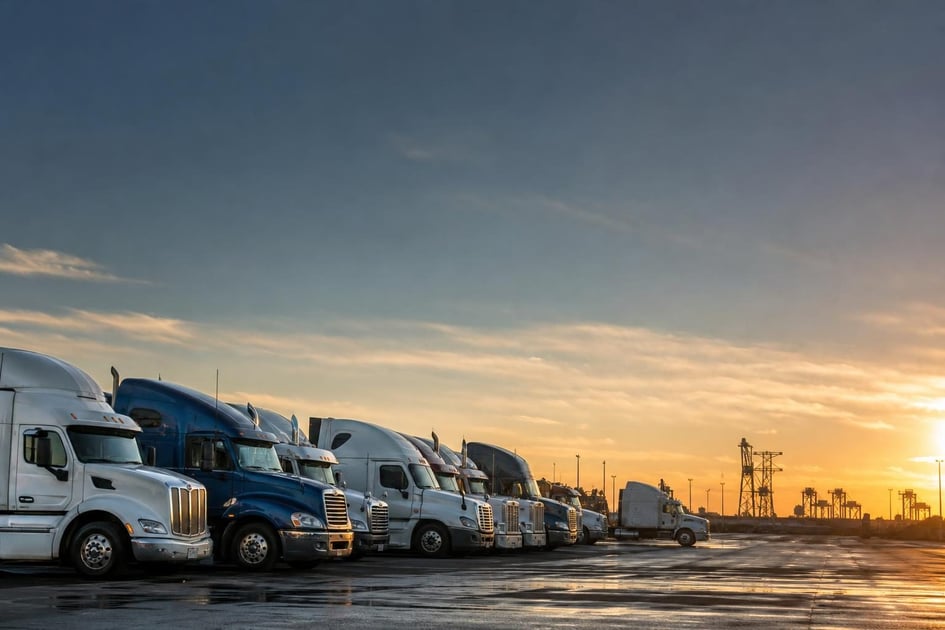
Semi truck financing qualifies for owner-operators and fleet owners who need a reliable tractor without draining operating cash. Most lenders, including Provide Capital, finance both new and used semi trucks from $5,000 up to $5 million, using the equipment itself as collateral. Approval depends on your credit profile, time in business, and the age and condition of the truck. Same-day decisions are possible when your documentation is complete.
If you are shopping for a sleeper cab for long hauls or a day cab for regional routes, understanding what financing qualifies for—and what lenders look for—helps you prepare an application that moves quickly.
See what you qualify for on your next semi truck.
What Semi Truck Financing Qualifies For
Financing covers the truck itself, and often related costs depending on the lender and structure. At Provide Capital, Semi Trucks financing covers class 8 tractors, sleeper cabs, day cabs, and in some cases the installation of auxiliary power units or refrigeration units if bundled at purchase.
The equipment acts as collateral. This secured structure is why lenders can offer competitive terms even when a borrower has a shorter credit history. If the truck is new or late-model with documented maintenance, the lender's risk drops and your terms improve.
What does not qualify? Personal-use vehicles, trucks without a commercial title, and equipment purchased from private sellers without proper documentation. Some lenders also exclude trucks with excessive mileage or older than 15 model years. Always verify the unit's eligibility before committing to a purchase.
Key Insight: Lenders view trucks with engine rebuild documentation differently than trucks with unknown maintenance history. A 2019 model with a freshly rebuilt engine and records can qualify more favorably than a 2021 model with gaps in its service history.
How Lenders Evaluate Your Application
Lenders look at four main factors: credit profile, time in business, the equipment, and your monthly revenue.
Credit Profile
Your personal and business credit scores both matter. A stronger score generally opens access to longer terms and lower monthly payments. However, because the truck secures the financing, borrowers across the credit spectrum can qualify. Rates vary by credit profile, equipment age and term.
Time in Business
Two years or more in operation is the standard benchmark. First-time owner-operators face tighter scrutiny, though some programs exist with strong credit or a significant down payment. If you have been driving under another carrier's authority and are now going independent, be ready to show your 1099s and driving history.
The Equipment
Lenders order an inspection or appraisal for used trucks. They check VIN history, mileage, engine hours, and accident reports. New trucks require a purchase order from a dealership. The year, make, model, and expected remaining useful life all factor into the term length offered.
Monthly Revenue
For existing operations, lenders want to see that your revenue can cover the new payment. They typically look for a minimum monthly revenue threshold, though the exact figure varies by lender and equipment cost. If your revenue is seasonal, be prepared to explain the cycle.
Pro Tip: Gather three months of bank statements, your commercial driver's license, and your motor carrier authority number before applying. Having these ready can cut the review time from days to hours.
New vs. Used Semi Trucks
The choice between new and used affects your payment, term, and total cost of ownership. Reuters coverage of truck tariffs shows how import costs can ripple through new-truck pricing, making late-model used units more attractive in some quarters.
New trucks come with manufacturer warranties, lower maintenance costs in the first years, and easier financing because the lender faces less uncertainty. Depreciation is steepest in the first two years, so a large down payment helps avoid negative equity.
Used trucks cost less upfront and depreciate more slowly. A well-maintained three- to five-year-old truck often represents the sweet spot for owner-operators. Financing terms on used equipment are typically shorter, and rates vary by credit profile, equipment age and term.
Consider the source. Dealerships offer verified maintenance records and sometimes certified pre-owned programs. Auction trucks are cheaper but riskier. Private sales require extra diligence on title status and lien clearance.
Get a same-day decision on your equipment once you have identified the truck you want.
Financing Structures Compared
You will encounter two main structures: equipment loans and equipment leases. Both let you put the truck to work immediately, but they differ in ownership, tax treatment, and end-of-term options.
| Feature | Equipment Loan | Equipment Lease |
|---|---|---|
| Ownership | You own the truck; lender holds lien | Lessor owns truck; you are the lessee |
| Down payment | Typically 5% to 20% | First and last payment, or minimal down |
| Term length | 2 to 7 years | 2 to 5 years |
| Monthly payment | Higher; builds equity | Lower; operating expense |
| End of term | Lien released; truck is yours | Purchase option, return, or renew |
| Tax treatment | Depreciation and interest deduction | Lease payments may be deductible |
Which structure fits depends on your tax strategy, how long you plan to keep the truck, and your cash flow. If you run high annual miles and plan to keep the truck for ten years, a loan builds equity. If you prefer to upgrade every three years and want lower payments, a lease may suit you better.
By the Numbers: A $150,000 semi truck financed over five years typically carries a lower monthly payment than a three-year term, but you pay more in total interest. A lease on the same truck often requires less cash upfront, preserving working capital for fuel, insurance, and permits.
Tax Treatment for 2026
Tax year 2026 offers several deductions for financed semi trucks, but the rules shift based on structure and whether you take bonus depreciation or Section 179 expensing.
Under Section 179 for tax year 2026, businesses can elect to deduct the full purchase price of qualifying equipment up to the annual limit, subject to phase-out thresholds. The exact dollar limit for 2026 should be confirmed with your CPA, as inflation adjustments apply. Bonus depreciation may also be available at a reduced percentage for 2026, depending on legislative changes. Consult a CPA before filing.
If you finance the truck with a loan, you deduct the interest portion of your payments and take depreciation on the equipment. With a lease, you generally deduct the lease payments as a business expense. The difference matters for your effective cost in the first year.
Keep meticulous records. Log every mile, fuel purchase, and maintenance receipt. The IRS requires documentation for both mileage-based and actual-expense methods. Your CPA can model which approach saves more based on your total operating costs.
Pro Tip: If you place a semi truck in service in December 2026, you may still qualify for a full year of depreciation depending on the convention you elect. A CPA familiar with transportation accounting can run the numbers for your specific purchase date and business structure.
Industry-Specific Considerations
Trucking is not monolithic. A flatbed hauler in Texas faces different equipment needs than a refrigerated carrier in the Northeast. Transportation equipment financing accounts for these differences by matching terms to the equipment's revenue cycle. According to Census Bureau transportation data, trucking and warehousing employ millions of workers nationwide, making it one of the largest small-business sectors.
Long-Haul Freight
Over-the-road operators need sleeper cabs with aerodynamic packages and auxiliary power units to save fuel during mandatory rest periods. Lenders recognize that these trucks generate mileage-based revenue, so they focus on the truck's expected useful life relative to the term.
Regional and Local Delivery
Day cabs and medium-duty tractors suit regional routes. They accumulate fewer annual miles, which slows depreciation and can extend the useful financing term. If you haul for a dedicated shipper, bring your contract to the lender. Predictable revenue supports stronger terms.
Specialized Hauling
Heavy haul, auto transport, and livestock hauling require specialized trailers and sometimes modified tractors. Financing the tractor separately from the trailer is common. If you need both, ask about bundling or sequential financing.
Seasonality also matters. Agriculture-dependent haulers may see revenue spike during harvest and drop in winter. Lenders can structure payments to match, with lower seasonal payments if you document the cycle. Construction haulers face similar patterns tied to weather and building permits.
Common Mistakes to Avoid
First-time buyers often overextend on the truck and underbudget for operating costs. A $180,000 tractor with a $2,500 monthly payment sounds manageable until you add insurance, fuel, maintenance escrow, and permits.
Another mistake is buying too much truck. A 600-horsepower sleeper with every option looks appealing, but if your freight lanes top out at 80,000 pounds gross, you may not need the extra capability. Buy for the freight you haul today, with modest room to grow.
Skipping the inspection is costly. Always order a third-party inspection on used trucks. Check for frame damage, oil analysis results, and ECM tampering. A clean history report for commercial trucks does not guarantee condition, so rely on physical inspection and service records.
Finally, do not ignore the lender's documentation requirements. Missing a page from your operating authority or providing incomplete bank statements delays approval. In a competitive used-truck market, that delay can cost you the unit.
What Documentation Is Needed
Prepare the following before starting an application:
- Driver's license and social security card
- Commercial driver's license
- Motor carrier authority number or proof of lease-on agreement
- Three months of business bank statements
- Two years of tax returns if you have been in business that long
- Current profit and loss statement
- Equipment quote or purchase agreement
- Proof of insurance quote
If you are a new authority, add your business formation documents, EIN confirmation, and any contracts showing future revenue. Some lenders also require a personal financial statement. SBA guidance on managing business assets recommends organizing these documents before approaching any lender.
For used trucks, the seller should provide a clear title, maintenance records, and a recent DOT inspection. If the truck has a lien, verify the payoff amount and confirm the title will clear within a few business days.
What Happens After Approval
Once approved, the lender issues a commitment letter detailing the amount, term, payment, and any conditions. Review this carefully. Look for prepayment penalties, documentation fees, and UCC filing requirements.
The lender then pays the seller directly or funds your escrow account. You take delivery, activate insurance, and register the truck in your operating authority's name. The lender files a UCC-1 lien against the equipment, which is standard for secured financing.
Your first payment typically comes due 30 to 45 days after funding. Set up automatic payments to avoid missing a due date during a busy haul. If you hit a cash-flow crunch, call the lender before the payment is late. Many lenders offer skip-a-payment options or short-term modifications for documented hardship.
Talk to a specialist about your specific machine and timeline.
Related Equipment
Many carriers expand beyond semi trucks. If you run a mixed fleet, you may also need Dump Trucks financing for construction work, Tow Truck financing for roadside operations, or Reefer Truck financing for temperature-controlled freight. Each equipment type carries its own qualification criteria, but the application process and documentation requirements are similar.
Frequently Asked Questions
Can I finance a semi truck with bad credit?
Yes, but expect stricter terms. Because the truck secures the financing, lenders can approve borrowers with lower credit scores if they show stable revenue and a reasonable down payment. Rates vary by credit profile, equipment age and term. Improving your score even by 30 points before applying can shift you into a better tier.
How much down payment do I need?
Down payments typically range from 5% to 20% of the purchase price. New trucks often require less down than used trucks. Strong credit and two-plus years in business can push the requirement toward the lower end. First-time buyers should plan for at least 10% to 15%.
Can I finance a truck from a private seller?
Some lenders allow private-party sales, but the requirements are tighter. The seller must provide a clear title, and the lender may require an independent inspection and title escrow. Dealership purchases are simpler because the dealer handles much of the paperwork.
Does the truck's age matter?
Yes. Most lenders cap financing at trucks that are 10 to 15 model years old at the time of purchase. Older trucks may still qualify, but with shorter terms and higher down payment requirements. A well-documented maintenance history can offset age concerns.
Can I pay off the loan early?
Many equipment loans allow early payoff, but some carry prepayment penalties during the first 12 to 24 months. Read your commitment letter carefully. If early payoff is part of your strategy, ask about it before signing.
What credit score is needed for semi truck financing?
There is no universal minimum. Borrowers with scores in the mid-600s and above generally see the most favorable terms. Those with scores below 600 can still qualify with compensating factors like strong revenue, a large down payment, or a co-signer. Rates vary by credit profile, equipment age and term.
Is a CDL required?
For owner-operator financing, yes. The lender wants to know the primary driver is licensed and experienced. If you are financing a truck for a driver you employ, the lender may ask for the driver's CDL and employment agreement.
How long does approval take?
With complete documentation, same-day approvals are possible. More complex applications—those involving multiple entities, used trucks with unclear titles, or borrowers with thin credit files—may take two to five business days. Respond promptly to document requests to keep the timeline short.
Next Steps
Semi truck financing qualifies for a wide range of operators, from solo owner-operators buying their first tractor to fleet managers adding capacity. The key is matching the right equipment, structure, and lender to your specific operation.
Start by identifying the truck that fits your freight lanes and budget. Gather your authority documents, bank statements, and tax returns. Then talk to a specialist about your specific machine to see what you qualify for and how quickly you can get rolling.
Disclaimer: The information provided in this article is for general educational purposes only and is not financial, legal, or tax advice. Funding terms, qualifications, and product availability may vary and are subject to change without notice. Provide Capital does not guarantee approval, rates, or specific outcomes. For personalized information about your business funding options, contact our team directly.
