
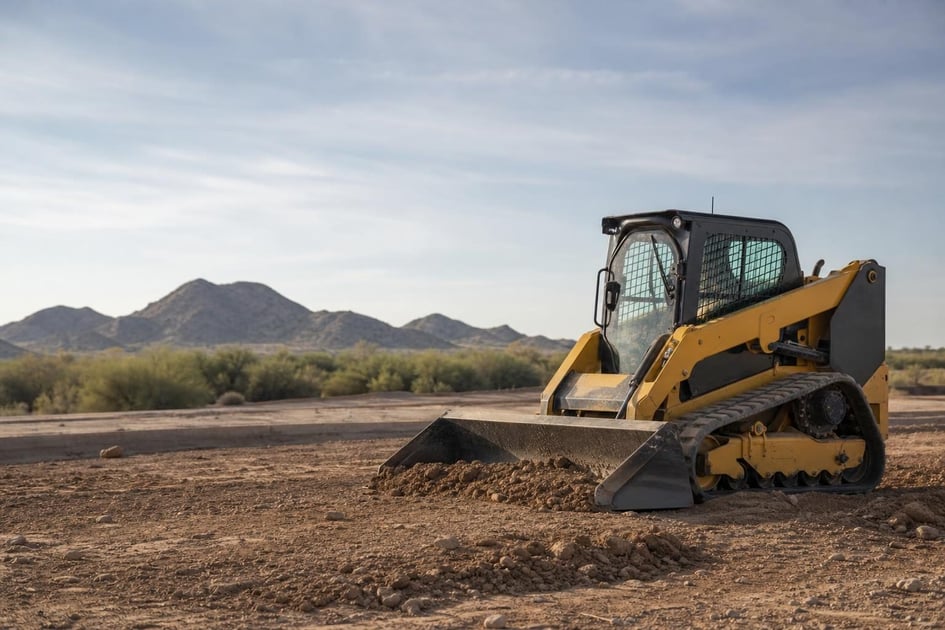
Financing a skid steer in Arizona works the same way it does anywhere else in the country, with one difference: the desert punishes equipment faster than milder climates, so the decision between new and used, and between buying now or waiting for a cooler month, carries more weight. Provide Capital offers Skid Steers financing from $5,000 to $5 million for Arizona businesses, with the machine itself serving as collateral. That structure keeps rates competitive and lets established contractors and newer landscaping crews alike see what financing they qualify for on a skid steer without tying up other assets.
Why Arizona Contractors Finance Skid Steers Instead of Paying Cash
Arizona's construction sector has outpaced national growth for years. According to Census Bureau data on the Desert Southwest, construction employment in the region rose 25.6 percent between 2015 and 2019, with Maricopa County adding more than 30,000 construction jobs alone. That expansion has not slowed. Residential builders in the Phoenix metro area, commercial developers in Tucson, and municipal infrastructure crews across Pinal and Yuma counties all run compact equipment fleets where the skid steer is the daily workhorse.
The problem is that a quality skid steer with the attachments an Arizona crew actually needs runs anywhere from $25,000 for a used wheeled unit to more than $75,000 for a new tracked loader with high-flow hydraulics. Tying up that much cash in a single machine strains working capital, especially when payroll, fuel, and insurance on a fleet of five or ten units already demand most of the monthly budget. Financing spreads the cost across 24 to 72 months, preserving cash for labor and materials. Forbes Finance Council recently outlined how equipment financing lets contractors expand fleet capacity without draining cash reserves, a strategy that aligns with how Arizona owners structure their purchases.
Desert Conditions and Equipment Wear
Arizona's climate is hard on skid steers. Summer temperatures in Phoenix and the lower deserts routinely reach 110 degrees Fahrenheit, and the monsoon season from July through September subjects machines to sudden dust storms and flash flooding. Fine desert dust infiltrates air filters, radiator fins, and hydraulic seals faster than in humid climates. Tracked loaders face additional wear when operators work on undeveloped desert lots where caliche and decomposed granite chew through undercarriages.
That wear pattern influences financing decisions. A contractor working mostly developed lots in Scottsdale or Mesa may get ten years out of a wheeled skid steer with basic maintenance. A crew clearing raw desert land in Buckeye or Queen Creek may need to replace a machine in five to seven years. Financing lets the owner match the term to the expected useful life, so the final payment arrives roughly when the next purchase becomes necessary.
Seasonal Buying Patterns
Arizona's construction season runs almost year-round, but the rhythm changes. Summer is slower for outdoor trades because of the heat, while October through April is peak season when snowbirds arrive and residential demand spikes. Smart contractors often finance equipment in late summer or early fall so the machine is broken in and fully operational by the time the winter rush begins. Waiting until December means competing with every other crew in the state for dealer inventory and for financing processing time.
Key Insight: Arizona dealers report that skid steer inventory tightens every November as contractors prepare for winter projects. Starting a financing application in August or September typically yields faster turnaround and more negotiating leverage on the purchase price.
Already have a machine in mind?
Provide Capital finances new and used equipment from $5,000 to $5 million, with same-day decisions possible.
Apply NowNew vs. Used Skid Steer Financing in Arizona
The new versus used question is more urgent in Arizona than in many states because of the climate stress. A three-year-old skid steer from Minnesota may have low hours, but if it was used to clear snow and salted roads, the corrosion profile differs from an Arizona unit. Conversely, an Arizona machine with higher hours may have spent its life in dry conditions that preserve the frame while destroying seals and coolers.
| Factor | New Skid Steer | Used Skid Steer (Under 5 Years) | Used Skid Steer (5-10 Years) |
|---|---|---|---|
| Typical price range | $45,000 - $85,000 | $30,000 - $55,000 | $15,000 - $35,000 |
| Financing term available | 36 - 72 months | 24 - 60 months | 12 - 48 months |
| Down payment expectation | Often 0% - 10% | 5% - 15% | 10% - 20% |
| Warranty status | Full manufacturer warranty | Limited or dealer warranty | Typically as-is |
| Desert wear risk | Low; full maintenance history known | Moderate; verify filter and cooler service | High; inspect undercarriage and hydraulics closely |
When Used Makes Sense
Used skid steers are the right choice for Arizona owner-operators who need a second or third machine for seasonal overflow work. A landscaping crew in Gilbert that already owns a new primary loader can add a used unit for the winter rush without stretching the debt load. The key is verifying maintenance records. Arizona machines need more frequent air-filter and coolant changes than manufacturers specify for national averages. Ask the seller for service logs that show at least double the recommended filter intervals.
When New Is the Better Bet
New machines make sense for the primary unit in a one- or two-machine fleet, especially when the operator will run it 1,000 hours or more per year. New tracked skid steers come with emissions-compliant engines that handle high-elevation work in Flagstaff and Prescott better than older tiered engines. The full warranty also matters in remote job sites where a blown turbo or failed drive motor can idle a crew for days while parts ship from Phoenix or Tucson.
By the Numbers: A contractor running a skid steer 1,200 hours annually in Arizona dust will spend roughly $3,000 to $5,000 more per year on maintenance than the same machine operated in the Midwest. Financing a new unit with warranty coverage for the first two to three years often absorbs that differential through reduced repair costs.
Lease vs. Loan: What Arizona Owners Need to Know
Equipment loans and equipment leases both finance the same machine, but the ownership path differs. With a loan, you own the skid steer outright at the end of the term and claim depreciation or Section 179 deductions on your business return. With a true lease, you make payments for the use of the equipment and typically return it or buy it at fair market value when the term ends.
Loans work best for Arizona contractors who plan to keep a skid steer for its full useful life and who want the equity on their balance sheet. Leases appeal to crews that expect to upgrade every three to four years to avoid obsolescence or to those who want lower monthly payments for cash-flow management. The trade-off is that a lease may restrict hours or require you to maintain the machine at dealer-specified intervals, which can be burdensome in remote job sites.
Rates vary by credit profile, equipment age and term length, so the right structure depends on your time in business, credit history, and how long you intend to run the machine. Get a decision on your equipment, possibly the same day, to see whether a loan or lease fits the numbers for the specific skid steer you have picked out.
What It Takes to Qualify for Skid Steer Financing
Provide Capital serves construction, agriculture, landscaping, and related trades nationwide, including every county in Arizona. Because the equipment itself collateralizes the financing, the barrier to approval is lower than with unsecured credit. That does not mean everyone qualifies, but it does mean that a contractor with a 650 credit score and two years of tax returns has a realistic path to approval on a $40,000 machine. If you are also exploring government-backed options, SBA loan resources are worth reviewing, though independent equipment finance companies often move faster on transactions under $5 million.
Credit and Time in Business
Lenders typically look for a minimum credit score in the mid-600s for standard approval on used equipment under $50,000. New equipment approvals sometimes stretch lower because the collateral retains more value. Time in business matters: owners with two or more years under the same entity generally receive better terms than newly formed LLCs. That said, first-time buyers are not excluded. A strong personal credit profile, a verifiable down payment, and a detailed invoice from a reputable dealer can overcome limited business history.
Documentation Checklist
Having the paperwork ready before you apply shortens the timeline. Most Arizona contractors will need:
- A current driver's license or state-issued ID
- The most recent two years of business tax returns, or personal returns if the business is new
- Three months of business bank statements
- A detailed equipment invoice or quote from the dealer or private seller
- Proof of insurance that names the lender as loss payee
For purchases above $100,000, expect to provide a current profit-and-loss statement and a brief description of how the equipment will generate revenue. The equipment itself is the collateral, which keeps rates competitive, but lenders still want evidence that the monthly payment is affordable relative to cash flow.
Pro Tip: If you are buying from a private seller in Arizona rather than a dealer, order an independent equipment appraisal before applying. Lenders finance private-party sales, but they base the advance rate on auction or wholesale value, not the asking price. A $35,000 listing on Craigslist may appraise at $28,000, and you will need to cover the gap.
See what you qualify for
The equipment itself secures the financing, which keeps rates competitive. Checking your options takes minutes.
Check Your OptionsTax Treatment for Arizona Businesses in 2026
The tax year 2026 offers several paths to deduct the cost of a financed skid steer. Under Section 179 of the Internal Revenue Code, businesses may elect to deduct the full purchase price of qualifying equipment in the year it is placed in service, subject to an annual limit that adjusts for inflation. For tax year 2026, consult a CPA to confirm the exact limit, as it changes yearly and interacts with your total equipment purchases and taxable income.
Bonus depreciation may also apply to new and used skid steers placed in service during 2026, though the percentage has been phasing down from prior years. Again, the precise rate for 2026 depends on federal legislation and your tax situation, so speak with a CPA before counting on a specific deduction amount. What does not change is that the interest portion of your equipment loan payments is generally deductible as a business expense, and the financed machine itself qualifies for depreciation or Section 179 treatment even though you did not pay cash upfront.
Arizona state tax follows federal depreciation schedules in most cases, but the state imposes a Transaction Privilege Tax on equipment sales that dealers collect at purchase. Financing does not eliminate the TPT, but it does let you pay it as part of the capitalized cost rather than from working capital. Your CPA can model whether an accelerated federal deduction in 2026 offsets the state cash outflow.
Industry-Specific Uses Across Arizona
Skid steers are not just for construction. Across Arizona, at least five distinct industries rely on them daily, and each has different financing needs.
Construction and Landscaping in Maricopa and Pima Counties
The Phoenix and Tucson metro areas account for the bulk of Arizona's skid steer demand. Residential builders use them for site prep, grading, and material handling on tight infill lots where a full-size excavator will not fit. Commercial crews use high-flow skid steers to run planetary augers for fence post installation and landscaping boulder placement. Because these markets are competitive, contractors need reliable equipment to meet deadlines. Construction equipment financing keeps crews bidding jobs instead of waiting for cash reserves to rebuild.
Agriculture in Yuma and Southern Arizona
Yuma County produces the majority of the nation's winter lettuce, and the vegetable operations there run skid steers for bin handling, light tillage, and loader work in packing sheds. Dairy operations around Maricopa and Pinal counties use them for feed pushing and manure scraping. Agricultural borrowers sometimes face seasonal income patterns, with revenue concentrated in harvest windows. Lenders accustomed to ag finance can structure payments around those seasons, with heavier payments after harvest and lighter ones during planting.
Forestry and Land Clearing in the Higher Elevations
Above 5,000 feet, in areas around Flagstaff, Show Low, and the White Mountains, forestry contractors and wildfire mitigation crews use skid steers with mulching heads to clear underbrush. These machines work in steep, rocky terrain that demands tracked units with high-flow hydraulics. The work is seasonal and grant-funded in many cases, so contractors often finance the machine during the off-season and pay it down with the first few project checks of spring.
HVAC and Utility Contractors
HVAC installers and underground utility crews in Arizona use skid steers with trencher attachments or backhoe arms to dig trenches for refrigerant lines, conduit, and irrigation pipe. The machines spend most of their life on paved or developed surfaces, so wheeled units with foam-filled tires are common. These contractors often finance a skid steer alongside Dump Trucks financing to create a self-contained crew that hauls its own material and digs its own trenches.
Municipal and Government Fleets
City parks departments, county road crews, and tribal maintenance operations across Arizona run skid steers for everything from trail maintenance to graffiti cleanup. These buyers often finance through municipal lease-purchase agreements with longer terms and lower rates, though the approval timeline is longer because of public bidding requirements.
Common Mistakes to Avoid When Financing a Skid Steer
Even experienced buyers make errors that cost money or delay approval. The most common mistake is overbuying on horsepower. A landscaping crew in Tempe running pallet forks and a bucket does not need a 100-horsepower track loader built for demolition. The higher the sticker price, the higher the monthly payment and insurance cost. Buy the machine that matches 90 percent of your actual work, and rent for the outliers.
Another mistake is failing to budget for attachments. A skid steer without attachments is just an expensive weight. Augers, trenchers, grapples, and brush cutters often add $5,000 to $15,000 to the total project cost. Finance the attachments with the machine so you are operational on day one. Some lenders treat attachments as a separate transaction if they are invoiced separately, which complicates the closing.
Finally, do not ignore the resale market. Bobcat, Caterpillar, John Deere, and Kubota hold value best in Arizona because dealer support and parts availability are strong. Off-brand machines may cost less upfront but depreciate faster and are harder to refinance later if you need to roll the unit into a new loan.
What Happens After Approval
Once approved, the process moves quickly. Provide Capital issues a funding authorization, often the same day for deals under $100,000 with clean documentation. The lender pays the dealer or private seller directly, and you take possession once the title and insurance are verified. For transactions above $250,000, a UCC filing on the equipment is standard, and the lender may require a visual inspection or appraisal before releasing funds.
After funding, your responsibility is straightforward: maintain insurance with the lender listed as loss payee, make payments on schedule, and keep the machine in working condition. Most lenders do not impose hour limits or maintenance schedules on loans, but they do expect the equipment to retain reasonable collateral value. If you sell the skid steer before the loan is paid off, the balance must be satisfied from the sale proceeds or refinanced onto replacement equipment.
Ready to move forward? Start an application in a few minutes and get a clear picture of what your business can qualify for on the next machine.
Ready to move forward?
More than 10,000 businesses have financed equipment with Provide Capital. See what you qualify for today.
Get StartedFrequently Asked Questions
Can I finance a skid steer in Arizona with a low credit score?
Approval depends on your full financial profile, not just the credit score. Borrowers in the mid-600s commonly qualify for standard terms on used equipment under $50,000. Scores below that may still qualify with a larger down payment, a strong cosigner, or by selecting newer equipment that holds collateral value better. Rates vary by credit profile, equipment age and term length.
How long does skid steer financing take to close?
Deals under $100,000 with complete documentation can close the same day. Larger transactions or those involving private-party sellers typically take two to five business days while the lender verifies the title, orders an appraisal, and completes UCC filings. Submitting clean paperwork upfront is the single best way to speed the timeline.
Should I buy a wheeled or tracked skid steer for Arizona work?
Wheeled skid steers cost less and work well on paved or finished surfaces, making them popular with HVAC and utility contractors in Phoenix and Tucson. Tracked units provide better flotation on soft desert sand, decomposed granite, and muddy monsoon sites, so they dominate in land clearing and raw lot prep. If your work is split evenly, wheeled units with over-the-tire tracks offer a middle ground.
Can I finance attachments with the skid steer?
Yes, most lenders allow you to roll attachments into the same financing package if they are invoiced together with the machine. Buckets, augers, grapples, and trenchers commonly add $5,000 to $15,000 to the financed amount. Financing them separately can complicate approval, so ask the dealer to bundle everything on one invoice.
Is it better to finance through the dealer or an independent lender?
Dealer financing is convenient because the paperwork is handled at the point of sale, but it is not always the most flexible option. Independent lenders like Provide Capital often offer longer terms, finance used and private-party sales that dealers will not touch, and structure payments around seasonal cash flow. It pays to compare both paths before signing.
What is the Section 179 deduction for a skid steer in 2026?
For tax year 2026, Section 179 allows businesses to deduct qualifying equipment purchases up to an inflation-adjusted annual limit. The exact dollar cap changes each year, so consult a CPA to confirm the 2026 threshold before filing. Bonus depreciation may also apply, though it has been phasing down. Your CPA can model the optimal strategy for your specific tax bracket and equipment needs.
Do I need a commercial driver's license to transport a skid steer in Arizona?
A CDL is not required to operate a skid steer itself, but transporting it on a trailer may require a CDL if the combined gross vehicle weight rating exceeds 26,000 pounds. Most single-axle trailers with a compact skid steer stay below that threshold, but larger track loaders on tandem-axle trailers can push the combined weight higher. Check Arizona Department of Transportation guidelines and your insurance requirements before hauling.
Can a new business qualify for skid steer financing?
Businesses with less than two years of operating history face more scrutiny, but startup contractors are not automatically excluded. A strong personal credit profile, a detailed business plan, a verifiable down payment of 10 to 20 percent, and a relationship with an established dealer all improve the odds. Time in business is a factor, but it is not the only factor.
If you are staring at a quote for a Bobcat or Caterpillar skid steer and wondering how the payments fit into your cash flow, the next step is simple. Gather your last two tax returns, three months of bank statements, and the equipment invoice, then submit an application to see what you qualify for. Approval can come the same day, and you can take delivery before the next job starts.
Disclaimer: The information provided in this article is for general educational purposes only and is not financial, legal, or tax advice. Funding terms, qualifications, and product availability may vary and are subject to change without notice. Provide Capital does not guarantee approval, rates, or specific outcomes. For personalized information about your business funding options, contact our team directly.
